BACKGROUND:Osteoarthritis (OA) has become one of the most prevalent joint diseases worldwide, leading to a growing burden of pain and disability as populations age. Although there is consistent evidence to support postoperative rehabilitation and high-intensity prehabilitation for total knee arthroplasty (TKA), the clinical outcomes of hospital-based prehabilitation remain unclear. We aimed to evaluate the effect of a hospital-based prehabilitation program on knee score (KS), function score (FS), and length of stay (LOS) among patients with knee OA after TKA.METHODS:A retrospective comparative study was conducted at Renmin Hospital of Wuhan University among patients with primary knee OA. Seventy-two postopearative patients who did not undergo the prehabilitation program were included as the control group, while 68 postoperative patients who underwent the prehabilitation program were assigned to the intervention group. All patients went through the same care after TKA. The KS, FS, and pain levels were measured 5 days before surgery, immediately preceding surgery, immediately after the surgery, and at 1 week and 1 month postoperatively. LOS for each patient was recorded.RESULTS:The new prehabilitation training program significantly improved the KS over time in the intervention group. However, no significant between-group difference was identified in the change of FS. The prehabilitation program also provided shorter LOS.CONCLUSIONS:The hospital-based prehabilitation program leads to improved recovery, as indicated by higher KS postoperatively, which may result in improved clinical outcomes of TKA.
目的:探讨跨理论模型在老年人工髋关节置换患者术后康复中的应用效果.方法 :老年人工髋关节置换患者69例随机分为对照组35例和观察组34例.对照组患者接受常规康复治疗与护理,观察组患者在对照组基础上增加跨理论模型导向的康复干预.观察2组患者干预前,干预1及3个月时,以及随访期间的康复训练依从性、髋关节功能和生活质量情况.结果 :干预1个月、3个月及术后6个月随访,2组患者康复训练依从性、髋关节功能和生活质量评分均较干预前明显提高(P<0.01,0.05),且观察组各时间点均高于对照组(P<0.01,0.05).结论 :基于跨理论模型的康复方案能有效提高老年人工髋关节置换患者康复训练依从性,并改善其髋关节功能及生活质量.
肌萎缩侧索硬化症(ALS)是一种累及上、下运动神经元的神经退行性疾病,目前尚无法治愈。针对ALS的临床管理较复杂,需要多学科合作,对症治疗及康复治疗是重要干预手段。运动训练能防止ALS患者肌肉废用性萎缩,同时也有助于患者心血管系统健康,被认为是ALS患者的一种潜在治疗方法,但仍存在一定争议。本文将阐述运动训练治疗ALS的机制、临床应用及对ALS的影响,以期为运动训练治疗ALS患者提供更多参考资料。
We present a case report of recovery from severe COVID ‐ 19 (novel coronavirus 2019) in a patient with cognitive decline (84‐year old, female), behavioral and psychiatric symptoms, hip arthroplasty, sacroiliac decubital necrosis, cachexia, after comprehensive therapy.
脊髓损伤(SCI)常继发手功能、步行功能、感觉功能等多种功能障碍,严重影响患者的生活质量.虚拟现实(VR)技术作为一项新兴的人工智能技术,越来越广泛地被应用于神经系统疾病的康复治疗.本文主要综述VR技术在SCI康复评估和康复治疗中的应用进展,包括在SCI后运动功能障碍、神经病理性疼痛、心理障碍等评估和治疗中的应用,以及相关作用机制.
 Yinshan Lu合作论文数3ShanShan Zhu (朱珊珊)合作论文数2Shanshan Zhu合作论文数1baoying wang (王宝英)合作论文数1fengxia zhang (张凤霞)合作论文数1HU Mengting (胡梦婷)合作论文数1Jun Hu合作论文数1Zong-Chao Liu合作论文数1Fengxia Zhang合作论文数1
 N. Xia (夏楠)合作论文数Collaborating Ctr Training & Res Rehabil, World Hlth Org1Shuai Xu合作论文数1Weiwei Li (李薇薇)合作论文数1Jianping Li合作论文数1
 Ze-Jian Chen合作论文数1BaoHong Hu (胡保红)合作论文数1XiaoJun He (何小俊)合作论文数1Liu Jingxia合作论文数1
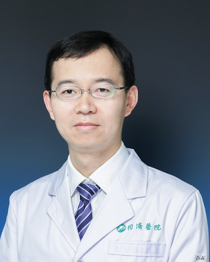 Xiaohua Han (韩肖华)合作论文数Tongji Hospital, Tongji Medical College, Huazhong University of Science and Technology1




