Sustainable pedagogical reform requires more than teacher preparedness; it depends on how school leaders interpret and coordinate the conditions that enable change. This focus is particularly critical in contexts where Problem-Based Learning (PBL) is introduced within predominantly traditional, exam-oriented pedagogical environments, requiring careful consideration of leadership’s perception of system-level readiness to support such shifts. This study investigates how Chinese K–12 school leaders conceptualize readiness for institution-wide implementation of PBL. Using Q methodology with 42 school leaders, four distinct leadership logics were identified: leadership-mediated cultural readiness through recognition, belief-driven pedagogical practice, externally anchored system-level readiness, and experientially grounded cultural readiness. These viewpoints reveal different ways leaders prioritize cultural alignment, belief formation, structural coordination, and experiential learning when organizing reform conditions. Despite these differences, participants showed several areas of shared positioning, particularly around coordination, expertise-based responsibility distribution, evaluation alignment, and adaptive responses to reform conditions. The findings extend change readiness research beyond teacher-focused perspectives by demonstrating how leaders interpret readiness as a multidimensional and system-level phenomenon. By illuminating distinct leadership logics for coordinating reform within centralized governance contexts, this study highlights the importance of aligning beliefs, professional relationships, institutional structures, and student learning improvement goals to support sustainable pedagogical transformation.
印度高等教育迈向大众化进程中,私立教育机构成为中坚力量.近年来,随着私立高等教育机构的分层发展,展现出明显的差异化发展.越来越多的优秀企业以建设"世界一流大学"为目标,创办非营利性私立大学,私立学院为满足大众化的专业教育需求转向集团化发展,私立教育机构的跨境国际化呈现出"全球学习中心"的发展趋势.我国民办高校的发展可以从中借鉴,建立分层发展的差异化格局,打造优势互补的办学类型,与公立高校协同发展.
Online and open learning has recently been made prevalent in many regions in order to mitigate educational inequality and to enhance students' learning experiences and outcomes. Previous studies showed that students perform differently in the learning process, where cultural differences matter. However, little is known about how cultural differences affect students' learning behavioral patterns. This study applies a lag sequential analysis approach to understand the behavioral patterns in an online six-week course of 262 students from three cultures, namely Confucian (for Chinese students), Arab (for Tunisian students), and Serbian (for Serbian students). This study then discusses the different learning behavior patterns based on the theoretical framework of Hofstede's National Cultural Dimensions (NCD). The obtained results highlighted that students from each culture behave differently due to several interconnecting factors, such as educational traditions. The results also showed that some of the learning behaviors were not in line with their students' cultures based on NCD, calling for further investigation in this regard. Finally, the results pointed out that culture is a complex dimension, and further investigation is needed to understand the other dimensions that may affect online and open learning behaviors.
It has been almost ten years since the credit bank was implemented in practice in China. There are three comparatively established models: the pilot credit bank, the university-company collaboration, and the university-university collaboration. In terms of breadth, the practice of credit banking has developed on a large scale across the whole nation; in terms of depth, the construction of the credit bank still needs to be improved with respect to certificate framework, methods, institution, and mechanism. Thus, the next step should focus on the construction of a certificate framework, the clarification of management roles and participation, the design of a credit-transfer system, and the certification of informal and non-formal learning.
创新教育理念和教学方式,培养创新型人才是新时代对教育的要求.大学"金课"建设是当前解决高校教学现实困境,提升教育教学质量的途径和发展趋势,其不仅要有创新性,还需具有立德树人的引领性和可行性.设计思维作为创新方法论体系,旨在通过创造性的过程促进学习者的能力提升和创新型人格的养成.该文从设计思维视角出发,将设计思维方法引入大学创新课程研究,以培养学生的创新知识、能力和品行来重构课程内容和结构,构建一种新型教学模式,通过真实情境问题、多层次协作方式、多维方法及工具以及创新核心理念来协同完成学习实践.三轮教学实践迭代表明,该创新教学模式突破大学课堂的空间边界,构建了多样化的新型教学时空,形成了双向促进的师生关系,丰富灵活的教学互动形式,以及由被动向主动转变的知识生产方式;在一定程度上符合当前"金课"建设的要求,促进了学生的有效学习,培养了学生真实情境的问题解决能力,提升了学生的创新思维、能力与品格.
随着深度学习、神经网络、大数据等技术的发展,机器智能水平逐渐上升,促使机器能够自主和辅助人们完成越来越多的工作.机器智能愈发成熟,人们该如何拥抱这类智能,又该如何发展自身成为学界重要的研究课题.创新能力作为人类难以被取代的能力一直是人才培养的重要内容.面对当今的技术发展形式,培养出能够拥抱机器智能,高效进行人机协同的创造性人才是教育领域的紧迫任务.该文从智能时代的特征入手,分析出智能时代对创造性人才的技能要求,并结合已有的创新能力构成研究,梳理出面向人机协同的创新能力构成要素和培养路径,以期为培养满足智能时代需要的创造性人才提供参考.
In China, school selection for both public primary and middle schools is a "bottom-to-top" spontaneous competition among individual parents as a social phenomenon. The study analyzes problems caused by the competition over school selection in terms of money, excellence, and power in public primary and middle schools in China, and explains the reasons behind them. The study then introduces and analyzes governing policies in education.
2014年11月召开的ICDE高等教育领导者会议强调,获得并成功实现开放、在线的灵活学习是解决当前发展面临的挑战和21世纪社会需求的根本道路。在此次会议上,国际开放与远程教育协会主席Tian Belawati教授指出:“在解决不平等、失业等问题,特别是年轻人的类似问题时,国家发展目标的进程和新的使命都需要开放教育、依靠技术改善学习,充分利用开放教育资源、在线灵活的混合式学习,对各个层面的教育设计、开发、部署和传播等进行研究和创新。” UNESCO教育部门代表Mariana Patru女士对此表示认同:“运用数字技术的潜能来构建全纳的、更相关的终身学习系统,这才是世界各国的政策宗旨。获得并成功实现开放、在线的灵活学习,将为当前发展面临的挑战和21世纪的社会需求提供优势机会和切实可行的解决方案。”
Based on the articles published by the Japan Comparative Education Society's journalComparative Education Reviewover the past 40 years, the paper analyzes and discusses the significance of implementing fieldwork in comparative study of education. In Japan, the number of comparative education studies employing fieldwork is gradually increasing, and their quality is improving and enhancing. With the target countries changing from the developing countries into the developed countries, fieldwork further turns to be the indispensable approach to study the western advanced countries. These trends indicate that studies in Comparative Education in Japan finally develops into their own unique state: what was long considered aconsumerposition in academia is now being replaced with true hope for making original and active contributions to research in the field.
The First International Conference on Learning took place in Beijing, China, from 21 to 23 October, attended by 500 mayors, city education executives and experts from all parts of the world, which becomes the milestone in the process of building learning cities. The paper deals with the crucial issues such as the idea,standard and strategy for building a learning city through analyzing the international cases. Firstly, it proposed the idea of promoting inclusion, prosperity and sustainability in learning cities; secondly, it suggested establishing evaluation standards such as green city index and comprehensive learning index; thirdly, it advocated the various human-centered development strategies. As a whole, the evolving process of building learning cities gives an expression to focus on the development of human, showing the idea changing from instrumental rational to value rational.
《中国教师》:《纽约时报》将2012年称为“M O O C元年”,而中国的MOOC元年即将到来。您如何看待MOOC这种新兴事物?<br> 王英杰:从教育学的角度来看,MOOC不是一个新兴事物;但从市场价值来看,MOOC就是一个新兴事物。就好像哥白尼的“日心说”,在发现之初并未被人们所接受,直到其死后60多年,开普勒和伽利略再次证明哥白尼是正确的,“日心说”才逐渐为人们所认识。教育技术虽然在远程教育、网络教育领域的发展已有几十年的历史,但并没有为人们的生产、生活方式带来影响和转变。市场不能作为主流教育取向,但教育的发展、技术的发展都不能忽略市场因素。任何新理念、新思想、新技术的出现,都会产生某种市场效应,如目前提倡的协同创新。当教育中出现新技术时,教育界也要关注到市场因素的影响。
《中国教师》:《纽约时报》将2012年称为“MOOC元年”,在这场引起教育界举目关注的数字海啸中,您认为已经发展多年的在线教育与新兴的MOOC是什么关系?
 Dongming Ma合作论文数8
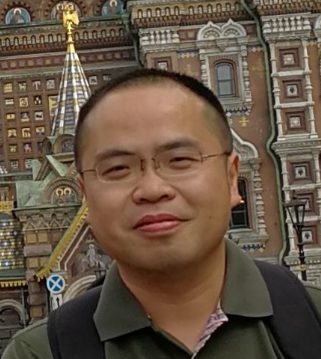 Qinhua Zheng (郑勤华)合作论文数Faculty of Education, Beijing Normal University8Hao Xie合作论文数7
 Xiangyun Du合作论文数4
 Ronghuai Huang (黄荣怀)合作论文数Faculty of Education, Beijing Normal University;Smart Learning Institute, Beijing Normal University3Yihong Shi合作论文数1
 Huanhuan Wang (王欢欢)合作论文数National Engineering Research Center of Cyberlearning and Intelligent Technology, Faculty of Education, Beijing Normal University1
 Juebei Chen (陈珏蓓)合作论文数Aalborg PBL Ctr, Aalborg Univ1
 aida guerra合作论文数Aalborg PBL Ctr, Aalborg Univ1
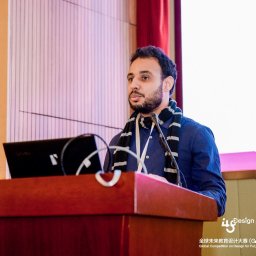 Ahmed Tlili合作论文数Beijing Normal Univ, Smart Learning Inst, Beijing 100875, Peoples R China1Dejian LIU (刘德建)合作论文数1
 Bojun Gao (高博俊)合作论文数1JiHong Li (李冀红)合作论文数1MingLi Fan (范明丽)合作论文数1
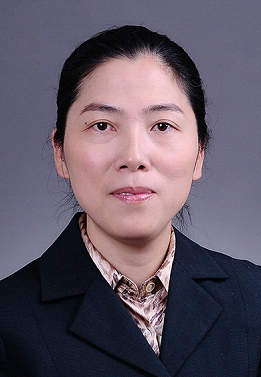 Rongxia Zhuang (庄榕霞)合作论文数Faculty of Education, Beijing Normal University1
 Bin Bai (白滨)合作论文数Faculty of Education, Beijing Normal University1
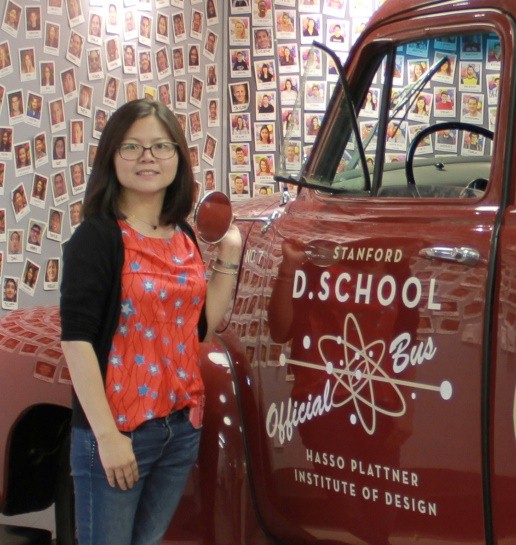 Peng Chen (陈鹏)合作论文数College of Education, Capital Normal University1
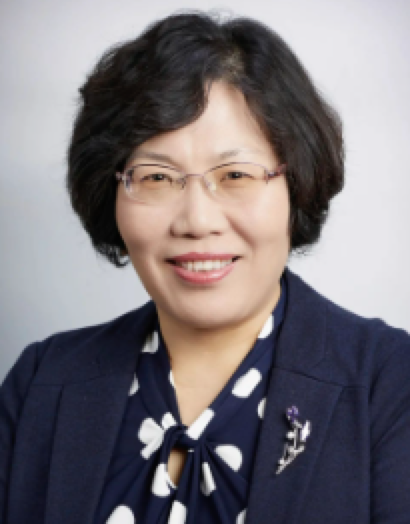 Li Chen (陈丽)合作论文数Faculty of Education, Beijing Normal University1
 Chee-Kit Looi (呂賜杰)合作论文数Department of Curriculum and Instruction, Faculty of Education and Human Development, The Education University of Hong Kong;National Institute of Education, Nanyang Technological University1




