The naked mole-rat (Heterocephalus glaber) is an eusocial rodent living underground, known for its unusually high life expectancy. Biochemical markers of age associated diseases (cancer, neurodegenerative diseases) in naked mole-rat are less pronounced than in other laboratory rodents. The immune system is involved in the aging and carcinogenesis regulation, however, the immune system in the naked mole-rats is yet not investigated well. We found that the immune system of naked mole-rats has structural diff erences compared to a mouse immune system: a smaller number of the bone marrow cells and splenocytes, the small size of the lymphoid follicles of the spleen and lymph nodes, a higher proportion of myeloid cells in the periphery. Taken together, these data provide a basis for studying the fundamental immunity patterns of the naked mole rat, and their contribution to the extraordinary longevity.
Mechanisms of skin wound healing have been extensively studied in order to propose novel approaches for treatment of chronic and poorly healing wounds, including those associated with autoimmune pathologies, as well as for fibrosis prevention. Recent studies indicate the key role of proinfl ammatory cytokines, such as TNF, IL-6 and IL-1, in regulating skin regeneration. In our work we investigated the impact of tumor necrosis factor (TNF) on healing of deep skin wounds in mice by employing reverse genetics approach. We found, that conditional knock-out of TNF gene specifically in macrophages results in delayed wound healing. However inactivation of TNF in all cell types does not aff ect wound regeneration dynamics. Moreover, genetic knock-out of TNF receptor I (TNFRI) results in accelerated wound healing. Thus, the results of our study suggest that TNF from diff erent cell types plays a dual role in skin regeneration probably refl ecting that both cellular source of TNF as well as receptor type on target cells are important.
Biomaterials have recently been recognized for their potential use in regenerative medicine and tissue engineering, since they not only represent a scaff old for cell populations, but also can infl uence functionality of diff erent cell types. In particular silk-based biomaterials (i. e. fibroin or spidroin) are of high interest, because they show prominent mechanistic features and have proregenerative potential. In our work we showed that composite fibroin/gelatin scaff olds induce moderate infl ammation both in vitro and in vivo and this eff ect depends on the configuration of the matrices. In particular, culturing of Mouse Embryonic Fibroblasts (MEF) on three-dimensional (3D), but not two-dimensional (2D) fibroin/gelatin scaff olds resulted in overexpression of adhesion molecules ICAM-1 and VCAM-1 as well as proinfl ammatory cytokines TNF and IL-6. Moreover subcutaneous injection of fibroin/gelatin microparticles in mice lead to accumulation of infl ammatory myeloid cells and acceleration of skin wound healing, while implantation of 3D fibroin/gelatin scaff olds under the kidney capsule promoted lymphocytes clusterization, resulting in generation of primitive lymphoid tissue. Altogether our data suggest immunomodulatory features of fibroin/gelatin scaff olds, which can be useful in tissue engineering and regenerative medicine.
Reverse genetics approach, involving genome editing, makes it possible not only to establish the nonredundant and unique functions of genes and their products, but also to construct animal models for biomedical research. Interleukin 6 (IL-6) is an important immunoregulatory and proinflammatory cytokine that differs from many related proteins in having a rather complicated signal transduction scheme. Apart from the multiple functions of IL-6, the most relevant biological problem of recent years was establishing what cells produce IL-6, in what form IL-6 is produced, what cells are recipients of the IL-6 signal, and what are the downstream events and physiological consequences of the IL-6 signaling cascade. Because IL-6 is involved in the pathogenesis of many diseases and is a drug target, understanding the mechanisms of its normal and pathogenic effects is important for the clinics. The review summarizes the recent data available in the field.
Interleukin-6 (IL-6)--one of the most important pro-inflammatory cytokines that has a broad spectrum of immunoregulatory properties. Molecular mechanisms of signal transduction of IL-6 and its receptor, which were previously established, have recently been supplemented with a concept of trans-signaling. Selective inhibition of this signaling cascade would allow to modulate the pathological effects of IL-6. Methods of reverse genetics have helped to establish the physiological functions of IL-6 in normal state and in various diseases, including neoplasias. Therapeutic inhibitors of IL-6 or its receptor are already used for the treatment of several autoimmune diseases, however, systemic inhibition inevitably also neutralizes the protective functions of this cytokine. It is expected that in the future systemic therapy will be replaced by more specific and effective approaches that take into account the peculiarities of molecular signaling pathways in target cells and differences in the function of IL-6, depending on the cell source.
Обзор посвящен проблеме конструирования искусственных лимфоидных органов. Успех в этой области позволит не только лучше понять механизмы функционирования нормальных органов иммунной системы, но и разработать новые подходы к терапии иммунодефицитов, аутоиммунных состояний и, возможно, других заболеваний. На примере лимфатического узла мыши рассмотрено строение и развитие нормальных лимфоидных органов. Особое внимание уделено роли межклеточных взаимодействий и цитокиновых сигналов в механизмах формирования и функционирования лимфоидных органов. Описаны биоматериалы, на основе которых возможно создание искусственных органов, в том числе органов иммунной системы. Критически рассмотрены достижения последних лет в области биоинженерии искусственных лимфоидных органов и предполагаемые направления исследований.
Появление генно-инженерных биологических препаратов открыло новые перспективы в терапии аутоиммунных и воспалительных заболеваний. Цитокины, регулирующие широкий спектр процессов в ходе развития нормального иммунного ответа, являются одними из наиболее успешных терапевтических мишеней. Исследования последних десятилетий, сопровождаемые бурным развитием биотехнологии, позволили детально изучить роль и место цитокинов в аутоиммунных и воспалительных патологиях. Как ни странно, многие механистические аспекты антицитокиновой терапии остаются не до конца понятыми. Настоящий обзор посвящен рассмотрению роли таких цитокинов, как TNF, IL-1 и IL-6, в развитии воспалительных процессов и возможным механизмам действия их блокаторов.
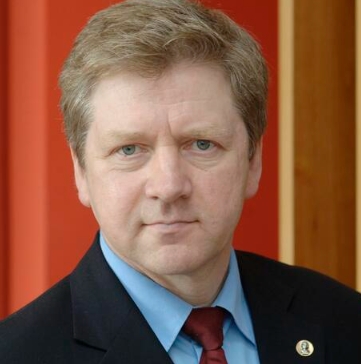 Sergei A. Nedospasov合作论文数Laboratory of Molecular Immunology, Engelhardt Institute of Molecular Biology, Russian Academy of Sciences;AG Entzundungsbiologie, Deutsches Rheuma-Forschungszentrum Berlin12
 М. А. Носенко合作论文数7
 Mihail Mihailovich Moisenovich合作论文数6
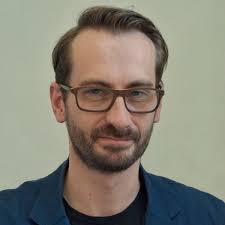 Grigory Efimov合作论文数Laboratory of Transplantation Immunology, Hematology Research Center6А.Ю. Архипова合作论文数5
 Kamar-Sulu Atretkhany合作论文数Russian Acad Sci, Engelhardt Inst Mol Biol, Lab Mol Mech Immun, Moscow 119991, Russia5
 Ekaterina Gubernatorova合作论文数Trudeau Institute5Ekaterina Gorshkova合作论文数4I I Agapov合作论文数4Р. В. Зварцев合作论文数4
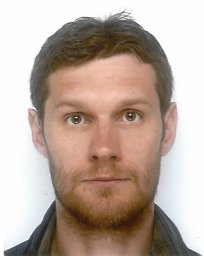 Andrey Kruglov合作论文数Deutsches Rheuma-Forschungszentrum Berlin4Kirill Korneev合作论文数Engelhardt Institute of Molecular Biology, Russian Academy of Sciences3
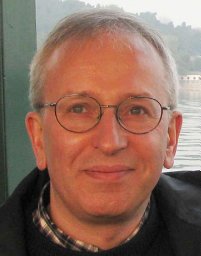 Sergei Tillib合作论文数Lab of Molecular Biotechnologies, Institute of Gene Biology, Russian Academy of Sciences3м ю высоких合作论文数2S A Nedospasov合作论文数2M. S. Kotliarova合作论文数2O. I. Agapova合作论文数2MP KIRPICHNIKOV合作论文数2
 Violetta Gogoleva合作论文数2Maliuchenko N V合作论文数2
 Evgeny S Shilov合作论文数2
 Dmitry V. Kuprash合作论文数Engelhardt Institute of Molecular Biology, Russian Academy of Sciences2I. V. Astrakhantseva合作论文数Laboratory Branch, Center for Disease Control and Prevention2А. А. Кучмий合作论文数1V. G. Krut’合作论文数1S. A. Chuvpilo合作论文数1н и шарова合作论文数1M F Nikonova合作论文数1
 Lyubov Ivanovna Davydova合作论文数1александр николаевич митин合作论文数1К.Н. Атретханы合作论文数1
 Victor A Kulikov合作论文数1M.M. Litvina合作论文数1
 Svetlana Volkova合作论文数Novo Nordisk Foundation Center for Biosustainability, Technical University of Denmark1Ekaterina N Sviriaeva合作论文数Lee Kong Chian School of Medicine, Nanyang Technological University1Sazykin A Iu合作论文数1Komogorova V V合作论文数1Donetskova A D合作论文数1Arkhipova A Yu合作论文数Biological Faculty, Moscow State University1
 Dmitry A. Kulikov合作论文数1
 Bozrova Svetlana V合作论文数1Vladislav V. Mokhonov合作论文数Ivanovsky Institute of Virology1Vladimir G Bogush合作论文数1
 Pavel Belousov合作论文数1A. V. Goncharenko合作论文数1
 Ilgiz a Mufazalov合作论文数Engelhardt Institute of Molecular Biology, Russian Academy of Sciences1Vladimir G. Debabov合作论文数1




