NeuLAND (New Large-Area Neutron Detector) is the next-generation neutron detector for the (RB)-B-3 (Reactions with Relativistic Radioactive Beams) experiment at FAIR (Facility for Antiproton and Ion Research). NeuLAND detects neutrons with energies from 100 to 1000 MeV, featuring a high detection efficiency, a high spatial and time resolution, and a large multi-neutron reconstruction efficiency. This is achieved by a highly granular design of organic scintillators: 3000 individual submodules with a size of 5 x 5 x 250 cm(3) are arranged in 30 double planes with 100 submodules each, providing an active area of 250 x 250 cm(2) and a total depth of 3 m. The spatial resolution due to the granularity together with a time resolution of sigma(t) <= 150 ps ensures highresolution capabilities. In conjunction with calorimetric properties, a multi-neutron reconstruction efficiency of 50% to 70% for four-neutron events will be achieved, depending on both the emission scenario and the boundary conditions allowed for the reconstruction method. We present in this paper the final design of the detector as well as results from test measurements and simulations on which this design is based.
A two-dimensional thermal-neutron detector developed for a small-angle diffractometer by the Petersburg Nuclear Physics Institute is described. The detector, with a sensitive area of 600 × 600 mm2, is based on a multiwire proportional chamber. A gas mixture containing 3He is the neutron converter. A new technology for manufacturing electrodes has been developed and used to increase both the gas purity and the lifetime of the detector without refilling its working volume under the experimental conditions. Data acquisition is carried out by the readout system based on the method of cathode-strip data readout to an LC delay line, which is located inside the detector. The detector is operable in a vacuum owing to its design.
A method of noninvasive recovery of gas-discharge detectors degraded due to operation in intense radiation fields is described. The plasma-chemical reactions are the basis of the presented techniques; these reactions take place during the detector training in a gas discharge of special recovering gas mixtures. The results of recovery of operating parameters for proportional chambers and counters are presented.
The gas-discharge detector is designed for the neutron lifetime spectrometer. The detector is intended for ultracold neutron flux monitoring in measurement cycles at the specrtometer (ILL, Grenoble, France). The detector has been successively tested with a Pu–Be neutron source under laboratory conditions and as a part of the spectrometer.
The analysis of high-precision $\pi^{\pm}p \to \pi^{\pm}p$ cross section data from the EPECUR Collaboration based on the multichannel $K$-matrix approach is presented.The sharp structures seen in these data are studied in terms of both opening thresholds and new resonance contributions. Some prominent features are found to be due to the opening $K\Sigma$ channel. However, a complete description of the data is improved with the addition of two narrow resonant structures at $W\sim 1.686$ and $W\sim 1.720$ GeV. These structures are interpreted as manifestations of $S_{11}$ and $P_{11}$ resonances. The underlying nature of the observed phenomena is discussed.
We report the measurement of the one-dimensional charged kaon correlation functions using 600 GeV/c Sigma(-), pi(-) and 540 GeV/c p beams from the SELEX (E781) experiment at the Fermilab Tevatron. (KK +/-)-K-+/- correlation functions are studied for three transverse pair momentum, k(T), ranges and parameterized by a Gaussian form. The emission source radii, R, and the correlation strength, lambda, are extracted. The analysis shows a decrease of the source radii with increasing kaon transverse pair momentum for all beam types. (C) 2015 The Authors. Published by Elsevier B.V. This is an open access article under the CC BY license (http://creativecommons.org/licenses/by/4.0/).
Для оснащения экспериментальных установок реакторного комплекса ПИК (ФГБУ ПИЯФ НИЦ КИ) средствами контроля пучков разработан позиционно-чувствительный монитор для регистрации тепловых нейтронов с плотностью потока до I = 108 н/(см2 · с). Конструкция монитора обеспечивает трансмиссию проходящего пучка на уровне не менее 95% и базируется на многопроволочной пропорциональной камере с катодным съемом информации c помощью LC-линии задержки. В качестве рабочего газа выбраны две смеси: 3Не/CF4 для работы с пучками с плотностью до 106 н/(см2 · с) и N2/CF4 для I > 106 н/(см2 · с). Показано, что примененные методы компьютерного моделирования хорошо согласуются с результатами исследования характеристик рабочей газовой смеси 3Не/CF4 с использованием пучка тепловых нейтронов. Разработанный детектор может служить основой для изготовления мониторов, планируемых для оснащения экспериментальных установок на реакторе ПИК.
Multi-wire proportional chambers filled with the He + CF4 gas mixture with a delay line readout are widely used for thermal neutron detection, especially in Small-Angle Neutron Scattering (SANS) instruments [1–3]. The purpose of the discussed work was to find a set of strongly interrelated detector design parameters with the aim to improve the detector performance. After careful consideration of important detector parameters, such as the space resolution, the efficiency and differential and integral nonlinearity, a satisfactory solution was found. In order to guarantee a reliable and optimal operation of the neutron detector, a wide range of scientific and technological investigations was carried out to: • improve and optimize the detector mechanical characteristics, simulations of the detector pressure behavior up to 10 bar were performed; • minimize the detector outgassing, a new technology for fabrication of the detector electrodes was successfully developed. It has opened a way to improve the gas purity by a few orders of magnitude; • minimize the gas leakage to a level smaller than 0.03 % per day, the detector gas sealing technology was improved. This paper describes general approaches and technological solutions that have allowed us to develop thermal neutron detectors for the SANS diffractometers “Vector” and “Membrana-2” at the VVR-M reactor of PNPI. The required parameters of the detector are listed in Table 1.
Background: The rate lambda(pp mu) characterizes the formation of pp mu molecules in collisions of muonic p mu atoms with hydrogen. In measurements of the basic weak muon capture reaction on the proton to determine the pseudoscalar coupling g(P), capture occurs from both atomic and molecular states. Thus knowledge of lambda(pp mu) is required for a correct interpretation of these experiments.Purpose: Recently the MuCap experiment has measured the capture rate Lambda(S) from the singlet p mu atom, employing a low-density active target to suppress pp mu formation [V. Andreev et al. (MuCap Collaboration), Phys. Rev. Lett. 110, 012504 (2013)]. Nevertheless, given the unprecedented precision of this experiment, the existing experimental knowledge in lambda(pp mu) had to be improved.Method: The MuCap experiment derived the weak capture rate from the muon disappearance rate in ultrapure hydrogen. By doping the hydrogen with 20 ppm of argon, a competing process to pp mu formation was introduced, which allowed the extraction of pp mu from the observed time distribution of decay electrons.Results: The pp mu formation rate was measured as lambda(pp mu) = (2.01 +/- 0.06(stat) +/- 0.03(sys)) x 10(6) s(-1). This result updates the pp mu value used in the abovementioned MuCap publication.Conclusions: The 2.5x higher precision compared to earlier experiments, and the fact that the measurement was performed under nearly identical conditions as the main data taking, reduces the uncertainty induced by lambda(pp mu) to a minor contribution to the overall uncertainty of Lambda(S) and g(P), as determined in the MuCap experiment. Our final value for lambda(pp mu) shifts Lambda(S) and g(P) by less than one-tenth of their respective uncertainties compared to our results published earlier.
Cross sections for pi+-p elastic scattering have been measured to high precision, for beam momenta between 800 and 1240 MeV/c, by the EPECUR Collaboration, using the ITEP proton synchrotron. The data precision allows comparisons of the existing partial-wave analyses (PWA) on a level not possible previously. These comparisons imply that updated PWA are required.
During last few years, large-scale studies of the radiation hardness of gaseous detectors were carried out in preparation for LHC experiments. Today, most of the factors affecting the aging rate of these detectors are well defined [1]. The “classical aging effects” are the result of chemical reactions occurring in the avalanche plasma near anode wires leading to formation of deposits on the electrode surfaces. This mode of aging is extremely sensitive to various additives and contaminants in the gas and materials used in contact with the gas. The most harmful chemical element, which is systematically detected in analyses of wire deposits, is silicon. Si compounds are found in gas-system components, sealant Room Temperature Vulcanizing Silicone Rubber, silicon-based lubricant, etc. Usually, Si deposits appear at the accumulated charges much below 1 C/cm per wire. That is why most of the materials used for construction of the detectors have to be tested to address their safety from the aging point of view. Due to the need for radiation hardness, a broad list of conventional working gas mixtures was narrowed down to Ar(Xe) + CO2 + CF4. These mixtures block the negative influence of silicon deposits, preventing the anode aging. However, at the accumulated doses above 1 C/cm per wire, there exist aging effects that are not related to polymerization. Anode wires are commonly made of gold-plated tungsten. It has been found that oxygen and other active radicals produced in avalanches penetrate through the pores and micro-cracks in the gold-plating and react with tungsten [2]. This process results in swelling of the wires because the forces within a wire break the gold-plating, and tungsten oxides (WOx) appear on the wire surface. The aim of the present work was to demonstrate recovery of an aged anode wire in a proportional counter by treating it with a negative corona discharge in a 80 % CF4 + 20 % CO2 gas mixture.
A position-sensitive monitor for the detection of thermal neutrons with a flux density of up to I = 108 neutrons/(cm2 s) is developed in order to implement beam control at experimental facilities of the PIK reactor complex. The monitor is designed in such a way that the beam transmission coefficient does not fall below 95%. This design is based on a multiwire proportional chamber with cathode data readout with the use of an LC delay line. Two mixtures are chosen to be used as the working gas: 3He/CF4 for beams with a density of up to 106 neutrons/(cm2 s) and N2/CF4 for I > 106 neutrons/(cm2 s). It is demonstrated that the computer modeling data agree well with the results of studies of the parameters of the 3He/CF4 working mixture with a thermal neutron beam. The developed detector may serve as the basis for the construction of monitors that are planned to be installed at experimental facilities of the PIK reactor at the Petersburg Nuclear Physics Institute.
The EPECUR experimental setup has been designed to search for narrow resonant states by precisely measuring differential and total reaction cross sections for pion-nucleon interactions with 1-MeV pion energy steps. Over the 5 years that passed from the submission of the idea of the experiment to the start of data taking in April 2009, a non-magnetic spectrometer with a liquid hydrogen target based on the large-aperture multiwire drift chambers with a hexagonal structure has been built at the universal beamline 322 of the U-10 proton synchrotron at the Alikhanov Institute for Theoretical and Experimental Physics. Owing to the unique properties of the beamline, the beam particle momentum can be measured with an accuracy of 0.1% or better using 1-mm-pitch proportional chambers located at the first focus of the beamline. The design of numerous subsystems of the setup is based on modern electronic components including microprocessors and field programmable gate arrays. All the subsystems have been tuned and tested both individually and as parts of the whole setup. The distributed data acquisition system is based on the widely spread USB and Ethernet protocols, which help achieve high performance characteristics and take full advantage of the industrial solutions.
The EPECUR collaboration presents new high precision data on the pion-proton elastic scattering in the second resonance region. The experiment EPECUR is placed on the universal beam channel of the accelerator ITEP. The setup features 0.1% beam pion momentum tagging system, 25 cm long liquid hydrogen target, placed in mylar container and beryllium outer shell, low material wire drift chambers and high performance DAQ. More than 3 billions of triggers have been collected. The data cover pion beam momentum range 0.8 - 1.3 GeV/c and 40-120 degrees center-of-mass scattering angle range for both positive and negative pions. The measured differential cross section has 2% statistical accuracy in 2 degrees angle and 5 MeV/c momentum intervals.
. The MuCap experiment at the Paul Scherrer Institute performed a high-precision measurement of the rate of the basic electroweak process of nuclear muon capture by the proton, μ^-+p→ n+ν_μ . The experimental approach was based on the use of a time projection chamber (TPC) that operated in pure hydrogen gas at a pressure of 10bar and functioned as an active muon stopping target. The TPC detected the tracks of individual muon arrivals in three dimensions, while the trajectories of outgoing decay (Michel) electrons were measured by two surrounding wire chambers and a plastic scintillation hodoscope. The muon and electron detectors together enabled a precise measurement of the μ p atom’s lifetime, from which the nuclear muon capture rate was deduced. The TPC was also used to monitor the purity of the hydrogen gas by detecting the nuclear recoils that follow muon capture by elemental impurities. This paper describes the TPC design and performance in detail.
One of the main sources of the information about nuclear resonances are partial wave analyses (PWA) of pion-proton elastic scattering. Nearly all of the data available for PWA were obtained more than 20 years ago with old measurement techniques. The talk presents new high precision data obtained recently by the EPECUR collaboration. The experiment features high statistics and better than 1 MeV resolution in the invariant mass thus allowing searches for narrow resonances with the coupling to the πp channel as low as 5%. The experimental setup consists of a 25 cm long liquid hydrogen target in a non-magnetic spectrometer of wire drift chambers with hexagonal structure. The measurements started in 2009. 3 billions of triggers are already collected with positive and negative pion beams in the beam momentum range 820-1330 MeV/c.
 Aa Vorobyov合作论文数41A. V. Nemitkin合作论文数36G. B. Dzyubenko合作论文数36A. P. Nilov合作论文数36A. G. Atamantchouk合作论文数36L. J. Dauwe合作论文数36Pv Neoustroev合作论文数36
 Victor T. Kim合作论文数High Energy Physics Division, Sr. Petersburg Nuclear Physics Institute;CERN36
 James Russ合作论文数36
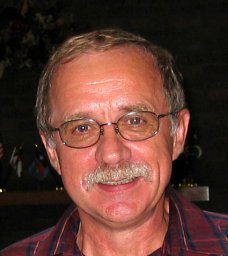 Valery Kubarovsky合作论文数Institute for High Energy Physics36
 Misha Svoiski合作论文数36A. I. Sitnikov合作论文数36A. Ocherashvili合作论文数36A. Evdokimov合作论文数35Bv Razmyslovich合作论文数35Np Kuropatkin合作论文数35E. McCliment合作论文数35Victor Petrovich Maleev合作论文数Department of High Energy Physics, Petersburg Nuclear Physics Institute35
 Igor Konorov合作论文数Physics Department E18, Technische Universität München35
 Michael Procario合作论文数35
 Murray Moinester合作论文数School of Physics and Astronomy;Tel Aviv University;School of Physics and Astronomy, Tel Aviv University35Uwe Dersch合作论文数35S Lance Cooper合作论文数35T. Lungov合作论文数35V. S. Verebryusov合作论文数35James Kilmer合作论文数35
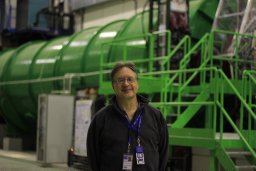 Jurgen Engelfried合作论文数Universitat Heidelberg;Physikalisches Institut;Physikalisches Institut, Universitat35G. V. Davidenko合作论文数35A. G. Dolgolenko合作论文数35I. S. Filimonov合作论文数34V. A. Prutskoi合作论文数34V. A. Victorov合作论文数34VE VISHNYAKOV合作论文数34
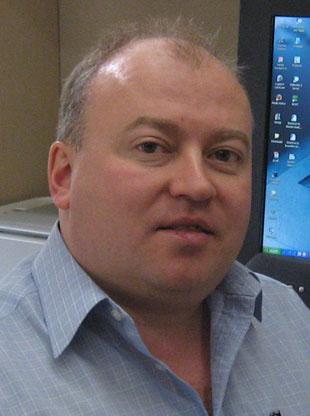 Greg Landsberg合作论文数Department of Physics, Brown University34V. Steiner合作论文数34
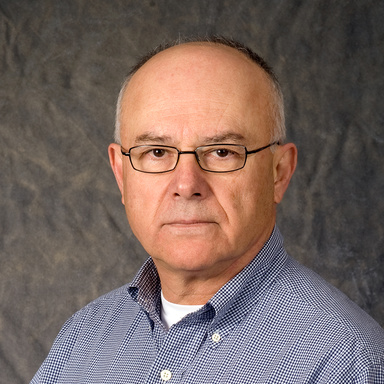 Yasar Onel合作论文数Department of Physics and Astronomy, College of Liberal Arts and Sciences, The University of Iowa34V. V. Molchanov合作论文数34M. Srivastava合作论文数34Maurizio Iori合作论文数Department of Physics, Sapienza University of Rome34Philippe Gouffon合作论文数34
 Ilya Larin合作论文数34I. Giller合作论文数34V. L. Golovtsov合作论文数33L. M. Kochenda合作论文数33L. Emediato合作论文数33M. Luksys合作论文数33V. F. Kurshetsov合作论文数33A. Morelos合作论文数33K. Vorwalter合作论文数33




