5 Лаборатория свойств стекла, Санкт-
Studies of 40Ar and 4He mobility in minerals (performed for isotope geochronometry problems) generally assumed that the migration parameters, obtained for the atoms preserved in a mineral, described the mobility of all atoms that were produced in the mineral, including those that were lost in the past. To test this assumption, an analysis of the U-Th-Li-4He-3He isotope system in amphiboles, separated from alkaline granites of the Ponoi massif, Kola Peninsula, was performed. The retention of He isotopes was determined, i.e., the ratio of the amount of radiogenic He remaining in a mineral to its amount, which should have been accumulated since the formation (metamorphism) of the mineral. It turned out that 36% of 3He and only 14% of 4He were preserved in the mineral. The results of experiments on 3He and 4He migration from amphibole grains during their step wise heating in vacuum were successfully approximated by a diffusion model. However, the parameters, obtained during the simulations, did not allow reproducing the above retentions of He isotopes. The mechanisms of 3He and 4He migration in the past, which have led to such different retentions, differ from the diffusion mechanism, which adequately describes migration of the atoms remaining in the mineral.
Helium isotopes are useful for tracing terrestrial water movement and calculating residence times, which have important implications for radioactive waste disposal and carbon capture and storage projects. Helium concentrations are generally measured directly in water samples; however, this is not always possible. In this scenario, the He concentration equilibrium between pore waters and He accessible volumes (e.g., fluid inclusions, hereafter HAV) in minerals (e.g., quartz) can be utilized to determine He concentrations. In this study, the He partial pressure was measured in HAVs of quartz grains collected from cores of the Kola Super Deep Borehole (KSDB) using isothermal He extraction/saturation experiments. A large fraction of He was released from these samples during the first interval of isothermal heating, indicating a destruction of the unstable HAVs, likely due to decrepitation of fluid inclusions. We present a new approach to calculate He partial pressures using only the He fraction released from the stable HAVs. This approach gives a He partial pressure p(He) of congruent to 1.5 atm at depths of similar to 10 km. When combined with solubility data, this value suggests a high He concentration in the deep pore waters nearby the KSDB, congruent to 1.3 x 10(-6) mol (cc H2O)(-1), indicating a long residence time of He atoms in a deep water - mineral system, close to the age of the regional metamorphism (congruent to 1700 Ma). The He-3/He-4 in the deep KSDB quartz samples (and the pore waters) are similar to 3 x 10(-8), typical of radiogenic He generated in 10 km deep Archean rocks of the KSDB. Importantly, external fluxes are not needed to explain He isotope abundances in rocks, minerals and pore waters at these depths.
The first evidence for a specific role of amphiboles in He isotope balance of crustal rocks was presented in early contributions by Gerling et al. (1971, 1976). Since then it was shown that 4He and 3He concentrations in amphiboles generally exceed those in the host rock samples. Recently amphibole was considered as an important carrier of noble gases and other volatiles components in the course of their subduction into the mantle. This paper presents new data on the balance and mobility of noble gas isotopes and major gas constituents in amphibole separates in order to understand sources and evolution of volatile components of 2666Ma old alkaline granites from Ponoy massif (Kola Peninsula), which underwent metamorphism 1802Ma ago.In the amphiboles 3He, 4He and 40Ar* were dominantly produced in situ due to radioactive decay of the parent isotopes and associated nuclear reactions. A small fraction of He (≈3% of the total) is liberated by crushing and shows 3He/4He ratio indistinguishable from that found by total extraction. The fraction of trapped 40Ar* amounts to ≈40%; both these fractions presumably occupy fluid inclusions and show rather low 4He/40Ar*≈0.1, a factor of ≈ 150 below the production ratio (calculated assuming no loss/gain of the species has happened since the time of metamorphism).3He has been better preserved in amphiboles compared with 4He: the retention parameter (measured amount of He/totally produced amount) for 3He (≈0.4) exceeds that for 4He (≈0.15).He extraction by fast and slow linear heating of amphiboles resulted in different release patterns. The fast heating (within 12 to 40°Cmin−1) revealed a superposition of two peaks. When heating with slower heating rate (below 8°Cmin−1) was applied, the high-temperature peak disappeared (the “disappearing site”). Extractions of He atoms from grain and powder samples at different heating rates have shown that: (1) the “disappearing site” is revealed by the fast heating analyses of different amphibole samples but not only those from the Ponoy massif; (2) amount of He liberated from the “disappearing site” is variable and generally much less than the total amount of He in the sample; (3) analysis of the powder produced in the crushing experiments never reveals the “disappearing site”; the temperature of He release from the powder is lower than that from the mm grain size sample by ≈50°C. Possible explanations of the nature of the “disappearing site” are discussed. However, independently on nature of this effect, repeated gas extractions by heating at different rates would give additional information about structure and its transformation during heating of amphiboles.The simplest explanation of the observed abundances of noble gas isotopes in the amphibole separates from Ponoy granites suggests local production, redistribution and partial loss of noble gases during evolution of the massif.
Continuous monitoring of 220Rn- and 222Rn-activities above and below the soil surface combined with sporadic direct 222Rn-flux measurements is used to quantify diffusive trace gas transport in the air-filled pore space of soil, through the soil-atmosphere interface and in the lowest layers of the atmosphere. In a calm night, 222Rn-activities above the surface first build-up near the ground (z<10 cm) and subsequently with a delay of 2-3 hours at higher altitudes (z<5 m). Knowing (1) the 222Rn-flux from activity profiles measured in soil gas, (2) from direct flux determinations and (3) using information about atmospheric diffusion parameters from 220Rn-activities measured near the surface it is possible to model the temporal evolution of the vertical 222Rn-profiles in a night with stable weather and constant soil conditions. The system operates automatically for extended periods of time in the field enabling a better understanding of transport processes in response to changing environmental conditions (wind, rain, soil humidity).
Concentration profiles of N 2 O in a grassland soil and dynamic response curves to disturbance of the soil concentration (relaxation curves) were measured with a new membrane tube technique. Diffusive properties of the soil were derived from 222 Rn measurements. The mathematical analysis of the relaxation curves yielded N 2 O uptake rates U soil diffusivities D s , scale lengths z * , and production rates P at different levels under the surface. The following ranges were found during 2 days of measurements: D s = (0.4–5) × 10 −7 m 2 s −1 , U = (1–20) × 10 −4 s −1 , z * = 0.7–2.8 cm, and P = 0.02–4.4 ppb s −1 . These values were used to reproduce the measured N 2 O concentration profiles with a one‐dimensional diffusive transport model of N 2 O in the soil air‐filled pore space and to deduce flux profiles. Bidirectional fluxes occurred with small deposition fluxes up to a few ppt ms −1 during intensive growing phases of the grass. Uptake rates were high enough that N 2 O produced at greater depth did not reach the atmosphere.
The temporal evolution of activity profiles of the radon isotope 222Rn in the top 50 cm of soil is used to quantify diffusive gas transport in the air‐filled pore space. Air is continuously collected from gas‐permeable, hydrophobic membrane tubes placed at various depths under the surface and circulated through a high‐sensitivity Rn detector. With a micro‐processor controlled inlet system an automatic monitoring of several levels is possible for extended periods of time with a typical time resolution of one hour. In addition, a new dynamic approach to measure the in‐situ soil diffusivity Ds (m²/s) around the subsurface tubes is presented where the recovery from air injection is evaluated every 3 hours. Within a test period of 3 weeks Ds dropped from 10−6 m²/s to 3 10−7 m²/s at a depth of z=50 cm due to increasing water content of the soil.
Activity concentration profiles of the short‐lived radon isotope 220Rn (half‐life 56 seconds) in the lowest 50 cm above the soil are used to study near‐surface gas transport processes. The experimental data are compared to profiles calculated by solving the one‐dimensional diffusion equation for radioactive atoms with a linear increase of the eddy diffusion coefficient K with altitude according to K(z) = K0 + Kz.Z. The slope KZ in this model and the radon flux from the surface are continuously calculated from the activity measurements in time steps of one hour. Transport times for Rn atoms from an altitude Z1 = 5 cm to an altitude Z2 = 20 cm are typically between one and two minutes in stable meteorological conditions when the friction velocity u* is below 0.1 m/s.
 I. N. Tolstikhin合作论文数5Bernhard E. Lehmann合作论文数4V. V. Kolobov合作论文数4
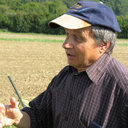 Albrecht Neftel合作论文数Neftel Research Expertise, 3033 Wohlen b. Bern|Climate and Agriculture Group, Agroscope, 8046 Zürich, Switzerland4
 Maria Gannibal合作论文数Kola Scientific Centre, Geological Institute3A. V. Gudkov合作论文数2Martin Lehmann合作论文数2В. И. Скиба合作论文数1
 R. L. Tyne合作论文数Department of Marine Chemistry and Geochemistry, Woods Hole Oceanographic Institution1
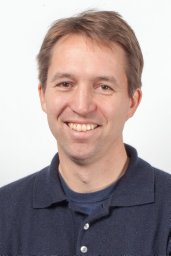 Martin Schmid合作论文数Swiss Federal Institute of Aquatic Science and Technology;Surface Waters-Research and Management;Surface Waters-Research and Management, Swiss Federal Institute of Aquatic Science and Technology1I.L Kamensky合作论文数1I. L. Kamenskii合作论文数1
 Valeriy Romanovich Vetrin合作论文数1
 Peter H. Barry合作论文数School of Physiology and Pharmacology, The University of New South Wales1Andreas Blatter合作论文数1
 Alexander Verchovsky合作论文数1Andreas Gut合作论文数1




