Recently experiments on He extraction from an amphibole by the incremental heating unexpectedly revealed that the He release pattern depends on the heating rate. During slow heating (~4 K·min−1) of the amphibole grains, one smooth peak of the He flux from the mineral was observed; in contrast, during fast heating (~40 K·min−1) an additional sharp peak appeared at a temperature about 750 °C. In order to explain these observations, we developed a model of He diffusion from the amphibole, which allowed the calculated He fluxes from the mineral to be reconciled with those observed. From the modelling we derived: (i) the helium diffusion domain size distribution, and evolution of the distribution in the course of incremental heating; (ii) occurrence of the tensile stresses, operating under enhanced temperatures above 700 °C. The stresses are different in sites with the different local thermal expansion of the crystalline lattice and they increase the He diffusion flux. The model can be applied to other minerals (materials).
The δ2H and δ18O values of the atmospheric precipitations in the Khibins vary within the range –147 ≤ δ2H ≤ –37‰, –20 ≤ δ18О ≤ –4‰ and are close to the global line of the precipitations for the northern hemisphere; the light values (with a positive deuterium excess) are typical of snow, while the heavy values are typical of rains. The data on the isotopic composition of water in open water bodies and groundwaters suggest their formation from the precipitations. Their flow (and subsurface migration) is accompanied by mixing of snowmelt and rain water; the efficiency of mixing can be evaluated by a decrease in the variation range of the values of δ2H and δ18О. According to isotopic data, the water of Lake Imandra, the major water body in the region, has formed through mixing of snowmelt and rain water in a proportion close to 1 : 1.
Abstract As you walk through life, you meet many people. In extremely rare cases, such an encounter changes your life. Meeting with Jan Kramers certainly changed my - an encounter that was followed by about 20 years of communication and collaboration. I thank my destiny for connecting me with Jan Kramers, for the happiness of interacting and working with such a great person and scientist. In so doing, I am also expressing the gratitude of many colleagues and authors of articles in this issue who have been treated with respect by Jan and have benefitted from his patient teaching and his hands-on training, from the splendid creative atmosphere inspired by Jan.
5 Лаборатория свойств стекла, Санкт-
The geophysical and geochemical indicators of the ascending heat and mass flow in the continental crust—conductive heat flow through the surface of the crust and the isotopic composition of helium in freely circulating underground fluids—are considered. The tectonic ordering of the heat flow and the factors responsible for the dispersion in its density ( q ) are discussed. The sources and reservoirs of terrestrial helium are characterized; the stability of 3 Не/ 4 Не ratio in the geological section along the depth and in time is demonstrated; linear and areal variations in this ratio on different scales are revealed and their similarity with heat flow distribution is established. The correlations of helium isotopic composition in freely circulating underground fluids with the conductive heat flow density and helium composition in gases in the regions of recent volcanism as well as with strontium composition in young lavas indicate helium transport from the mantle to the crust by the magmatic melts.
Studies of 40Ar and 4He mobility in minerals (performed for isotope geochronometry problems) generally assumed that the migration parameters, obtained for the atoms preserved in a mineral, described the mobility of all atoms that were produced in the mineral, including those that were lost in the past. To test this assumption, an analysis of the U-Th-Li-4He-3He isotope system in amphiboles, separated from alkaline granites of the Ponoi massif, Kola Peninsula, was performed. The retention of He isotopes was determined, i.e., the ratio of the amount of radiogenic He remaining in a mineral to its amount, which should have been accumulated since the formation (metamorphism) of the mineral. It turned out that 36% of 3He and only 14% of 4He were preserved in the mineral. The results of experiments on 3He and 4He migration from amphibole grains during their step wise heating in vacuum were successfully approximated by a diffusion model. However, the parameters, obtained during the simulations, did not allow reproducing the above retentions of He isotopes. The mechanisms of 3He and 4He migration in the past, which have led to such different retentions, differ from the diffusion mechanism, which adequately describes migration of the atoms remaining in the mineral.
The similarity of U-Th-4He age of meliphanite and the age of regional metamorphism (1800 Ma) seems to indicate a good retention of radiogenic 4He in the mineral, but contradicts with the experience of U-Th-4He dating. To analyze this result 3He concentration was measured, which appeared to be very low, about 2 % of the totally produced 3He. Radiogenic 3,4He isotopes occupier radiation tracks. Intersections of these tracks with cleavage planes provide migration of He atoms from the mineral and 4He, produced due to U and Th decay, should be almost completely lost. Instead, meliphanite contains trapped He occurring in specific cavities of the crystalline structure. Extraction of He isotopes from meliphanite by its step-wise heating in vacuum confirmed this conclusion. Using U-Th-4He system for dating (as it is often done in thermochronology) can lead to incorrect results. Both isotopes, 3He and 4He, should be used to identify the origin of helium in minerals.
Discrete model (local chains approach) reveals the influence of heterogeneity of structure on the movement of a helium atom in the form of a soliton Frenkel-Kontorova. The transition to the field form of this equation - to the Klein-Fock-Gordon equation or, simply, to the sine-Gordon equation, allows us to calculate the diffusion coefficient of such a soliton, taking into account the collective nature of the movement of the atom and the accompanying reversible displacements of the atoms of the environment through the medium in the form of a soliton and taking into account the details of the structure of nanostructures.
Helium isotopes are useful for tracing terrestrial water movement and calculating residence times, which have important implications for radioactive waste disposal and carbon capture and storage projects. Helium concentrations are generally measured directly in water samples; however, this is not always possible. In this scenario, the He concentration equilibrium between pore waters and He accessible volumes (e.g., fluid inclusions, hereafter HAV) in minerals (e.g., quartz) can be utilized to determine He concentrations. In this study, the He partial pressure was measured in HAVs of quartz grains collected from cores of the Kola Super Deep Borehole (KSDB) using isothermal He extraction/saturation experiments. A large fraction of He was released from these samples during the first interval of isothermal heating, indicating a destruction of the unstable HAVs, likely due to decrepitation of fluid inclusions. We present a new approach to calculate He partial pressures using only the He fraction released from the stable HAVs. This approach gives a He partial pressure p(He) of congruent to 1.5 atm at depths of similar to 10 km. When combined with solubility data, this value suggests a high He concentration in the deep pore waters nearby the KSDB, congruent to 1.3 x 10(-6) mol (cc H2O)(-1), indicating a long residence time of He atoms in a deep water - mineral system, close to the age of the regional metamorphism (congruent to 1700 Ma). The He-3/He-4 in the deep KSDB quartz samples (and the pore waters) are similar to 3 x 10(-8), typical of radiogenic He generated in 10 km deep Archean rocks of the KSDB. Importantly, external fluxes are not needed to explain He isotope abundances in rocks, minerals and pore waters at these depths.
Труды Ферсмановской научной сессии ГИ КНЦ
Abundances of radiogenic He and Ar isotopes, observed in ground waters of the Permian-Carboniferous terrigenous sediments (PCT) in Northern Switzerland, exceed those in the overlaying (Muschelkalk) and underlying (Crystalline basement) aquifers, eliminating external sources of these species. In this case a comparison of the observed abundances with those in situ generated sheds light on mobility of noble gases generated in the PCT.Detailed studies of the parent element and He isotope concentrations in the PCT rocks, mineral separates, pore and ground waters along with the data on γ-logging and porosity allow He isotope production and redistribution in the PCT rock-water system to be understood and quantified. The PCT shales generate most of 3He and 4He and both isotopes are almost completely released from the shales into pore space and migrate either into the aquifers with movable waters and further out of the PCT, or into gas-fluid inclusions of the rock forming minerals, quartz and plagioclase.Here we present a He concentration profile, based on: (i) helium measured concentrations in ground water samples from 5 aquifers available within the cross section studied; (ii) helium concentrations (in 15 PCT pore water “samples”), derived from the He partial pressure in gas-fluid inclusions, recovered by special extraction/saturation experiments.In order to estimates the rates of He migration through the PCT, we compare the produced and observed abundances within the frame of 1D diffusion model. Only two parameters, the diffusion coefficient for the whole sequence, DALL = 4.1 × 10⁻³ m2 year−1, and the rate of He removal from the crystalline aquifers, θCR ≈ 1.4 × 10⁻⁶ year−1, are required to obtained a good agreement between the observed and calculated He concentrations in PCT waters: the minimal square deviations are ≈(2 to 3) × 10−8 mol cm−3 H2O, comparable with the accuracy of measurements. The following parameters were derived from the modeling: the reduction factor DALL/D0 = 0.013; the He diffusion fluxes into the overlaying Muschelkalk and underlying Crystalline aquifers, FMU ≈ 1.4 × 10⁻⁷ mol m−2 year−1 and FCR = 0.24 × 10⁻⁷ mol m−2 year−1, respectively. From these values we calculated the mean helium residence times in PCT, <τPCT> ≈ 120 Ma, and in Muschelkalk aquifer, <τMU> ≈ 6 ka. The relationships between He diffusivities of the PCT and the underlying Crystalline basement are discussed. We further compare our results with other estimates of He mobility in low-permeable sediments.
The paper presents newly acquired data on the budget and mobility of isotopes of noble gases in samples of amphibole, a mineral commonly characterized by relatively high He concentrations compared to other rock-forming minerals of Earth’s crust. In the amphibole samples from alkaline granites of the Ponoy Massif, Kola Peninsula, 3He, 4Не, and 40Ar* isotopes were mostly radiogenic, generated by radioactive decay and nuclear reactions. Retention ability of two helium isotopes was found to be different: since the time of metamorphic event approximately 38% 3Не and only approximately 16% 4Не have been preserved. A small He fraction (≈3% of its total concentration) and a larger part of radiogenic 40Ar* (≈35%) are hosted in fluid inclusions. Relatively high 3Не/4He ratios (up to ≈1 × 10⁻⁶) in the amphibole were caused by the high Li concentrations and better preservation of 3Не. The 3He/4He ratios in helium extracted from the samples by melting and crushing are indistinguishable, while the 4He/40Ar* ratios in the fluid inclusions (opened by sample crushing) (~0.6) are notably lower than those in the bulk samples (melting) (5) and those calculated from the U, Th, and K concentrations (15). Two He release peaks were observed on the curves of rapid (12–40°C min–1) liner heating of the samples. At a lower heating rate (~5°C min–1), the high-temperature peak disappeared. Further investigation of this peculiarity of He migration has shown that (1) it is also typical of some other amphibole samples (not only those from Ponoy granites); (2) He amount in the “disappearing” peak varies from sample to sample and also depends on the heating rate and grain size (powdered samples with an average grain size of ≤50 µm did not yield the second peak, regardless of the heating rate); (3) the temperature of He release from powdered samples is approximately 50°C lower than that for mineral grains; and (4) preliminary long-term heating of the sample to 400°C (a temperature at which He starts to diffuse from the amphibole structure) results in a significant decrease in the low-temperature peak and a shift of the “disappearing” peak toward lower temperatures. The probable reasons for this phenomenon are discussed.
In accord with the standard Earth accretion scenario, the late accretion supervened the last collision with a massive proto-planet, segregation of the core, and (partial) solidification of the magma ocean. These processes took place approximate to 40 Ma after Sun formation or somewhat later. Traces of the processes and respective materials have been preserved as specific elemental and isotopic abundances in the earth's mantle. Three groups of chemical elements, showing rather different behavior, allow the principal processes and materials to be restored: (i) involatile siderophile elements and the Hf-182-W-182 and Pt-190-Re-187-Os-186,Os-187 isotopic systematics highlight the time scale of core formation, the late veneer materials, and post-core-formation interactions between the mantle and the core; (ii) involatile lithophile incompatible elements and the Sm-147-Nd-143 isotopic systematics indicate the early differentiation of the silicate Earth; Lu-176-Hf-176 one recorded the early crustal processes; (iii) highly volatile elements, noble gases, and the U-238-U-235-Th-232-He-Ne and Pu-244-U-238-I-129-Xe systematics trace the accreting materials and the rate of mantle mixing and degassing. Recently proposed interpretations of this last systematics appear to be precarious and are particularly discussed in this contribution. During the late accretion a terrestrial regolith, including chondritic and solar-wind-irradiated materials, was rapidly accumulating on the surface of the early thick basaltic crust, enriched in incompatible elements. This early crust had not been preserved. Its overturn(s) into the mantle during several 100th Ma after Sun formation and (partial) isolation from the mantle convection allow all principal observations, related to the informative systematics mentioned above, to be satisfied, providing the transfer of the crust®olith "cake" was not accompanying by fractionation and degassing, in contrast to present-day slab subduction.
The first evidence for a specific role of amphiboles in He isotope balance of crustal rocks was presented in early contributions by Gerling et al. (1971, 1976). Since then it was shown that 4He and 3He concentrations in amphiboles generally exceed those in the host rock samples. Recently amphibole was considered as an important carrier of noble gases and other volatiles components in the course of their subduction into the mantle. This paper presents new data on the balance and mobility of noble gas isotopes and major gas constituents in amphibole separates in order to understand sources and evolution of volatile components of 2666Ma old alkaline granites from Ponoy massif (Kola Peninsula), which underwent metamorphism 1802Ma ago.In the amphiboles 3He, 4He and 40Ar* were dominantly produced in situ due to radioactive decay of the parent isotopes and associated nuclear reactions. A small fraction of He (≈3% of the total) is liberated by crushing and shows 3He/4He ratio indistinguishable from that found by total extraction. The fraction of trapped 40Ar* amounts to ≈40%; both these fractions presumably occupy fluid inclusions and show rather low 4He/40Ar*≈0.1, a factor of ≈ 150 below the production ratio (calculated assuming no loss/gain of the species has happened since the time of metamorphism).3He has been better preserved in amphiboles compared with 4He: the retention parameter (measured amount of He/totally produced amount) for 3He (≈0.4) exceeds that for 4He (≈0.15).He extraction by fast and slow linear heating of amphiboles resulted in different release patterns. The fast heating (within 12 to 40°Cmin−1) revealed a superposition of two peaks. When heating with slower heating rate (below 8°Cmin−1) was applied, the high-temperature peak disappeared (the “disappearing site”). Extractions of He atoms from grain and powder samples at different heating rates have shown that: (1) the “disappearing site” is revealed by the fast heating analyses of different amphibole samples but not only those from the Ponoy massif; (2) amount of He liberated from the “disappearing site” is variable and generally much less than the total amount of He in the sample; (3) analysis of the powder produced in the crushing experiments never reveals the “disappearing site”; the temperature of He release from the powder is lower than that from the mm grain size sample by ≈50°C. Possible explanations of the nature of the “disappearing site” are discussed. However, independently on nature of this effect, repeated gas extractions by heating at different rates would give additional information about structure and its transformation during heating of amphiboles.The simplest explanation of the observed abundances of noble gas isotopes in the amphibole separates from Ponoy granites suggests local production, redistribution and partial loss of noble gases during evolution of the massif.
The measurement of 3H, 3He, 4He, and 20Ne concentrations in waters at the Tsentralny pumping station (southern Khibiny massif, Kola Peninsula) showed that they are a mixture of young (>90%) and old (<10%) waters. The excess noble gas component from the young water is caused by the dissolution of air bubbles trapped during recharge in the unsaturated zone. The 3H-3He(3H) age of the young water is 21 ± 1.5 yr. The U-Th-4He age of the old water is about 50 ka. The high concentrations of helium and some toxic elements (e.g., aluminum) in this old water are caused by dissolution of the alkaline rocks of the Khibiny massif as a result of water-rock interaction.
 Jan Kramers合作论文数University of Johannesburg29
 I.L Kamensky合作论文数19
 Maria Gannibal合作论文数Kola Scientific Centre, Geological Institute19Bernhard E. Lehmann合作论文数14Yu. A. Shukolyukov合作论文数13
 Valeriy Romanovich Vetrin合作论文数12Hh Loosli合作论文数11A. V. Gudkov合作论文数10I. V. Tokarev合作论文数Intitute of Precambrian Geology, RAS 199164 St.Petersburg Russia9V. A. Nivin合作论文数9B. Z. Pevzner合作论文数8В. И. Скиба合作论文数7
 Bernard Marty合作论文数Centre de Recherches Petrographiques et Geochimiques, Universite de Lorraine7G. Sh. Ashkinadze合作论文数7V. V. Kolobov合作论文数7
 H.Niklaus Waber合作论文数6S. Tarakanov合作论文数6S. P. Orlov合作论文数6С.В. Тараканов合作论文数5Ivan Kamensky合作论文数5
 B. G. Polyak合作论文数5I. L. Kamenskii合作论文数5S. V. Ikorsky合作论文数5
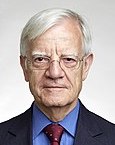 Albrecht W. Hofmann合作论文数Geochemistry Department, Max Planck Institute for Chemistry;Columbia University5
 R. Purtschert合作论文数Physics Institute, University of Bern4Evgenii V Kalashnikov合作论文数4V. Skiba合作论文数4E. G. Balaganskaya合作论文数4W. Aeschbach-Hertig合作论文数3P. S. Trukhlyaev合作论文数3
 Andreas Gautschi合作论文数3R Kipfer合作论文数3V. I. Kononov合作论文数3V. T. Lebedev合作论文数Petersburg Nuclear Physics Institute, Russian Academy of Sciences3
 Alexander Verchovsky合作论文数3MA Gannibal合作论文数2A Love合作论文数2
 Andrew Herczeg合作论文数College of Science and Engineering, Flinders University2Daniel Demaiffe合作论文数2
 Dmitry A. Novikov合作论文数Trapeznikov Institute of Control Sciences, Russian Academy of Sciences2L.M. Ploschansky合作论文数2E. K. Gerling合作论文数2
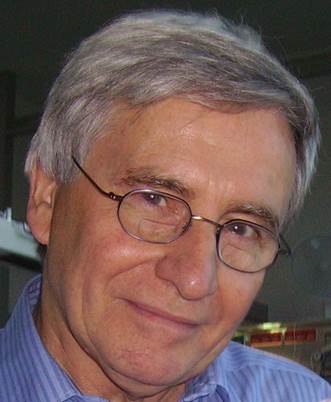 Kutschera, Walter合作论文数University of Vienna2M. D. Khutorskoy合作论文数2
 M. Pekala合作论文数Department of Chemistry, University of Warsaw2
 Urs Beyerle合作论文数Water Resources and Drinking Water, EAWAG2
 Dominik Weiss合作论文数Department of Earth Science & Engineering, Faculty of Engineering, Imperial College London2
 Philippe Collon合作论文数Department of Physics, University of Notre Dame2M. V. Lebedev合作论文数2




