Although quasiparticles in flat bands have zero group velocity, they can display an anomalous velocity due to the quantum geometry. We address the thermal and thermoelectric transport in flat bands in the clean limit with a small amount of broadening due to inelastic scattering. We derive general Kubo formulas for flat bands in the DC limit up to linear order in the broadening and extract expressions for the thermal conductivity, the Seebeck and Nernst coefficients. We show that the Seebeck coefficient for flat Chern bands is topological up to second order corrections in the broadening. We identify thermal and thermoelectric transport signatures for two generic flat Chern bands and also for the generalized flattened Lieb model, which describes a family of three equally spaced flat Chern bands where the middle one is topologically trivial. Finally, we address the saturation of the quantum metric lower bound for a general family of Hamiltonians with an arbitrary number of flat Chern bands corresponding to SU(2) coherent states. We find that only the extremal bands in this class of Hamiltonians saturate the bound, provided that the momentum dependence of their Hamiltonians is described by a meromorphic function.
The in-plane and out-of-plane superconducting stiffness of La_{1.83}Sr_{0.17}CuO_4La1.83Sr0.17CuO4 rings appear to vanish at different transition temperatures, which contradicts thermodynamical expectation. In addition, we observe a surprisingly strong dependence of the out-of-plane stiffness transition on sample width. With evidence from Monte Carlo simulations, this effect is explained by very small ratio \alphaα of inter-plane over intra-plane Josephson couplings. For three dimensional rings of millimeter dimensions, a crossover from layered three dimensional to quasi one dimensional behavior occurs at temperatures near the thermodynamic transition temperature {T_{c}}Tc, and the out-of-plane stiffness appears to vanish below {T_{c}}Tc by a temperature shift of order \alpha L_a/{\xi^{\parallel}}αLa/ξ∥, where L_a/{\xi^{\parallel}}La/ξ∥ is the sample’s width over coherence length. Including the effects of layer-correlated disorder, the measured temperature shifts can be fit by a value of \alpha=4.1× 10^{-5}α=4.1×10⁻⁵, near {T_{c}}Tc, which is significantly lower than its previously measured value near zero temperature.
Conductivities and Hall coefficients of two dimensional hard core bosons are calculated using the thermodynamic expansions of Kubo formulas. At temperatures above the superfluid transition, the resistivity rises linearly and is weakly dependent on boson filling. The zeroth order Hall coefficient diverges toward zero and unit fillings, and reverses its sign at half filling. The correction terms, which are calculated up to fourth (Krylov) orders, do not alter this behavior. The high temperature thermal Hall coefficient is reversed relative to the electric Hall coefficient. We discuss relevance of HCB transport to the metallic state of short coherence length superconductors.
This report reviews recent progress in computing Kubo formulas for general interacting Hamiltonians. The aim is to calculate electric and thermal magneto-conductivities in strong scattering regimes where Boltzmann equation and Hall conductivity proxies exceed their validity. Three primary approaches are explained. 1. Degeneracy-projected polarization formulas for Hall-type conductivities, which substantially reduce the number of calculated current matrix elements. These expressions generalize the Berry curvature integral formulas to imperfect lattices. 2. Continued fraction representation of dynamical longitudinal conductivities. The calculations produce a set of thermodynamic averages, which can be controllably extrapolated using their mathematical relations to low and high frequency conductivity asymptotics. 3. Hall-type coefficients summation formulas, which are constructed from thermodynamic averages. The thermodynamic formulas are derived in the operator Hilbert space formalism, which avoids the opacity and high computational cost of the Hamiltonian eigenspectrum. The coefficients can be obtained by well established imaginary-time Monte Carlo sampling, high temperature expansion, traces of operator products, and variational wavefunctions at low temperatures. We demonstrate the power of approaches 1--3 by their application to well known models of lattice electrons and bosons. The calculations clarify the far-reaching influence of strong local interactions on the metallic transport near Mott insulators. Future directions for these approaches are discussed.
The Hall coefficient of the strongly interacting square lattice Hubbard model is calculated for temperatures between the antiferromagnetic interaction and the Mott gap scales. The leading order thermodynamic formula is evaluated for all doping concentrations. Second-order corrections of the thermodynamic formula are calculated and found to be negligible. The Hall coefficient diverges toward the Mott insulator. Below 45% doping the Hall sign is reversed relative to band structure-based Boltzmann’s equation. These results elucidate the effects of the Mott insulator on the charge carriers and their non-Fermi liquid transport.
The in-plane and out-of-plane superconducting stiffness appear to vanish at different transition temperatures, which contradicts thermodynamical expectation. In addition, we observe a surprisingly strong dependence of the out-of-plane stiffness transition on sample width. With evidence from Monte Carlo simulations, this effect is explained by a crossover from three dimensions into quasi one dimensional behavior of the finite sample. Due to an essential singularity at the thermodynamic transition temperature $T_c$, the out-of-plane stiffness appears to vanish below $T_c$ by an amount which is proportional to the inverse width. A fit of our prediction to the data is used to determine the value of the anisotropy parameter. Analogy to studies of helium superfluids in nanopores is made.
The Hall coefficient exhibits anomalous behavior in lightly doped Mott insulators. For strongly interacting electrons its computation has been challenged by analytical and numerical obstacles. We calculate the leading contributions in the recently derived thermodynamic formula for the Hall coefficient. We obtain its doping and temperature dependence for the square lattice tJ-model at high temperatures. The second order corrections are evaluated to be negligible. Quantum Monte Carlo sampling extends our results to lower temperatures. We find a divergence of the Hall coefficient toward the Mott limit and a sign reversal relative to Boltzmann equation's weak scattering prediction. The Hall current near the Mott phase is carried by a low density of spin-entangled vacancies, which should constitute the Cooper pairs in any superconducting phase at lower temperatures.
We discuss an apparent difficulty in computing the radiation emitted by a system undergoing Lindblad evolution. The difficulty is resolved by viewing the problem as Born rule for conserved currents defined by the appropriate terms in the adjoint Lindbladian. In Heralding Alice prepares Bob's system in a state that mirrors her test. We show that heralding is consistent with no-cloning. This follows from the observation that heralding is not a completely positive map.
Kubo formulas for Hall, transverse thermoelectric, and thermal Hall conductivities are simplified into on-shell commutators of degeneracy projected polarizations. The new expressions are computationally economical, and apply to general Hamiltonians without a gap restriction. We show that Hall currents in open boundaries are carried by gapless chiral excitations. Extrapolation of finite lattice calculations to the dc-thermodynamic limit is demonstrated for a disordered metal.
A recently developed formula for the Hall coefficient [A. Auerbach, Phys. Rev. Lett. 121, 66601 (2018)] is applied to nodal line and Weyl semimetals (including graphene), and to spin-orbit split semiconductor bands in two and three dimensions. The calculation reduces to a ratio of two equilibrium susceptibilities, where corrections are negligible at weak disorder. Deviations from Drude's inverse carrier density are associated with band degeneracies, Fermi surface topology, and interband scattering. Experiments which can measure these deviations are proposed.
The standard Kubo formulas for Hall-type conductivities are generally difficult to calculate for gapless, disordered and strongly correlated Hamiltonians. Here they are transformed into more computable on-shell formulas, devoid of the divergent magnetization corrections of thermal Hall conductivities. The on-shell formulas reveal the essential roles of degeneracy-projected polarizations and gapless Hall-current carrying excitations. A numerical extrapolation to the DC limit is demonstrated for the disordered square lattice model.
Magnetotransport theory of layered superconductors in the flux flow steady state is revisited. Longstanding controversies concerning observed Hall sign reversals are resolved. The conductivity separates into a Bardeen-Stephen vortex core contribution, and a Hall conductivity due to moving vortex charge. This charge, which is responsible for Hall anomaly, diverges logarithmically at weak magnetic field. Its values can be extracted from magetoresistivity data by extrapolation of vortex core Hall angle from the normal phase. Hall anomalies in YBCO, BSCCO, and NCCO data are consistent with theoretical estimates based on doping dependence of London penetration depths. In the appendices, we derive the Streda formula for the hydrodynamical Hall conductivity, and refute previously assumed relevance of Galilean symmetry to Hall anomalies.
Exact formulas for the Hall coefficient [A. Auerbach, Phys. Rev. Lett. 121, 066601 (2018).], modified Nernst coefficient, and thermal Hall coefficient of metals are derived from the Kubo formula. These coefficients depend exclusively on equilibrium susceptibilities, which are significantly easier to compute than conductivities. For weak isotropic scattering, Boltzmann theory is recovered. For strong scattering, well-controlled methods for thermodynamic functions are available. As an example, the Hall sign reversals of lattice bosons near the Mott insulator phases are determined. Appendices include mathematical supplements and instructions for calculating the coefficients.
An exact formula for the temperature dependent Hall number of metals is derived. It is valid for nonrelativistic fermions or bosons, with an arbitrary potential and interaction. This dc transport coefficient is proven to (remarkably) depend solely on equilibrium susceptibilities, which are more amenable to numerical algorithms than the conductivity. An application to strongly correlated phases is demonstrated by calculating the Hall sign in the vicinity of Mott phases of lattice bosons.
The superconductor-insulator transition (SIT) is an excellent example of a quantum phase transition at zero temperature, dominated by quantum fluctuations. These are expected to be very prominent close to the quantum critical point. So far, most of the experimental studies of the SIT have concentrated on transport properties and tunneling experiments that provide indirect information on criticality close to the transition. Here we present an experiment uniquely designed to study the evolution of quantum fluctuations through the quantum critical point. We utilize the Nernst effect, which has been shown to be effective in probing superconducting fluctuation. We measure the Nernst coefficient in amorphous indium oxide films tuned through the SIT and find a large signal on both the superconducting and the insulating sides, which peaks close to the critical point. The transverse Peltier coefficient α_{xy}, which is the thermodynamic quantity extracted from these measurements, follows quantum critical scaling with critical exponents ν∼0.7 and z∼1. These exponents are consistent with a clean X-Y model in 2+1 dimensions.
The doped 1D Kondo Lattice describes complex competition between itinerant and magnetic ordering. The numerically computed wave vector-dependent charge and spin susceptibilities give insights into its low-energy properties. Similar to the prediction of the large N approximation, gapless spin and charge modes appear at the large Fermi wave vector. The highly suppressed spin velocity is a manifestation of "heavy" Luttinger liquid quasiparticles. A low-energy hybridization gap is detected at the small (conduction band) Fermi wave vector. In contrast to the exponential suppression of the Fermi velocity in the large-N approximation, we fit the spin velocity by a density-dependent power law of the Kondo coupling. The differences between the large-N theory and our numerical results are associated with the emergent magnetic Ruderman-Kittel-Kasuya-Yosida interactions.
For weakly disordered fractional quantum Hall phases, the nonlinear photoconductivity is related to the charge susceptibility of the clean system by a Floquet boost. Thus, it may be possible to probe collective charge modes at finite wave vectors by electrical transport. Incompressible phases, irradiated at slightly above the magnetoroton gap, are predicted to exhibit negative photoconductivity and zero resistance states with spontaneous internal electric fields. Nonlinear conductivity can probe composite fermions' charge excitations in compressible filling factors.
The superconductor–insulator transition (SIT) is considered an excellent example of a quantum phase transition that is driven by quantum fluctuations at zero temperature. The quantum critical point is characterized by a diverging correlation length and a vanishing energy scale. Low-energy fluctuations near quantum criticality may be experimentally detected by specific heat, c p , measurements. Here we use a unique highly sensitive experiment to measure c p of two-dimensional granular Pb films through the SIT. The specific heat shows the usual jump at the mean field superconducting transition temperature marking the onset of Cooper pairs formation. As the film thickness is tuned towards the SIT, is relatively unchanged, while the magnitude of the jump and low-temperature specific heat increase significantly. This behaviour is taken as the thermodynamic fingerprint of quantum criticality in the vicinity of a quantum phase transition.
 Daniel P. Arovas合作论文数Department of Physics, University of California, San Diego22
 Snir Gazit合作论文数Dept Phys, Univ Calif Berkeley10
 Kathryn Levin合作论文数James Franck Institute;Department of Physics;Department of Physics, James Franck Institute9
 Achim Rosch合作论文数Institute for Theoretical Physics, University of Cologne9
 Netanel Lindner合作论文数Physics Department, Technion – Israel Institute of Technology8U. Zulicke合作论文数7
 Ilia Khait合作论文数Technion, Phys Dept, IL-32000 Haifa, Israel7
 Herbert A. Fertig合作论文数Department of Physics, The College of Arts + Sciences, Indiana University Bloomington7
 Natan Andrei合作论文数Department of Physics and Astronomy, School of Arts and Sciences, Rutgers, The State University of New Jersey7
 Ehud Altman合作论文数Department of Physics, University of California, Berkeley6
 Abhisek Samanta合作论文数Phys Dept, Technion5
 Sauri Bhattacharyya合作论文数HBNI, Harish Chandra Res Inst4
 Ganpathy Murthy合作论文数4G. Venketeswara Pai合作论文数4D. Shahar合作论文数Department of Condensed;Weizmann Institute of Science;Department of Condensed, Weizmann Institute of Science4A. Frydman合作论文数3Y. Gefen合作论文数3
 Steven H. Simon合作论文数Somerville College, University of Oxford3
 Shivaji Sondhi合作论文数Rudolf Peierls Centre for Theoretical Physics, University of Oxford;Department of Physics, University of Oxford3
 Steven Kivelson合作论文数Department of Physics, Stanford University;Stanford Institute for Materials and Energy Sciences, Stanford University3G. Koren合作论文数3Emil Polturak合作论文数3
 Daniel C. Tsui (崔琦)合作论文数Peking University3
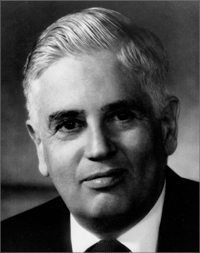 Robert Gomer合作论文数Department of Chemistry, University of Chicago;James Frank Institute, University of Chicago3
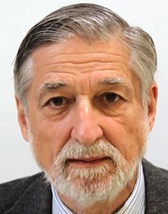 Bertrand I. Halperin合作论文数Department of Physics, Harvard University3A. V. Sologubenko合作论文数3
 Amit Keren合作论文数Physics Department;Technion-Israel Institute of Technology;Physics Department, Technion-Israel Institute of Technology3
 Norman Y. Yao合作论文数Department of Physics, Harvard University3Paul M. Goldbart合作论文数3
 Amir Yacoby合作论文数Department of Physics, Harvard University;Department of Applied Physics, Harvard JohnA. Paulson School of Engineering and Applied Sciences, Harvard University;University of Waterloo3Ilya G. Finkler合作论文数3L. Patlagan合作论文数3
 Jan Genossar合作论文数3Ju H. Kim合作论文数3
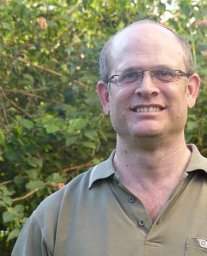 Yaacov E. Kraus合作论文数Department of Condensed;Weizmann Institute of Science;Department of Condensed, Weizmann Institute of Science3M D Phillips合作论文数2Noga Bashan合作论文数2Itay Mangel合作论文数2
 Phil Allen合作论文数Department of Physics and Astronomy, College of Arts and Sciences, Stony Brook University2Y. Mor合作论文数2
 Karl Freed合作论文数Department of Chemistry, University of Chicago2B. Fisher合作论文数2Shmuel Fishman合作论文数Department of Physics2
 V Ravi Chandra合作论文数Centre for High Energy Physics;Indian Institute of Science;Centre for High Energy Physics, Indian Institute of Science2Moshe Havilio合作论文数Physics Department2Milica V. Milovanovic合作论文数2
 Victoria Mazo合作论文数School of Physics;Faculty of Exact Sciences;Tel Aviv University;School of Physics, Tel Aviv University2Rivka Carmi合作论文数2Leonid P. Pryadko合作论文数Department of Physics;University of California;Department of Physics, University of California , Riverside2




