Strathprints is designed to allow users to access the research output of the University of Strathclyde. Unless otherwise explicitly stated on the manuscript, Copyright © and Moral Rights for the papers on this site are retained by the individual authors and/or other copyright owners. Please check the manuscript for details of any other licences that may have been applied. You may not engage in further distribution of the material for any profitmaking activities or any commercial gain. You may freely distribute both the url (https://strathprints.strath.ac.uk/) and the content of this paper for research or private study, educational, or not-for-profit purposes without prior permission or charge.
We derive the complete photon count statistics of an interferometer based on two beam splitters. As a special case we consider a joint intensity–electric field measurement. Our approach is based on the transformation properties of state vectors as well as field operators at a beam splitter.
S. Ballmer, 13 B. C. Barish, 12 C. Barker, 14 D. Barker,14 M. Barnes, 12, b B. Barr,35 M. A. Barton,12 K. Bayer,13 R. Beausoleil, 26, c K. Belczynski,23 R. Bennett, 35, d S. J. Berukoff, 1, e J. Betzwieser, 13 B. Bhawal,12 I. A. Bilenko,20 G. Billingsley,12 E. Black,12 K. Blackburn, 12 L. Blackburn, 13 B. Bland,14 B. Bochner, 13, f L. Bogue, 12 R. Bork,12 S. Bose, 40 P. R. Brady, 39 V. B. Braginsky, 20
We report an ultra-narrow linewidth light source applicable for a frequency standard in the ultraviolet. The laser is a Nd:YAG laser that emits at 946 nm with 300-mW output power. It is locked to a high-finesse cavity. The minimum Allan deviation is 1.3×10⁻¹⁴ for an integration time of 1 s, which corresponds to a laser linewidth of 2.8 Hz. The cavity drift is measured by a frequency comb and a single-ion spectrum for different time scales. In order to investigate broadening mechanisms due to the fiber transport and doubling systems, the laser light is frequency doubled with two independent systems and compared. The measured minimum beat-note between the two laser fields is less than 1 Hz. By carrying out a high-resolution scan on a trapped single indium ion, we observe a linewidth of 260 Hz on the ion clock transition. Possible reasons for the broadening effects are discussed.
We report on an improved absolute frequency measurement of the 5s 2 1 S 00-5s5p 3 P 0 narrowline clock transition at 236.5 nm, for a single, trapped, and laser-cooled 115In ion. Using a narrowline laser as the local oscillator, a linewidth of 43 Hz for the transition is resolved. The uncertainty of the transition frequency’s centroid is 18 Hz, leading to a fractional uncertainty of 1.4 × 10⁻¹⁴. For absolute frequency measurement, we use an optical frequency comb locked to a cesium clock as the reference. The transition frequency is found to be 1267402452900967(63) Hz, averaged over 13 days of separate measurements. The accuracy is about 5.0 × 10⁻¹⁴. We discuss possibilities for further improvement.
We measure the frequency of the 5s2 1S0–5s5p 3P0 narrowline clock transition at 236.5nm, for a single, trapped and laser cooled 115In+ ion. In the experiment, an ultra-narrow linewidth laser (<1.34Hz at 3s integration time) is used to interrogate the clock transition for high resolution spectroscopy. A linewidth of 43Hz of the clock transition is observed. The uncertainty of the line centroid is 18Hz, leading to a fractional uncertainty of 1.4×10⁻¹⁴. The frequency is measured by using an optical frequency comb referenced to a cesium clock. The transition frequency is found to be 1, 267, 402, 452, 901.265 (256) kHz, averaged over 13 days of separate measurement. The accuracy of 2.35×10⁻¹³ is due to the reference cesium clock calibrated against UTC time. We discuss ways for further improvements.
With a single trapped calcium ion, strongly localized in an optical resonator, we have realized a cavity-QED system operating under continuous coupling conditions. Ion and field interact via cavity-assisted Raman pulses, applied between the S1/2 ground state and the metastable D3/2 state. We have studied the long-term stability of this interaction at the single- photon level by monitoring the emission from the cavity output and analysing its fluctuations on time-scales up to 10(3) s. The small Allan variances we find confirm that ion and cavity mode are continuously coupled in a deterministically controlled way. Applications include the generation of single photons on demand and an atom - photon interface for optical quantum networks.
We report greater than two orders of magnitude improvements in the absolute frequency and isotope shift measurements of the In+ 5s2 1S0 (F = 9/2)–5s5p 3P1 (F = 11/2) transition near 230.6 nm. The laser-induced fluorescence from a single In+ in a radio-frequency trap is detected. The fourth-harmonic of a semiconductor laser is used as the light source. The absolute frequency is measured with the help of a frequency comb referenced to a Cs atomic clock. The resulting transition frequencies for isotopes 115In+ and 113In+ are measured to be 1 299 648 954.54(10) MHz and 1 299 649 585.36(16) MHz, respectively. The deduced cooling transition frequency difference is 630.82(19) MHz. By taking into account of the hyperfine interaction, the isotope shift is calculated to be 695.76(1.68) MHz.
We report an improved absolute frequency measurement of the 5s 2 1 S 0 -5s5p 3 P 0 narrowline clock transition at 236.5 nm, for a single trapped and laser cooled 115 In + . Using a narrowline laser as the local oscillator, a linewidth of 43 Hz for the transition is resolved. For absolute frequency measurement we use an optical frequency comb referenced to a cesium clock The transition frequency is found to be 1, 267, 402, 452, 900, 967 (63) Hz, averaged over 13 days of separate measurements. The accuracy is about 5.0 times 10 -14 . And a preliminary absolute frequency measurement is shown with a Hydrogen maser as the reference. We discuss possibilities for further improvement.
We present a setup of two coupled micromaser cavities for studying decoherence. The system is prepared in a state where, initially, one photon is contained in one of the two cavities. The coupling of the two resonators allows the photon to tunnel into the other cavity with a certain probability. The system thus oscillates between the two states parallel to 1 >(L)parallel to 0 >(R) and parallel to 0 >(L)parallel to 1 >(R). It is shown how to map these states onto the states parallel to g > and parallel to e > of probe atoms used to investigate the status of the cavity system. It is an important result that the symmetry of our special setup allows decoherence to be monitored by measuring just the diagonal elements of the atomic density matrix. This property relies on the fact that only parallel to 0 > and parallel to 1 > states are relevant. To our knowledge, this is the first proposal that tries to exploit this particular property.
Received 27 October 2006DOI:https://doi.org/10.1103/PhysRevA.74.059907©2006 American Physical Society
We present a method of measuring expectation values of quadrature moments of a multimode field through two-level probe “homodyning”. Our approach is based on an integral transform formalism of measurable probe observables, where analytically derived kernels unravel efficiently the required field information at zero interaction time, minimizing decoherence effects. The proposed scheme is suitable for fields that, while inaccessible to a direct measurement, enjoy one and two-photon Jaynes-Cummings interactions with a two-level probe, like spin, phonon, or cavity fields. Available data from previous experiments are used to confirm our predictions.
We show that spatial phase dislocations associated with optical vortices can be embedded in femtosecond laser beams by computer-generated holograms, provided that they are built in a setup compensating for the introduced spatial dispersion of the broad spectrum. We present analytical results describing two possible arrangements: a dispersionless 4f setup and a double-pass grating compressor. Experimental results on the generation of optical vortices in the output beam of a 20 fs Ti:sapphire laser and the proof-of-principle measurements with a broadband-tunable cw Ti:sapphire laser confirm our theoretical predictions. (c) 2006 Optical Society of America.
We search for coincident gravitational wave signals from inspiralling neutron star binaries using LIGO and TAMA300 data taken during early 2003. Using a simple trigger exchange method, we perform an intercollaboration coincidence search during times when TAMA300 and only one of the LIGO sites were operational. We find no evidence of any gravitational wave signals. We place an observational upper limit on the rate of binary neutron star coalescence with component masses between 1 and 3M of 49 per year per Milky Way equivalent galaxy at a 90% confidence level. The methods developed during this search will find application in future network inspiral analyses.
The LIGO interferometers are operating as gravitational wave observatories, with a noise level near an order of magnitude of the goal and the first scientific data recently taken. This data has been analyzed for four different categories of gravitational wave sources; millisecond bursts, inspiralling binary neutron stars, periodic waves from a known pulsar, and stochastic background. Research and development is also underway for the next generation LIGO detector, Advanced LIGO.
A single indium ion is being trapped and cooled via sideband cooling to its lowest vibrational states.We demonstrate a Hz-level laser system which is capable of measuring the 115 In + 1 S 0 - 3 P 0 clock transition with high accuracy.
 Gerhard G. Paulus合作论文数Abbe Center of Photonics, Friedrich Schiller University Jena56
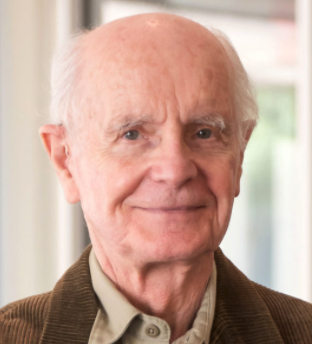 Marlan Scully (司嘉理)合作论文数Department of Physics and Astronomy, Texas A&M University;Princeton University41
 Felix Grasbon合作论文数33
 Berthold-Georg (Berge) Englert合作论文数Department of Physics, Faculty of Science, National University of Singapore;Centre for Quantum Technologies, National University of Singapore30
 J. Von Zanthier合作论文数Institut fur Optik;Information und Photonik;Max-Planck Forschungsgruppe;Universitat Erlangen-Nurnberg;Institut fur Optik, Universitat Erlangen-Nurnberg27
 Alexander Dreischuh合作论文数Nonlinear Physics Centre;Centre for Ultrahigh-bandwidth Devices;School for Physical Sciences and Engineering, Research;Australian National University;Research School for Physical Sciences and Engineering, Australian National University24Wolfgang Krieger合作论文数19H Welling合作论文数18
 David Robertson合作论文数School of Physics & Astronomy, University of Glasgow18
 Sheila Rowan合作论文数School of Physics and Astronomy, University of Glasgow;Institute for Gravitational Research, University of Glasgow18
 Ekkehard Peik合作论文数Institute for Experimental Quantum Metrology, Physikalisch-Technische Bundesanstalt18
 Peter Aufmuth合作论文数Max-Planck-Institut für Gravitationsphysik18
 James Hough合作论文数School of Physics & Astronomy, University of Glasgow18C. A. Cantley合作论文数18
 Karsten Danzmann合作论文数Albert Einstein Institute, Max-Planck-Institut fur Gravitationsphysik;Institute of Gravitational Physics, Faculty of Mathematics and Physics, Leibniz Universität Hannover18A. Sazonov合作论文数17
 Graham Woan合作论文数School of Physics & Astronomy, University of Glasgow17Virginio Sannibale合作论文数ChromoLogic LLC17J. Castiglione合作论文数17N. Hindman合作论文数17R. Schilling合作论文数17R. Amin合作论文数17H. Rong合作论文数17C. Hardham合作论文数17O. Matherny合作论文数17K. Reithmaier合作论文数17A. Chandler合作论文数17J. Langdale合作论文数17G. Stapfer合作论文数17C. A. Shapiro合作论文数17I. Salzman合作论文数17P. Ehrens合作论文数17E. Rotthoff合作论文数17H. Overmier合作论文数17S. Seel合作论文数17
 David Chin合作论文数17D. Grimmett合作论文数17
 Igor Yakushin合作论文数Amazon;Data Science Institute, The University of Chicago17M. Malec合作论文数17Rolf Bork合作论文数LIGO Lab, California Institute of Technology17I Zawischa合作论文数17K Kötter合作论文数17D Churches合作论文数17Keita Kawabe合作论文数Laser Interferometer Gravitational-wave Observatory - Hanford Observatory;California Institute of Technology17
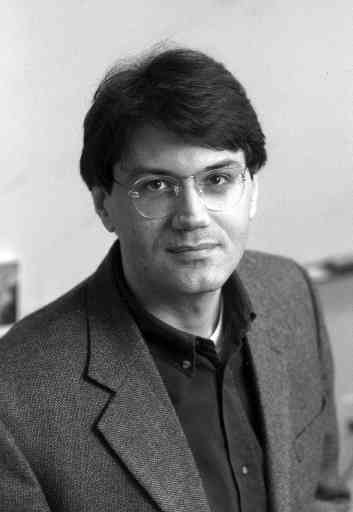 E. C. Katsavounidis合作论文数Department of Physics, Kavli Institute for Astrophysics and Space Research, Massachusetts Institute of Technology;Laser Interferometer Gravitational-wave Observatory, Massachusetts Institute of Technology17M. Fyffe合作论文数17
 Gianpietro Cagnoli合作论文数Institut Lumière Matière, Université Claude Bernard Lyon 1;CNRS17
 Gerhard Heinzel合作论文数Space Interferometry Group, Albert Einstein Institute;Leibniz Universität Hannover17
 Garilynn Billingsley合作论文数California Institute of Technology17




