Le retentissement du prurigo sur la qualité de vie est majeur et les conséquences psycho-sociales importantes. L’objectif de cette étude était d’évaluer le stress, la stigmatisation et la dysmorphophobie chez les patients atteints de prurigo chronique. Une étude observationnelle multicentrique a été menée dans 17 pays européens. Tous les patients consultant dans des centres spécialisés, ainsi que des sujets témoins, ont complété différents questionnaires concernant notamment l’apparence corporelle, les idées suicidaires, le stress (Perceived Scale Stress-10), la dysmorphophobie (Dysmorphic Concern Questionnaire) et la stigmatisation (Perceived Stigmatization Questionnaire). Un total de 2808 témoins sans dermatose et 5487 patients avec une dermatose ont été inclus, dont 127 patients avec un prurigo. Les patients avec un prurigo avaient en moyenne 54,7 ans et étaient en majorité des femmes (59,1 %). Leurs caractéristiques sont présentées dans le tableau 1. Les patients étaient « assez insatisfaits » (13,5 %) ou « insatisfaits » (8,7%) de leur apparence corporelle, ce qui était supérieur aux déclarations des témoins (p = 0,006 et p < 0,0001, respectivement). 31,7% des patients ont déclaré avoir eu des idées suicidaires liées à leur dermatose. Les patients avec un prurigo étaient plus stressés que les témoins, avec un score moyen supérieur de 2,81 points sur 40 [1,64 ; 3,99] (p < 0,001). La dysmorphophobie était présente chez 9,6 % des patients avec un prurigo vs 2,1 % des contrôles (p < 0,001). Le score moyen de stigmatisation était plus élevé de 0,122 point sur 5 [0,046 ; 0,198] chez les patients avec un prurigo (p < 0,01). Les scores des patients avec prurigo ont ensuite été comparés à ceux observés dans d’autres dermatoses inflammatoires: dermatite atopique (n = 352), psoriasis (n = 1404), urticaire (n = 173) et hidradénite suppurée (n = 142). Concernant la stigmatisation, le score total moyen était inférieur chez les patients avec un prurigo par rapport aux patients atteints de psoriasis (−0,167 [−0,278; −0,057] (p < 0,01)) mais supérieur à celui des patients ayant de l’urticaire (0,133 [0,012 ; 0,277] (p = 0,037)). Aucune différence significative n’a été observée pour le stress et la dysmorphophobie. Il s’agit de la première étude s’intéressant au niveau de stress, à la stigmatisation et à l’association à une dysmorphophobie chez les patients atteints de prurigo chronique. Des études antérieures ont montré des taux plus élevés d’anxiété, dépression, idées suicidaires, que dans la population générale mais aussi que de nombreuses dermatoses. Cette étude montre que le stress, la stigmatisation et la dysmorphophobie sont plus fréquents chez les patients atteints de prurigo que chez des sujets sans dermatose, et que le taux est comparable aux autres dermatoses inflammatoires fréquentes. L’impact psychosocial du prurigo sur les patients pouvant avoir de lourdes conséquences sur le statut social, les interactions avec autrui, le bien être émotionnel ou encore sur l’estime de soi, l’évaluation du poids de ce fardeau a toute sa place lors de la prise en charge du patient.
Debates often evolve around central topics and labels that have a conjuncture. For more than a decade, ‘hybrids’ and processes of ‘hybridisation’ have been such a topic. Beyond the sphere of academic research this topic has reached some popularity as a background notion in the debate on social enterprises and social entrepreneurship (The Economist, 2009; European Business Review, 2013). And in this context there has been a move from an earlier conceptual stage to contributions on procedural and organisational questions (see the overview in Doherty et al., 2014). This chapter, however, focuses on conceptual issues. The main reason is that the conceptual debate about hybrids and hybridisation has pushed aside some dimensions of hybridity that could allow for a broader perspective than one in which hybridisation in practical and political terms is narrowed down to issues of social entrepreneurship. It will be argued that there are two very different concepts of hybridity that exist separately, each of them pointing in a different direction for research and practice.
Part 1 Concepts: quality development - part of a changing culture of care in personal social services business and professional approaches to quality improvement - a comparison of their suitability for the personal social services quality management in Finland - problems and possibilities quality in personal social services - the developing role of user involvement in the UK. Part 2 Methods: professionals and quality initiatives in health and social services measuring quality in personal social services towards a new client orientation through continuous improvement combining client interests with professionalism in the organization quality management and quality assurance in residential and nursing home care in Britain and Germany user-centred performance indicators for inspection of community care in Scotland - developing a framework. Part 3 Cases and comments: quality assured or quality compromised?, developing domiciliary care markets in Britain rationality and management in public care services quality by users' influence and involvement in Denmark - the logical development of social services the city of Stockholm's awards for good quality quality in home care and nursing? promoting quality of life for older people in institutions some national and local quality strategies in Finland quality of care - on whose terms? quality measurements and some unintended consequences - can quasi-quality be a consequence of quality standards?.
In Germany, like in other countries, the notions of volunteering and civic action altogether describe a wide diversity of activities. Often, this wide spectre is put together under civic engagement', reaching from civic action that is sometimes overtly political' over to engagement as volunteering in areas like sports or culture. Yet in academic contributions that use such a wide concept, nothing much can be found about a convincing differentiation of the diverse forms of engagement that figure under such a wide cover. Is there a clear line separating voluntary and civic action? In line with the introduction to this special issue, the paper takes up these questions by proposing that a proper understanding of differentiations in the wide field of civic engagement calls for a historical approach that gives a key role to discourses and politics. Looking from such a perspective at historical constellations in German history, four decisive historical concepts get sketched. It shows that kinds of differentiation between voluntary and civic action are very much dependent on discourses and politics and not only the repercussions of socio-economic and cultural changes and megatrends. The kind of approach chosen shows as well that older concepts, notions and attitudes do not simply melt away in the light of new ones. The label civic engagement' appears as an umbrella notion in front of a diversity of forms and understandings of engagement. Understanding this diversity calls for tracing the historical roots, notably the ordering imaginaries and strategies wherein these forms and understandings took shape and function today.
The article is based on research in the region of Heidelberg-the city itself and two small municipalities nearby. It addresses three dimensions of local support movements for refugees: (1) the varying bundles of motives among those engaged, (2) the diversity of organizations concerned and (3) their interaction with the local political administration. A focal point of the study concerns features and processes that give actions and organizations a more or less political character. Our results reveal that, especially among newly engaged helpers and activists, political and apolitical motives coexist. Many people and their local organizations take positions in the country-wide controversial political debates on refugees, but for their practical action on location, moral concerns clearly prevail. Processes of politicization and depoliticization of refugee support largely depend on the ways and degrees to which nationwide political controversies and local developments intermesh. Politicization may take place due to controversies that call for more than a moral attitude, have an impact and build up at the local level. However, resistance to supportive action, be it by changing discourses or the persistence of traditional administrative routines, may also cause depoliticization, where volunteers and initiatives restrict themselves to acting as mere helpers that bring some human touch into an environment that longs to return to normality.
The aim of this introduction to the special issue is to call into question the presumed conceptual divide between volunteering and civic action and suggest an analytical tool and four perspectives that bring to light the varying meanings of popular engagement. Volunteering and civic action are laden with different moral meanings, are associated with different theoretical approaches and, just as important, have been assigned different roles in society. This conceptual divide is reflected in the academic debate. Only rarely, however, has the academic debate explored and discussed how the meaning of volunteering and civic action has changed historically. Therefore, we argue for a contextual and relational interpretation of the different forms of popular engagement instead of the application of essentialist definitions of volunteering and civic action. In order to examine the variety of popular engagement without being caught up in pre-made or taken-for-granted conceptualisations of volunteering and civic action as two separate forms of popular engagement, we propose approaching variations of popular engagement with respect to two criteria: first, to what degree popular engagement is enacted in institutionalised spheres of politics or in social public spheres and, second, to what degree actions of popular engagement are controversial or operating in line with what is widely agreed upon and dominant in public opinion. Moreover, we argue that history, discourses, politics and a relational approach are four crucial perspectives in order to reveal the varying meanings of popular engagement.
The effort to strengthen social cohesion and lower social inequalities is among Europe’s main policy challenges. At the urban level, these great challenges become visible and tangible, which makes cities a microcosm of society. Local welfare systems are at the forefront of the struggle to address this challenge – and they are far from winning. While the statistics show some positive signs, the overall picture still shows sharp and sometimes rising inequalities, a loss of social cohesion and failing policies of integration and inclusion [1]. It is clear that new ideas and approaches are needed to tackle these very wicked problems.
Le concept de prurigo étant très vague et donc très variable selon les pays, la task force de l’EADV sur le prurit a organisé des réunions de consensus pour obtenir une définition, une classification et une terminologie sur le prurigo chronique qui soient communes et fassent donc autorité. Des discussions sur des cas ont organisées. La méthode Delphi a été utilisée pour obtenir un consensus sur les différents items. Les résultats ont été adoptés après deux séminaires. Une première notion importante dégagée par ce consensus d’experts est qu’il faut considérer le prurigo chronique comme une maladie autonome. Le prurigo chronique est ainsi une maladie distincte définie par la présence d’un prurit chronique depuis au moins 6 semaines, des antécédents et/ou des signes de grattage répété et de multiples lésions cutanées prurigineuses, localisées ou généralisées (papules blanchâtres ou rosées, nodules et/ou plaques). Le prurit chronique survient à cause d’une sensibilisation neuronale au prurit et du développement d’un cercle vicieux prurit-grattage. Le prurigo chronique peut être d’origine dermatologique, systémique, neurologique, psychiatrique/psychosomatique, mixte ou indéterminée. Cinq formes cliniques ou types sont décrits : le prurigo chronique peut être papuleux, nodulaire, en plaques, ombiliqué ou linéaire. Ces différents types peuvent co-exister ou se succéder. Le prurigo nodulaire est la forme la plus fréquente et habituellement la forme ultime. Cette classification et cette définition permettent de clarifier nettement la situation. La définition souligne que le prurigo chronique a une évolution et des facteurs physiopathologiques qui lui sont propres, quelle que soit l’origine initiale du prurit. Les mécanismes en cause sont la sensibilisation périphérique et la sensibilisation centrale au prurit. La sensibilisation périphérique est liée à une hyperexcitabilité des terminaisons nerveuses cutanées, qui est augmentée par le grattage chronique. La sensibilisation centrale est liée à une diminution des contrôles inhibiteurs par les interneurones dans la moelle épinière et à des modifications de la connectivité cérébrale. Issus d’un consensus européen obtenu avec une méthodologie rigoureuse, ces résultats permettent de réaliser des essais cliniques dans de bonnes conditions, à l’heure où de multiples traitements du prurit chronique apparaissent possibles et alors que l’indication retenue par les agences officielles est le prurigo chronique.
Zusammenfassung Die demokratiepolitische Bedeutung der Zivilgesellschaft – diverser, auch „unkonventioneller“ Formen von Partizipation und das Engagement in Vereinen und innovativen Projekten – wird oft beschworen. Das hier in den Blick genommene Problem ist: wie beide Formen bürgerschaftlicher Aktivität zu den klassisch-konventionellen Beteiligungsformen der Parteiendemokratie stehen. Es geht also um mehr als die viel beklagte Kluft zwischen (Partei-)Politik und (Wahl-)Bürgern. Wir behaupten: Von der Qualität der Verbindungen zwischen in Parteien organisierter Politik und zivilgesellschaftlichen Organisationen hängt auch die Qualität der Beiträge beider Seiten und darüber hinaus die Fähigkeit der Gesellschaft ab, sich selbst zu regieren. Mit dem Signum „falsch verbunden“ wollen wir darauf hinweisen, dass vieles an der Art und Weise, wie die jeweiligen Seiten die Verbindung zur anderen suchen, in die falsche Richtung weist. Damit plädieren wir auch für eine andere Blickrichtung als die der üblichen, auf eine Stärkung der Zivilgesellschaft „an und für sich“ gerichteten Debatten.
This comment concerns a two-fold phenomenon, namely differentiations within the wide array of what is called civic engagement, including voluntary action; and shifts that sometimes blur the demarcation lines between the worlds of voluntary action and working life. How do these two developments affect the meaning of volunteering both on an analytical and on a public discourse level?
The innovation of “Kreuzberg Acts—entrepreneurship in the district” results in the intertwining of two issues that are usually separated: On one hand, individual consultancy for (future) entrepreneurs and, on the other hand, a kind of concern with community development and urban planning addressing different local groups. Thereby, “Kreuzberg Acts” bridges economic and social concerns. For instance, those interested in founding a start-up are coached by local mentors on how to apply for public subsidies and how to launch an effective marketing campaign. On the other hand, the project is striving for street credibility by building bridges to the local economy. Moreover, project leaders develop strategies together with participants about how locals may benefit from the districts’ booming economic sectors such as healthcare or tourism. Respective inventions are thought of in a neighbourhood-friendly way, for example, by devising small-scale business ideas that fit the local social ecology.
This book addresses the practice of social innovation, which is currently very much in the public eye. New ideas and approaches are needed to tackle the severe and wicked problems with which contempor
The final conclusive chapter discusses the implications of the findings for policymakers and professionals as well as the academic research agenda. "Good" signifies what innovations can contribute to a society's ability to cope with change and, more precisely, to do it in a way that change can be perceived as progress in civility. "Bad" signifies the shortcomings of social innovations—especially their limited impact on an overall averse social and policy context. "Ugly" finally stands for discourses that deal with social innovations as if they were something else—usually, treating them like market-based products and technologies. On the basis of the overall evidence concerning the potentials and limits of social innovation discourse so far, the chapter gives a balanced assessment of the state of the art of social innovation and social innovation research.
 kerstin hamel合作论文数10
 Ingo Bode合作论文数10Andreas Schulz合作论文数8
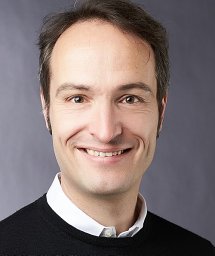 Benjamin Ewert合作论文数Dept Hlth Sci, Fulda Univ Appl Sci7
 Annette Zimmer合作论文数6
 Taco Brandsen合作论文数Nijmegen School of Management, Radboud University Nijmegen6
 Thomas Olk合作论文数6
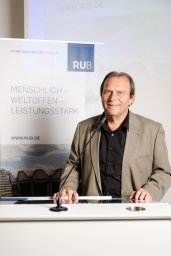 Rolf G. Heinze合作论文数Allgemeine Soziologie und Arbeits- und Wirtschaftssoziologie, an der Ruhr-Universität4
 Kai Leichsenring合作论文数European Centre for Social Welfare Policy and Research3
 Claudia Wiesner合作论文数3
 Sandro Cattacin合作论文数Département de Sociologie, Université de Genève3Kraft Kathrin合作论文数2Brenaut Emilie合作论文数Department of Dermatology, University Hospital of Brest2
 Paul Dekker合作论文数tilburg university2Jane Lewis合作论文数All Souls College, University of Oxford2
 Uwe Gieler合作论文数2Hellmut Wollmann合作论文数2
 John Baldock合作论文数2
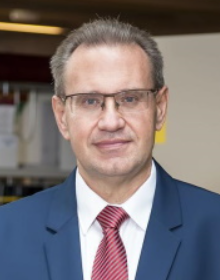 Jacek Szepietowski合作论文数Department of Dermatology, Venereology and Allergology, Wroclaw Medical University2Ansgar Klein合作论文数2Franz J. Legat合作论文数2Dalgard Florence合作论文数2L. Lien合作论文数1L. Tomas Aragones合作论文数1J A Halvorsen合作论文数1Johan von Essen合作论文数1E Serra Baldrich合作论文数1uta stitz合作论文数1
 Anna Wiebke Klie合作论文数1
 Verena Schmid合作论文数Reallabor Asylsuchende Rhein Neckar Reg, Heidelberg Univ1S Bobko合作论文数1T Leslie合作论文数1
 Manuel Pedro Pereira合作论文数Department of Dermatology and Center for Chronic Pruritus, University Hospital Münster1
 Jo Lydie W Lambert合作论文数1
 Andrew Finlay合作论文数School of Medicine, Cardiff University1
 Sonja Ständer合作论文数Center for Chronic Pruritus, Department of Dermatology, Münster University Hospita;Faculty of Medicine, University of Münster1
 Anne-Sophie Ficheux合作论文数Laboratoire de Toxicologie Alimentaire et Cellulaire, Université Européenne de Bretagne-Université de Bretagne Occidentale (UEB-UBO),1Georg Mildenberger合作论文数1
 Schut Christina合作论文数Institute of Medical Psychology, University of Giessen1Titeca G合作论文数1Szabó C合作论文数1
 Martin Metz合作论文数1
 L.Misery合作论文数University of Brest1Markus Streit合作论文数1
 Roland Roth合作论文数Max-Planck-Institut fur Metallforschung;Institut fur Theoretische und Angewandte Physik;Universitat Stuttgart;Institut fur Theoretische und Angewandte Physik, Universitat Stuttgart1
 Marthe Nyssens合作论文数Catholic University of Louvain1andreas schulz合作论文数1Clare Ungerson合作论文数1
 Jacques Defourny合作论文数Yohanan Stryjan1




