Using wireless sensors worn on the body to monitor health information is a promising new application. To realize transceivers targeted for these applications, it is essential to understand the body area propagation channel. Several numerical, simulated, and measured body area propagation studies have recently been conducted. While many of these studies are useful for evaluating communication systems, they are not compared against or justified by more fundamental physical models derived from basic principles. This type of comparison is necessary to provide better physical insights into expected propagation trends and to justify modeling choices. To address this problem, we have developed a simple and generic body area propagation model derived directly from Maxwell's equations revealing basic propagation trends away, inside, around, and along the body. We have verified the resulting analytical model by comparing it with measurements in an anechoic chamber. This paper develops an analytical model of the body, describes the expected body area pathloss trends predicted by Maxwell's equations, and compares it with measurements of the electric field close to the body.
In this paper we developed a body area propagation model by considering an infinite circular lossy cylinder instead of a human body and solving the Helmholtz equations inside and around the cylinder. The wave propagations around and inside the body have been studied for line source, point source, and plane wave excitations.
Ultra-wideband (UWB) impulse radio is a promising technique for low-power bio-medical communication systems. While a range of analog and digital UWB architectures exist, the mostly-digital approach without analog down-conversion enables better technology scaling and signal processing flexibility. Furthermore, recently proposed sub-sampling schemes and advances in high-speed ADC circuit design are helping to make this approach more feasible at low power. However, architectures that directly sample the received signal are more vulnerable to sampling jitter. Currently, there does not exist a model describing the impact of sampling jitter making it difficult to determine appropriate tolerances or to establish the feasibility of digital architectures. To address this problem, we have developed a model of sampling jitter and derived a generic bit error rate expressions for a digital UWB modem with sampling jitter, additive noise, and imperfect channel estimation in a generic multipath environment. We then use this model to investigate the performance of sub-sampled digital UWB in a body area network. This paper explains this analytical model and compares it with simulations results for communication around the body.
Ultra-wideband (UWB) impulse radio is a promising technique for low-power body area communication systems. While a range of analog and digital UWB transceiver architectures exist, a mostly-digital approach without analog downconversion would enable better technology scaling and signal processing flexibility. Furthermore, recently proposed subsampling schemes and advances in high-speed ADC circuit design now make this approach feasible at low power. However, subsampling systems require the extra overhead of a Hilbert transform to generate the in-phase and quadrature components necessary for phase estimation and tracking in coherent receivers. This can potentially lead to higher power consumption. To address this problem, we present several low-complexity Hilbert transform solutions suitable for UWB systems. In addition, we propose a clock frequency offset tracking mechanism and develop an analytical model of its performance. Finally, we use this model to analyze our proposal in a body area communication channel. This paper presents and evaluates a complete subsampling clock frequency tracking implementation targeting body area communication.
Using wireless sensors worn on the body to monitor health information is a promising new application. To realize transceivers targeted for these applications, it is essential to understand the body area propagation channel. Several numerical, simulated, and measured body area propagation studies have recently been conducted. While many of these studies are useful for evaluating communication systems, they do not directly consider physical propagation mechanisms forcing researchers to rely on ad-hoc modeling approaches that are not always motivated by fundamental electromagnetic principles. This can result in less insight into expected propagation trends and inappropriate modeling choices. To address this problem, we have developed a simple and generic body area propagation model derived directly from Maxwell's equations. We then verify the resulting analytical model by comparing it with measurements around a body in an anechoic chamber. This paper describes the analytical derivation of this model and compares it with measurements of the electric field close to the body.
Using wireless sensors placed on a person to continuously monitor health information is a promising new application. At the same time, new low-power wireless standards such as Bluetooth and Zigbee have been proposed for short range, low data-rate communication matching the requirements of these bio-medical applications. However, there are currently few measurements or models describing propagation around the body. To address this problem, electromagnetic waves near the torso are measured and a statistical model is derived for communication in the 915 MHz and 2.45 GHz industrial, scientific and medical bands associated with Zigbee and Bluetooth. Measurement setup and statistical analysis are described.
Using wireless sensors placed on a person to continuously monitor health information is a promising new application. Furthermore, ultra-wideband is a promising air interface for short-range low data rate communication scenarios matching the requirements of wireless bio-medical applications. However, the performance and complexity tradeoffs of ultrawideband systems has never been assessed for the special features of the body area propagation channel. To address this problem, we have measured electromagnetic wave propagation around the body and developed a statistical model. Using this model, we evaluate the performance of optimal and sub-optimal RAKE receivers. This paper describes the resulting communication performance versus complexity for ultra wideband RAKE receivers in a body area propagation environment.
Using ultra-wideband (UWB) wireless sensors placed on a person to continuously monitor health information is a promising new application. However, there are currently no detailed models describing the UWB radio channel around the human body making it difficult to design a suitable communication system. To address this problem, we have measured radio propagation around the body in a typical indoor environment and incorporated these results into a simple model. We then implemented this model on a computer and compared experimental data with the simulation results. This paper proposes a simple statistical channel model and a practical implementation useful for evaluating UWB body area communication systems.
A comprehensive statistical model is described for ultrawideband (UWB) propagation channels that is valid for a frequency range from 3-10 GHz.It is based on measurements and simulations in the following environments: residential indoor, office indoor, builtup outdoor, industrial indoor, farm environments, and body area networks.The model is independent of the used antennas.It includes the frequency dependence of the path gain as well as several generalizations of the Saleh-Valenzuela model, like mixed Poisson times of arrival and delay-dependent cluster decay constants.A separate model is specified for the frequency range below 1 GHz.The model can thus be used for realistic performance assessment of UWB systems.It was accepted by the IEEE 802.15.4aTask Group as standard model for evaluation of UWB system proposals.This paper also presents a critical assessment of the applicability of the model and possible generalizations and improvements.
Body worn wireless sensors for monitoring health information is a promising new application. In developing these sensors, a communication channel model is essential. However, there are currently few measurements or models describing propagation around the body. To address this problem, we have measured electromagnetic waves near the torso and derived relevant statistics. We find that components diffracting around the body are well modeled using correlated log normal variables, and a Nakagami-m distribution can be used to incorporate the influence of arm motions. We have implement this model and evaluated it in terms of important communication metrics. This paper describes body area propagation statistics and proposes a suitable computer model implementation.
Using wireless sensors placed on a person to continuously monitor health information is a promising new application. In developing these sensors, detailed knowledge of the communication channel is essential. However, there are currently very few measurements describing propagation around the body. To address this problem, we have measured electromagnetic waves traveling near the torso to derive a simple pathless law. The pathless law is then extended to include the influence of arm movements and a surrounding office environment. This paper describes our measurement campaign and the basic characteristics of the body area radio channel.
Using wireless sensors placed on a person to continuously monitor health information is a promising new application. However, there are currently no models describing the radio channel around the human body making it difficult to design a suitable communication system. To address this problem, we have simulated electromagnetic wave propagation around the body and incorporated these results into a simple model. We then compared this model with measurements taken around the human torso and with previous studies in the literature. This paper proposes a simple statistical channel model useful for evaluating both UWB and (after resampling) narrow-band body area communication systems.
The successful realization of a wireless body area network (WBAN) requires innovative solutions to meet the energy consumption budget of the autonomous sensor nodes. The radio interface is a major challenge, since its power consumption must be reduced below 100 /spl mu/W (energy scavenging limit). The emerging ultra-wide-band (UWB) technology shows strong advantages in reaching this target. First, most of the complexity of an UWB system is in the receiver, which is a perfect scenario in the WBAN context. Second, the very little hardware complexity of a UWB transmitter offers the potential for low-cost and highly integrated solutions. Finally, in a pulse-based UWB scheme, the transmitter can be duty-cycled at the pulse rate, thereby reducing the baseline power consumption. We present a low-power UWB transmitter that can be fully integrated in standard CMOS technology. Measured performances of a fully integrated pulse generator are provided, showing the potential of UWB for low power and low cost implementations. Finally, using a WBAN channel model, we present a comparison between our UWB solution and state-of-the-art low-power narrow-band implementations. This paper shows that UWB performs better in the short range due to a reduced baseline power consumption.
This is a discussion document for the IEEE document of the IEEE 802.15.4a channel modeling subgroup. It provides models for the following frequency ranges and environments: for UWB channels dovering the frequency range from 2 to 10 GHz, it covers indoor residential, indoor of fi ce, industrial, outdoor, and open outdoor environments (usually with a distinction between LOS and NLOS properties). For the frequency range from 2 to 6 GHz, it gives a model for body area networks. For the frequency range from 100 to 900 MHz, it gives a model for indoor of fi ce-type environments. Finally, for a 1MHz carrier frequency, a narrowband model is given. The document also provides MATLAB programs and numerical values for 100 impulse response realizations in each environment.
The wireless communications world is moving towards the so-called 4G pictures, by integrating many different subsystems. Some of them have to provide short-range connectivity at very low power, in order to enable battery-operated sensors or devices. This low-power requirement can be achieved by selecting channel codes of high coding gain. However, the power consumption of encoding and decoding operations also has to be taken into account. This paper analyzes this trade-off between coding gain and digital power consumption, considering different wireless scenarios. It shows that turbo codes can be used even for relatively low-power applications. For every low-power system, simple Hamming codes provide a good trade-off, as well as convolutional codes. The Golay code is another strong candidate, thanks to a very efficient implementation. Considering current CMOS technology, the different codes are in competition for systems sending bits with energy between 0.1 and 10 nJ. Systems working at lower values do not gain anything in coding, while systems working above will always advantageously use turbo-codes.
 Piet Wambacq合作论文数Imec9
 Claude Desset合作论文数Imec7
 Philippe De Doncker合作论文数Université libre de Bruxelles6
 Julien Ryckaert合作论文数IMEC5
 Andreas F. Molisch合作论文数Department of Electrical Engineering, Viterbi School of Engineering, University of Southern California4
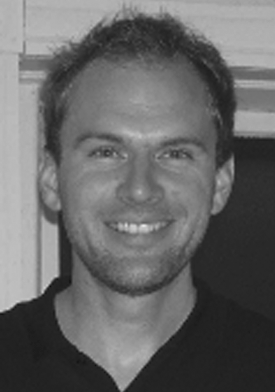 Johan Karedal合作论文数4
 Juergen Kunisch合作论文数4
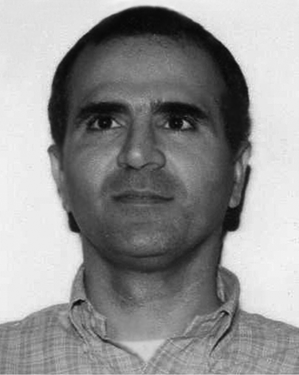 Shahriar Emami合作论文数Freescale Semiconductor , Inc4
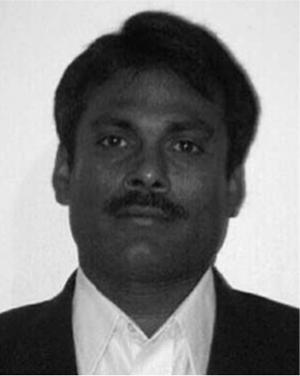 Balakrishnan Kannan合作论文数Cochin University of Science & Technology4
 Hans G. Schantz合作论文数Ohio State University;ElectroScience Laboratory;Domain Corporation;ElectroScience Laboratory, Ohio State University4leonard pierre van biesen合作论文数3
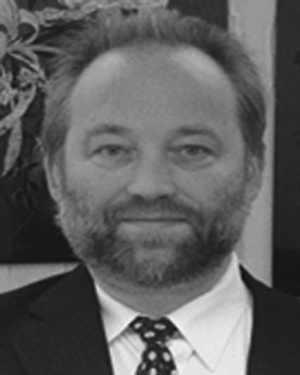 Leo Van Biesen合作论文数Universiteit Brussel;Department of Fundamental Electricity and Instrumentation3
 Chia-Chin Chong合作论文数Inst. for Digital Commun., Univ. of Edinburgh3Dajana Cassioli合作论文数Dipartimento di Ingegneria e Scienze Dell'Informazione e Matematica, Universita degli Studi dell'Aquila3
 Christophe Craeye合作论文数Institute of Information and Communication Technologies, Electronics and Applied Mathematics, Universite Catholique de Louvain;University of Massachusetts;The Netherlands Institute for Research;University of Cambridge3V. De Heyn合作论文数2b van poucke合作论文数2
 Stephane Donnay合作论文数2
 István Z. Kovács合作论文数Nokia Bell Labs2
 Kazimierz Siwiak合作论文数2Patrick Eggers合作论文数2
 Claude Oestges合作论文数Louvain School of Engineering, Universite Catholique de Louvain;Institute of Information and Communication Technologies, Electronics and Applied Mathematics, Universite Catholique de Louvain2
 Peter Hall合作论文数Devices and Systems Research Centre, Department of Electronic, Electrical and Systems Engineering, University of Birmingham2Kai Siwiak合作论文数2
 Mustafa Badaroglu合作论文数Qualcomm2
 Bert Gyselinckx合作论文数IMEC-NL2
 Farshad Keshmiri合作论文数and Electromagnetics Microwave Communication Laboratory, Ecole polytechnique de Louvain2Ulrich Schuster合作论文数2
 Gert Frølund Pedersen合作论文数Department of Electronic Systems, The Technical Faculty of IT and Design, Aalborg University2
 Maciej Klemm合作论文数Advanced Protection Systems Inc.2Wolfgang Eberle合作论文数Sr. Scientist and Project Leader Bioelectronic Systems at IMEC
* Sr. Scientist and Project Leader Bioelectronic Systems at IMEC2
Maciej Klemm合作论文数Advanced Protection Systems Inc.2Wolfgang Eberle合作论文数Sr. Scientist and Project Leader Bioelectronic Systems at IMEC
* Sr. Scientist and Project Leader Bioelectronic Systems at IMEC2 Geert Van Der Plas合作论文数Imec2U Derudder合作论文数1j w weijers合作论文数1
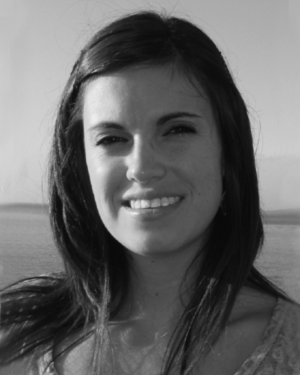 Gemma Roqueta合作论文数1yang hao合作论文数1Stéphane Donnay合作论文数1
 André Bourdoux合作论文数Interuniversity Microelectronics Centre1
 Hao Yang合作论文数School of Electronic Engineering and Computer Science, Queen Mary University of London1
 Robert W. Brodersen合作论文数Berkeley Wireless Research Center, University of California, Berkeley;Department of Electrical Engineering and Computer Sciences, University of California, Berkeley1
 Mike Chen (陈彦仰)合作论文数Department of Computer Science & Information Engineering, College of Electrical Engineering and computer Science, National Taiwan University;HCI Lab, National Taiwan University;Tickle Labs, Inc.1
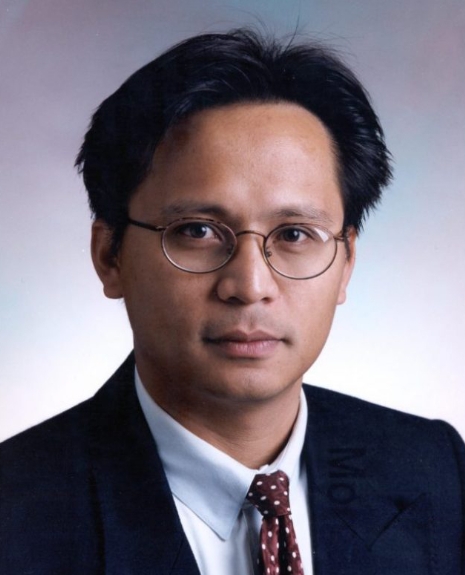 Moe Win合作论文数Wireless Information and Network Sciences Laboratory, Massachusetts Institute of Technology;Institute for Data, Systems, and Society, Schwarzman College of Computing, Massachusetts Institute of Technology1
 Qammer Abbasi合作论文数James Watt School of Engineering, University of Glasgow;Communications Sensing and Imaging Hub, University of Glasgow1L. V. Biesen合作论文数1
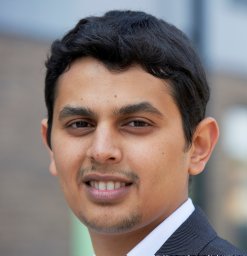 Akram Alomainy合作论文数queen mary university of london1
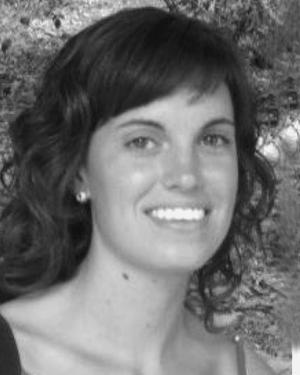 Gemma Roqueta Crusats合作论文数1




