Description of Probe: A cDNA probe of about 3.5 kb which is a PstI-KpnI fragment encoding the majority of the beta chain of cytochrome b-245 transcript in pGEM-4 (1).Polymorphisms: Digestion with NsiI reveals invariant fragments of approximately 7.2, 6.2 and 3.7 kb.In addition to the polymorphic fragments of 1.7 and 1.3 kb described by Battat and Francke (2) a further polymorphism exists with fragment sizes of 2.9 and 2.5 kb.Frequency: In 32 unrelated chromosomes, allele frequencies were 2.9 kb: 19% and 2.5 kb: 81 %.In 29 of the same chromosomes allele frequencies were 1.7 kb: 90% and 1.3 kb: 10%.The observed haplotype distribution does not deviate significantly from that expected on the basis of the above allele frequencies, implying that there is no strong linkage disequilibrium.Not Polymorphic For: BamHI, BglI, EcoRI, HindJH, MspI, PstI, TaqI in 14 chromosomes tested.Chromosomal Localisation: The X-linked CYBB locus has been assigned to Xp21.1 (1).Mendelian Inheritance: X-linked inheritance has been demonstrated in 2 three-generation families.
Using chromosome jumping and walking and restriction fragment length polymorphism (RFLP) analysis, we have defined the region which must contain the cystic fibrosis gene. DNA segments spanning approximately 250 kb in the direction of the gene were isolated and used to identify several new polymorphisms informative in cystic fibrosis families. These RFLPs include a highly polymorphic, CA/GT repeat, and a 10 bp insertion uncovered using the polymerase chain reaction. By analyzing a family with a recombination near the gene, we can exclude this region as containing the mutation. Data on the extent of linkage disequilibrium of these markers provides additional information on where the gene is located.
The cystic fibrosis (CF) locus has been located, by both linkage analysis and physical mapping, to a 900-kb region of 7q22-31 flanked by D7S8 (J3.11) and D7S23 (XV-2c). Using a 100-kb general jumping library, we isolated two sequential jump clones, J31 and J29, to one side of the D7S8 region and one jump clone, J32, to the other side of D7S8, so that the total region covered is about 300 kb. Three new RFLPs were detected by J29 and J32. Using PFGE mapping and the three jump clones, we found it possible to orient D7S8 on the chromosome and, by linkage analysis, to further narrow the CF region by 100 kb. The orientation of D7S8 will be useful for directing the isolation of other jump clones toward the CF locus. Though the newly described RFLPs are in considerable linkage disequilibrium with D7S8 polymorphisms, they increase the informativeness of genetic markers in the D7S8 region and should be useful in prenatal diagnosis.
The techniques of molecular biology have had a dramatic effect on the advancement of human genetics. In particular, the development of restriction fragment length polymorphisms (RFLPs) has allowed researchers to generate genetic markers for virtually any region of the human genome. Most RFLPs occur when a mutation creates or deletes a recognition site for a restriction enzyme, generating a DNA fragment of altered size. In the simplest case this will create two alleles. A DNA probe which hybridizes to this fragment will detect the presence of these alleles in the DNA from different individuals. Probes used to detected RFLPs have been derived from both cloned genes and randomly isolated DNA segments. Thus, each RFLP is a genetically inherited marker for a precise location on a chromosome.
Several difficulties arise when attempts are made to characterize the deposits of magnetite found in metazoans. We are usually forced to deal with very small amounts of material, dispersed in tissues, using indirect methods that are subject to contamination. Magnetite crystals in the abdomens of bees (Gould et al., 1978), and in the heads of pigeons (Walcott et al., 1979), and other vertebrates (Bauer et al., this volume; Perry et al., this volume; Walker et al., this volume) are submicroscopic (<100 nm), occupy a combined volume of 10−10 to 10−8 cm3, and have a mass of 1–100 ng. In organisms of up to 100 kg or more, detecting such quantities of magnetite from its magnetic properties depends on the crystals being highly concentrated in small, recognizable structures, and not uniformly dispersed throughout all the tissues. Extraction and recovery of the crystals likewise depend on their being sufficiently concentrated to be magnetically detectable.
 Michael Dean合作论文数Laboratory of Translational Genomics, Division of Cancer Epidemiology and Genetics, National Cancer Institute;Laboratory of Translational Genomics, NCI5
 Stewart Cole合作论文数Institut Pasteur;Ineos Oxford Institute for Antimicrobial Research4
 Bernard Gerrard合作论文数4N Hidaka合作论文数3M Iannuzzi合作论文数2JL COLE合作论文数2FS COLLINS合作论文数2
 Mitchell Drumm合作论文数Department of Genetics and Genome Sciences, School of Medicine, Case Western Reserve University2Michael C. Iannuzzi合作论文数2Mitchell L. Drumm合作论文数2Andrew E. Dizon合作论文数2Claudia Stewart合作论文数1
 Joseph L. Kirschvink合作论文数Division of Geological and Planetary Sciences, California Institute of Technology1
 Stephen O'Brien合作论文数Department of Biological Sciences, Halmos College of Arts and Sciences, Nova Southeastern University;Laboratory of Genomic Diversity, Center for Computer Technologies, ITMO University1
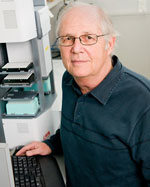 Mark F. Leppert合作论文数Department of Human Genetics, School of Medicine, University of Utah Health1
 Francis Collins合作论文数National Human Genome Research Institute, National Institutes of Health1Dora Stauffer合作论文数1Ray White合作论文数1Thomas W. Beck合作论文数1Gordon B. Bauer合作论文数1Michael M. Walker合作论文数1B Otterud合作论文数1




