Figure 20.1 was not correct in the published article. The original article has been corrected. The published apologizes for the inconvenience.
DAΦNE, the Frascati lepton collider, has completed the preparatory phase in order to deliver luminosity to the SIDDHARTA-2 detector. DAΦNE colliding rings rely on a new interaction region, which implements the well-established Crab-Waist collision scheme, and includes a low-beta section equipped with newly designed permanent magnet quadrupoles, and vacuum components. Diagnostics tools have been improved, especially the ones used to keep under control the beam-beam interaction. The horizontal feedback in the positron ring has been potentiated in order to achieve a higher positron current. Luminosity diagnostics have been also updated so to be compatible with the new detector design. The commissioning was initially focused on recovering the optimal dynamical vacuum conditions, outlining alignment errors, and optimizing ring optics. For this reason, a detuned optics, featured by relaxed low-b condition at the interaction point and Crab-Waist Sestupoles off, has been applied. In a second stage a low-b optics has been implemented to test collisions with a preliminary setup of the experiment detector. Machine preparation and the first luminosity results are presented and discussed.
SABINA (Source of Advanced Beam Imaging for Novel Applications) is a project aimed at the enhancement of the SPARC_LAB research facility. This enhancement is carried out through the following actions: first, the increase of the uptime through the consolidation of technological systems and the replacement of some critical equipment in order to limit the number and extent of faults; then, the improvement of the accelerator performances, by replacing some devices with updated ones. The effect will be greater reliability of the accelerator, which will allow it to be opened as a facility for external users, both industrial and scientific, with the goal of increasing the competitiveness of industries in a broad range of technological areas and enhancing collaborations with research institutions. The two user lines that will be implemented are a power laser target area and a THz radiation line, by using a dedicated undulator. The undulator and the THz line are also described in other contributions to this conference. A brief description of the project and potential exploitations are reported.
This report presents the conceptual design of a new European research infrastructure EuPRAXIA. The concept has been established over the last four years in a unique collaboration of 41 laboratories within a Horizon 2020 design study funded by the European Union. EuPRAXIA is the first European project that develops a dedicated particle accelerator research infrastructure based on novel plasma acceleration concepts and laser technology. It focuses on the development of electron accelerators and underlying technologies, their user communities, and the exploitation of existing accelerator infrastructures in Europe. EuPRAXIA has involved, amongst others, the international laser community and industry to build links and bridges with accelerator science - through realising synergies, identifying disruptive ideas, innovating, and fostering knowledge exchange. The Eu-PRAXIA project aims at the construction of an innovative electron accelerator using laser- and electron-beam-driven plasma wakefield acceleration that offers a significant reduction in size and possible savings in cost over current state-of-the-art radiofrequency-based accelerators. The foreseen electron energy range of one to five gigaelectronvolts (GeV) and its performance goals will enable versatile applications in various domains, e.g. as a compact free-electron laser (FEL), compact sources for medical imaging and positron generation, table-top test beams for particle detectors, as well as deeply penetrating X-ray and gamma-ray sources for material testing. EuPRAXIA is designed to be the required stepping stone to possible future plasma-based facilities, such as linear colliders at the high-energy physics (HEP) energy frontier. Consistent with a high-confidence approach, the project includes measures to retire risk by establishing scaled technology demonstrators. This report includes preliminary models for project implementation, cost and schedule that would allow operation of the full Eu-PRAXIA facility within 8-10 years.
DAΦNE, the Italian lepton collider, is running since more than a decade thanks to a radical revision of the approach used to deal with the beam-beam interaction: the Crab-Waist Collision Scheme. In this context, the collider has recently completed a long term activity program aimed at providing an unprecedented sample of data to the KLOE-2 detector, a large experimental apparatus including a high intensity axial field strongly perturbing ring optics and beam dynamics. The KLOE-2 run has been undertaken with the twofold intent of collecting data for rare decay and flavor physics studies, and testing the effectiveness of the new collision scheme in presence of a strongly perturbing experimental apparatus. The performances of the collider are reviewed and the limiting factors discussed along with the preparatory phase activities planned to secure a new collider run to the SIDDHARTA-2 experiment.
On the wake of the results obtained so far at the SPARC_LAB test-facility at the Laboratori Nazionali di Frascati (Italy), we are currently investigating the possibility to design and build a new multi-disciplinary user-facility, equipped with a soft X-ray Free Electron Laser (FEL) driven by a ∼1 GeV high brightness linac based on plasma accelerator modules. This design study is performed in synergy with the EuPRAXIA design study. In this paper we report about the recent progresses in the on going design study of the new facility.
The paper is aimed to present the !CHAOS open source project aimed to develop a prototype of a national private Cloud Computing infrastructure, devoted to accelerator control systems and large experiments of High Energy Physics (HEP). The !CHAOS project has been financed by MIUR (Italian Ministry of Research and Education) and aims to develop a new concept of control system and data acquisition framework by providing, with a high level of abstraction, all the services needed for controlling and managing a large scientific, or non-scientific, infrastructure. A beta version of the !CHAOS infrastructure will be released at the end of December 2015 and will run on private Cloud infrastructures based on OpenStack.
A synthesis of the “!CHAOS: a cloud of controls” project and its application to accelerators and large experiments will be presented. We will describe here how the !CHAOS project has evolved from a candidate for the SuperB accelerator control system to a facility for IT distributed infrastructures. !CHAOS is currently, not only suitable for accelerators and large High Energy Physics (HEP) experiments, but is also applicable to other contexts, such as social and industrial applications. Preliminary results achieved on an accelerator use case are discussed.
After a long preparatory phase, including a wide hardware consolidation program, the Italian lepton collider DAFNE, is now systematically delivering data to the KLOE-2 experiment. In approximately 200 days of operation 1 fb-1 has been given to the detector limiting the background to a level compatible with an efficient data acquisition. Instantaneous and maximum daily integrated luminosity measured, so far, are considerably higher with respect to the previous KLOE runs, and are: L(inst) ~ 2.0 1032 cm-2s-1, and L(day) ~ 12.5 pb-1 respectively. A general review concerning refurbishing activities, machine optimization efforts and data taking performances is presented and discussed.
We report on the progress of !CHAOS [1], a framework for the development of control and data acquisition services for particle accelerators and large experimental apparatuses. !CHAOS introduces to the world of controls a new approach for designing and implementing communications and data distribution among control system’s components and for providing the middle-layer services for a control system. Based on software technologies developed for high-performance Internet services !CHAOS offers, by using a centralized highly-scalable cloud-like design, all the services needed for controlling and managing a large infrastructure. It includes a number of peculiar features such as high abstraction of services, devices and data, easy and modular customization, extensive data caching for enhancing performances, integration of all services in a common framework. Since the !CHAOS conceptual design was presented two years ago the INFN group have been working on the implementations of services and components of the software framework. Most of them have been completed and tested for evaluating performance and reliability. Some services are already installed and operational in experimental facilities at LNF.
In the first six months of 2013 the KLOE detector has been upgraded inserting new layers in the inner part of the apparatus, around the interaction region. The long shutdown has been used to implement a general consolidation program aimed at improving the Φ-Factory operation stability and reliability and, in turn, the collider uptime. In this context several systems have been revised and upgraded, new diagnostic elements have been installed, some critical components have been modified and the interaction region mechanical support structure has been redesigned to improve its mechanical stability and to deal with the weight added by the new detector layers.
The machine described in this document is an advanced Source of up to 20 MeV Gamma Rays based on Compton back-scattering, i.e. collision of an intense high power laser beam and a high brightness electron beam with maximum kinetic energy of about 720 MeV. Fully equipped with collimation and characterization systems, in order to generate, form and fully measure the physical characteristics of the produced Gamma Ray beam. The quality, i.e. phase space density, of the two colliding beams will be such that the emitted Gamma ray beam is characterized by energy tunability, spectral density, bandwidth, polarization, divergence and brilliance compatible with the requested performances of the ELI-NP user facility, to be built in Romania as the Nuclear Physics oriented Pillar of the European Extreme Light Infrastructure. This document illustrates the Technical Design finally produced by the EuroGammaS Collaboration, after a thorough investigation of the machine expected performances within the constraints imposed by the ELI-NP tender for the Gamma Beam System (ELI-NP-GBS), in terms of available budget, deadlines for machine completion and performance achievement, compatibility with lay-out and characteristics of the planned civil engineering.
The transfer lines of the DAΦNE accelerator complex have been revised and optimized in view of the forthcoming KLOE-2 physics run. The transfer lines consolidation activities involved low level systems, diagnostics tools and control system procedures dealing with polarity switch of the magnetic element during the injection. The work done determined a substantial improvement in the transfer lines stability and reproducibility, speeding up the polarity switch and increasing the injection efficiency thus achieving a considerable reduction of the background hitting the experimental detector during the process.
This paper describes the scientific aims and potentials as well as the preliminary technical design of IRIDE, an innovative tool for multi-disciplinary investigations in a wide field of scientific, technological and industrial applications. IRIDE will be a high intensity “particles factory”, based on a combination of high duty cycle radio-frequency superconducting electron linacs and of high energy lasers. Conceived to provide unique research possibilities for particle physics, for condensed matter physics, chemistry and material science, for structural biology and industrial applications, IRIDE will open completely new research possibilities and advance our knowledge in many branches of science and technology. IRIDE is also supposed to be realized in subsequent stages of development depending on the assigned priorities.
The analysis of most recent developments on highperformance software technologies suggests that new a design of distributed control systems (DCS) for particle accelerators and large experimental apparatuses can profit from solutions borrowed from cutting-edge Internet services. To fully profit from this new technologies the DCS model should be reconsidered, thus leading to the definition of a new paradigm. In this paper we present the conceptual design of a new control system for a particle accelerator and associated machine data acquisition system (DAQ), based on a synergic combination of a non-relational key/value database (KVDB) and network distributed object caching (DOC). The use of these technologies, to implement continuous data archiving and data distribution between components respectively, brought about the definition of a new control system concept offering a number of interesting features such as a high level of abstraction of services and components and their integration in a framework that can be seen as a comprehensive control services provider for GUI applications, front-end controllers, measurement and feedback procedures etc. The work is under development by a collaboration of INFN-LNF and INFN-Roma Tor Vergata with growing contributions from other academic and industrial partners. THE !CHAOS FRAMEWORK A typical example of software technology emerging from developments of Internet services is the class of nonrelational databases known as key/value database. They offer an alternative to relational databases (RDMS) that is having a growing success and interest among developers of web services due to of their high throughput, scalability and flexibility. Another example are the distributed memory object caching systems. They provide in-memory key/value store for small chunks of frequently requested sets of information in order to both respond faster to requests and to distribute the load of the main server to a scalable cluster of cache servers. These two software technologies represent the core components in the design of this new control system we named !CHAOS [1] (i.e. “not” CHAOS, where CHAOS acronym stands for Control system based on Highly Abstract Open Structure) [2, 3]. In particular, the KVDB is used by DAQ for managing what we call history data, while the DOC implements the service for distributing live data from the front-end controllers to clients, thus replacing the client/server communication. Datasets that need to be updated are identically pushed, abstraction b o u n d a ry
 Alessandro Drago合作论文数70
 Andrea Ghigo合作论文数Laboratori Nazionali di Frascati70Catia Milardi合作论文数69A. Stella合作论文数67
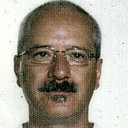 Giampiero Di Pirro合作论文数66
 Lorena Pellegrino合作论文数59Mikhail Zobov合作论文数59
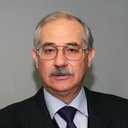 Claudio Sanelli合作论文数58F. Marcellini合作论文数57Cristina Vaccarezza合作论文数Istituto Nazionale di Fisica Nucleare - Laboratori Nazionali di Frascati56
 Giovanni Mazzitelli合作论文数Laboratori Nazionali di Frascati56R. Boni合作论文数55Francesco Sgamma合作论文数55Alberto Clozza合作论文数55Serena Guiducci合作论文数53M. Boscolo合作论文数52Caterina Biscari合作论文数49B. Spataro合作论文数Lab Nazl Frascati, INFN48Riccardo Ricci合作论文数Department of Pathology, Universita' Cattolica del Sacro Cuore48
 D. Alesini合作论文数44
 Gallo Alessandro合作论文数42Mario Serio合作论文数40C. Ligi合作论文数37Miro Andrea Preger合作论文数37M. Vescovi合作论文数37P. Raimondi合作论文数36M. E. Biagini合作论文数36G Delle Monache合作论文数28
 Maurizio Incurvati合作论文数28L. Catani合作论文数27
 Mauro Migliorati合作论文数Dipartimento di Scienze di Base e Applicate per l'Ingegneria, Universita' degli Studi di Roma “La Sapienza”,25
 Adolfo Esposito合作论文数24
 L. Palumbo合作论文数Dipartimento di Scienze di Base e Applicate per l'Ingegneria, Universita' degli Studi di Roma “La Sapienza”,23U. Rotundo合作论文数23M. Ferrario合作论文数University La Sapienza23Bruno Buonomo合作论文数INFN, Laboratori Nazionali di Frascati dell’INFN23
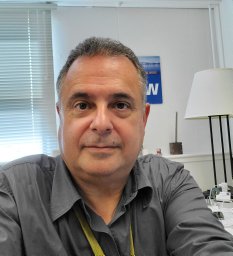 Fernando Sannibale合作论文数Advanced Technology and Accelerator Physics Division, Lawrence Berkeley National Laboratory;Advanced Light Source Division, Lawrence Berkeley National Laboratory22E. Chiadroni合作论文数21
 Vittoria Petrillo合作论文数INFN-Milano20
 L. Serafini合作论文数Laboratori Nazionali di Frascati19Francesco Broggi合作论文数INFN Sezione di Milano, Milano, Italy19
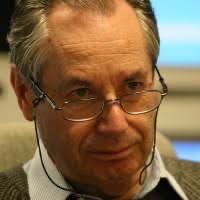 Michele Castellano合作论文数Laboratori Nazionali di Frascati, Istituto Nazionale di Fisica Nucleare19
 A. Cianchi合作论文数Ist Nazl Fis Nucl, Univ Roma Tor Vergata18
 E. Levichev合作论文数18
 C. Ronsivalle合作论文数ENEA17
 Sergio Bertolucci合作论文数INFN;Department of Physics and Astronomy, University of Bologna17
 A. Mostacci合作论文数Dipartimento di Scienze di Base e Applicate per l'Ingegneria, Universita' degli Studi di Roma “La Sapienza”,16
 Luca Giannessi合作论文数ENEA-Frascati16C. De Martinis合作论文数16




