With the rapid technological development, identifying the attackers behind cyber-attacks is getting more sophisticated. To cope with this phenomenon, the current process of cyber-threat attribution includes features like tactics techniques and procedures (TTP), tools, target country/ company and application. They do not include attacker context and motives; thus, they demand more refined traits. Adding behavioral features to this process is essential to better understand the attacker’s context, motivations and goals. This research study accentuates the impact of adding behavioral features with existing technical features in determining the actual actor. The behavioral features are extracted from Threat actor encyclopedia, a dataset published by Thai CERT. This research investigation also analyzes the impact of hybrid features (technical & and behavioral). For this procedure, the best features are chosen by implementing feature selection techniques. For empirical results, we use the threat actor encyclopedia, a data set published by Thai Cert, for extraction of behavioral attributes. With this augmentation, we achieve elevated results of 97%, 98.8%, 97%, and 97.2% in terms of accuracy, precision, recall and F1-measure using machine/deep learning algorithms.
With the advancement of modern technology, cyber-attacks are continuously rising. Malicious behavior in the network is discovered using security devices like intrusion detection systems (IDS), firewalls, and antimalware systems. To defend organizations, procedures for detecting threats more correctly and precisely must be defined. The proposed study investigates the significance of cyber-threat intelligence (CTI) feeds in accurate IDS detection. The NSL-KDD and CSE-CICIDS-2018 datasets were analyzed in this study. This research makes use of normalization, transformation, and feature selection algorithms. Machine learning (ML) techniques were employed to determine if the traffic was normal or an attack. With the proposed study the ability to identify network attacks has improved using machine learning algorithms. The proposed model provides 98% accuracy, 97% precision, and 96% recall respectively.
Cyber-threat attribution is the identification of attacker responsible for a cyber-attack. It is a challenging task as attacker uses different obfuscation and deception techniques to hide its identity. After an attack has occurred, digital forensic investigation is conducted to collect evidence from network/system logs. After investigation and collecting evidence reports are published in multiple formats such as text and PDF. There is no standard format for publishing these reports, so extracting meaningful information from these reports is a challenging task. Manual extraction of features from unstructured cyber-threat intelligence (CTI) is a difficult task. There is a need for an automated mechanism to extract features from unstructured reports and attribute cyber-threat actor (CTA). The aim of this research is to develop a mechanism to attribute or profile cyber threat actors (CTA) by extracting features from CTI reports. Moreover define a methodology to extract features from unstructured CTI reports by using natural language processing (NLP) techniques and then attributing cyber threat actor by using machine learning algorithms. Extracting features i.e., tactics, techniques, tools, malware, target organization/country and application by using novel embedding model known as" Attack2vec" which is trained on domain specific embeddings. Training model on domain specific embedding produces high results as compared to model train on general embeddings specially in the field of cyber security. Results of this novel model is compared with different methods. Machine learning algorithms such as decision tree, random forest, support vector machine is used for classification of CTA. This novel model produces high results as compared to other models with Accuracy of 96%, Precision of 96.4%, Recall of 95.58% and F1-measure of 95.75%.
Cardiac arrhythmias pose a significant danger to human life; therefore, it is of utmost importance to be able to efficiently diagnose these arrhythmias promptly. There exist many techniques for the detection of arrhythmias; however, the most widely adopted method is the use of an Electrocardiogram (ECG). The manual analysis of ECGs by medical experts is often inefficient. Therefore, the detection and recognition of ECG characteristics via machine-learning techniques have become prevalent. There are two major drawbacks of existing machine-learning approaches: (a) they require extensive training time; and (b) they require manual feature selection. To address these issues, this paper presents a novel deep-learning framework that integrates various networks by stacking similar layers in each network to produce a single robust model. The proposed framework has been tested on two publicly available datasets for the recognition of five micro-classes of arrhythmias. The overall classification sensitivity, specificity, positive predictive value, and accuracy of the proposed approach are 98.37%, 99.59%, 98.41%, and 99.35%, respectively. The results are compared with state-of-the-art approaches. The proposed approach outperformed the existing approaches in terms of sensitivity, specificity, positive predictive value, accuracy and computational cost.
Unmanned air vehicles (UAVs) used as aerial base stations (ABSs) can provide communication services in areas where cellular network is not functional due to a calamity. ABSs provide high coverage and high data rates to the user because of the advantage of a high altitude. ABSs can be static or mobile; they can adjust their position according to real-time location of ground user and maintain a good line-of-sight link with ground users. In this paper, a reinforcement learning framework is proposed to maximize the number of served users by optimizing the ABS 3D location and power. We also design a reward function that prioritize the emergency users to establish a connection with the ABS using Q-learning. Simulation results reveal that the proposed scheme clearly outperforms the baseline schemes.
Expression detection plays a vital role to determine the patient's condition in healthcare systems. It helps the monitoring teams to respond swiftly in case of emergency. Due to the lack of suitable methods, results are often compromised in an unconstrained environment because of pose, scale, occlusion and illumination variations in the image of the face of the patient. A novel patch-based multiple local binary patterns (LBP) feature extraction technique is proposed for analyzing human behavior using facial expression recognition. It consists of three-patch [TPLBP] and four-patch LBPs [FPLBP] based feature engineering respectively. Image representation is encoded from local patch statistics using these descriptors. TPLBP and FPLBP capture information that is encoded to find likenesses between adjacent patches of pixels by using short bit strings contrary to pixel-based methods. Coded images are transformed into the frequency domain using a discrete cosine transform (DCT). Most discriminant features extracted from coded DCT images are combined to generate a feature vector. Support vector machine (SVM), k-nearest neighbor (KNN), and Naive Bayes (NB) are used for the classification of facial expressions using selected features. Extensive experimentation is performed to analyze human behavior by considering standard extended Cohn Kanade (CK+) and Oulu-CASIA datasets. Results demonstrate that the proposed methodology outperforms the other techniques used for comparison.
Task scheduling is one of the core issues in cloud computing. Tasks are heterogeneous, and they have intensive computational requirements. Tasks need to be scheduled on Virtual Machines (VMs), which are resources in a cloud environment. Due to the immensity of search space for possible mappings of tasks to VMs, meta-heuristics are introduced for task scheduling. In scheduling makespan and load balancing, Quality of Service (QoS) parameters are crucial. This research contributes a novel load balancing scheduler, namely Balancer Genetic Algorithm (BGA), which is presented to improve makespan and load balancing. Insufficient load balancing can cause an overhead of utilization of resources, as some of the resources remain idle. BGA inculcates a load balancing mechanism, where the actual load in terms of million instructions assigned to VMs is considered. A need to opt for multi-objective optimization for improvement in load balancing and makespan is also emphasized. Skewed, normal and uniform distributions of workload and different batch sizes are used in experimentation. BGA has exhibited significant improvement compared with various state-of-the-art approaches for makespan, throughput and load balancing.
Primarily, there are three basic operational constituents of Nodule Detection Systems namely nodule candidate detection, classification of nodule and extraction of features. Thresholding is one of the most important factor for nodule detection. To segment the lungs and nodules, Gaussian approximation based Particle Swarm Optimization (PSO) is used to determine the optimal threshold value. After extracting lungs part, 2D and 3D region of interests (ROI’s) are used to detect nodules with area and volume information of nodules and then distinguish between wall and vessels by using fuzzy C-mean. There are three key objects namely wall, nodule and vessel in the lugs volume with specific shape. Shape-based features with Histogram of Oriented Surface Normal Vectors (HOSNV) are used as a feature descriptor. A scaled and rotation invariant multi-coordinate histogram of thegradient is used to identify nodules with different sizes and directionless shapes. So, a Novel Ensemble Shape Gradient Features (NESGF) descriptor for pulmonary nodule classification is proposed using the Histogram of Oriented Surface Normal Vectors and Multi-Coordinate Histogram of Gradient descriptor. The random forest has been used to classify the nodules through intelligent usage of the ensemble concepts to learn weak classifiers. A standard benchmark database Lung Image Consortium Database (LICD) is used for testing and validation purposes. In order to show the performance of segmentation quality, the proposed model is compared through three quantitative measures inclusive of Variation of Information (VoI), Probabilistic Rand Index (PRI) and Jaccard Measure. The methods Area Under Curve, Sensitivity, Specificity and Sensitivity have are used for classification. For classification, accuracy, sensitivity, specificity and Area under curve (AUC) has been used.
For detection and classification of pulmonary nodules, there are two major issues exists in the existing computer aided diagnosis system. First major problem is automatic threshold to segment lungs and nodules. Threshold selection is a critical preprocessing step for medical images. Gaussian approximation based differential evolution has been used to find out the optimal threshold value for segmentation of lungs. Initially, 1-D histogram of the image is estimated using a blend of Gaussian functions whose parameters are calculated using the differential evolution method. Every Gaussian function estimating the histogram characterizes a pixel class and hence a threshold point. Second major problem is to extract the optimized features for classification of nodules. So, a novel gradient intensity feature descriptor for pulmonary nodule classification has been proposed using the multi-coordinate histogram of gradient and intensity based statistical features descriptor. Ensemble bagging trees has been used intelligently using the concepts of ensemble to classify the nodules. We have used standard dataset titled lung image consortium database for the verification and authentication of our proposed computer aided diagnostic (CAD) system. The proposed CAD system gives better results in comparison with existing CAD systems. The sensitivity of 97.5% is attained with an accuracy of 98.7%.
Introduction: Renal biopsy is the diagnostic modality of choice for the diagnosis of renal parenchymal diseases. The advent of improved imaging techniques and biopsy needles over the years has increased the safety of the procedure and the ability to obtain adequate renal tissue for diagnosis. However, there is paucity of data in this regard from Pakistan. This study shall help in establishing the local perspective of the frequency of bleeding complications in percutaneous ultrasound guided renal biopsy. Materials and methods: This is a prospective case series of hospitalized patients from January till December 2015 at Nephrology Department, Aga Khan University Hospital, Karachi, Pakistan. After enrolment, each participant was followed for 24 h after renal biopsy. Results: A total of 220 patients were included. Mean age was 41.65 +/- 8.627 years, 82 (37.2%) were male and 138 (62.8%) were female. Pre and post biopsy haemoglobin, pre and post biopsy haematocrit were 10.92 +/- 1.25 and 10.60 +/- 1.22, and 30.82 +/- 4.73 and 30.49 +/- 4.68 respectively. Out of 220 patients, 16 (7.27%) developed major complications and 26 (11.8%) developed minor complications in 24 h after renal biopsy. Conclusions: Percutaneous kidney biopsy is a relatively safe procedure. Complication rates following the procedure are minimal. It is important that all nephrology programs train the trainees in performing biopsies, so that there is a wider clinical use of this important investigation even in underprivileged & developing countries. (C) 2017 The Authors. Published by Elsevier Ltd on behalf of IJS Publishing Group Ltd. This is an open access article under the CC BY-NC-ND license
The oviduct is a location of egg production, fertilization, and sperm storage. While its secretions have broadly attributes toward different physiological functions. We examined the ultrastructure of oviduct epithelium and glands in relation to the secretions, particularly with exosomes origin in Chinese soft-shelled turtle Pelodiscus sinensis using immunohistochemistry and transmission electron microscopy. The ciliated epithelial and gland cells were involved in the release of exosomes and secretions into lumen throughout the year. The exosomes were either released directly from epithelium or in relation with multivesicular body (MVB). The average size of the particles varies between 50 and 130 nm. These exosomes were also widely distributed in the epithelial ciliated cells and pericytoplasm of glands lumen. Intracellular MVB was characterized by membrane-bounded exosomes of different sizes. Exosomes were also found in close contact with the cilia and sperm membrane in the lumen, which is suggestive of their fusogenic properties. Immunohistochemistry results showed strong to moderate positive expression of exosomes, in ciliated and gland cells, during January, September, and December, as it is the time of sperm storage in this turtle, whereas they showed moderate to weak level of expression during breeding season (May). This is first study about identification of the exosomes in female turtles. Epithelial and glandular exosomes, intracellular MVB, secretions, and secretory vesicles give this turtle specie a unique secretory morphology and a potential model for investigating the secretory nature of the oviduct.
We assessed the efficiency of a hierarchical docking protocol against homology models in virtual ligand screening (VLS) studies. A low resolution model of factor X (FX) was built on a template of Trypsin molecule (PDB ID: 1EB2). Afterward VLS was performed involving a hierarchical protocol, rigid body followed by flexible docking, both against model as well as an X-ray structure of FX (PDB ID: 1FJS) using a smart library of 50,000 chemical compounds seeded with 9 known inhibitors of FX. The percentage enrichments of screened chemical compounds obtained both from the crystal structure and homology model of FX were compared to analyze the efficiency of the protocol. In the first 5% of the finally ranked database of the screened compounds, both against model and the X-ray structure, 67% of the inhibitors were retrieved.
Due to shifting of healthcare data in electronic form, huge volumes of data have been accumulated in organizations related to medical claim processing domain. This paper presents design of a data warehouse implemented as integral part of a rule based expert system. The system is being used for scrubbing of medical claims' data. Approximate star schema has been used for designing the proposed data warehouse. The data warehouse is being used by the production rule mining module and inference engine of the system. Rejected medical claims got corrected in operational database. Payments are received against corrected claims. Production rule mining module needs both versions of a claim, to learn new rules. Therefore data warehouse is required to store all states of medical claims. Moreover, efficiency of the rule based inference engine of the system has increased due to de-normalized format of data in the warehouse.
The current study was designed to evaluate the macro and trace mineral profile in soil, fodder and in buffaloes of irrigated agro-ecological zone. 60 soil and 60 fodder samples were collected from Block-1 (Tehsil Dera Ghazi Khan) and Block-2 (Tehsil Taunsa Sharif), whereas, in each Block, 60 blood samples were collected randomly from lactating buffalo. The concentrations of calcium, magnesium, copper, iron and zinc were quantified with the help of atomic absorption spectrophotometer whereas sodium and potassium were measured by a flame photometer. There was non-significant (P>0.05) difference in soil and fodder macro (calcium, magnesium, sodium, potassium) and trace mineral (copper, iron, zinc) concentrations between block-1 and 2. There was non-significant (P>0.05) difference in calcium, magnesium and sodium concentrations whereas significant (P<0.05) differences were observed for potassium concentrations in buffaloes of block-1 and block-2. There was non-significant (P>0.05) difference in copper, iron and zinc concentrations in buffaloes of block-1 and block-2. In block-1 and block-2, all buffaloes were deficient for zinc. It was concluded that buffaloes raised in the study area were lacking in some minerals, and for optimal production these minerals must be supplemented.
In the year 2009, a total of 500 faecal samples from buffaloes from different locations of Tehsil Muzaffar Garh were analyzed to confirm the presence of gastrointestinal parasitic infection. The recovered parasites were five nematodes and two trematodes. The nematodes were Toxocara vitulorum (16.6%), Oesophagostomum radiatum (3.2%), Bunostomum phlebotomum(1.6%), Cooperia spp. (1.6%), Trichostrongylus spp (0.8%). The two trematodes were Fasciola hepatica (8.4%), Paramphistomum cervi (15%). Age wise prevalence was 79.5% and 47% in buffalo calf and adult buffalo, respectively while sex wise prevalence was 78.4% and 50.93% in male and female buffalo, respectively. To know the dependence of helminth's prevalence on sex and age of animals, Chi-square statistical design was applied to data.
Many image processing tasks such as image segmentation, restoration, enhancement, edge detection etc. require an image in which all the objects are developed. The focal length of optical lenses is limited which results in an image containing partially developed objects. This paper deals with obtaining an image where all the objects are in focus: A SVM based classifier is used for multi-focus image fusion. The classifier is trained using feature vectors of blocks of ten different pairs of partially developed images. Different measures are used to characterize the detail present in image blocks. The results of proposed technique are compared using different quantitative measures with some of the existing techniques which show its performance.
Image processing techniques have witnessed increased usage in various real world applications. For any image processing technique, such as image segmentation, restoration, edge detection, stereo matching etc., to be applied successfully, the image under consideration must contain all of the scene objects in focus. Usually, due to inadequate depth of field of optical lenses, especially with larger focal length, it becomes impossible to obtain an image in which all of the objects are in focus. Image fusion deals with creating an image by combining portions from other images to obtain an image in which all of the objects are in focus. In this paper, a novel feature-level multi-focus image fusion technique has been proposed which fuses multi-focus images using classification. Ten pairs of multi-focus images are first divided into blocks. The optimal block size for every image is found adaptively. The block feature vectors are fed to feed forward neural network. The trained neural network is then used to fuse any pair of multi-focus images. The results of extensive experimentation performed are presented to highlight the efficiency and usefulness of the proposed technique. Key words: Multi-focus image fusion, feed forward neural network, feature classification, genetic algorithm.
For accurate image segmentation, edge detection and stereo matching, it is significant that all the objects in the image under processing must be in focus. However, due to limited depth of field of optical lenses particularly which have greater focal length, it is not always possible. In such cases, image fusion is performed to obtain an everywhere-in focus image. In this paper, we have proposed a highly precise method for multi-focus image fusion. We have proposed a method based on Particle Swarm Optimization (PSO) to find out the optimal size of blocks to be fused. Detailed experimentation is performed using different quantitative measures for different set of multi-focus images. We have compared the results of proposed technique with different existing image fusion techniques such as DWT, aDWT, PCA and Laplacian Pyramid based image fusion. Experimental results show that the proposed method outperforms the traditional approach both visually and quantitatively
A mobile Ad-hoc network consists of dynamic nodes that can move freely. These nodes communicate with each other without a base station. In this paper, we propose a Comprehensive Learning Particle Swarm Optimization (CLPSO) based clustering algorithm for mobile ad hoc networks. It has the ability to find the optimal or near-optimal number of clusters to efficiently manage the resources of the network. The cluster-heads do the job of routing network packets within the cluster or to the nodes of other clusters. The proposed CLPSO based clustering algorithm takes into consideration the transmission power, ideal degree, mobility of the nodes and battery power consumption of the mobile nodes. It is a weighted clustering algorithm that assigns a weight to each of these parameters of the network. Each particle of the swarm contains information about the cluster-heads and the members of each cluster. It uses the evolutionary capability to optimize the number of clusters. We compare the simulation results with two other well-known clustering algorithms. The results show that the proposed technique is effective and works better than the other two approaches.
 Arfan Jaffar合作论文数Department of Computer Science, FAST National University of Computer and Emerging Sciences7
 Ayyaz Hussain合作论文数International Islamic University7
 Anwar M. Mirza合作论文数Department of Computer Science, FAST National University of Computer and Emerging Sciences5
 Farrukh Aslam Khan合作论文数Ctr Excellence Informat Assurance, King Saud Univ3
 Waseem Shahzad合作论文数FAST National University of Computer and Emerging Sciences3
 Abdullah Alhumaidi Alotaibi合作论文数Dept Sci & Technol, Taif Univ2
 Turke Althobaiti合作论文数Faculty of Science, and the Remote Sensing Unit, Northern Border University2Murtaza Saeed合作论文数Faculty of Veterinary Science, Baha-ud-Din Zakariya University2
 Muhammad Mazhar Ayaz合作论文数Faculty of Veterinary Sciences, B.Z. University2
 Nadeem Anjum合作论文数Queen Mary University of London2
 Muhammad Rashid合作论文数Dept Comp Engn, Umm Al Qura Univ2
 Naeem Ramzan合作论文数Queen Mary University of London2h a bachaya合作论文数1aftab ahmed合作论文数1Fayez Eid Alazemi合作论文数1
 Majid Hussain合作论文数1Abdul Asim Farooq合作论文数1Masood Akhtar合作论文数1
 Muhammad Kashif合作论文数1Saad Irfan合作论文数1
 Rabeea Azmat合作论文数1Guipei Xing合作论文数1
 Muhammad Saleem Akhtar合作论文数1Pierre Nioche合作论文数1
 Irtaza Hussain合作论文数1Umer Javed合作论文数1
 Arif Jamal Malik合作论文数1
 Nisar Ahmed合作论文数1
 Muhammad Raza合作论文数Faculty of Veterinary and Animal Sciences, Muhammad Nawaz Shareef University of Agriculture1Ahmed Alkhayyat合作论文数1
 M. Sultan Zia合作论文数Dept Comp Sci, Univ Chenab1
 Tahir Khan合作论文数Inst Mol Biol & Biotechnol IMBB, Univ Lahore1Mushtaq Hussain合作论文数Dow University of Health Sciences Department of Molecular Pathology, DDRRL Karachi Pakistan1
 Ping Yang (杨平)合作论文数College of Veterinary Medicine, Nanjing Agricultural University1Kashif Waqar合作论文数1
 Sheeraz Akram合作论文数1
 Uzma Jamil合作论文数Dept. of Comput. Eng., Bahria Univ.;c;Dept. of Comput. Eng., Bahria Univ.1
 Muhammad Nazir合作论文数1
 Siddiqi Abdul Rauf合作论文数Department of Biosciences, COMSATS Institute of Information Technology1
 Yasir Waqas合作论文数1Zhang Qian合作论文数1
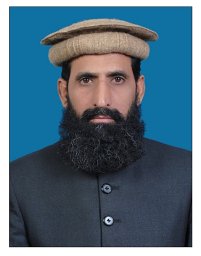 Hafiz Arshad合作论文数1
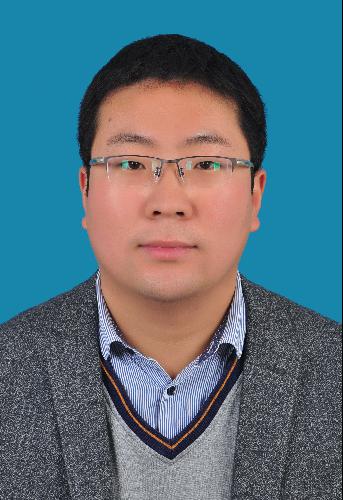 Tengfei Liu (刘腾飞)合作论文数College of Veterinary Medicine, Northwest A&F University1
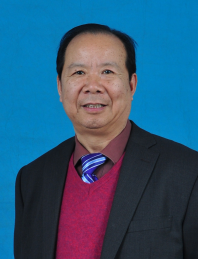 Hong Chen (陈宏)合作论文数College of Animal Science and Technology, Northwest A&F University1
 Bruno Villoutreix合作论文数Institut National de La Santé et de La Recherche Médicale1
 Ohyoung Song合作论文数School of Electrical and Electronic Engineering, Chung-Ang University1
 Ijaz Ahmad合作论文数Dept Chem, Kohat Univ Sci & Technol1
 Qiusheng Chen (陈秋生)合作论文数南京农业大学动物医学院1
 Muhammad Arshad合作论文数Northern Alberta Institute of Technology1




