The realities of climate catastrophe increasingly threaten opportunities for multispecies liveability on this planet; Earth is becoming more alien every day through unequal intensities of weirding. We explore the conceptual provocations in the idea of 'terraforming Terra': that is, exploring the politics of transforming exoplanets - fabulated in the pages of science fiction - in contemporary empirical situations on an alien Earth. Gleaning insight from the speculative fiction of Becky Chambers in her 2019 novella To Be Taught, If Fortunate, we examine her concept of 'somaforming' in relation to terraforming. Chambers presents somaforming as a technology deployed to adapt bodies to alien planets, as an explicit alternative to terraforming, enabling human survival in hostile exoplanetary environments. We read somaforming with empirical reference to ongoing technoscientific efforts seeking to adapt bovine bodies to the imagined futures caused by global warming, in preparation for weird worlds to come. We analyse two scientific experiments that attempt to adapt cattle to the negative environmental impacts of climate change - respectively parasitism and heat stress - affecting animal welfare and agricultural productivity. While these somaforming practices each use a different technology transforming the cows' body - through paint or gene editing - we argue that both illustrate the dangers of allowing 'somaforming experiments' to pre-empt an alien Earth, in its foreclosing of alternatives to 'business as usual'.
More-than-human metabolic processes increasingly constitute the locus of contemporary biopower, often responding to industrially-altered biogeochemical cycles. We conceptualise 'metabolo-politics' to examine the targeting of bodies and populations via interventions in the biochemical surroundings and ecologies that shape them; and simultaneously, the administration and modulation of materials in the environment via interventions in the bodies and populations that ingest, digest, and excrete them. Focusing on the governance of environmental crises related to carbon and nitrogen pollution, particularly in livestock sectors in the Global North, we offer three analytics for theorising metabolo-politics as a form of governance oscillating between bio-politics and anatomo-politics. They are: the dispositive, which grapples with the relations of matter and discourse that shape emergent problematisations of metabolism; the milieu, which is the more-than-human scene of intervention; and technologies, which are the diverse means through which power is operationalised metabolically and through which bodies, populations, and environments are governed.
Emergent research in metagenomics has unveiled large quantities of previously unknown and unclassified prokaryotic DNA. As these prokaryotes constitute the vast majority of microbial life in environmental samples, some microbiologists and commentators in scientific media have referred to this expansive unknown as ‘biological dark matter’, translating the rhetorical power of dark matter from the physical to the life sciences. Engaging literatues and approaches from across the philosophy, history, and social studies of science, we explore the cultural significance of the dark matter theory in the physical sciences and examine the implications of its conceptual reworking in biology, through critically engaging the political narratives folded within dark matter’s genealogies. ‘Dark matter’ designates both zones of importance and zones of turbulence, simultaneously emphasizing microbiologists’ creativity whilst constructing new ways of relating to microbiota. Such a situation, we propose, also invites theoretical analysis as it calls for a conceptual reconsideration of the gene and its fundamental role within the life sciences.
Geographers have much to learn from speculative philosophy, which can provide us with theoretical tools to broaden our modes of analysis and understandings of research subjects. Following Alfred North Whitehead's radical proposal for altering how we prescribe meaning to ‘experience’, Tom Roberts introduces areas of thought within ‘more-than-human geography’ and its overlaps with new materialisms where Whiteheadian analysis offers an experiential rupture. We concur with Roberts’ proposal, and, through conversing this thesis with the work of Isabelle Stengers and Didier Debaise, suggest that Whitehead offers unique conceptual tools for resisting geography's ‘bifurcation’. This intervention, we hold, has never been timelier given the ecological collapse of increasingly weird worlds.
Birding is a form of wildlife recreation that often involves exclusive communities and spaces, where both access and practice are policed along hegemonic lines. This paper examines the experiences of birders from marginalised communities who, through online networks, were able to challenge birding's historical hegemonies during the COVID-19 lockdowns and beyond. Our research participants were members of the Self-Isolating Bird Club (SIBC), a grassroots birding group founded on social media in 2020, which challenged preconceptions concerning both who wildlife was for and how it could be enjoyed. We contextualise the SIBC alongside other digitally-empowered wildlife communities and theorise these practices as 'glitches' in contemporary environmentalism. We present glitches as generative fissures that dissent, dismantle, and disorient the status quo, yet their impacts are generally understood to be fleeting and momentary. Engaging Legacy Russell's manifesto, Glitch Feminism, and recent geographical scholarship on the glitch's political atmospheres, this paper examines the conditions in which the fleeting impact of glitches can gain duration and engender lasting social change. Informed by affirmative, qualitative accounts of female-identifying members of the SIBC, we outline the participatory work through which the disruptive effects of glitches can endure and note their implications for wildlife recreation spaces like bird hides, parks, and nature reserves, which have historically made non-conforming bodies and marginalised people feel unwelcome or unsafe. Accounting for such duration, we develop work on glitches in digital geography and digital ecologies by conceptualising 'glitch environmentalism'.
Digital mediation profoundly shapes how cultural geographers understand and encounter nature. Practice-based engagements with digitally mediated natures pose methodological, aesthetic and ethical questions for cultural geographers. Reflecting on a conference held in Bonn, Germany, in July 2022, which brought together a host of artists, practitioners, researchers and designers working at the human-technology-nature interface, this paper introduces the special issue, Digital Ecologies in Practice. The paper reflects on the key themes which cut across contributing articles and sketches a framework for methodologically – and practice – inclined geographers. Specifically, we draw out the ways in which practice-based engagements with digital technologies and processes of digitisation afford novel modes of sensing, speculating and remediating natures that have implications for the doing of both digital ecologies and cultural geographies as fields of research and domains of critical practice.
Abstract Scientific measurement and prediction tools have highlighted the significant greenhouse gas contributions of farmed animals, particularly dairy and meat cows. Emergent analysis and associated political discourse have refigured narratives of blame for the contemporary climate crisis, influencing international policy and inspiring a range of technological and economic fixes to construct “climate cattle” as keystone species for a “good Anthropocene.” Interventions are centered on bovine metabolisms at different spatial and temporal scales; they include the use of feed supplements that inhibit methane production in bovine rumens during digestion, and selective breeding or genetic engineering for the breeding of future-ready low-methane cows. In these bovine “technofix” solutions, the global scale is invoked to drive metabolic interventions at multiple smaller scales including individual cows, their microbiomes, and their genomes. Research, however, suggests that these interventions do not neatly scale back up as invoked by those deploying them for climate-related ends. Rather, the global scale functions discursively to incentivize bovine metabolic intervention, influence agricultural policies, and draw investment into ecomodernist visions of “good cows for a good Anthropocene.” Through examining how cows figure as both problems and solutions through metabolic interventions, this article traces the importance of, and issues with, scale in contemporary environmental governance.
How do technologies animate more-than-human geographies after extinction? How can geographical scholarship evoke, or bring presence to, extinct biota? In an epoch simultaneously characterized by biotic loss at an unthinkable scale and the increased presence of representations depicting nonhuman life through mass media and digitization, we examine the epistemic, affective, and ethical possibilities of extinct animal traces to shape more-than-human geographies. We show how technological apparatuses inaugurate afterlives of extinction troubling binaries of extinct-extant and absence-presence. Specifically, we consider audio and visual remains of two taxa producing awkward and unsettling postextinction geographies: the ivory-billed woodpecker and the bucardo. Sound recordings and other historical traces continue to forge contemporary connections between human searchers and the ivory-billed woodpecker, although no sighting of the ghost bird has been universally accepted since 1944. The bucardo was declared extinct in 2000, but it was tentatively reanimated through a failed 2003 cloning project; in this milieu, visual technologies and representations conjure alternative presence and speculative futures beyond technoscientific spectacle. Through conversing our own situated, speculative, and technologically mediated relations with these taxa-and situating the technological assemblages themselves-we present some of the lively, contested, and dispersed ways technological apparatuses affect and inaugurate animated geographies after extinction.
Ecological collapse and the proliferation of digitally mediated relations are two conjoined elements of the ‘technonatural present’, which pose varied challenges and openings for the future of geographical thought and praxis beyond the delineated sub-disciplinary concerns of more-than-human and digital geographies. In this commentary, we draw attention to the inseparability, now and into the future, of geographical thought and praxis from digital mediation. This mediation is also central to forms of encounter, exploitation, and governance shaping human-nonhuman relations. Within this complex nexus of humans, nonhumans, environments, and technologies, it is crucial to critically examine how nature is made (mediated) and remade (remediated), by whom, for whom, and with whom. We call for research that affirmatively centres the potentials for progressive digitally-mediated environmentalisms, drawing from Agnieszka Leszczynski and Sarah Elwood's work on ‘glitch epistemologies’. To conclude, we point to a series of themes and questions that geographers might usefully engage with as they navigate digitally (re)mediated catastrophic times.
Scientific measurement and prediction tools have highlighted the significant greenhouse gas contributions of farmed animals, particularly dairy and meat cows. Emergent analysis and associated political discourse have refigured narratives of blame for the contemporary climate crisis, influencing international policy and inspiring a range of technological and economic fixes to construct "climate cattle" as keystone species for a "good Anthropocene." Interventions are centered on bovine metabolisms at different spatial and temporal scales; they include the use of feed supplements that inhibit methane production in bovine rumens during digestion, and selective breeding or genetic engineering for the breeding of future-ready low-methane cows. In these bovine "technofix" solutions, the global scale is invoked to drive metabolic interventions at multiple smaller scales including individual cows, their microbiomes, and their genomes. Research, however, suggests that these interventions do not neatly scale back up as invoked by those deploying them for climate-related ends. Rather, the global scale functions discursively to incentivize bovine metabolic intervention, influence agricultural policies, and draw investment into ecomodernist visions of "good cows for a good Anthropocene." Through examining how cows figure as both problems and solutions through metabolic interventions, this article traces the importance of, and issues with, scale in contemporary environmental governance.
Ecologists, particularly restoration ecologists, were early to recognise the challenges of historically unprecedented combinations of species and abiotic conditions brought about by human intervention. However, to date, this ecological understanding has paid limited attention to sociocultural considerations. We propose the concept of novel natures to combine ecological and social dimensions in the perception and evaluation of novelty in nature, and to assist conservation and restoration decision-making in a time of rapid environmental change.
Humans, non-human animals, and technologies are increasingly entangled. Using the peregrine falcon (Falco peregrinus) as an illustrative example, we propose 'technonatural history' as a theoretical and methodological approach for observing, describing, and examining the role technologies play in shaping human relations with other species. After nearing extinction in the 20th century, peregrines have become woven into the fabric of everyday urban life and are a frequently sighted urban raptor in the UK, nesting on high-rise buildings and church spires since the late 1990s. Their unexpected presence in cities symbolises hope for multispecies conviviality amid the contemporary ecological crisis. As their populations resurged, crucially, webcam and livestreaming technologies developed rapidly. Peregrines were one of the first animals to be broadcast over the internet via 'nestcams', granting broad publics access to their intimate lives. We examine the related technological histories of livestreaming technologies and natural histories of peregrine falcons in the UK, tracing the emergence of 'the digital peregrine' and its manifold implications for more-than-human and digital geographies. To do so, we build on oral history interviews with people associated with digital peregrines throughout the UK: nestcam technicians, peregrine conservationists, professional ecologists, activists, and citizen scientists. While digitisation brings broad publics closer to these cosmopolitan raptors, they can only ever grasp at the wildness of peregrine falcons and their wider milieus as the digital peregrine is a distinct entity, encountered via its own set of affects and affordances. In the peregrine's case, digital technologies create unexpected and radical opportunities for urban conviviality, signalling the positive potentials technologies host for forging meaningful more-than-human connections.
This informal dialogue contextualises and explores contemporary practices of nonhuman animal gene-modification in de-extinction projects. Looking at recent developments in biotechnology’s role in de-extinction sciences and industries, these interdisciplinary scholars scrutinise the neoliberal impetus driving ‘species revivalism’ in the wake of the Capitalocene. Critical examinations of species integrity, cryo-preservation, techno-optimism, rewilding initiatives and projects aimed at restoring extinct animals such as the woolly mammoth and bucardo are used to map some of the necessary restructuring of conservation policies and enterprises that could secure viably sustainable – and just – futures for nonhuman animals at risk of extinction. The authors question what alternatives are being ignored in the wake of technoscientific responses to the climate emergency, and interpret the motivations, tactics and tools responsible for commodifying nonhuman animals down to the cellular level. Our conversation on the messy relations within endangered ecologies offers alternative approaches to environmental governance and strategies for addressing the climate and biodiversity crises today.
After nearing extinction in the late 1970s, peregrine falcons have adapted to urban ecosystems, becoming a UK conservation success story. This chapter tells the story of peregrine falcon resurgence in the UK, tracing three key lignes de fuite that peregrines have taken from the twentieth to the twenty-first century. First, we consider the peregrine as a revenant ghost: its transformation into spectral form, its fading from human sight as it neared extinction, and its resurgence and ecological recovery. Second, we consider the peregrine's movement into new spaces; specifically, the built environments of urban landscapes. The revenant peregrine has become urban, occupying novel territories and displaying new mobilities closely aligned to human worlds. Third, we consider a further transition that has accompanied the peregrine's recovery and urban flyways: its emergence in and through the fractal spaces of the digital world. Cameras mounted on nests, shared through the internet, have allowed the peregrine to move through new digital skies, interweaving its flight across a different cloud. From single images refreshed every 30 seconds to high-definition livestreamed audiovisual footage of peregrine nests, "nestcams" have proliferated online, offering unique windows into the lives of these charismatic predators, which have become cosmopolitan species par excellence. We draw on archival research and extensive qualitative research with peregrine nestcam hosts, local birding groups, and online visitors to nestcams across the UK to make our argument.
Digitisation produces unique understandings of, and access to, nonhuman worlds, and reshapes conservation, environmentalism, and ecological politics. This chapter explores the disciplinary trends in more-than-human and digital geographies, outlining how the shared empirical and ethical interests can pose a range of questions for future research in the emerging field of ‘digital ecologies’. We exemplify this by focusing on peregrine falcons in the UK, emphasising how their resurgence over the last two decades has been entangled with digital technologies and mediation. Specifically, we focus on ‘nestcams’ - livestreaming webcams positioned in peregrine nests - showing how they opening up novel and convivial modes of human-nature relation. We show how nestcams digitally mediate urban space, reconfiguring the urban as a wild space, but one in which wildness, care, and conviviality come together. We conclude with future avenues for research in digital ecologies, encouraging geographers to experiment with participatory and interdisciplinary digital methods.
Digital technologies increasingly mediate relations between humans and nonhumans in a range of contexts including environmental governance, surveillance, and entertainment. Combining approaches from more-than-human and digital geographies, we proffer ‘digital ecologies’ as an analytical framework for examining digitally-mediated human–nonhuman entanglement. We identify entanglement as a compelling basis from which to articulate and critique digitally-mediated relations in diverse situated contexts. Three questions guide this approach: What digital technologies and infrastructures give rise to digital entanglement, and with what material consequences? What is at stake socially, politically, and economically when encounters with nonhumans are digitised? And how are digital technologies enrolled in programmes of environmental governance? We develop our digital ecologies framework across three core conceptual themes of wider interest to environmental geographers: (i) materialities, considering the infrastructures which enable digitally-mediated more-than-human connections and their socioenvironmental impacts; (ii) encounters, examining the political economic consequences and convivial potentials of digitising contact zones; (iii) governance, questioning how digital technologies produce novel forms of more-than-human governance. We affirm that digital mediations of more-than-human worlds can potentially cultivate environmentally progressive communities, convivial human–nonhuman encounters, and just forms of environmental governance, and as such note the urgency of these conversations.
This paper offers a detailed empirical account of how human-environment relations were reconfigured in the UK and Ireland during the 2020-2021 COVID-19 lockdowns, a period which natural scientists defined as the COVID-19 Anthropause. Bringing this scientific concept into conversation with geographical work, we consider anthropause as both a lived condition and an historical moment of space-time decompression. Our expanded conceptualisation of anthropause, centred on lived experience and everyday life, develops a more hopeful politics than those offered by the 'Great Acceleration' narrative, which suggests digital media and urbanisation separate humans from nature. In contrast, we identify affirmative and inclusive modes of 'anthropause environmentalism' and explore their potential for fostering convivial human-nature relations in a world that is increasingly urban, digital, and powered by vernacular expertise. To make this argument, we turn to the Self-Isolating Bird Club, an online birdwatching community operating across several social media platforms which, at the pandemic's height, reached over 50,000 members. We trace three key changes to human-nature relations illustrated by this group which we use to structure our paper: connection, community and cultivation. The COVID-19 Anthropause recalibrated the fabric and rhythms of everyday life, changing what counts as a meaningful human-nature relationship. This paper will be of interest to geographers exploring environmental change at the interface of more-than-human and digital geographies, as well as environmentalists and conservationists. To conclude, we offer suggestions as to how scholars and practitioners might harness the lessons of anthropause to respond to the 'anthropulse'.
Billions of people saw their lives dramatically altered in 2020/2021 as the novel coronavirus, SARS-Cov-2, spread rapidly, initiating a global pandemic. Physical distancing was the most deployed tactic to prevent interpersonal transmission, which led to a significant reduction in human mobilities and activities at an international—and yes, unprecedented—scale. As a consequence of this, large swathes of the public began to pay more attention to, seek out relations with, and show an interest in nature and the nonhuman world. Drawing on a range of empirical materials collected during the lockdown period, this chapter discusses the significance of these altered human-nature relations. From the proliferation of reactionary 'nature is healing' memes, to the flourishing of online birdwatching communities, to the efforts of some ecologists to collect data during the 'COVID-19 Anthropause', we discuss the diverse more-than-human geographies of lockdown life. We draw on digital ethnography, focus groups, large-scale surveys, interviews, and discourse analysis concerning a range of case studies from Sheffield to Chornobyl to critically analyse how these relationships, knowledges, and encounters might inform strategies for fostering post-pandemic more-than-human conviviality.
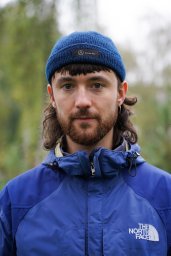 Jonathon Turnbull合作论文数Dept Geog, Univ Cambridge18
 Oscar Hartman Davies合作论文数3
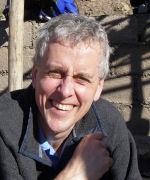 William M. Adams(Bill Adams)合作论文数Department of Geography, University of Cambridge3Henry Anderson-Elliott合作论文数2
 Jennifer Dodsworth合作论文数2Pauline Chasseray-Peraldi合作论文数2
 Catherine Oliver合作论文数Dept Geog, Univ Cambridge2
 Erica von Essen合作论文数Department of Social Anthropology, Stockholm University2
 Jamie Lorimer合作论文数School of Geography and the Environment, University of Oxford2Rosine Kelz合作论文数1
 Uta Eser合作论文数1
 Julia Sattler合作论文数1Eva Kasprzycka合作论文数1Hannah Hunter合作论文数1Julia Poerting合作论文数1
 Armin Bischoff合作论文数1finn arne jorgensen合作论文数1
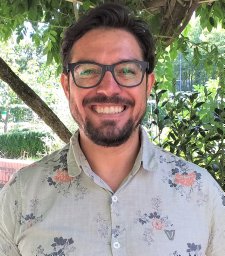 Leonardo H. Teixeira合作论文数TUM School of Life Sciences, Technical University of Munich1
 Andreas Hubert Schweiger合作论文数Institute of Landscape and Plant Ecology, University of Hohenheim1
 Tim R. Hofmeester合作论文数Resource Ecology Group, Wageningen University and Research Centre1
 Tina Heger合作论文数Department of Ecology and Ecosystem Management, Technische Universität München (TUM),1
 Eric Higgs合作论文数School of Environmental Studies, University of Victoria1
 Rene van der Wal合作论文数Aberdeen Centre for Environmental Sustainability (ACES),, Macaulay Institute and University of Aberdeen1
 Richard Twine合作论文数ESRC Centre for Economic and Social Aspects of Genomics (CESAGen) IAS Building, Lancaster University1Shane Mccorristine合作论文数Humanities Institute of Ireland1




