За последние годы достигнут значительный прогресс в изучении скрытого разнообразия грибов и грибообразных протистов (Myxomycetes = Mycetozoa) в связи с ростом использования методов секвенирования следующего поколения (NGS). В этом обзоре мы подвели итоги исследований почвенных грибов, включая эктомикоризные грибы, сапротрофные аскомицеты, базидиомицеты и миксомицеты, а также дереворазрушающих грибов, с акцентом на последствия пожаров для этих организмов. Также обсуждены несколько направлений в этих исследованиях, включая методы и подходы.
The annotated list of macromycetes collected in 2007–2011 in the Pechory District of the Pskov Region during our investigation of the macrofungi of the grassland communities on calcareous soils is presented. It includes 55 species (7 — Ascomycota, 48 — Basidiomycota), among which 42 species and 1 variety are new to the Pskov Region, including 3 species new to Russia, i. e. Conocybe pulchra, Entoloma glaucobasis, E. ochromicaceum (the descriptions and illustrations of these species are provided). The studied communities are dominated by Conocybe and Entoloma, but the members of typical «grassland» genera Camarophyllopsis, Dermoloma, Geoglossum, Hemimycena, Hygrocybe, Mycenella were also found there.
Amanita pallidorosea, A. longistriata and A. farinosa are recorded for the first time for Russia from the Primorye Territory. Their descriptions and illustrations are provided.
Mycena viscidocruenta is presently known only from the Antipodes. Collections from far eastern Russia were shown to be closely related both by morphology and by sequence homology. Phylogenetic analyses based on ribosomal LSU and ITS sequences show that the M. viscidocruenta clade is sister to Panellus stypticus and Panellus (Dictyopanus) pusillus, two laterally stipitate taxa, in the panelloid clade. Resinomycena rhododendri, the type species of Resinomycena is basal to this group. A new genus, Cruentomycena, is proposed to accommodate C. viscidocruenta (typus generis) and a new species, C. kedrovayae.
The results of mycological foray to Sebezhsky National Park (North-Western Russia) in July 2002 are presented. The Park is situated in the southwestern part of Pskov region, close to Belarus and Latvia borders. Foraying took place in the mixed and coniferous woodland, mainly Scots pine, aspen, birch and Norway spruce, sometimes with oak, hazel and ash. An annotated list represented consists of 126 species new for Sebezhsky National Park (of 184 collected) including 26 ascomycetes and 100 basidiomycetes. Melastiza carbonicola is recorded for the first time for Russia.
Annotated list of 80 species of agaricoid basidiomycetes collected by the authors during mycological foray (July 1994) in Pskov and Novgorod regions (southern taiga subzone) is presented.
Valaam archipelago in the northern part of Ladoga lake belongs to the middle taiga subzone with Scots pine and Norway spruce forests and is characterised by the typical vegetation complex. Nemoral element also plays here a considerable role. Many introduced species such as Larix sibirica, Abies sibirica, Pinus sibirica and Quercus robur have been grown and self-reproduced here for over 130 years. Tourism and pilgrimage as well as monastery economic activities affect the nature of the island. Since 1979 archipelago received a status of the State historical and architectural reserve-museum because of it's special historical and cultural value (the Valaam monastery has been functioning since XIV century) as well as uniqueness of natural complexes. Until recently there were practically no studies of the archipelago's macromycetes. Three expeditions to Valaam were carried out in 1995-1996. This paper is the first in a planned series of publications. 197 species and intraspecific taxa from the orders Boletales, Russulales, Cortinariales, and Agaricales (Tricholomataceae only) are reported here. Information on location, habitat, collection date and number (in brackets) or LE herbarium specimen number are given for each species sample. The specimens are kept at Komarov Botanical Institute of RAS (LE).
The paper gives an overview and analytical treatment of recent works on the role of fungi (and particularly of ectomycorrhizal one) in the structure and coenological hierarchy of ecosystems. Modern classifications and nomenclature of fungal communities are discussed. The biocoenoses succession concept in an interpretation and development of Razumovskii (1981) is proposed as a theoretical basis for mycocoenological investigations. The hypothesis is advanced that there are socalled successional groupings of ectomycorrhizal fungi related to certain stages of ecosystem succession. Some of the supporting evidence for this hypothesis picked up from newest publications are presented.
 E. S. Popov合作论文数6
 Ekaterina Malysheva合作论文数4Yu. K. Novozhilov合作论文数3Ю. К. Новожилов合作论文数3Anna G. Fedosova合作论文数2
 Nadezhda V Psurtseva合作论文数Russian Academy of Sciences Komarov Botanical Institute Saint-Petersburg2
 Vera Malysheva合作论文数2V. A. Mel’nik合作论文数1
 Anna Kiyashko合作论文数1PY Kolmakov合作论文数1
 Olga Morozova合作论文数1
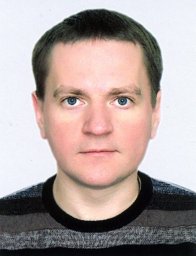 Sergey Volobuev合作论文数Russian Acad Sci, Komarov Bot Inst1
 Edgar B Lickey合作论文数1
 Oleg Shchepin合作论文数1
 Ronald Petersen合作论文数1
 Ivan V. Zmitrovich合作论文数1
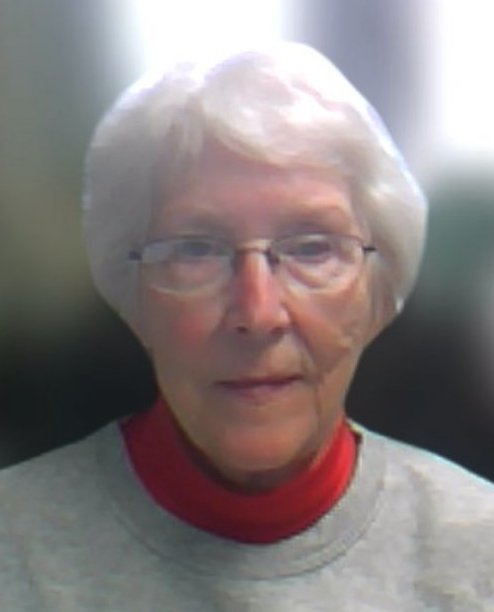 Karen Hughes合作论文数Department of Ecology & Evolutionary Biology, College of Arts and Sciences, The University of Tennessee Knoxville1




