Creativity has become increasingly critical for decision-making, particularly at upper organisational levels where male-dominated teams remain prevalent. While a substantial body of research has examined the relationship between gender diversity and collective creativity, far less attention has been paid to numerical gender dominance in creative teams, and especially to the dynamics of male-dominated configurations. In this paper, we address this gap by examining how men's behaviour unfolds in male-dominated teams and how these patterns translate into team dynamics and creative outcomes. Using a framed field experiment involving 55 male (and 33 female) experienced managers, we investigate how male-dominated teams composition shapes men's contributions to collective creativity. Drawing on both quantitative and qualitative analyses, we show that men in male-dominated teams contribute fewer ideas, resulting at the collective level in fewer ideas and across fewer categories. Grounded in social role theory, we further identify three underlying mechanisms. First, men in male-dominated teams are less likely to engage in idea bouncing, i.e., building on previously generated ideas. Second, they provide less positive feedback on peers' ideas. Third, they report higher confidence in their performance, fostering a satisficing tendency that reduces persistence in idea exploration. Taken together, our findings show that ideation is particularly constrained in male-dominated contexts and point to actionable managerial implications. Beyond simply promoting gender balance, they highlight the need for targeted interventions to mitigate these gendered dynamics and foster more effective collective creativity.
Understanding collaboration is central to management education, yet it is often approached through verbal, cognitive, and performance-oriented pedagogies. We propose an art-based initiative designed to foster a more subtle understanding of collaboration by encouraging reflection on participants’ engagement in a dynamic relationship and by cultivating an understanding of listening beyond silence, including attentiveness to others’ aesthetic expressions. In this article, we present an experiential exercise based on abstract painting and silent co-creation that invites participants to explore nonverbal communication, embodied awareness, and relational attunement. Drawing on embodied collaboration and aesthetic theories, the exercise is particularly effective for highlighting tacit dynamics such as esthetic expressions of oneself, boundaries, power dynamics and embodied synchronization. We detail the pedagogical foundations, learning objectives, step-by-step implementation, and debriefing questions. This exercise can be used at the graduate level, in courses on leadership, organizational behavior, or communication, as well as in executive training.
Listening to background music during non-musical tasks is a common practice, yet its effects on creative performance remain to be fully understood. Previous research has predominantly focused on its mechanisms, notably emotional mechanisms, overlooking the role of music's structural properties. This study investigates how musical predictability, i.e. the extent to which a musical structure aligns with the listener's expectations, influences creative cognition by applying the Dual Pathway to Creativity model, which distinguishes between flexibility and persistence pathways. In a controlled experiment, 61 participants were randomly assigned to listen to one of two Mozart pieces differing in musical predictability while performing creative tasks. Measures included flexibility and persistence components of divergent thinking, as well as persistence in convergent thinking. Results indicate that higher musical predictability enhances persistence in both divergent and convergent thinking, but this increased engagement comes at a cost: flexibility is reduced through task engagement mechanisms, even though no direct effect of musical predictability on flexibility is observed. Importantly, this effect is mediated by task engagement rather than emotional mechanisms. These findings offer practical insights for individuals curating music to support creative work and for organizations designing auditory environments to strategically foster specific types of creative cognition.
Although the proportion of women in academic positions has increased, women researchers continue to receive less media coverage than their counterparts. To examine the implications of this underrepresentation, we investigate how different audiences respond to women researchers' increased visibility in social sciences dissemination media. We conducted two laboratory experiments, the first with a sample of non-academic individuals (N = 271) and the second with a sample of graduate students (N = 129). Results show that greater visibility of women researchers reduces the gender gap in self-efficacy beliefs between men and women in both populations. It also increases women researchers' perceived expertise among non-academic participants, but not among graduate students. Among the later, however, heightened visibility is also unexpectedly associated with a decline in the perceived attractiveness of academic careers, but only for men. While our research focuses specifically on women researchers in the field of management science and manipulates media visibility through the relative representation of women and men in a simulated scientific dissemination newsletter, our findings offer broader insights into how media exposure can influence self-efficacy beliefs, perceptions of researchers' expertise, and the attractiveness of academic careers. Building on these insights, we propose recommendations for researchers, academic institutions, and media organizations engaged in science dissemination.
Management educators regularly innovate by designing and/or integrating experiential exercises into their classrooms. Many then endeavor to publish their exercises in academic journals, providing readers with a roadmap for how to use them in their classes. To convince colleagues that an activity helps students learn, authors will often include evidence demonstrating its impact. Importantly, there is a dearth of research exploring the types of evidence authors use to do so. We analyzed 185 articles presenting in-class management-related experiential exercises, published across seven journals between 1 January 2018 and 1 June 2024. In so doing, we contribute to the literature by synthesizing the ways in which authors demonstrate the effectiveness of their activities. We offer both a portrait of current practices and framework of strategies (by source, type, and preparation required) that prospective authors may draw on as they reflect on impactful ways to structure upcoming data collection efforts. We are, however, mindful that most authors in our sample were affiliated with institutions in North America. As norms regarding evidence for experiential exercises are collectively shaped by journal expectations and authors, we reflect on how our methodological choices contribute to shaping practices about what “counts” as credible evidence in management education.
Living Labs (LLs) are now well-recognized in the development and commercialization of science—that is taking emerging discoveries from research labs to the industry. Whereas their widespread interest seems encouraging, it has been complicated by some inconsistencies regarding what LLs actually are, what types of activities they (should) support, and under what conditions. We conduct a meta-synthesis of 41 LL application patterns, supplemented by an in-depth empirical case study—the application of a MedTech LL in healthcare—to examine effective practices for organizing collaborative innovation within the science-industry nexus. By studying what worked best and under what conditions, we present a typology of eight design elements that underlie four unique LL models. Our analysis reveals that although these different models do fit under the same umbrella concept, they vary in the roles they serve in the collaborative innovation process. Most notably, we find that organizations need to navigate between these models as the collaboration moves from idea inception into impact. Our results offer relevant insights for understanding new forms of organizations for science-industry relations. We discuss practical implications for LL managers, researchers, and sponsoring institutions and conclude by outlining promising areas for future research.
Everyone seems to have something to say about creativity, thus participating in the reproduction of persistent myths about creativity that may influence creative behaviour. This research explores the influence of Laypeople's Implicit Theories of Creativity (LIToCs) regarding the drivers of creativity on creative performance, to ascertain whether having strong convictions about the drivers of creativity either enhances or hinders creative productivity when these convictions align with the actual methods of stimulating creativity. An experiment randomly involved 69 subjects who were invited to drink the exact same fruit juice before performing a creative task. In one condition, they were told this was indeed juice; in the other condition, they were told that it was mixed with Red Bull. Analyses showed an interaction effect with the subjects' LIToC, such that among subjects displaying strong LIToC, individual creative performance was lower when they perceived the conditions to stimulate creativity were activated, than otherwise. These results suggest that having strong beliefs in the effects of some creativity drivers might then trigger a complacent attitude and reduce the invested effort in generating creative ideas. This research contributes to rethinking how we use specific drivers to stimulate creativity, as strong LIToCs about those drivers may have a counterproductive effect on creative performance.
Emerging technologies are characterized by malleability and incompleteness, rendering them profoundly unpredictable. Science and Technology Studies (STS) have underscored the significance of prospective narratives, such as technological visions, in managing the inherent uncertainty of emerging technologies. However, the dynamics of prospective narratives within the settings of organizations remain underexplored in organizational studies (OS). Therefore, this paper explores the mechanism by which organizations frame emerging technologies and navigate the future’s intrinsic uncertainty. We investigate these issues through an ethnographic case study of EnerCo, a large electricity utility. We find that the process of constitution of a technological vision is driven by iterative enactments of anticipating, which involves creatively formulating prospective narratives, and disseminating, which encompasses transferring and translating prospective narratives into new social settings. By bridging the STS literature on technological expectation and the OS practice framework of zoom in/out, we offer a fresh outlook on the reciprocal relationship between organizational dynamics and technoscientific narratives.
Innovation intermediaries have emerged as prominent forms of intervention for supporting technological changes and driving sociotechnical transitions. In this paper, we draw on an in-depth case study tracing the emergence and evolution of an intermediary organization created specifically to address innovation-related challenges and spur digital transformation in the healthcare sector in Montreal, Canada. We analyze data from 85 interviews with leading actors in the healthcare ecosystem, coupled with supplementary material, meetings, and follow-ups to theorize how intermediaries help facilitate the diffusion of emerging digital technologies in this sector. Our analysis reveals two interrelated processes: (1) "technology-focused intermediation" to help co-create the technology in accordance with existing demands; and (2) "ecosystem-focused intermediation" to help reinforce ecosystem components for enabling effective deployment. Each of these processes is driven by sourcing, mobilizing, and scaling activities intended to align the technology development trajectory with envisioned sociotechnical requirements.
Understanding the dynamic relationships of the entities that have the most impact on an organization—or that the organization impacts the most—is at the core of stakeholder management approaches. In this article, we present an experiential exercise that provides a creative practical, low-overhead, discussion-oriented classroom activity to engage in a critical examination of the concept of stakeholders. This exercise is especially effective for the stakeholders usually invisibilized. Rather than relying on presenting stakeholder theory, this exercise uses fictional writing as a way for students to give a voice to water, a most often invisibilized stakeholder on an academic campus. The activity encourages reflection on the perception we hold toward certain stakeholders and aims to raise awareness toward the underrepresentation of some of them despite the centrality of their contribution to the organization. The exercise also enables students to grasp that there are limits when trying to speak on behalf of someone or something that structurally does not have a voice. This exercise can be used at the graduate level. Recommendations for adapting the exercise to the large classes are included.
Supporting entrepreneurship has become an explicit priority during a crisis. The challenge, however, is to understand why and how some entrepreneurial support initiatives can be more successful than others at responding to emerging business development challenges in such context. In this paper, we blend organizational sponsorship and resilience theories to explore the adaptive behaviors of entrepreneurial support organizations—intermediaries that manage and monitor the development of new ventures—during a crisis. We show that the resilience of both local businesses and that of the broader ecosystem can be reinforced through ensuring a dynamic “fit” between entrepreneurial support activities and evolving needs and priorities. Our analysis is grounded in observations, interviews, discussions, and archived data gathered during an in-depth case study investigating the impact of the Lebanese crisis on the state of the country’s entrepreneurial ecosystem. We discuss the implications of this research on theories and practice of resilience and entrepreneurship in times of crisis.
Most graduate programs in management require students to carry out a substantive research project. However, few management students have a comfortable command of the statistical techniques needed to realize such quantitative projects. This can lead to student anxiety and stress, which challenges instructors to devise ways to build students' self-efficacy with statistical analysis. Drawing on game-based learning principles, we developed an exercise to help students in a graduate-level research methods course practice these statistical techniques. Designed around a series of four gamified challenges, students perform basic statistical analyses (correlations, t-tests, and simple linear regression) to solve puzzles and unlock a reward hidden in a mysterious red envelope. We used the exercise on seven occasions (five times in the methods course and twice in a graduate program preparatory course). After launching it in fall 2021, we observed that students were engaged and enthusiastic about the exercise. To ascertain its effectiveness more systematically, we collected data in five subsequent sections using a pretest/posttest design (N = 84) which showed that perceptions of statistics self-efficacy increased following the exercise. We conclude by suggesting that our exercise can be tailored to other learning contexts such as management and statistics-centered courses.
Virtual teams are gaining increasing momentum in contemporary organizations. Although it is becoming clear that virtual teams will play a major role in shaping the future of work, we still know relatively little about their creative performance. Because of the disproportionate focus on conventional, face-to-face working practices, much of the literature remains centred around co-located teams. In this review, we integrate existing research on team creativity and virtual work to identify the relevant factors, processes and contextual conditions that have been shown to influence creativity in virtual teams. We highlight the major challenges that are likely to impede team creativity and assess their relevance to contemporary virtual work practices. We conclude by presenting promising avenues for future research in this area.
This paper studies minority influence on individual tolerance to certain instances of fraud. Using an experimental approach, we divided 100 students from a business school into 25 groups and compared the individual trajectory of each group according to whether they were in a group composed of only fraud-intolerant individuals (control), in a group with one fraud-tolerant individual (minority), or in a group with two fraud-tolerant individuals (equality). Our results indicate that individual fraud tolerance increases significantly after a group discussion in which only one more fraud-tolerant individual participates, demonstrating the magnitude of the minority influence on the trajectory of individuals who were initially fraud intolerant.
 Pascal Le Masson合作论文数Centre de gestion scientifique (CGS),, École des Mines16
 Anna Ystrom合作论文数Department of Management and Engineering, Linköping University15
 Cassotti Mathieu合作论文数Lab Psychol Child Dev & Educ, Paris Descartes Univ15
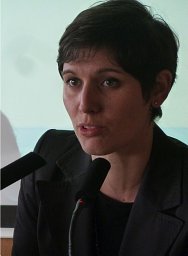 Sophie Hooge合作论文数I3UMR CNRS MINES ParisTech, PSL Res Univ11
 Benoit Weil合作论文数Mines ParisTech10
 Rampa Romain合作论文数8
 Beatrice Parguel合作论文数Université Paris-Est (IRG), Route de Choisy, 94010 Créteil, France8
 Elsa Berthet合作论文数7
 Susanne Ollila合作论文数Dept Technol Management & Econ, Chalmers Univ Technol7
 Kevin Levillain合作论文数I3UMR CNRS MINES ParisTech, PSL Res Univ6
 Olivier Houdé合作论文数6
 Anaelle Camarda合作论文数Institut Supérieur Maria Montessori, France;LaPEA, Université Paris Cité and Université Gustave Eiffel;Université Gustave Eiffel, Université Paris Cité5
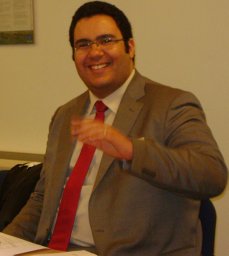 Hicham Ezzat合作论文数MINES ParisTech, PSL Res Univ5
 Akin Kazakci合作论文数Mines ParisTech5Elie Abi Saad合作论文数4Melanie A. Robinson合作论文数4Cyrille Sardais合作论文数HEC Montreal4
 Armand Hatchuel合作论文数Centre de Gestion Scientifique4
 frederic arnoux合作论文数Stim, Scientific Methods for Radical Innovation 24 rue de l’est, 75020 Paris, France3
 John Fiset合作论文数Sobey Sch Business, St Marys Univ3Brown Ingi合作论文数3
 Martin Wiener合作论文数3
 Blanche Segrestin合作论文数Mines ParisTech, PSL Res Univ3
 Tobias Fredberg合作论文数Dept Technol Management & Econ, Chalmers Univ Technol3
 Nicolas Poirel合作论文数University of Caen, University of Paris V3
 Martin Stoetzel合作论文数3Alexandre Guinovker合作论文数2Yves Plourde合作论文数HEC Montreal2
 Puente-Díaz Rogelio合作论文数Department of Business and Economics, Universidad Anáhuac México Norte2
 Karen Williams-Middleton合作论文数Dept Technol Management & Econ, Chalmers Univ Technol2
 David Coghlan合作论文数Sch Business, Trinity Coll Dublin2
 Eva Boxenbaum合作论文数2
 Francois Bellavance合作论文数École des Hautes Études Commerciales (affiliated, University of Montreal),2
 Gregoire Borst合作论文数Department of Psychology, Harvard University2
 Mats Lundqvist合作论文数Department of Technology Management and Economics, Chalmers University of Technology2
 Joy C Phillips合作论文数1Albert David合作论文数1
 Nathalie Tremblay合作论文数1
 Rachel Germanier合作论文数1Anais Scussel合作论文数1jeanfrancois menudet合作论文数1
 Alexander Brem (亚历山大伯尔尼)合作论文数Institute of Entrepreneurship and Innovation Science, University of Stuttgart;University of Southern Denmark1Anaïs Osmont合作论文数1
 Ruth Puhr合作论文数1
 Charlotte Blanche合作论文数HEC Montreal1
 Payal Kumar合作论文数BML Munjal University1
 Christophe Abrassart合作论文数University of Montreal1
 Jean-François Soublière合作论文数HEC Montreal1




