Sexual assault is a major offense, and there has been a rise in the number of reported sexual offenses to the police in India. Transferred trace material can be utilized to ascertain connections between objects, individuals, or locations. Perfumes are imperceptible substances utilized by individuals of both genders. Hence, it is possible for the aromatic constituents of a perfume to be transmitted during interpersonal contact. The purpose of this study is to analyze the transfer of smell from garments to a secondary piece of cloth using UV-Visible Spectroscopy. Cotton swatches were utilized for all perfume transfer trials. The experiments involved the use of direct touch and solvent extraction techniques. This study establishes that perfume aroma is transferable and can be retrieved from various secondary fabric samples, even after the perfume has been matured on distinct primary fabric for a duration of up to 5 hours. This study focuses on analyzing transferred fragrance in secondary fabric using UV-VIS Spectroscopy. The major objective is to provide the forensic area with a reliable and cost-effective analytical method.
The morphological features of the external ear have been studied and found to be imparting significant uniqueness for the personal identification purpose, including gender and population studies. This study aims to investigate the bilateral variations of the external ear between males and females within the population of southern Uttar Pradesh, India. A total of 150 healthy individuals, consisting of 75 males and 75 females, were chosen for this study. This research prioritized a variety of morphological features of both ears, including auricle length, auricle width, lobule length, lobule width, tragus to antihelix, and anterior crus to notch, subjected to the morphometry for the study of bilateral differences. Initially, the morphometric data was evaluated descriptively. To further examine the deviation, student’s t-test and the Wilcoxon test was employed. The external ear morphology showed significant bilateral and sex-based differences. In female samples, the mean auricle length of the left and right ears was found to be 4.361 cm (± 0.49) and 4.397 cm (± 0.323), respectively. In males, the mean auricle lengths for the left and right ears were observed to be 4.36 cm (± 0.45) and 4.619 cm (± 0.422), respectively. Additionally, with the exception of tragus to antihelix distances, male samples showed higher values for auricle width, length and width of lobule, and anterior crus to notch. Auricle length and width of both the ears were found to be significantly different between male and female samples (p < .001). The male samples showed differences between the two sides, especially in auricle width, lobule length (p < .001), and tragus to antihelix (p < 0.05). However, the auricle width and lobule length demonstrated statistically significant bilateral asymmetry in female samples. Ultimately, the variation among the same individuals, as well as between males and females was observed that allowed to identify a markedly significant difference between the two groups. Predominantly, males exhibit a considerably higher value than females. The results of this study underscore the insights on bilateral differences in the morphology of external human ear that may significantly contribute in personal identification for anthropology and forensic stand point.
The technique of DNA fingerprinting is considered as one of the enthralling innovations of the scientific era. The massive potential of the technique and its great evidentiary value has made it a boon for the world of forensic science and the criminal justice system. In the meantime, this particular DNA science has crossed significant milestones and hence assists in providing resolutions to various criminal offenses. The capability of discovering the polymorphism of human DNA in non-coding regions has been a great achievement for forensic DNA science. DNA typing is just like a miracle to the judiciary since it is a highly sensitive, specific, advanced, accurate and reliable technique whose outcomes can be easily trusted. There are various commercial STR kits available in the market which have made recent advancements in the procedure and improvised the automation procedure. The progression of DNA typing methods from RFLP to STRs has escalated the sensitivity of the outcomes. Non-human DNA analysis stands as a fairly recent but powerful field. The latest practice in DNA fingerprinting is NGS which provides rapid evolution of results with high discrimination power. Further, there are several other prospective innovations in this science such as the development of different STR kits, i.e., autosomal STRs, Y-STRs, X-STRs, mini-STRs, etc., for forensic applications. The main focus of this chapter is to describe the applications of DNA fingerprinting techniques in the analysis of individuals in cases of mass fatalities or natural disasters where the family members do not even receive the dead body of their loved ones which leaves an indelible remark on them. Hence this efficacious science of DNA typing can help in evaluating the identity of those folks with the generation of links between them and their biological family members. The procedure of sample collection from the subsequent locations where these types of calamities take place is also demonstrated in this chapter for reference.
Digital forensic includes a wide variety of spectrum, which deals with the mobile forensic, computer forensic, network forensic or other types of different devices related to the digital evidence. The main goal of digital forensic is to focus on the recovery and investigation of artifacts found in digital evidences related to cyber-crimes. In comparison to various other domains of forensics digital forensics has evolved faster as simple because technology changes rapidly. The advancement and upgradation of forensic software's are needed with each new version of an operating system, digital forensic must keep up with advances in technology. It is withal important to maintain the chain of custody from proper collection, seizing and transportation. In the forensic laboratories there are various forensically sound software which are used for examination in which extraction and interpretation is done. This needs a well sound scientist having a great knowledge. Also, there are different types of certifications available by many of the renowned organizations.
Background: The scientific and technological advances along with the changing socio-economical standards of society have posed new challenges to the criminal justice system. With the changes in society and technology, there is also an increase in crime rate. Forensics provides the scientific proofs beyond the shadow of reasonable doubt and thus significantly contributes in criminal as well as civil investigations and legal matters. Main body of the abstract: Discovery of DNA has opened new avenues and the advancement of DNA technology and its introduction into the court of law has provided extensive aid in the resolution of civil and criminal disputes. In India, the DNA technology was first introduced in a paternity dispute in 1989. However, the need for legislation and guidelines to support grounds for the use of DNA profiling for forensic purposes in India has been recognized for some time now. In July 2019, the DNA Technology (Use and Application) Bill 2019 was introduced in the Indian parliament. Short conclusion: Herein, this article is focused on the current aspects of DNA based evidence in the Indian Criminal Justice system along with the associated issues, highlighting the need for specific DNA based legislation.
Infection born by Coronavirus SARS-CoV-2 has swept the world within a time of a few months. It has created a devastating effect on humanity with social and economic depression. Europe and America were the hardest hit continents. India has also lost lives, making the country fourth most deadly worldwide. However, the infection and death rate per million and the case fatality ratio in India were substantially lower than in many developed nations. Several factors have been proposed including genetics. One of the important facts is that a large chunk of Indian population is asymptomatic to the SARS-CoV-2 infection. Thus, the real infection in India is much higher than the reported number of cases. Therefore, the majority of people are already immune in the country. To understand the dynamics of real infection as well as the level of immunity against SARS-CoV-2, we have performed antibody testing (serosurveillance) in the urban region of fourteen Indian districts encompassing six states. In our survey, the seroprevalence frequency varied between 0.01-0.48, suggesting high variability of viral transmission between states. We also found out that the cases reported by the government were several fold lower than the real incidence of infection. This discrepancy is mainly driven by the higher number of asymptomatic cases. Overall, we suggest that with the high level of immunity developed against SARS-CoV-2 in the majority of the districts, the case fatality rate of second wave in India will be minor than first wave.
Infection born by Coronavirus SARS-CoV-2 has swept the world within a time of a few months. It has created a devastating effect on humanity with social and economic depressions. Europe and America were the hardest hit continents. India has also lost several lives, making the country fourth most deadly worldwide. However, the infection and death rate per million and the case fatality ratio in India were substantially lower than many of the developed nations. Several factors have been proposed including the genetics. One of the important facts is that a large chunk of Indian population is asymptomatic to the SARS-CoV-2 infection. Thus, the real infection in India is much higher than the reported number of cases. Therefore, the majority of people are already immune in the country. To understand the dynamics of real infection as well as level of immunity against SARS-CoV-2, we have performed antibody testing (serosurveillance) in the urban region of fourteen Indian districts encompassing six states. In our survey, the seroprevalence frequency varied between 0.01-0.48, suggesting high variability of viral transmission among states. We also found out that the cases reported by the Government were several fold lower than the real infection. This discrepancy is majorly driven by a higher number of asymptomatic cases. Overall, we suggest that with the high level of immunity developed against SARS-CoV-2 in the majority of the districts, it is less likely to have a second wave in India.
Aim The present study was designed to explore the STR diversity and genomic history of the inhabitants of the most populous subdivision of the country. A set of 24 hypervariable autosomal STRs was used to estimate the genetic diversity within the studied population. A panel of 15 autosomal STRs, which is most common in the previously reported data sets, was used to estimate the genetic diversity between the studied population, and obtained unique relations were reported here. Method The genetic diversity and polymorphism among 636 individuals of different ethnic groups, residing in Bareilly, Pilibhit, Shahjahanpur, Gorakhpur, Jhansi, and Varanasi regions of Uttar Pradesh, India, was investigated. This investigation was carried out via 24 autosomal STRs. Result The 24 loci studied showed the highest value of combined power of discrimination (CPD = 1), combined power of exclusion (CPE = 0.99999999985), combined paternity index (CPI = 6.10 x 10(9)) and lowest combined matching probability (CPM = 7.90 x 10(-31)). Conclusion The studied population showed genetic closeness with the population of Uttarakhand, the Jats of Delhi,the Jat Sikh (Punjab), and the population of Rajasthan. Among the tested loci, SE33 and Penta E were found to be most useful in terms of the highest discrimination power, lowest matching probability, the highest power of exclusion, and highest polymorphism information content for the Uttar Pradesh population .
In order to find out the genetic structure and characterize the forensic features of 23 autosomal STRs in the population of Assam, PowerPlex® Fusion 6C amplification kit was employed to genotype 292 unrelated individuals from Assam, India. A total of 79 different alleles were observed across 23 autosomal STRs with the corresponding frequency of alleles, which ranges from 0.002 to 0.406. Selected 23 loci were observed useful together with the highest value of combined discrimination power (CPD = 1), combined exclusion power (CPE = 0.999999999914), combined paternity index (CPI = 3.04 × 10⁹), and all studied loci combined showing the lowest matching probability which is (CPM = 1.29 × 10⁻²⁹). Additionally, in comparison with neighboring population, Assam population showed genetic closeness with Indian population. The genetic data of the present study will enrich the existing Indian autosomal DNA database and be useful for forensic and genealogical applications.
Decipherment of latent fingerprints are one of the most common tasks in crime scene investigation as it carries the unique identification feature of the individuals related to that offence. Powder dusting is the most suitable method to develop latent prints on a wide range of nonporous and semiporous surfaces. In present work, a commercially available talcum powder, generally used as a common cosmetic product, has been used to decipher latent prints on 28 non-porous and semi-porous surfaces commonly encountered in daily life. The powder is economic and harmless in nature and easily available in market. The results showed that the powder developed good quality fingerprints on most of the surfaces and can be a good substitute of conventional powders.
Serial number restoration is a frequently encountered problem in forensic science laboratories for the investigation of theft and burglary cases. These identification marks are generally introduced over metallic surfaces of different vehicle parts and firearms by various means. Chemical etching is one of the most effective and simple technique to restore obliterated, erased, over-stamped and over-engraved marks on metallic surfaces. Several significant studies on restoration of engraved markings on aluminium surfaces were previously reported. The present study attempts to find out an efficient and fast etching reagent to restore obliterated stamped marks on aluminium surfaces. Ten effective etching reagents previously reported by various researchers in their restoration studies were assessed in the present experiment. Etching reagents were individually applied on obliterated surfaces by the cotton swabbing method. The Reagent 3 (ferric chloride 25 g, conc. HCl 25 mL, distilled water 100 mL) was found out to be the most sensitive and rapid (4–6 min) for the restoration on aluminium surfaces. The study also revealed that the absence of an alkaline compound in etching reagent potentially accelerates the speed of the restoration process.
 Ankit Srivastava合作论文数9
 Abhimanyu Harshey合作论文数Dr APJ Abdul Kalam Inst Forens Sci & Criminol, Bundelkhand Univ6
 Kriti Nigam合作论文数Dr APJ Abdul Kalam Inst Forens Sci & Criminol, Bundelkhand Univ5
 Tanurup Das合作论文数School of Forensic Sciences, The West Bengal National University of Juridical Sciences5
 Pankaj Shrivastava合作论文数Department of Physics;Model Science College;Department of Physics|Model Science College4
 Royana Singh合作论文数3
 Nikhil Srivastava合作论文数3
 Anupam Yadav合作论文数3Ashish Singh合作论文数3
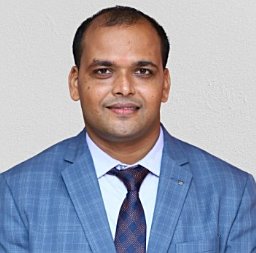 Vijay Kumar Yadav合作论文数Medical Center, Columbia University3Sudhir K. Upadhyay合作论文数2
 Manisha Rana合作论文数2
 Sanjay Kumar合作论文数2
 Yashvant Patel合作论文数2
 Prajjval Pratap Singh合作论文数Cytogenetics Laboratory, Banaras Hindu University2Anshika Srivastava合作论文数Cytogenetics Laboratory, Banaras Hindu University2Charu Sharma合作论文数2
 Ramniwas Kumawat合作论文数DNA Division, State Forensic Science Laboratory, Jaipur, India2
 Shivani Dixit合作论文数State Forensic Science Laboratory, Govt. of MP2
 Aggarwal Dau Dayal合作论文数Institute of Evolution, University of Haifa2
 Amit Kumar合作论文数School of Mathematics and Computer Applications, Thapar University2
 Anand Prakash合作论文数2
 Gyaneshwer Chaubey合作论文数Estonian Biocentre and Department of Evolutionary Biology, University of Tartu2
 KESHAV K SINGH合作论文数School of Medicine, University of Alabama at Birmingham2Ankita Ghosh合作论文数1
 Nitish Kumar Singh合作论文数1Subhankar Nath合作论文数1Kiran Yadav合作论文数1Astha Mishra合作论文数1Nargis Khanam合作论文数1Abhishek Pathak合作论文数1Manpreet Kaur合作论文数1Urgyan Chorol合作论文数1Alay Bhatt合作论文数1
 Debashruti Das合作论文数1Devinder Kumar合作论文数1
 Varun Sharma合作论文数1
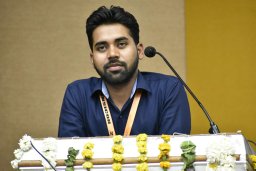 Pushpesh Kushwaha合作论文数1
 Pradeep Kumar合作论文数1Deepa Devadas合作论文数Institute of Medical Sciences, Banaras Hindu University1
 Thadiyan Parambil Ijinu合作论文数Amity Inst Phytochem & Phytomed1
 Rudra Kumar Pandey合作论文数Cytogenetics Laboratory, Banaras Hindu University1
 Neelesh Tiwari合作论文数Dr. A.P.J. Abdul Kalam Institute of Forensic Science and Criminology, Bundelkhand University1
 Murali Manohar Yadav合作论文数Dr APJ Abdul Kalam Inst Forens Sci & Criminol, Bundelkhand Univ1
 Abhay Kumar Yadav合作论文数1
 Ritabrata Chowdhury合作论文数1
 Ajit Parihar合作论文数Faculty of Dental Science, Banaras Hindu University1Jaison Sequeira合作论文数1
 Sumit Kumar Rawat合作论文数Microbiology, Bundelkhand Medical College;Microbiology, Bundelkhand Medical College1




