Event-related brain potentials (ERPs) were recorded while subjects read statements followed by words that were either semantically congruous or incongruous with the preceding phrase, and during a subsequent recognition test. Congruous words yielded smaller N400s and better memory than did incongruous statements. In addition, the ERPs to correctly recognized old words were characterized by an enhanced late positivity (P650) relative to those elicited by correctly identified new words. A second experiment essentially replicated the results of the first. In addition, the amplitude of the late positive component (P650) elicited by final words on initial exposure was predictive of subsequent recognition; words that would be later recognized were associated with a larger P650 (whether they were incongruous or not) than were words that would not be recognized. These ERP data provide evidence that within 250 ms of the presentation of a congruous word and within 450 ms of an incongruous word, a significant portion of the brain processes which determine whether a word will or will not be recognized some time in the future have taken place.
Event-related potentials (ERPs) were recorded from a group of men with (FH+) and without (FH−) a family history of alcoholism. ERPs were recorded over the left and right cerebral hemispheres and over midline locations while subjects performed a letter rhyming task. The ERPs to the letters displayed major group differences in a negative component with a latency of 430 msec (N430). The amplitude of N430 was significantly smaller in the FH+ as compared to the FH− subjects. These group differences were more pronounced in ERPs recorded from over the right than the left hemisphere. In addition, in the FH+ group only the latency of N430 was linearly related to personal drinking habits. These results suggest that (1) certain brain functions associated with the language processing required in this task are different in men at high and low risk for the development of alcoholism and (2) moderate social use of ethanol may have more pronounced effects on language-relevant brain functions in FH+ than in FH− individuals.
We investigated inter- and intrahemispheric specialization in congenitally deaf adults during a word reading task. The results were compared with those obtained from a group of normally hearing subjects in a paradigm which we have shown produces reliable behavioral and event-related potential (ERP) evidence of cerebral specialization (Neville, Kutas, and Schmidt (Brain and Language, 16, 300–315 (1982)). The deaf subjects (Ss) were as accurate as the hearing Ss in identifying the words; however, they did not display visual field asymmetries. Deaf Ss' ERPs recorded over posterior brain regions were similar in morphology to ERPs from hearing Ss but were different in lateral distribution. At the temporal and frontal regions ERPs from deaf Ss differed from those of hearing Ss in both morphology and lateral distribution. In particular, the negative (410 msec)-positive shift prominent in the left hemisphere of hearing Ss was not evident in deaf Ss. Testable hypotheses concerning the factors which may have determined the different pattern of cerebral organization in the deaf Ss are discussed.
Auditory evoked responses (AER) to series of consonant--vowel syllables were recorded from temporal and parietal scalp locations from 20 right-handed female college students. Averaged AERs were submitted to principal components analysis and analysis of variance. Seven components of the group's AERs were found to reflect various aspects of the stimulus parameters. One component reflected changes over only the left hemisphere to different consonants independent of the following vowel sound. A second component changed systematically over both hemispheres in response to only consonant changes. A third component systematically changed for the different consonants depending on the following vowel.
Visual-evoked potentials recorded from the scalp of congenitally deaf adults were significantly larger than over both auditory and visual cortical areas than in normal hearing adults. Over temporal and frontal areas peripheral stimuli presented at long intervals elicited N150 components which were larger in deaf than in hearing subjects. Over occipital and parietal areas peripheral and foveal stimuli elicited larger P230 components in deaf than in hearing subjects. These results imply that early auditory experience influences the organization of the human brain for visual processing.
Evoked potentials (EPs) to a probe tone stimulus were recorded simultaneously at the temporal and parietal areas of the left and right hemisphere of dextral adults engaged in either an arithmetic or a visuospatial task. The probe EP amplitude was attenuated in the left temporal area during the arithmetic task and in the left temporal and both parietal areas, but significantly more in the right, during the visuospatial task, indicating distinct patterns of regional cerebral engagement for the two types of cognitive activity.
A number of methodological features were incorporated in a paradigm designed to maximize the likelihood of finding reliable event-related potential (ERP) signs of functional specializations between and within the cerebral hemispheres. Every subject was more accurate in identifying words presented to the right than to the left visual field. The morphology of the ERPs elicited by these words varied considerably as a function of electrode position both within and between the hemispheres. Amplitude asymmetries of ERP components recorded from occipital regions of the two hemispheres varied systematically with the position of the word in the visual field. On the other hand, ERPs from more anterior (temporal and frontal) regions displayed large asymmetries which were in the same direction regardless of the visual field of word presentation. The most prominent such asymmetry was in the negativity in the region 300–500 msec (N410) which was larger in the left than the right hemisphere in every subject. These results demonstrate that in this paradigm which demands specialized language processing ERPs are sensitive to aspects of cerebral organization both within and between the two hemispheres.
 Helen Neville合作论文数Brain Development Lab, Psychology Department, University of Oregon7
 Marta Kutas合作论文数Department of Cognitive Science, University of California, San Diego5
 Greg Chesney合作论文数2janet e davidson合作论文数1Joseph Paul Stemberger合作论文数1Susan Bovair合作论文数1stephen j eady合作论文数1Charles R. Fletcher合作论文数1Robert J Weber合作论文数1William M Hazelett合作论文数1
 Richard P. Meier合作论文数Department of French and Italian, College of Liberal Arts, University of Texas at Austin1Gm Stephenson合作论文数1Meredyth Daneman合作论文数1
 Fred Conrad合作论文数Department of Psychology, College of Literature, Science, and the Arts, University of Michigan-Ann Arbor1
 Daniel G. Morrow合作论文数Department of Educationa, College of Education, University of Illinois Urbana-Champaign1
 Jacques Mehler合作论文数Language, Cognition and Development Lab, International School for Advanced Studies1
 Steve Greenspan合作论文数1
 Michael Masson合作论文数Department of Psychology, Faculty of Social Sciences, University of Victoria1
 Rebecca Treiman合作论文数Department of Education, College of Arts and Sciences, Washington University;Reading and Language Lab, College of Arts and Sciences, Washington University1
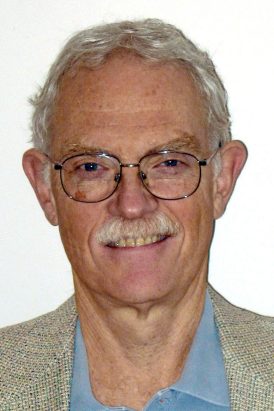 Henry Wellman合作论文数Department of Psychology, College of Literature, Science, and the Arts, University of Michigan;Center for Human Growth and Development, University of Michigan1
 Raymond W. Gibbs Jr.合作论文数Department of Psychology, University of California, Santa Cruz1
 Mark McDaniel合作论文数Psychological & Brain Sciences, Washington University1
 Robert J. Sternberg合作论文数Department of Psychology, College of Human Ecology, Cornell University1
 John Jonides合作论文数Department of Psychology, College of Literature, Science and the Arts, University of Michigan1
 Gilles O. Einstein合作论文数Department of Psychology, Furman University1
 Lance Rips合作论文数Department of Psychology, Weinberg College of Arts and Sciences, Northwestern University1
 Dennis Norris合作论文数MRC Cognition and Brain Sciences Unit, University of Cambridge1
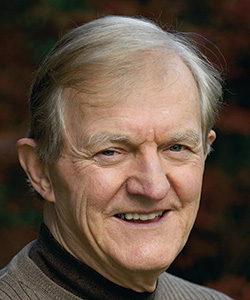 Gordon H. Bower合作论文数Department of Psychology, Stanford University1
 Andrew Papanicolaou合作论文数1William Prinzmetal合作论文数1
 Fergus Craik合作论文数Department of Psychology, Faculty of Arts & Science, University of Toronto;Rotman Research Institute, Baycrest Centre for Geriatric Care1
 David A. Rosenbaum合作论文数Department of Psychology, University of California, Riverside/Department of Psychology, Pennsylvania State University1Franz Schmalhofer合作论文数1
 William E. Cooper合作论文数Department of Biology, Indiana University-Purdue University Fort Wayne;Savannah River Ecology Lab, University Of Georgia1
 Lorraine K. Tyler合作论文数Centre for Speech, Language, and the Brain, Department of Psychology, University of Cambridge1
 Fernanda M. Ferreira合作论文数Department of Psychology, University of Edinburgh1Michael H. Kelly合作论文数Department of Psychology, University of Pennsylvania1Judith Kiely合作论文数1
 Bartlett D. Moore合作论文数Department of Pediatrics, The University of Texas M. D. Anderson Cancer Center1Michel Hupet合作论文数1Karl F. Haberlandt合作论文数1Van Hindorff合作论文数1N. K. Clark合作论文数1
 Moshe Naveh Benjamin合作论文数Department of Psychological Sciences, University of Missouri/Memory and Cognitive Aging Laboratory, University of Missouri1Dennis L. Molfese合作论文数Department of Psychology, College of Arts and Sciences, University of Nebraska-Lincoln1Jay G. Rueckl合作论文数University of Connecticut1
 Juan Segui合作论文数Centre National De La Recherche Scientifique1D. R. Rutter合作论文数1Anne Cutler合作论文数Language Comprehension Group 1




