Is a response sequence executed only after the sequence has been fully programmed, as discrete processing models predict, or does execution begin before programming has been completed, as continuous processing models predict? To address this issue, we tested a discrete processing model of human motor performance, the hierarchical editor model of Rosenbaum, Inhoff, and Gordon (1984). This model was developed to account for data from experiments in which people perform one of two possible finger sequences, depending on the identity of a choice signal. The model assumes a hierarchically organized motor program that is first "edited" to resolve any uncertainties and is then "executed" to produce the desired responses. Three experiments reported here show that, contrary to the model's predictions and some well-known motor programming results (Sternberg, Monsell, Knoll, & Wright, 1978), the reaction time to begin a response sequence actually decreases with the length of the sequence under some choice conditions. We account for these results with a model that allows execution to begin while editing is still in progress. A key assumption in the model is that subjects schedule execution so that means and variances of interresponse times are minimized.
This article describes a series of experiments which show that motor performance suffers when responses in a repeated sequence have variable rather than fixed parameter mappings. In speech production, repeated recitation of the beginning of the alphabet is slowed dramatically if the same letters have different stress levels on successive cycles; the same effect holds for vowel-consonant relationships. In keyboard performance, repetitions of fingertapping sequences suffer if the number of consecutive taps by the same finger changes from cycle to cycle; we call these difficult sequences finger fumblers. Finally, similar effects are obtained with violin playing. The model we develop to account for these results says that parameter values mapped to the subprogram for a response item persist after the subprogram has been executed, and that extra processing is required if a new parameter value must be mapped to the subprogram the next time it is called for. This account is consistent with the view that motor programs for forthcoming actions are prepared by editing motor programs for actions that have just been completed. Because our results are similar to interference effects in traditional memory studies, we also suggest that similar mechanisms underlie storage and retrieval of motor responses and symbolic materials.
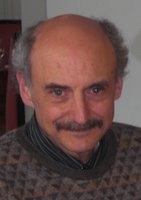 David A. Rosenbaum合作论文数Department of Psychology, University of California, Riverside/Department of Psychology, Pennsylvania State University5
 Robert J Weber合作论文数2William M Hazelett合作论文数2janet e davidson合作论文数1Joseph Paul Stemberger合作论文数1Susan Bovair合作论文数1stephen j eady合作论文数1Charles R. Fletcher合作论文数1
 Richard P. Meier合作论文数Department of French and Italian, College of Liberal Arts, University of Texas at Austin1Gm Stephenson合作论文数1Meredyth Daneman合作论文数1
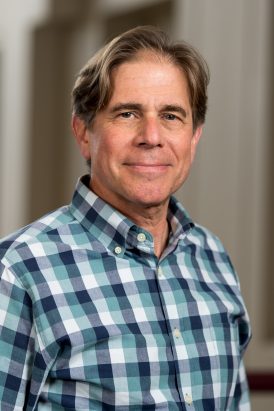 Fred Conrad合作论文数Department of Psychology, College of Literature, Science, and the Arts, University of Michigan-Ann Arbor1
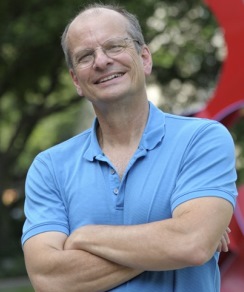 Daniel G. Morrow合作论文数Department of Educationa, College of Education, University of Illinois Urbana-Champaign1
 Jacques Mehler合作论文数Language, Cognition and Development Lab, International School for Advanced Studies1
 Steve Greenspan合作论文数1
 Michael Masson合作论文数Department of Psychology, Faculty of Social Sciences, University of Victoria1
 Rebecca Treiman合作论文数Department of Education, College of Arts and Sciences, Washington University;Reading and Language Lab, College of Arts and Sciences, Washington University1
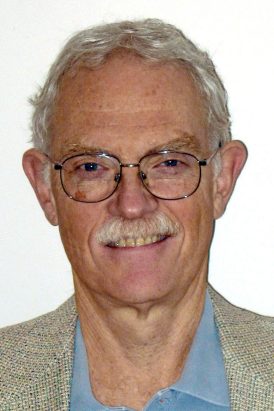 Henry Wellman合作论文数Department of Psychology, College of Literature, Science, and the Arts, University of Michigan;Center for Human Growth and Development, University of Michigan1
 Raymond W. Gibbs Jr.合作论文数Department of Psychology, University of California, Santa Cruz1
 Mark McDaniel合作论文数Psychological & Brain Sciences, Washington University1
 Robert J. Sternberg合作论文数Department of Psychology, College of Human Ecology, Cornell University1
 Marta Kutas合作论文数Department of Cognitive Science, University of California, San Diego1
 John Jonides合作论文数Department of Psychology, College of Literature, Science and the Arts, University of Michigan1
 Gilles O. Einstein合作论文数Department of Psychology, Furman University1
 Lance Rips合作论文数Department of Psychology, Weinberg College of Arts and Sciences, Northwestern University1
 Dennis Norris合作论文数MRC Cognition and Brain Sciences Unit, University of Cambridge1
 Gordon H. Bower合作论文数Department of Psychology, Stanford University1William Prinzmetal合作论文数1
 Fergus Craik合作论文数Department of Psychology, Faculty of Arts & Science, University of Toronto;Rotman Research Institute, Baycrest Centre for Geriatric Care1Franz Schmalhofer合作论文数1
 William E. Cooper合作论文数Department of Biology, Indiana University-Purdue University Fort Wayne;Savannah River Ecology Lab, University Of Georgia1
 Lorraine K. Tyler合作论文数Centre for Speech, Language, and the Brain, Department of Psychology, University of Cambridge1
 Fernanda M. Ferreira合作论文数Department of Psychology, University of Edinburgh1Michael H. Kelly合作论文数Department of Psychology, University of Pennsylvania1Judith Kiely合作论文数1Albert L. Schmidt合作论文数1Michel Hupet合作论文数1Karl F. Haberlandt合作论文数1N. K. Clark合作论文数1
 Helen Neville合作论文数Brain Development Lab, Psychology Department, University of Oregon1
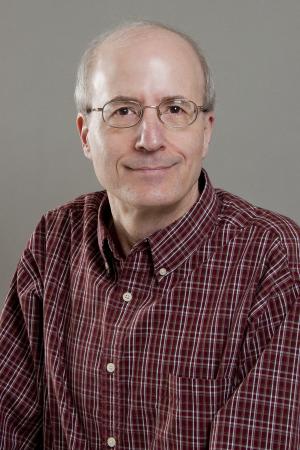 Moshe Naveh Benjamin合作论文数Department of Psychological Sciences, University of Missouri/Memory and Cognitive Aging Laboratory, University of Missouri1Jay G. Rueckl合作论文数University of Connecticut1
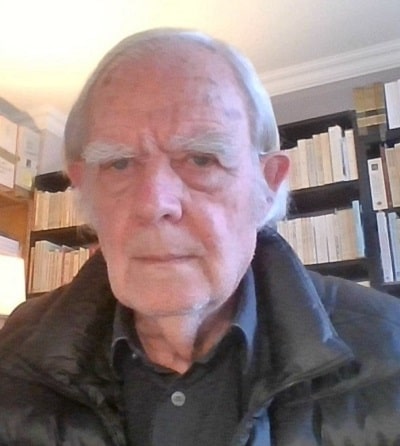 Juan Segui合作论文数Centre National De La Recherche Scientifique1D. R. Rutter合作论文数1Anne Cutler合作论文数Language Comprehension Group 1Brigitte Tilmant合作论文数1
 Gregg C. Oden合作论文数Department of Psychology, University of Wisconsin1Robert G. Crowder合作论文数1Paul K. Dunay合作论文数1




