Diabetespatienten haben ein erhöhtes Risiko für Pflegebedürftigkeit. Anhand von DPV-Registerdaten soll die Frage geklärt werden, wie hoch der Anteil pflegebedürftiger Diabetespatienten in diabetologischer Betreuung ist und es sollen die Charakteristika dieser Patientengruppe beschrieben werden.
Neben dem Charcot-Fuß wird auch von einer Charcot-Erkrankung oder Charcot-Arthropathie gesprochen. Basierend auf einer peripheren Neuropathie mit einhergehender gestörter Schmerzwahrnehmung, gestörter Vasomotorik mit vermehrter Vasodilatation und Fehlbelastungen resultiert eine aseptische Knochen- und Gelenkzerstörung des Fußes. Nicht selten spät diagnostiziert und damit primär auch falsch behandelt, entstehen oftmals schwerste Komplikationen. Ein 86-jähriger Patient wurde in reduziertem Allgemeinzustand notfallmäßig mit der Diagnose eines Erysipels des rechten Fußes zugewiesen. Der Fuß war glänzend ödematös aufgequollen und wies eine Nekrose des Endgliedes des III. Digitus auf. Nach einer Laufstrecke von ca. 20 m bereitete ihm das Gehen Schmerzen. Neben dem Erysipel wurde bei bestätigter neuropathischer Arthropathie und radiologischen Kennzeichen für einen Charcot-Fuß als dritte Diagnose eine periphere arterielle Verschlusskrankheit (pAVK) gesichert. Trotz mehrfach umgestellter systemischer Antibiotikatherapie kam es zu einem progredienten Krankheitsverlauf mit steigenden Entzündungsparametern bei zunehmender Verschlechterung des Allgemeinzustandes. Trotz gefäßchirurgischer und intensivmedizinischer Maßnahmen kam es zu einer ausgeprägten Befundverschlechterung und letztlich zum Tod des Patienten. Am vorliegenden Fall sollen die Kennzeichen und die jeweilige diagnostische Sicherung der 3 überlappenden Diagnosen „Erysipel“, „Charcot-Fuß“ und „pAVK“ erarbeitet werden.
Charcot foot is also known as Charcot disease or Charcot arthropathy. The associated aseptic destruction of the bones and joints of the foot results due to peripheral neuropathy accompanied by impaired pain perception, impaired vasomotricity with increased vasodilation, and an unequal weight distribution. Because it is frequently diagnosed late and, thus, incorrectly treated, serious complications often result. An 86-year-old man in poor health was diagnosed with erysipelas of the right foot. The foot was glossy and edematously swollen, showing necrosis of the distal phalanx of the third toe. The patient experienced pain after a walking distance of approximately 20m. In addition to erysipelas, confirmed neuropathic arthropathy and radiological indicators for Charcot foot established peripheral artery disease ( PAD) as a third diagnosis. Despite multiple systemic antibiotic therapies, there was a progressive disease pattern marked by increasing inflammation parameters with an increasing decline of the patient's overall health. The patient suffered severe deterioration in spite of vascular surgical measures, ultimately leading to his death. In the present case, the indicators and respective confirmation of the three overlapping diagnoses erysipelas, Charcot foot and PAD are elaborated.
Das diabetische Fußsyndrom (DFS) ist eine lebenslange Komplikation des Diabetes, die in inaktiven und aktiven Phasen verläuft. Die Versorgungssituation weist in Deutschland durch Zertifizierungsverfahren und selektivvertragliche Projekte in den letzten 10 Jahren eine hohe Struktur- und Prozessqualität auf. Ein Register mit einer großen Anzahl strukturiert und gerichtet erhobener Daten fehlt in Deutschland.
UNLABELLED:Chronic wounds are an increasing problem in our ageing population and can arise in many different ways. Over the past decades it has become evident that sufficient oxygen supply is an essential factor of appropriate wound healing. Sustained oxygen deficit has a detrimental impact on wound healing, especially for patients with chronic wounds. This has been proven for wounds associated with peripheral arterial occlusive disease (PAOD) and diabetic foot ulcers (particularly in combination with PAOD). However, this is still under debate for other primary diseases. In the past few years several different new therapeutic approaches for topical oxygen therapies have been developed to support wound healing. These tend to fall into one of four categories: (1) delivery of pure oxygen either under pressurised or (2) ambient condition, (3) chemical release of oxygen via an enzymatic reaction or (4) increase of oxygen by facilitated diffusion using oxygen binding and releasing molecules. In this review article, the available therapeutic topical oxygen-delivering approaches and their impact on wound healing are presented and critically discussed. A summary of clinical data, daily treatment recommendations and practicability is provided. DECLARATION OF INTEREST:J. Dissemond received an honorarium for lectures, advisory boards and/or clinical studies from the following companies: 3M, B. Braun, BSN, Coloplast, Convatec, Draco, Hartmann, KCI, Lohmann&Rauscher, Medoderm, Merz, Sastomed, Systagenix, UCB-Pharma, Urgo. K. Kröger received an honorarium for lectures, advisory boards and/or clinical studies from the following companies: Bayer, Sanofi, GSK, Hartmann, Sastomed, UCB-Pharma, Urgo. M. Storck received an honorarium for lectures for the following companies: KCI, Systagenix, and UCB-Pharma. A. Risse received an honorarium for lectures, advisory boards and/or clinical studies from the following companies: Bracco, Coloplast, Draco, Lilly Deutschland, NovoNordisk, Sastomed, Urgo. P. Engels received an honorarium for lectures, and consulting from the following companies: Sastomed, Oculus.
Das diabetische Fußsyndrom (DFS) ist ein Krankheitsbild mit wachsender Bedeutung wegen der erheblichen Beeinträchtigung der Betroffenen, der zunehmenden Häufigkeit und des immensen Ressourcenverbrauchs. Wesentliche Aspekte der Diagnostik und der Therapie werden durch tradierte Vorstellungen geprägt und sind nicht geklärt.
In numerous epidemiological studies diabetes mellitus has emerged as a risk factor for dementia. The risk of dementia is positively associated with the duration and insufficient treatment of diabetes. Diabetes promotes neuropathological changes observed in vascular dementia and Alzheimer's disease. Antidiabetic therapies, such as change of lifestyle, metformin, insulin sensitizers and insulin, are currently being investigated with respect to the neuroprotective potential and have demonstrated promising results. Due to the high burden of the disease effective prevention as well as early confirmation of diagnosis and initiation of treatment of diabetes mellitus could translate into a substantial reduction of dementia cases.
BACKGROUND:Today numerous products for wound care are available. A research-based evidence on which the clinician can base its selection, is still missing. In the guidelines randomized controlled trials (RCTs) have been left out.METHOD:In the overview three current RCT with products for the treatment of chronically venous ulcers will be presented.RESULTS AND CONCLUSIONS:The pre-mentioned studies show, that it is possible to provide a basis for evidence-based treatment in wound healing. The effective value ofa wound treatment based on the costs and benefits must be defined by the health system. But products, for which data from randomized trials exist, should be evaluated in a different way to products, for which there are no such data.
Introduction: The word "compliance" describes the following of behavioural instructions from doctors. Most often these instructions apply to more or less intensive lifestyle changes for the patient.Discussion: Attempts to change the lifestyle of patients have been, on the whole, unsuccessful. Non-compliance results in poor treatment outcomes. This leads to various reactions on the part of the therapist from frustration to aggression. The expression "non-compliant" often has negative connotations and implies that the patient has such a thing as a free will or - assuming he has a free will - a lack of will to behave in a healthy way. This problem complex will be described with regard to the treatment of chronic wounds.
ZusammenfassungEinleitung: „Compliance” bezeichnet die Einhaltung von ärztlich verordneten Verhaltensmaßregeln durch Patienten. In den meisten Fällen beinhalten derartige Verhaltensmaßregeln eine mehr oder weniger intensive Lebensstiländerung des Patienten.Diskussion: Versuche, Menschen zu Lebensstiländerungen zu bewegen, haben sich als überwiegend erfolglos herausgestellt. „Non-Compliance” resultiert in schlechten Therapieergebnissen. Diese führen zu verschiedenen Reaktionen seitens der Therapeuten in einem Spektrum zwischen Frustration und Aggression. Häufig ist der Begriff der „Non-Compliance” negativ kodiert und impliziert zudem eine freie Willensbildung des Patienten bzw. dessen mangelnden Willen zu gesundheitsadäquatem Verhalten.
Currently, there are no generally accepted definitions for wounds at risk of infection. In clinical practice, too many chronic wounds are regarded as being at risk of infection, and therefore many topical antimicrobials – in terms of frequency and duration of use – are applied to wounds. Based on expert discussion and current knowledge, a clinical assessment score was developed. The objective of this wounds at risk (W.A.R.) score is to allow decision-making on the indication for the use of antiseptics on the basis of polihexanide. The proposed clinical classification of W.A.R. shall facilitate the decision for wound antisepsis and allow an appropriate general treatment regimen with the focus on the prevention of wound infection. The W.A.R. score is based on a clinically oriented risk assessment using concrete patient circumstances. The indication for the use of antiseptics results from the addition of differently weighted risk causes, for which points are assigned. Antimicrobial treatment is justified in the case of 3 or more points.
 Stephan Morbach合作论文数8Femerling M合作论文数8
 Ulrich Alfons Muller合作论文数8M. Jecht合作论文数6Hochlenert D合作论文数5Storck M合作论文数5M Spraul合作论文数4Gerald Engels合作论文数4Knut Kröger合作论文数4
 Heinrich Reike合作论文数4Km Reinauer合作论文数3B. Fatke合作论文数3M Voss合作论文数3a trocha合作论文数3
 Viktor Jorgens合作论文数3Joachim Dissemond合作论文数3Ralf Schiel合作论文数3Ingrid Muhlhauser合作论文数3J. Wimmer合作论文数2B. Birgel合作论文数2c tonn合作论文数2S. Murday合作论文数2H F Ständer合作论文数2G. Ruemenapf合作论文数2A Haep合作论文数2E. Mueller合作论文数2D. Nashan合作论文数2
 Gerhard Rumenapf合作论文数2Michael Berger合作论文数2
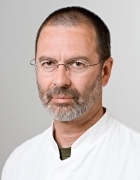 Hans Förstl合作论文数Klinik und Poliklinik für Psychiatrie und Psychotherapie, Technische Universität München2
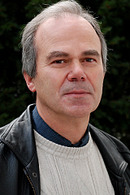 Rainer Landgraf合作论文数Max Planck Institute of Psychiatry;Munich Center for NeuroSciences, Ludwig-Maximilians-Universität München2J. F. Zander合作论文数2
 Margaret May合作论文数University of Bristol2K Hodeck合作论文数2Reinhard W Holl合作论文数2J. Kersken合作论文数2G Use合作论文数1H. Foerstl合作论文数1A Hungele合作论文数1HM Reuter合作论文数1Rj Gfrerer合作论文数1Andrew Kingsley合作论文数1Veronika Gerber合作论文数1Axel Kramer合作论文数1T. R. Pieber合作论文数1hannes reuter合作论文数1F. Schröder合作论文数1Anna Katharina Trocha合作论文数1G Riepe合作论文数1




