Second-order methods such as KFAC can be useful for neural net training. However, they are often memory-inefficient since their preconditioning Kronecker factors are dense, and numerically unstable in low precision as they require matrix inversion or decomposition. These limitations render such methods unpopular for modern mixed-precision training. We address them by (i) formulating an inverse-free KFAC update and (ii) imposing structures in the Kronecker factors, resulting in structured inverse-free natural gradient descent (SINGD). On modern neural networks, we show that SINGD is memory-efficient and numerically robust, in contrast to KFAC, and often outperforms AdamW even in half precision. Our work closes a gap between first- and second-order methods in modern low-precision training.
Adaptive gradient optimizers like Adam(W) are the default training algorithms for many deep learning architectures, such as transformers. Their diagonal preconditioner is based on the gradient outer product which is incorporated into the parameter update via a square root. While these methods are often motivated as approximate second-order methods, the square root represents a fundamental difference. In this work, we investigate how the behavior of adaptive methods changes when we remove the root, i.e. strengthen their second-order motivation. Surprisingly, we find that such square-root-free adaptive methods close the generalization gap to SGD on convolutional architectures, while maintaining their root-based counterpart's performance on transformers. The second-order perspective also has practical benefits for the development of non-diagonal adaptive methods through the concept of preconditioner invariance. In contrast to root-based methods like Shampoo, the root-free counterparts do not require numerically unstable matrix root decompositions and inversions, thus work well in half precision. Our findings provide new insights into the development of adaptive methods and raise important questions regarding the currently overlooked role of adaptivity for their success.
We present an optimal method for encoding cluster assignments of arbitrary data sets. Our method, Random Cycle Coding (RCC), encodes data sequentially and sends assignment information as cycles of the permutation defined by the order of encoded elements. RCC does not require any training and its worst-case complexity scales quasi-linearly with the size of the largest cluster. We characterize the achievable bit rates as a function of cluster sizes and number of elements, showing RCC consistently outperforms previous methods while requiring less compute and memory resources. Experiments show RCC can save up to $2$ bytes per element when applied to vector databases, and removes the need for assigning integer ids to identify vectors, translating to savings of up to $70\%$ in vector database systems for similarity search applications.
Numerous capability and safety techniques of Large Language Models (LLMs), including RLHF, automated red-teaming, prompt engineering, and infilling, can be cast as sampling from an unnormalized target distribution defined by a given reward or potential function over the full sequence. In this work, we leverage the rich toolkit of Sequential Monte Carlo (SMC) for these probabilistic inference problems. In particular, we use learned twist functions to estimate the expected future value of the potential at each timestep, which enables us to focus inference-time computation on promising partial sequences. We propose a novel contrastive method for learning the twist functions, and establish connections with the rich literature of soft reinforcement learning. As a complementary application of our twisted SMC framework, we present methods for evaluating the accuracy of language model inference techniques using novel bidirectional SMC bounds on the log partition function. These bounds can be used to estimate the KL divergence between the inference and target distributions in both directions. We apply our inference evaluation techniques to show that twisted SMC is effective for sampling undesirable outputs from a pretrained model (a useful component of harmlessness training and automated red-teaming), generating reviews with varied sentiment, and performing infilling tasks.
Second-order methods for deep learning---such as KFAC---can be useful for neural network training. However, they are often memory-inefficient and numerically unstable for low-precision training since their preconditioning Kronecker factors are dense, and require high-precision matrix inversion or decomposition. Thus, such methods are not widely used for training large neural networks such as transformer-based models. We address these two issues by (i) formulating an inverse-free update of KFAC and (ii) imposing structures in each of the Kronecker factors, resulting in a method we term structured inverse-free natural gradient descent (SINGD). On large transformer- and convolution-based models, we show that, in contrast to KFAC, SINGD is memory efficient and numerically robust.
The dynamical formulation of the optimal transport can be extended through various choices of the underlying geometry (kinetic energy), and the regularization of density paths (potential energy). These combinations yield different variational problems (Lagrangians), encompassing many variations of the optimal transport problem such as the Schrödinger bridge, unbalanced optimal transport, and optimal transport with physical constraints, among others. In general, the optimal density path is unknown, and solving these variational problems can be computationally challenging. We propose a novel deep learning based framework approaching all of these problems from a unified perspective. Leveraging the dual formulation of the Lagrangians, our method does not require simulating or backpropagating through the trajectories of the learned dynamics, and does not need access to optimal couplings. We showcase the versatility of the proposed framework by outperforming previous approaches for the single-cell trajectory inference, where incorporating prior knowledge into the dynamics is crucial for correct predictions.
Solving the quantum many-body Schrödinger equation is a fundamental and challenging problem in the fields of quantum physics, quantum chemistry, and material sciences. One of the common computational approaches to this problem is Quantum Variational Monte Carlo (QVMC), in which ground-state solutions are obtained by minimizing the energy of the system within a restricted family of parameterized wave functions. Deep learning methods partially address the limitations of traditional QVMC by representing a rich family of wave functions in terms of neural networks. However, the optimization objective in QVMC remains notoriously hard to minimize and requires second-order optimization methods such as natural gradient. In this paper, we first reformulate energy functional minimization in the space of Born distributions corresponding to particle-permutation (anti-)symmetric wave functions, rather than the space of wave functions. We then interpret QVMC as the Fisher-Rao gradient flow in this distributional space, followed by a projection step onto the variational manifold. This perspective provides us with a principled framework to derive new QMC algorithms, by endowing the distributional space with better metrics, and following the projected gradient flow induced by those metrics. More specifically, we propose "Wasserstein Quantum Monte Carlo" (WQMC), which uses the gradient flow induced by the Wasserstein metric, rather than Fisher-Rao metric, and corresponds to transporting the probability mass, rather than teleporting it. We demonstrate empirically that the dynamics of WQMC results in faster convergence to the ground state of molecular systems.
Binary neural networks, i.e., neural networks whose parameters and activations are constrained to only two possible values, offer a compelling avenue for the deployment of deep learning models on energy- and memory-limited devices. However, their training, architectural design, and hyperparameter tuning remain challenging as these involve multiple computationally expensive combinatorial optimization problems. Here we introduce quantum hypernetworks as a mechanism to train binary neural networks on quantum computers, which unify the search over parameters, hyperparameters, and architectures in a single optimization loop. Through classical simulations, we demonstrate that of our approach effectively finds optimal parameters, hyperparameters and architectural choices with high probability on classification problems including a two-dimensional Gaussian dataset and a scaled-down version of the MNIST handwritten digits. We represent our quantum hypernetworks as variational quantum circuits, and find that an optimal circuit depth maximizes the probability of finding performant binary neural networks. Our unified approach provides an immense scope for other applications in the field of machine learning.
We present a one-shot method for compressing large labeled graphs called Random Edge Coding. When paired with a parameter-free model based on P\'olya's Urn, the worst-case computational and memory complexities scale quasi-linearly and linearly with the number of observed edges, making it efficient on sparse graphs, and requires only integer arithmetic. Key to our method is bits-back coding, which is used to sample edges and vertices without replacement from the edge-list in a way that preserves the structure of the graph. Optimality is proven under a class of random graph models that are invariant to permutations of the edges and of vertices within an edge. Experiments indicate Random Edge Coding can achieve competitive compression performance on real-world network datasets and scales to graphs with millions of nodes and edges.
We present a one-shot method for compressing large labeled graphs called Random Edge Coding. When paired with a parameter-free model based on Pólya's Urn, the worst-case computational and memory complexities scale quasi-linearly and linearly with the number of observed edges, making it efficient on sparse graphs, and requires only integer arithmetic. Key to our method is bits-back coding, which is used to sample edges and vertices without replacement from the edge-list in a way that preserves the structure of the graph. Optimality is proven under a class of random graph models that are invariant to permutations of the edges and of vertices within an edge. Experiments indicate Random Edge Coding can achieve competitive compression performance on real-world network datasets and scales to graphs with millions of nodes and edges.
Learning the continuous dynamics of a system from snapshots of its temporal marginals is a problem which appears throughout natural sciences and machine learning, including in quantum systems, single-cell biological data, and generative modeling. In these settings, we assume access to cross-sectional samples that are uncorrelated over time, rather than full trajectories of samples. In order to better understand the systems under observation, we would like to learn a model of the underlying process that allows us to propagate samples in time and thereby simulate entire individual trajectories. In this work, we propose Action Matching, a method for learning a rich family of dynamics using only independent samples from its time evolution. We derive a tractable training objective, which does not rely on explicit assumptions about the underlying dynamics and does not require back-propagation through differential equations or optimal transport solvers. Inspired by connections with optimal transport, we derive extensions of Action Matching to learn stochastic differential equations and dynamics involving creation and destruction of probability mass. Finally, we showcase applications of Action Matching by achieving competitive performance in a diverse set of experiments from biology, physics, and generative modeling.
Mutual information (MI) is a fundamental quantity in information theory and machine learning. However, direct estimation of MI is intractable, even if the true joint probability density for the variables of interest is known, as it involves estimating a potentially high-dimensional log partition function. In this work, we present a unifying view of existing MI bounds from the perspective of importance sampling, and propose three novel bounds based on this approach. Since accurate estimation of MI without density information requires a sample size exponential in the true MI, we assume either a single marginal or the full joint density information is known. In settings where the full joint density is available, we propose Multi-Sample Annealed Importance Sampling (AIS) bounds on MI, which we demonstrate can tightly estimate large values of MI in our experiments. In settings where only a single marginal distribution is known, we propose Generalized IWAE (GIWAE) and MINE-AIS bounds. Our GIWAE bound unifies variational and contrastive bounds in a single framework that generalizes InfoNCE, IWAE, and Barber-Agakov bounds. Our MINE-AIS method improves upon existing energy-based methods such as MINE-DV and MINE-F by directly optimizing a tighter lower bound on MI. MINE-AIS uses MCMC sampling to estimate gradients for training and Multi-Sample AIS for evaluating the bound. Our methods are particularly suitable for evaluating MI in deep generative models, since explicit forms of the marginal or joint densities are often available. We evaluate our bounds on estimating the MI of VAEs and GANs trained on the MNIST and CIFAR datasets, and showcase significant gains over existing bounds in these challenging settings with high ground truth MI.
of the evolution of quantum systems in to diffusion-based models in machine learning. Existing methods such as score matching can be used to simulate these physical processes by assuming that the dynamics is a diffusion, which is not always the case. In this work, we propose a method called “Action Matching” that enables us to learn a much broader family of stochastic dynamics. Our method requires access only to samples from different time-steps, makes no explicit assumptions about the underlying dynamics, and can be applied even when samples are uncorrelated (i.e., are not part of a trajectory). Action Matching directly learns an underlying mechanism to move samples in time without modeling the distributions at each time-step. In this work, we showcase how Action Matching can be used for several computer vision tasks such as generative modeling, super-resolution, colorization, and inpainting; and further discuss potential applications in other areas of science.
Current methods which compress multisets at an optimal rate have computational complexity that scales linearly with alphabet size, making them too slow to be practical in many real-world settings. We show how to convert a compression algorithm for sequences into one for multisets, in exchange for an additional complexity term that is quasi-linear in sequence length. This allows us to compress multisets of independent and identically distributed symbols at an optimal rate, with computational complexity decoupled from the alphabet size. The key insight is to avoid encoding the multiset directly, and instead compress a proxy sequence, using a technique called `bits-back coding'. We demonstrate the method experimentally on two tasks which are intractible with previous optimal-rate methods: compression of multisets of images and JavaScript Object Notation (JSON) files. Code for our experiments is available at https://github.com/facebookresearch/multiset-compression.
Neural Compressors (NCs) are codecs that leverage neural networks and entropy coding to achieve competitive compression performance for images, audio, and other data types. These compressors exploit parallel hardware, and are particularly well suited to compressing i.i.d. batches of data. The average number of bits needed to represent each example is at least the well-known cross-entropy. However, the cross-entropy bound assumes the order of the compressed examples in a batch is preserved, which in many applications is not necessary. The number of bits used to implicitly store the order information is the logarithm of the number of unique permutations of the dataset. In this work, we present a method that reduces the bitrate of any codec by exactly the number of bits needed to store the order, at the expense of shuffling the dataset in the process. Conceptually, our method applies bits-back coding to a latent variable model with observed symbol counts (i.e. multiset) and a latent permutation defining the ordering, and does not require retraining any models. We present experiments with both lossy off-the-shelf codecs (WebP) as well as lossless NCs. On Binarized MNIST, lossless NCs achieved savings of up to 7 . 6% , while adding only 10% extra compute time.
Current methods which compress multisets at an optimal rate have computational complexity that scales linearly with alphabet size, making them too slow to be practical in many real-world settings. We show how to convert a compression algorithm for sequences into one for multisets, in exchange for an additional complexity term that is quasi-linear in sequence length. This allows us to compress multisets of exchangeable symbols at an optimal rate, with computational complexity decoupled from the alphabet size. The key insight is to avoid encoding the multiset directly, and instead compress a proxy sequence, using a technique called `bits-back coding'. We demonstrate the method experimentally on tasks which are intractable with previous optimal-rate methods: compression of multisets of images and JavaScript Object Notation (JSON) files. Code for our experiments is available at https://github.com/facebookresearch/multiset-compression.
Latent variable models have been successfully applied in lossless compression with the bits-back coding algorithm. However, bits-back suffers from an increase in the bitrate equal to the KL divergence between the approximate posterior and the true posterior. In this paper, we show how to remove this gap asymptotically by deriving bits-back coding algorithms from tighter variational bounds. The key idea is to exploit extended space representations of Monte Carlo estimators of the marginal likelihood. Naively applied, our schemes would require more initial bits than the standard bits-back coder, but we show how to drastically reduce this additional cost with couplings in the latent space. When parallel architectures can be exploited, our coders can achieve better rates than bits-back with little additional cost. We demonstrate improved lossless compression rates in a variety of settings, especially in out-of-distribution or sequential data compression.
Given the ubiquity of deep neural networks, it is important that these models do not reveal information about sensitive data that they have been trained on. In model inversion attacks, a malicious user attempts to recover the private dataset used to train a supervised neural network. A successful model inversion attack should generate realistic and diverse samples that accurately describe each of the classes in the private dataset. In this work, we provide a probabilistic interpretation of model inversion attacks, and formulate a variational objective that accounts for both diversity and accuracy. In order to optimize this variational objective, we choose a variational family defined in the code space of a deep generative model, trained on a public auxiliary dataset that shares some structural similarity with the target dataset. Empirically, our method substantially improves performance in terms of target attack accuracy, sample realism, and diversity on datasets of faces and chest X-ray images.
The field of deep generative modeling has succeeded in producing astonishingly realistic-seeming images and audio, but quantitative evaluation remains a challenge. Log-likelihood is an appealing metric due to its grounding in statistics and information theory, but it can be challenging to estimate for implicit generative models, and scalar-valued metrics give an incomplete picture of a model's quality. In this work, we propose to use rate distortion (RD) curves to evaluate and compare deep generative models. While estimating RD curves is seemingly even more computationally demanding than log-likelihood estimation, we show that we can approximate the entire RD curve using nearly the same computations as were previously used to achieve a single log-likelihood estimate. We evaluate lossy compression rates of VAEs, GANs, and adversarial autoencoders (AAEs) on the MNIST and CIFAR10 datasets. Measuring the entire RD curve gives a more complete picture than scalar-valued metrics, and we arrive at a number of insights not obtainable from log-likelihoods alone.
Deep generative models have achieved remarkable progress in recent years. Despite this progress, quantitative evaluation and comparison of generative models remains as one of the important challenges. One of the most popular metrics for evaluating generative models is the log-likelihood. While the direct computation of log-likelihood can be intractable, it has been recently shown that the log-likelihood of some of the most interesting generative models such as variational autoencoders (VAE) or generative adversarial networks (GAN) can be efficiently estimated using annealed importance sampling (AIS). In this work, we argue that the log-likelihood metric by itself cannot represent all the different performance characteristics of generative models, and propose to use rate distortion curves to evaluate and compare deep generative models. We show that we can approximate the entire rate distortion curve using one single run of AIS for roughly the same computational cost as a single log-likelihood estimate. We evaluate lossy compression rates of different deep generative models such as VAEs, GANs (and its variants) and adversarial autoencoders (AAE) on MNIST and CIFAR10, and arrive at a number of insights not obtainable from log-likelihoods alone.
 Daniel Severo合作论文数FAIR Labs, Meta7
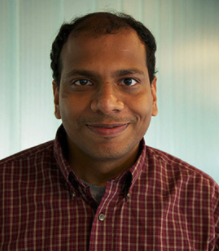 Ashish Khisti合作论文数The Edward S. Rogers Sr. Department of Electrical & Computer Engineering, Faculty of Applied Science & Engineering, University of Toronto;Vector Institute;Signals, Multimedia and Security Laboratory, University of Toronto7
 Kirill Neklyudov合作论文数Université de Montréal;Mila - Quebec Artificial Intelligence Institute6
 James Tarlton Townsend合作论文数Department of Psychology at Indiana University6
 Brendan J. Frey合作论文数Department of Electrical and Computer Engineering, University of Toronto;Best Department of Medical Research, University of Toronto;Department of Computer Science, University of Toronto5
 Karen Ullrich合作论文数FAIR, Meta4
 Roger Grosse合作论文数Department of Computer Science, University of Toronto;Schwartz Reisman Institute for Technology and Society;Anthropic4
 Felix Dangel合作论文数Max Planck Society3
 Rich Turner合作论文数Information Engineering Division, Department of Engineering, University of Cambridge3
 Rob Brekelmans合作论文数Department of Computer Science, University of Southern California;Information Sciences Institute, University of Southern California3
 Shah Rokh Valaee合作论文数The Edward S. Rogers Sr. Department of Electrical and Computer Engineering, Faculty of Applied Science and Engineering, University of Toronto3
 Wu Lin合作论文数Vector Institute3
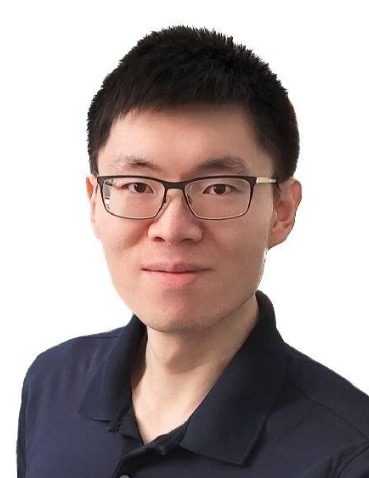 Sheldon Sicong Huang (黄思聪)合作论文数Vector Institute, University of Toronto3
 Agustinus Kristiadi合作论文数Vector Institute2
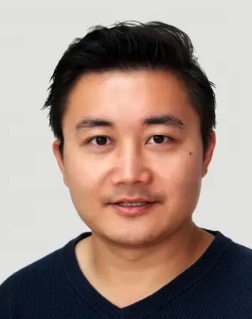 Yanshuai Cao (曹颜帅)合作论文数RBC Borealis2
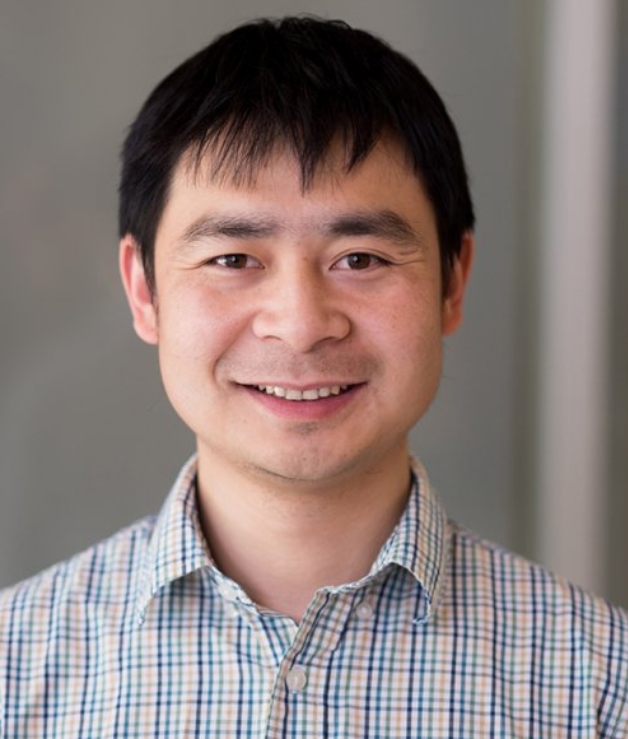 Qiang Liu合作论文数Department of Computer Science, College of Natural Sciences, The University of Texas at Austin2
 Juan Carrasquilla合作论文数Escuela de Física;Universidad Nacional de Colombia2
 Ashish J Khisti合作论文数1
 Petko Georgiev合作论文数Google DeepMind1
 Lazar Atanackovic合作论文数Vector Institute;The Edward S. Rogers Sr. Department of Electrical and Computer Engineering, University of Toronto1
 Kuan-Chieh (Jackson) Wang (王冠傑)合作论文数Snap Inc.1
 Mohamed Hibat-Allah合作论文数Vector Institute for Artificial Intelligence, University of Waterloo;MaRS Centre, Vector Institute;Vector Institute for Artificial Intelligence, University of Waterloo1
 Stephen Zhao合作论文数University of Toronto1YAN FU合作论文数1
 Luca Anthony Thiede合作论文数Georg August Univ Gottingen1
 Jonathon Shlens合作论文数Google DeepMind1
 Stig Petersen合作论文数DeepMind, London, England1
 Michelle Yeo合作论文数IST1Giacomo Torlai合作论文数Amazon Web Services1Stephen Gaffney合作论文数1
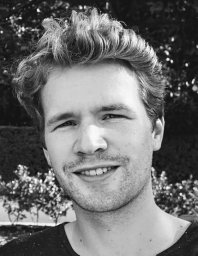 Jannes Nys合作论文数Ctr Quantum Sci & Engn, Ecole Polytech Fed Lausanne EPFL1John Quan合作论文数DeepMind1
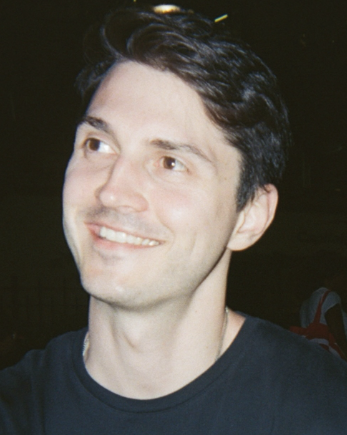 Runa Eschenhagen合作论文数Machine Learning Group, Computational and Biological Learning Lab, University of Cambridge;Department of Engineering, University of Cambridge1
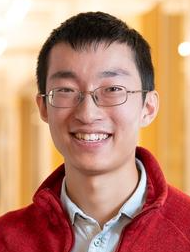 Alex Tong合作论文数Aithyra Research Institute for Biomedical Artificial Intelligence1
 Marzyeh Ghassemi合作论文数Department of Electrical Engineering and Computer Science, Massachusetts Institute of Technology;The Edward S. Rogers Sr. Department of Electrical and Computer Engineering, University of Toronto1
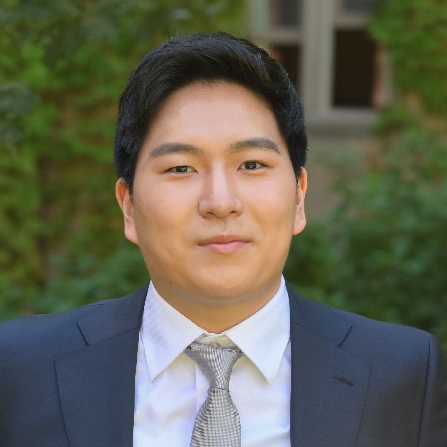 Juhan Bae合作论文数Machine Learning Group, Department of Computer Science, University of Toronto1
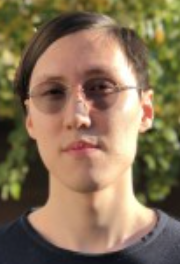 Sergey Bartunov合作论文数Isomorphic Labs;QuestDB1
 Alexander Sasha Vezhnevets合作论文数DeepMind1
 Heinrich ‘Heiner’ Küttler合作论文数xAI1
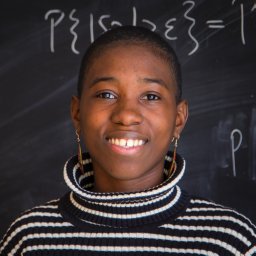 Inack E M合作论文数Faculty of Science, University of Buea1
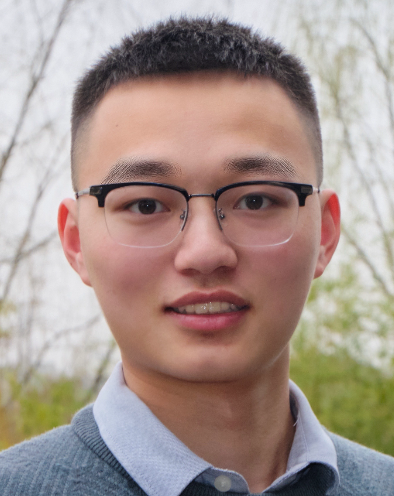 Yangjun Ruan合作论文数Machine Learning Group, Department of Computer Science, University of Toronto;Vector Institute;Department of Computer Science, Stanford University1
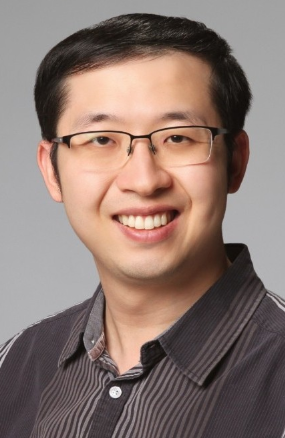 Ke Li合作论文数School of Computing Science, Faculty of Applied Sciences, Simon Fraser University1
 Graham Taylor合作论文数School of Engineering, University of Guelph1
 Karen Simonyan合作论文数Microsoft AI1
 Tom Schaul合作论文数DeepMind1
 Arnaud Doucet合作论文数DeepMind;Department of Statistics, University of Oxford1
 John P Agapiou合作论文数Google DeepMind1




