Scientific Deep Research (DR) agents answer user queries by synthesizing research papers into multi-section reports. User feedback can improve their utility, but existing protocols only score the final report, making it hard to study and learn which intermediate actions DR agents should take to improve reports. We collect DRACULA, the first dataset with user feedback on intermediate actions for DR. Over five weeks, nineteen expert CS researchers ask queries to a DR system that proposes actions (e.g., "Add a section on datasets"). Our users select actions they prefer, then judge whether an output report applied their selections successfully, yielding 8,103 action preferences and 5,230 execution judgments. After confirming a DR agent can execute DRACULA's actions, we study the predictability of user-preferred actions via simulation-how well LLMs predict the actions users select-a step toward learning to generate useful actions. We discover: (1) LLM judges initially struggle to predict action selections, but improve most when using a user's full selection history, rather than self-reported or extrapolated user context signals; (2) Users' selections for the same query differ based on unstated goals, bottlenecking simulation and motivating affordances that let users steer reports; and (3) Our simulation results inform an online intervention that generates new actions based on the user's past interactions, which users pick most often in follow-up studies. Overall, while work extensively studies execution, DRACULA reveals a key challenge is deciding which actions to execute in the first place. We open-source DRACULA's study design, user feedback, and simulation tasks to spur future work on action feedback for long-horizon agents.
AI-powered scientific research tools are rapidly being integrated into research workflows, yet the field lacks a clear lens into how researchers use these systems in real-world settings. We present and analyze the Asta Interaction Dataset, a large-scale resource comprising over 200,000 user queries and interaction logs from two deployed tools (a literature discovery interface and a scientific question-answering interface) within an LLM-powered retrieval-augmented generation platform. Using this dataset, we characterize query patterns, engagement behaviors, and how usage evolves with experience. We find that users submit longer and more complex queries than in traditional search, and treat the system as a collaborative research partner, delegating tasks such as drafting content and identifying research gaps. Users treat generated responses as persistent artifacts, revisiting and navigating among outputs and cited evidence in non-linear ways. With experience, users issue more targeted queries and engage more deeply with supporting citations, although keyword-style queries persist even among experienced users. We release the anonymized dataset and analysis with a new query intent taxonomy to inform future designs of real-world AI research assistants and to support realistic evaluation.
Scientific progress depends on the ability of researchers to synthesize the growing body of literature. Can large language models (LLMs) assist scientists in this task? Here we introduce OpenScholar, a specialized retrieval-augmented language model (LM)1 that answers scientific queries by identifying relevant passages from 45 million open-access papers and synthesizing citation-backed responses. To evaluate OpenScholar, we develop ScholarQABench, the first large-scale multi-domain benchmark for literature search, comprising 2,967 expert-written queries and 208 long-form answers across computer science, physics, neuroscience and biomedicine. Despite being a smaller open model, OpenScholar-8B outperforms GPT-4o by 6.1% and PaperQA2 by 5.5% in correctness on a challenging multi-paper synthesis task from the new ScholarQABench. Although GPT-4o hallucinates citations 78-90% of the time, OpenScholar achieves citation accuracy on par with human experts. OpenScholar's data store, retriever and self-feedback inference loop improve off-the-shelf LMs: for instance, OpenScholar-GPT-4o improves the correctness of GPT-4o by 12%. In human evaluations, experts preferred OpenScholar-8B and OpenScholar-GPT-4o responses over expert-written ones 51% and 70% of the time, respectively, compared with 32% for GPT-4o. We open-source all artefacts, including our code, models, data store, datasets and a public demo.
Can AI systems trained on the existing scientific record forecast the advances that will follow? We introduce PreScience, a dataset and benchmark for scientific forecasting built around 98K recent AI research papers, together with companion papers covering author publication histories and citation links, yielding 502K papers in total. The resulting paper records include titles, abstracts, disambiguated author identities, influential references, topic labels, citation trajectories, and metadata snapshotted to respect temporal cutoffs. We instantiate seven exemplar tasks: five paper-anchored tasks – contribution generation, collaborator prediction, prior work selection, citation count prediction, and future combination prediction – and two aggregate topic trend forecasting variants. We develop baselines ranging from simple heuristics and embedding methods to frontier language models and agentic systems, and introduce LACER, an LLM-based metric for evaluating similarity of generated contribution descriptions that agrees better with human judgments than existing metrics. Finally, we compose task models to generate a 12-month synthetic corpus and find that the resulting papers are systematically less diverse and less novel than human-authored research from the same period. We release the PreScience dataset (https://huggingface.co/datasets/allenai/prescience) and code (https://github.com/allenai/prescience).
Recent advances have made long-form report-generating systems widely available. This has prompted evaluation frameworks that use LLM-as-judge protocols and claim verification, along with meta-evaluation frameworks that seek to validate these methods. Many of the meta-evaluations estimate an evaluation quality's by comparing its assessments against human pairwise preferences. Prior work, however, suggests that human pairwise preference may be overly simplistic and can fail to capture nuances of expert expectations. We conduct a case study in meta-evaluation for long-form QA benchmarks using ScholarQA-CS2, a benchmark designed for assessing retrieval-augmented deep-research QA in the scientific domain. We comprehensively validate the benchmark through human pairwise preference judgments, then critically examine the strengths, weaknesses, and confounders of this approach. We show that pairwise preference rankings are best suited for system-level evaluation, while explicit metric-wise annotations and expert annotators are critical for reliable metric-level assessment, with subjectivity remaining a key challenge. Based on our findings, we offer practical guidelines for designing future meta-evaluations that better align evaluation methods, annotator expertise, and reporting practices. By surfacing these methodological challenges, we aim to advance evaluation standards for deep-research systems.
Deep Research (DR) tools (e.g. OpenAI DR) help researchers cope with ballooning publishing counts. Such tools can synthesize scientific papers to answer researchers' queries, but lack understanding of their users. We change that in MyScholarQA (MySQA), a personalized DR tool that: 1) infers a profile of a user's research interests; 2) proposes personalized actions for a user's input query; and 3) writes a multi-section report for the query that follows user-approved actions. We first test MySQA with NLP's standard protocol: we design a benchmark of synthetic users and LLM judges, where MySQA beats baselines in citation metrics and personalized action-following. However, we suspect this process does not cover all aspects of personalized DR users value, so we interview users in an online version of MySQA to unmask them. We reveal nine nuanced errors of personalized DR undetectable by our LLM judges, and we study qualitative feedback to form lessons for future DR design. In all, we argue for a pillar of personalization that easy-to-use LLM judges can lead NLP to overlook: real progress in personalization is only possible with real users.
AI agents hold the potential to revolutionize scientific productivity by automating literature reviews, replicating experiments, analyzing data, and even proposing new directions of inquiry; indeed, there are now many such agents, ranging from general-purpose "deep research" systems to specialized science-specific agents, such as AI Scientist and AIGS. Rigorous evaluation of these agents is critical for progress. Yet existing benchmarks fall short on several fronts: they often (1) lack reproducible agent tools necessary for a controlled comparison of core agentic capabilities; (2) do not account for confounding variables such as model cost and tool access; (3) do not provide standardized interfaces for quick agent prototyping and evaluation; (4) fail to provide holistic, product-informed measures of real-world use cases such as science research; and (5) lack comprehensive baseline agents necessary to identify true advances. In response, we define principles and tooling for more rigorously benchmarking agents. Using these, we present AstaBench, a suite that provides a holistic measure of agentic ability to perform scientific research, comprising 2400+ problems spanning the entire scientific discovery process and multiple scientific domains, and including many problems inspired by actual user requests to deployed Asta agents. Our suite comes with the first scientific research environment with production-grade search tools that enable controlled, reproducible evaluation, better accounting for confounders. Alongside, we provide a comprehensive suite of nine science-optimized classes of Asta agents and numerous baselines. Our extensive evaluation of 57 agents across 22 agent classes reveals several interesting findings, most importantly that despite meaningful progress on certain individual aspects, AI remains far from solving the challenge of science research assistance.
All text-based language problems can be reduced to either generation or embedding. Current models only perform well at one or the other. We introduce generative representational instruction tuning (GRIT) whereby a large language model is trained to handle both generative and embedding tasks by distinguishing between them through instructions. Compared to other open models, our resulting GritLM-7B is among the top models on the Massive Text Embedding Benchmark (MTEB) and outperforms various models up to its size on a range of generative tasks. By scaling up further, GritLM-8x7B achieves even stronger generative performance while still being among the best embedding models. Notably, we find that GRIT matches training on only generative or embedding data, thus we can unify both at no performance loss. Among other benefits, the unification via GRIT speeds up Retrieval-Augmented Generation (RAG) by > 60% for long documents, by no longer requiring separate retrieval and generation models. Models, code, etc. are freely available at https://github.com/ContextualAI/gritlm.
Retrieval-augmented generation is increasingly effective in answering scientific questions from literature, but many state-of-the-art systems are expensive and closed-source. We introduce Ai2 Scholar QA, a free online scientific question answering application. To facilitate research, we make our entire pipeline public: as a customizable open-source Python package and interactive web app, along with paper indexes accessible through public APIs and downloadable datasets. We describe our system in detail and present experiments analyzing its key design decisions. In an evaluation on a recent scientific QA benchmark, we find that Ai2 Scholar QA outperforms competing systems.
Large Language Models (LLMs) are often aligned using contrastive alignment objectives and preference pair datasets. The interaction between model, paired data, and objective makes alignment a complicated procedure, sometimes producing subpar results. We study this and find that (i) preference data gives a better learning signal when the underlying responses are contrastive, and (ii) alignment objectives lead to better performance when they specify more control over the model during training. Based on these insights, we introduce Contrastive Learning from AI Revisions (CLAIR), a data-creation method which leads to more contrastive preference pairs, and Anchored Preference Optimization (APO), a controllable and more stable alignment objective. We align Llama-3-8B-Instruct using various comparable datasets and alignment objectives and measure MixEval-Hard scores, which correlate highly with human judgments. The CLAIR preferences lead to the strongest performance out of all datasets, and APO consistently outperforms less controllable objectives. Our best model, trained on 32K CLAIR preferences with APO, improves Llama-3-8B-Instruct by 7.65%, closing the gap with GPT4-turbo by 45%. Our code and datasets are available.
As language models become integral to critical workflows, assessing their behavior remains a fundamental challenge – human evaluation is costly and noisy, while automated metrics provide only coarse, difficult-to-interpret signals. We introduce natural language unit tests , a paradigm that decomposes response quality into explicit, testable criteria, along with a unified scoring model, LMUnit, which combines multi-objective training across preferences, direct ratings, and natural language rationales. Through controlled human studies, we show this paradigm significantly improves inter-annotator agreement and enables more effective LLM development workflows. LMUnit achieves state-of-the-art performance on evaluation benchmarks including FLASK, BigGenBench, and RewardBench 2, while maintaining competitive results on the original RewardBench. These results validate both our proposed paradigm and scoring model, suggesting a promising path forward for language model evaluation and development. Our code has been released at github.com/ContextualAI/LMUnit with an MIT license.
We introduce OLMoE, a fully open, state-of-the-art language model leveraging sparse Mixture-of-Experts (MoE). OLMoE-1B-7B has 7 billion (B) parameters but uses only 1B per input token. We pretrain it on 5 trillion tokens and further adapt it to create OLMoE-1B-7B-Instruct. Our models outperform all available models with similar active parameters, even surpassing larger ones like Llama2-13B-Chat and DeepSeekMoE-16B. We present novel findings on MoE training, define and analyze new routing properties showing high specialization in our model, and open-source all our work: model weights, training data, code, and logs.
Topic pages aggregate useful information about an entity or concept into a single succinct and accessible article. Automated creation of topic pages would enable their rapid curation as information resources, providing an alternative to traditional web search. While most prior work has focused on generating topic pages about biographical entities, in this work, we develop a completely automated process to generate high-quality topic pages for scientific entities, with a focus on biomedical concepts. We release TOPICAL, a web app and associated open-source code, comprising a model pipeline combining retrieval, clustering, and prompting, that makes it easy for anyone to generate topic pages for a wide variety of biomedical entities on demand. In a human evaluation of 150 diverse topic pages generated using TOPICAL, we find that the vast majority were considered relevant, accurate, and coherent, with correct supporting citations. We make all code publicly available and host a free-to-use web app at: https://s2-topical.apps.allenai.org
Scientific progress depends on researchers' ability to synthesize the growing body of literature. Can large language models (LMs) assist scientists in this task? We introduce OpenScholar, a specialized retrieval-augmented LM that answers scientific queries by identifying relevant passages from 45 million open-access papers and synthesizing citation-backed responses. To evaluate OpenScholar, we develop ScholarQABench, the first large-scale multi-domain benchmark for literature search, comprising 2,967 expert-written queries and 208 long-form answers across computer science, physics, neuroscience, and biomedicine. On ScholarQABench, OpenScholar-8B outperforms GPT-4o by 5 PaperQA2 by 7 hallucinates citations 78 to 90 accuracy on par with human experts. OpenScholar's datastore, retriever, and self-feedback inference loop also improves off-the-shelf LMs: for instance, OpenScholar-GPT4o improves GPT-4o's correctness by 12 experts preferred OpenScholar-8B and OpenScholar-GPT4o responses over expert-written ones 51 32
Real-world applications of neural language models often involve running many different models over the same corpus. The high computational cost of these runs has led to interest in techniques that can reuse the contextualized embeddings produced in previous runs to speed training and inference of future ones. We refer to this approach as embedding recycling (ER). While multiple ER techniques have been proposed, their practical effectiveness is still unknown because existing evaluations consider very few models and do not adequately account for overhead costs. We perform an extensive evaluation of ER across eight different models (17 to 900 million parameters) and fourteen tasks in English. We show how a simple ER technique that caches activations from an intermediate layer of a pretrained model, and learns task-specific adapters on the later layers, is broadly effective. For the best-performing baseline in our experiments (DeBERTa-v2 XL), adding a precomputed cache results in a >90% speedup during training and 87-91% speedup for inference, with negligible impact on accuracy. Our analysis reveals important areas of future work.
Learned representations of scientific documents can serve as valuable input features for downstream tasks without further fine-tuning. However, existing benchmarks for evaluating these representations fail to capture the diversity of relevant tasks. In response, we introduce SciRepEval, the first comprehensive benchmark for training and evaluating scientific document representations. It includes 24 challenging and realistic tasks, 8 of which are new, across four formats: classification, regression, ranking and search. We then use this benchmark to study and improve the generalization ability of scientific document representation models. We show how state-of-the-art models like SPECTER and SciNCL struggle to generalize across the task formats, and that simple multi-task training fails to improve them. However, a new approach that learns multiple embeddings per document, each tailored to a different format, can improve performance. We experiment with task-format-specific control codes and adapters and find they outperform the existing single-embedding state-of-the-art by over 2 points absolute. We release the resulting family of multi-format models, called SPECTER2, for the community to use and build on.
We propose LENS, a modular approach for tackling computer vision problems by leveraging the power of large language models (LLMs). Our system uses a language model to reason over outputs from a set of independent and highly descriptive vision modules that provide exhaustive information about an image. We evaluate the approach on pure computer vision settings such as zero- and few-shot object recognition, as well as on vision and language problems. LENS can be applied to any off-the-shelf LLM and we find that the LLMs with LENS perform highly competitively with much bigger and much more sophisticated systems, without any multimodal training whatsoever. We open-source our code at https://github.com/ContextualAI/lens and provide an interactive demo.
Large multimodal models trained on natural documents, which interleave images and text, outperform models trained on image-text pairs on various multimodal benchmarks. However, the datasets used to train these models have not been released, and the collection process has not been fully specified. We introduce the OBELICS dataset, an open web-scale filtered dataset of interleaved image-text documents comprising 141 million web pages extracted from Common Crawl, 353 million associated images, and 115 billion text tokens. We describe the dataset creation process, present comprehensive filtering rules, and provide an analysis of the dataset's content. To show the viability of OBELICS, we train vision and language models of 9 and 80 billion parameters named IDEFICS, and obtain competitive performance on different multimodal benchmarks. We release our dataset, models and code.
We present a novel task and dataset for evaluating the ability of vision and language models to conduct visio-linguistic compositional reasoning, which we call Winoground. Given two images and two captions, the goal is to match them correctly - but crucially, both captions contain a completely identical set of words, only in a different order. The dataset was carefully hand-curated by expert annotators and is labeled with a rich set of fine-grained tags to assist in analyzing model performance. We probe a diverse range of state-of-the-art vision and language models and find that, surprisingly, none of them do much better than chance. Evidently, these models are not as skilled at visio-linguistic compositional reasoning as we might have hoped. We perform an extensive analysis to obtain insights into how future work might try to mitigate these models' shortcomings. We aim for Winoground to serve as a useful evaluation set for advancing the state of the art and driving further progress in the field. The dataset is available at https://huggingface.co/datasets/facebook/winoground.
 Douwe Kiela合作论文数Contextual AI;Stanford University13
 Doug Downey合作论文数Allen Institute for AI;Department of Computer Science, Robert R. McCormick School of Engineering and Applied Science, Northwestern University11
 Sergey Feldman合作论文数Alongside;Allen Institute for AI;Data Cowboys10
 Devi Parikh合作论文数Yutori9
 Vedanuj Goswami合作论文数Meta7
 Joseph Chee Chang合作论文数Allen Institute for Artificial Intelligence6
 Aakanksha Naik合作论文数Allen Institute for Artificial Intelligence6
 Marcus Rohrbach合作论文数Technische Universität Darmstadt6
 Dhruv Batra合作论文数Yutori6
 Ronghang Hu (胡戎航)合作论文数5
 Daniel S. Weld合作论文数Paul G. Allen School of Computer Science & Engineering, University of Washington;Allen Institute of Artificial Intelligence;Madrona Venture Group5
 Tristan Thrush合作论文数Artificial Intelligence Laboratory, Stanford University5
 Jena D. Hwang合作论文数Allen Institute for Artificial Intelligence5
 Niklas Muennighoff合作论文数Meta;Stanford University;Ai24
 Luca Soldaini合作论文数Allen Institute for AI4
 Varsha Kishore合作论文数School of Computer Science, Cornell University4
 Xinlei Chen (陈鑫磊)合作论文数XAI4
 Mike D'Arcy合作论文数Northwestern University;Allen Institute for AI;CheckMate.AI;Informatics Systems Research Division, University of Southern California3
 Julian Michael合作论文数Meta3
 Alex Wang合作论文数Cohere3
 Stas Bekman合作论文数Stasosphere Online Inc.;Contextual AI;StasoSphere.com3
 Vivek Natarajan合作论文数Google3
 Felix Hill合作论文数DeepMind3
 Kyle Lo合作论文数Allen Institute for Artificial Intelligence3
 David Wadden合作论文数Google DeepMind3
 Nishant Balepur合作论文数University of Maryland;Microsoft Research3
 Meet Shah合作论文数Waymo3
 Wojciech Galuba合作论文数Cohere3
 Weijia Shi (施惟佳)合作论文数University of Washington;Meta AI3
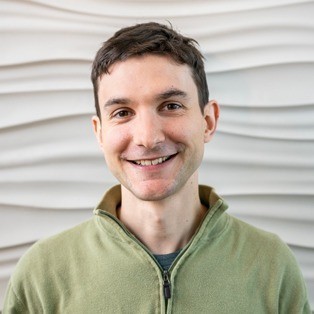 Jonathan Bragg合作论文数Allen Institute for AI3
 Yada Pruksachatkun合作论文数Moonhub3
 Sam Bowman合作论文数Computer Science Department, College of Arts & Science, New York University;Center for Data Science, New York University;Anthropic3
 Victor Sanh合作论文数Rilix AI3
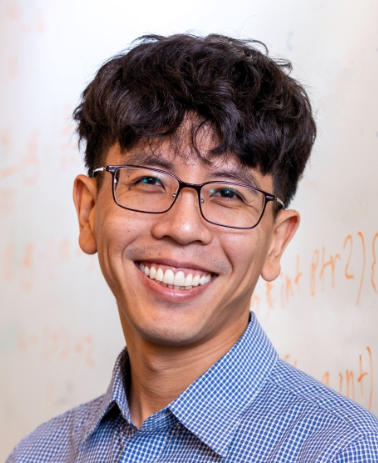 Pang Wei Koh合作论文数Paul G. Allen School of Computer Science & Engineering, College of Engineering, University of Washington3
 Hanna Hajishirzi合作论文数Paul G. Allen School of Computer Science & Engineering, University of Washington3
 Jacqueline He合作论文数Natural Language Processing Group, Paul G. Allen School of Computing Science & Engineering, University of Washington2Angelina McMillan-Major合作论文数2
 Jon Saad-Falcon合作论文数Graduate School of Business, Stanford University;Department of Computer Science, Stanford University2
 Timo Schick合作论文数Inflection AI2Karthik Venkatesan合作论文数2
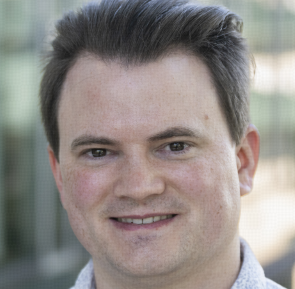 Tim Dettmers合作论文数Allen Institute for Artificial Intelligence;Carnegie Mellon University2Sharan Agrawal合作论文数2
 Anton Lozhkov合作论文数Hugging Face2
 Rulin Shao (邵如琳)合作论文数University of Washington;Meta2
 William Berrios合作论文数Hugging Face - Remote2
 Hugo Laurençon合作论文数Meta2
 Mario Šaško合作论文数Hugging Face2Minyang Tian合作论文数2
 M Latzke合作论文数2