The BETTER4U project (Preventing Obesity through Biologically and bEhaviorally Tailored inTERventions for You) is a Horizon Europe initiative (GAP 101080117) dedicated to advancing our understanding of the multifaceted etiology of obesity. The project aims to move beyond current knowledge of obesity-related determinants by examining the system-level interactions between biological (including genetics), lifestyle behaviors (physical activity, nutrition, sedentary behaviors), and contextual factors, including social, economic, psychological, and environmental factors. BETTER4U advances from traditional approaches by exploring determinants embedded within interconnected systems and biological frameworks. It seeks to identify and integrate polygenic risks, omics-based markers, lifestyle and contextual factors using data from biobanks and previous landmark studies. This comprehensive approach enables the refinement of Artificial Intelligence (AI) algorithms, enhancing individualization in the design of tailored interventions. The project employs real-time behavioral monitoring tools and remote technologies to track individual behaviors and metabolic responses, allowing for the development of personalized obesity prevention strategies. By doing so, BETTER4U aims to bridge the gap between research and practical application, enabling the design of interventions that are biologically and behaviorally informed. The anticipated outcomes of BETTER4U include advanced AI models that support the development of sophisticated, targeted interventions for individuals at risk of overweight or obesity. These models will provide actionable insights into how personalized lifestyle adjustments in lifestyle behaviors, such as diet and physical activity, can effectively mitigate weight gain trajectories across the lifespan. Ultimately, the project seeks to empower individuals and support precision medicine approaches in obesity prevention and treatment through active participant engagement.
Population-specific genome-wide association studies can reveal high-impact genomic variants that influence traits like body-mass index (BMI). Using the Estonian Biobank BMI dataset (n = 204,747 participants) we identified 214 genome-wide significant loci. Among those hits, we identified a common non-coding variant within the newly associated ADGRL3 gene (-0.18 kg/m²; P = 3.21 × 10⁻⁹). Moreover, the missense rare variant PTPRT:p.Arg1384His associated with lower BMI (-0.44 kg/m²; P = 2.51 × 10⁻¹⁰), while the protein-truncating variant POMC:p.Glu206* was associated with considerably higher BMI (+ 0.81 kg/m²; P = 1.48 × 10⁻¹²), both likely affecting the functioning of the leptin-melanocortin pathway. POMC:p.Glu206* was observed in different North-European populations, suggesting a broader, yet elusive, distribution of this damaging variant. These observations indicate the previously unrecognized roles of the ADGRL3 and PTPRT genes in body weight regulation and suggest an increased prevalence of the POMC:p.Glu206* variant in European populations, offering avenues for developing interventions in obesity management.
Genetic and environmental factors contribute to weight gain, but how these effects change over adulthood is largely unknown. We examined how genetic factors influence BMI changes from young adulthood to old age and how this change relates to BMI in early adulthood. Data from 16 longitudinal twin cohorts, including 111,370 adults (56
The demographic history of the Papua New Guinean (PNG) population is a subject of interest due to its early settlement in New Guinea, its relative isolation and substantial Denisovan ancestry. Previous research suggested an admixture with an early diverged out of African population. This study re-examines the PNG population using newly published samples. Our findings demonstrate that the observed shifts in Relative Cross Coalescent Rate (RCCR) curves are driven by strong bottleneck and slower population growth rate of the PNG population, rather than the contributions from an earlier out of Africa population. Although a small contribution from the early out of Africa population cannot be ruled out, it is no longer needed to explain the observed results. Our analysis positions them as a sister group to other East Asian populations. This study provides insights on the PNG population and highlights the impact of population-specific demography on interpreting RCCR curves.
The expansion of people speaking Bantu languages is the most dramatic demographic event in Late Holocene Africa and fundamentally reshaped the linguistic, cultural and biological landscape of the continent 1 – 7 . With a comprehensive genomic dataset, including newly generated data of modern-day and ancient DNA from previously unsampled regions in Africa, we contribute insights into this expansion that started 6,000–4,000 years ago in western Africa. We genotyped 1,763 participants, including 1,526 Bantu speakers from 147 populations across 14 African countries, and generated whole-genome sequences from 12 Late Iron Age individuals 8 . We show that genetic diversity amongst Bantu-speaking populations declines with distance from western Africa, with current-day Zambia and the Democratic Republic of Congo as possible crossroads of interaction. Using spatially explicit methods 9 and correlating genetic, linguistic and geographical data, we provide cross-disciplinary support for a serial-founder migration model. We further show that Bantu speakers received significant gene flow from local groups in regions they expanded into. Our genetic dataset provides an exhaustive modern-day African comparative dataset for ancient DNA studies 10 and will be important to a wide range of disciplines from science and humanities, as well as to the medical sector studying human genetic variation and health in African and African-descendant populations.
The contemporary European genetic makeup formed in the last 8,000 years when local Western Hunter-Gatherers (WHGs) mixed with incoming Anatolian Neolithic farmers and Pontic Steppe pastoralists.1-3 This encounter combined genetic variants with distinct evolutionary histories and, together with new environmental challenges faced by the post-Neolithic Europeans, unlocked novel adaptations.4 Previous studies inferred phenotypes in these source populations, using either a few single loci5-7 or polygenic scores based on genome-wide association studies,8-10 and investigated the strength and timing of natural selection on lactase persistence or height, among others.6,11,12 However, how ancient populations contributed to present-day phenotypic variation is poorly understood. Here, we investigate how the unique tiling of genetic variants inherited from different ancestral components drives the complex traits landscape of contemporary Europeans and quantify selection patterns associated with these components. Using matching individual-level genotype and phenotype data for 27 traits in the Estonian biobank13 and genotype data directly from the ancient source populations, we quantify the contributions from each ancestry to present-day phenotypic variation in each complex trait. We find substantial differences in ancestry for eye and hair color, body mass index, waist/hip circumferences, and their ratio, height, cholesterol levels, caffeine intake, heart rate, and age at menarche. Furthermore, we find evidence for recent positive selection linked to four of these traits and, in addition, sleep patterns and blood pressure. Our results show that these ancient components were differentiated enough to contribute ancestry-specific signatures to the complex trait variability displayed by contemporary Europeans.
The statin drug target, 3-hydroxy-3-methylglutaryl-CoA reductase (HMGCR), is strongly linked to body mass index (BMI), yet how HMGCR influences BMI is not understood. In mammals, studies of peripheral HMGCR have not clearly identified a role in BMI maintenance and, despite considerable central nervous system expression, a function for central HMGCR has not been determined. Similar to mammals, Hmgcr is highly expressed in the Drosophila melanogaster brain. Therefore, genetic and pharmacological studies were performed to identify how central Hmgcr regulates Drosophila energy metabolism and feeding behavior. We found that inhibiting Hmgcr, in insulin-producing cells of the Drosophila pars intercerebralis (PI), the fly hypothalamic equivalent, significantly reduces the expression of insulin-like peptides, severely decreasing insulin signaling. In fact, reducing Hmgcr expression throughout development causes decreased body size, increased lipid storage, hyperglycemia, and hyperphagia. Furthermore, the Hmgcr induced hyperphagia phenotype requires a conserved insulin-regulated α-glucosidase, target of brain insulin (tobi). In rats and mice, acute inhibition of hypothalamic Hmgcr activity stimulates food intake. This study presents evidence of how central Hmgcr regulation of metabolism and food intake could influence BMI.
Attempts to identify a 'homeland' for our species from genetic data are widespread in the academic literature. However, even when putting aside the question of whether a 'homeland' is a useful concept, there are a number of inferential pitfalls in attempting to identify the geographic origin of a species from contemporary patterns of genetic variation. These include making strong claims from weakly informative data, treating genetic lineages as representative of populations, assuming a high degree of regional population continuity over hundreds of thousands of years, and using circumstantial observations as corroborating evidence without considering alternative hypotheses on an equal footing, or formally evaluating any hypothesis. In this commentary we review the recent publication that claims to pinpoint the origins of 'modern humans' to a very specific region in Africa (Chan et al., 2019), demonstrate how it fell into these inferential pitfalls, and discuss how this can be avoided.
Extensive sequencing of modern and ancient human genomes has revealed that contemporary populations can be explained as the result of recent mixing of a few distinct ancestral genetic lineages 1 . But the small number of aDNA samples that predate the Last Glacial Maximum means that the origins of these lineages are not well understood. Here, we circumvent the limited sampling by modelling explicitly the effect of climatic changes and terrain on population demography and migrations through time and space, and show that these factors are sufficient to explain the divergence among ancestral lineages. Our reconstructions show that the sharp separation between African and Eurasian lineages is a consequence of only a few limited periods of connectivity through the arid Arabian peninsula, which acted as the gate out of the Arican continent. The subsequent spread across Eurasia was then mostly shaped by mountain ranges, and to a lesser extent deserts, leading to the split of European and Asians, and the further diversification of these two groups. A high tolerance to cold climates allowed the persistence at high latitudes even during the Last Glacial Maximum, maintaining a pocket in Beringia that led to the later, rapid colonisation of the Americas. The advent of food production was associated with an increase in movement 2 , but mountains and climate have been shown to still play a major role even in this latter period 3,4 , affecting the mixing of the ancestral lineages that we have shown to be shaped by those two factors in the first place.
Whilst an African origin of modern humans is well established, the timings and routes of their expansions into Eurasia are the subject of heated debate, due to the scarcity of fossils and the lack of suitably old ancient DNA. Here, we use high-resolution palaeoclimate reconstructions to estimate how difficult it would have been for humans in terms of rainfall availability to leave the African continent in the past 300k years. We then combine these results with an anthropologically and ecologically motivated estimate of the minimum level of rainfall required by hunter-gatherers to survive, allowing us to reconstruct when, and along which geographic paths, expansions out of Africa would have been climatically feasible. The estimated timings and routes of potential contact with Eurasia are compatible with archaeological and genetic evidence of human expansions out of Africa, highlighting the key role of palaeoclimate variability for modern human dispersals.
Demographic models of human cultural evolution have high explanatory potential but weak empirical support. Here we use a global dataset of rock art sites and climate and genetics-based estimates of ancient population densities to test a new model based on epidemiological principles. The model focuses on the process whereby a cultural innovation becomes endemic in a population, predicting that this cannot occur unless population density exceeds a critical threshold. Analysis of the data, using a Bayesian statistical framework, shows that the model has stronger empirical support than a proportional model, where detection is directly proportional to population density, or a null model, where rock art detection ratios and population density are independent. Results for different geographical areas and periods are compatible with the predictions of the model and confirm its superiority with respect to the null model. Re-analysis of the rock art data, using a second set of independent population estimates, again supports the superiority of the model. Although the available data is sparse and the analysis cannot exclude all possible sources of bias, this is evidence that population density above a critical threshold may be a necessary condition for the maintenance of rock art as a stable part of a population's cultural repertoire. Methods similar to those described can be used to test the model for other classes of archaeological artifact and to compare it against other models.
Whilst an African origin for Anatomically Modern Humans is well established [1][1], the timings of their expansions into Eurasia are the subject to heated debate, due to the scarcity of fossils and the lack of suitably old ancient DNA [2][2]. Here, we estimate potential timings and routes out of Africa by deriving anthropologically and ecologically plausible precipitation requirements for human existence, and applying them to high-resolution palaeoclimate reconstructions for the past 300k years. We find that exit routes and timings previously suggested based on archaeological and genetic evidence coincide precisely with the presence of sufficiently wet corridors into Eurasia, while the gaps between the proposed exit timings co-occur with periods of insufficient rainfall. This demonstrates the key role that palaeoclimatic conditions played for out-of-Africa expansions. The challenging environmental conditions outside of Africa that occurred between windows of potential contact, coupled with the lack of a demographic rescue effect from migration and possible competition with other hominins, likely explain the demise of early colonists prior to the large-scale colonisation of the world beginning from ∼65kya. [1]: #ref-1 [2]: #ref-2
The Neolithic transition in Europe was driven by the rapid dispersal of Near Eastern farmers who, over a period of 3,500 years, brought food production to the furthest corners of the continent. However, this wave of expansion was far from homogeneous, and climatic factors may have driven a marked slowdown observed at higher latitudes. Here, we test this hypothesis by assembling a large database of archaeological dates of first arrival of farming to quantify the expansion dynamics. We identify four axes of expansion and observe a slowdown along three axes when crossing the same climatic threshold. This threshold reflects the quality of the growing season, suggesting that Near Eastern crops might have struggled under more challenging climatic conditions. This same threshold also predicts the mixing of farmers and hunter-gatherers as estimated from ancient DNA, suggesting that unreliable yields in these regions might have favoured the contact between the two groups. By synthesizing information on archaeological sites, palaeoclimate reconstructions and ancient DNA, Betti et al. show that the Neolithic expansion in Europe was not a continuous process of diffusion, but a series of climate-driven episodes of varying speeds.
This work is covered by copyright. Unless the document is being made available under a Creative Commons Licence, you must assume that re-use is limited to personal use and that permission from the copyright owner must be obtained for all other uses. If the document is available under a Creative Commons License (or other specified license) then refer to the Licence for details of permitted re-use. It is a condition of access that users recognise and abide by the legal requirements associated with these rights. If you believe that this work infringes copyright please provide details by email to qut.copyright@qut.edu.au
 Andrea Manica合作论文数Department of Zoology, University of Cambridge40
 Rasmus Nielsen合作论文数Department of Integrative Biology, College of Letters & Science, University of California, Berkeley;Department of Statistics, University of California, Berkeley;University of Copenhagen9
 Mait Metspalu合作论文数Institute of Molecular and Cell Biology, Tartu University and Estonian Biocentre9
 Vera Warmuth合作论文数Univ Cambridge, Dept Zool, Downing St, Cambridge CB2 3EJ, England8
 Eske Willerslev合作论文数Department of Zoology, University of Cambridge8
 Helgi Schiöth合作论文数Department of Surgical Sciences, Functional Pharmacology and Neuroscience, Uppsala University7
 Kristian Lindgren合作论文数Chalmers University of Technology7
 Liisa Loog合作论文数UCL, Res Dept Genet Evolut & Environm, London WC1E 6BT, England6
 Toomas Kivisild合作论文数Laboratory for Human Evolutionary Genetics, Department of Human Genetics, KU Leuven6
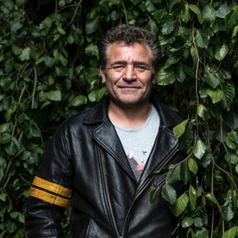 Francois Balloux合作论文数Genetics Institute, University College London;Department of Genetics, Evolution and Environment, University College London6
 Bernhard Mehlig合作论文数Department of Physics, University of Gothenburg6
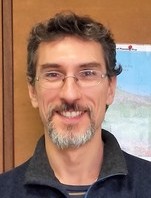 François-Xavier Ricaut合作论文数Centre de Recherche sur la Biodiversité et l'Environnement;Université de Toulouse III – Paul Sabatier;French National Centre for Scientific Research;Department of Prehistory, National Museum and Art Gallery6
 Veronika Siska合作论文数5
 Simon Rasmussen合作论文数Novo Nordisk Foundation Center for Protein Research, University of Copenhagen5
 Bower M A合作论文数5
 Richard Villems合作论文数Institute of Molecular and Cell Biology, Faculty of Science and Technology, University of Tartu5
 Monika Karmin合作论文数Department of Evolutionary Biology;Institute of Molecular and Cell Biology;University of Tartu;Institute of Molecular and Cell Biology, University of Tartu5
 Michael J Williams合作论文数Umeå Centre for Molecular Pathogenesis;Umeå University;Umeå Centre for Molecular Pathogenesis, Umeå University5
 Yali Xue合作论文数School of Computer Science and Software, Shenzhen University5
 Chris Tyler-Smith合作论文数Wellcome Sanger Institute5Klas Kullander合作论文数Department of Neuroscience, Uppsala University5
 Michael Degiorgio合作论文数Department of Electrical Engineering and Computer Science, College of Engineering & Computer Science, Florida Atlantic University;Department of Biomedical Engineering, College of Engineering & Computer Science, Florida Atlantic University5
 Martin Nilsson Jacobi合作论文数Department of Earth, Space and Environment, Chalmers University of Technology5
 Morten Arendt Rasmussen合作论文数Department of Food Science, Faculty of Science, University of Copenhagen4
 Eppie R Jones合作论文数Dept Zool, Univ Cambridge4Craig Muller合作论文数4
 Marta Mirazon Lahr合作论文数Department of Archaeology, University of Cambridge4
 Luca Pagani合作论文数Department of Biology, University of Padova;Eesti Biokeskus4Yamskova Olga合作论文数4
 Beyer Robert合作论文数Applied Mathematics and Systems Laboratory Châtenay-Malabry, Ecole Centrale Paris4
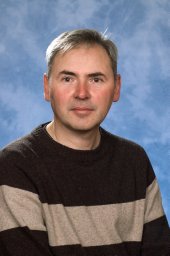 Boris Malyarchuk合作论文数Institute of Biological Problems of the North, Russian Academy of Sciences4David M Lambert合作论文数Evolutionary Genetics Laboratory, University of Auckland4
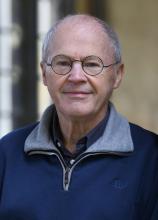 Graeme Barker合作论文数Department of Archaeology, University of Cambridge;St John’s College, University of Cambridge;McDonald Institute for Archaeological Research, University of Cambridge4
 Robert Fredriksson合作论文数Department of Pharmaceutical Biosciences, Uppsala University4
 Paula F. Campos合作论文数Københavns Universitet, University of Copenhagen4Johan Nystrom合作论文数4Ene Metspalu合作论文数University of Tartu, Tartu University4Kolbjørn Tunstrøm合作论文数Department of Ecology and Evolutionary Biology, Princeton University4
 Kristiina Tambets合作论文数Institute of Molecular and Cellular Biology, University of Tartu and Estonian Biocentre4Thorfinn Sand Korneliussen合作论文数Nat Hist Museum Denmark, Univ Copenhagen4
 Andrea Migliano合作论文数Department of Evolutionary Anthropology, University of Zurich;Institut für Anthropologie und Anthropologisches Museum, University of Zurich;Department of Anthropology, University College London4
 Anders Albrechtsen合作论文数Department of Biostatistics, University of Copenhagen4Miroslava Derenko合作论文数Institute of Biological Problems of the North, Russian Academy of Sciences4Francesco Casalegno合作论文数3
 Ida Moltke合作论文数Department of Biology, Faculty of Science, University of Copenhagen3Camille Ruiz合作论文数3
 Richard Walker合作论文数Blue Brain Project, Ecole Polytech Fed Lausanne3
 Nicolas Brucato合作论文数Laboratoire d'Anthropologie Moléculaire et Imagerie de Synthèse, Centre National de la Recherche Scientifique;Laboratoire d'Anthropologie Moléculaire et Imagerie de Synthèse, Centre National de la Recherche Scientifique3
 Reedik Mägi合作论文数Institute of Genomics, University of Tartu;Estonian Genome Centre, University of Tartu;Faculty of Science and Technology, University of Tartu3




