The demographic history of the Papua New Guinean (PNG) population is a subject of interest due to its early settlement in New Guinea, its relative isolation and substantial Denisovan ancestry. Previous research suggested an admixture with an early diverged out of African population. This study re-examines the PNG population using newly published samples. Our findings demonstrate that the observed shifts in Relative Cross Coalescent Rate (RCCR) curves are driven by strong bottleneck and slower population growth rate of the PNG population, rather than the contributions from an earlier out of Africa population. Although a small contribution from the early out of Africa population cannot be ruled out, it is no longer needed to explain the observed results. Our analysis positions them as a sister group to other East Asian populations. This study provides insights on the PNG population and highlights the impact of population-specific demography on interpreting RCCR curves.
The genetically regulated component of molecular traits can be imputed from ancient genomes, though low genotyping quality and genetic drift may impair accurate expression prediction and results interpretation. We developed tissue-specific gene expression and alternative splicing prediction models and applied them to over a thousand imputed ancient genomes spanning 10,000 years of Western Eurasian history. We revealed gene regulatory patterns diverging with time, space and genomic ancestry by fitting predicted transcriptional profiles onto multivariable models including these factors. By interpreting associations with time as recent natural selection we identify hits mediated by transcriptional changes. Finally, we fine-mapped these selection signals to tissue-specific transcriptional traits, explicitly accounting for prediction uncertainty. Among others, we elucidate the spatial patterns and the regulatory features promoting selection at LCT, FADS1, SLC22A5/ P4HA2, ACAD10 / OAS3 and find novel signals of selection at TBIMB6, SORD2P and AC012370 . 3 . ### Competing Interest Statement The authors have declared no competing interest. Fondazione CRT, 2021.1787
Several studies have demonstrated significant phenotypic and genetic correlations between body mass index (BMI) and brain morphological traits derived from structural magnetic resonance imaging (sMRI). We use the sMRI, BMI, and genetic data collected by the UK Biobank to systematically compute the genetic correlations between area, volume, and thickness measurements of hundreds of brain structures on one hand, and BMI on the other. In agreement with previous literature, we find many such measurements to have negative genetic correlation with BMI. We then dissect the molecular mechanisms underlying such correlations using brain eQTL data and summary-based Mendelian randomization, thus producing an atlas of genes whose genetically regulated expression in brain tissues is pleiotropic with brain morphology and BMI. Fine-mapping followed by colocalization analysis allows, in several cases, the identification of credible sets of variants likely to be causal for both the macroscopic phenotypes and for gene expression. In particular, epigenetic fine mapping identifies variant rs7187776 in the 5' UTR of the TUFM gene as likely to be causal of increased BMI and decreased caudate volume, possibly through the creation, by the alternate allele, of an ETS binding site leading to increased chromatin accessibility, specifically in microglial cells.
Highlanders and lowlanders of Papua New Guinea have faced distinct environmental stress, such as hypoxia and environment-specific pathogen exposure, respectively. In this study, we explored the top genomics regions and the candidate driver SNPs for selection in these two populations using newly sequenced whole-genomes of 54 highlanders and 74 lowlanders. We identified two candidate SNPs under selection - one in highlanders, associated with red blood cell traits and another in lowlanders, which is associated with white blood cell count - both potentially influencing the heart rate of Papua New Guineans in opposite directions. We also observed four candidate driver SNPs that exhibit linkage disequilibrium with an introgressed haplotype, highlighting the need to explore the possibility of adaptive introgression within these populations. This study reveals that the signatures of positive selection in highlanders and lowlanders of Papua New Guinea align closely with the challenges they face, which are specific to their environments.
Neandertals and Denisovans, having inhabited distinct regions in Eurasia and possibly Oceania for over 200,000 y, experienced ample time to adapt to diverse environmental challenges these regions presented. Among present-day human populations, Papua New Guineans (PNG) stand out as one of the few carrying substantial amounts of both Neandertal and Denisovan DNA, a result of past admixture events with these archaic human groups. This study investigates the distribution of introgressed Denisovan and Neandertal DNA within two distinct PNG populations, residing in the highlands of Mt Wilhelm and the lowlands of Daru Island. These locations exhibit unique environmental features, some of which may parallel the challenges that archaic humans once confronted and adapted to. Our results show that PNG highlanders carry higher levels of Denisovan DNA compared to PNG lowlanders. Among the Denisovan-like haplotypes with higher frequencies in highlander populations, those exhibiting the greatest frequency difference compared to lowlander populations also demonstrate more pronounced differences in population frequencies than frequency-matched nonarchaic variants. Two of the five most highly differentiated of those haplotypes reside in genomic areas linked to brain development genes. Conversely, Denisovan-like haplotypes more frequent in lowlanders overlap with genes associated with immune response processes. Our findings suggest that Denisovan DNA has provided genetic variation associated with brain biology and immune response to PNG genomes, some of which might have facilitated adaptive processes to environmental challenges.
As human populations left Asia to first settle in Oceania around 50,000 years ago, they entered a territory ecologically separated from the Old World for millions of years. We analyzed genomic data of 239 modern Oceanian individuals to detect and date signals of selection specific to this region. Combining both relative and absolute dating approaches, we identified a strong selection pattern between 52,000 and 54,000 years ago in the genomes of descendants of the first settlers of Sahul. This strikingly corresponds to the dates of initial settlement as inferred from archaeological evidence. Loci under selection during this period, some showing enrichment in Denisovan ancestry, overlap genes involved in the immune response and diet, especially based on plants. Pathogens and natural resources, especially from endemic plants, therefore appear to have acted as strong selective pressures on the genomes of the first settlers of Sahul.
The settlement of Sahul, the lost continent of Oceania, remains one of the most ancient and debated human migrations. Modern New Guineans inherited a unique genetic diversity tracing back 50,000 years, and yet there is currently no model reconstructing their past population dynamics. We generated 58 new whole-genome sequences from Papua New Guinea, filling geographical gaps in previous sampling, specifically to address alternative scenarios of the initial migration to Sahul and the settlement of New Guinea. Here, we present the first genomic models for the settlement of northeast Sahul considering one or two migrations from Wallacea. Both models fit our data set, reinforcing the idea that ancestral groups to New Guinean and Indigenous Australians split early, potentially during their migration in Wallacea where the northern route could have been favored. The earliest period of human presence in Sahul was an era of interactions and gene flow between related but already differentiated groups, from whom all modern New Guineans, Bismarck islanders, and Indigenous Australians descend. The settlement of New Guinea was probably initiated from its southeast region, where the oldest archaeological sites have been found. This was followed by two migrations into the south and north lowlands that ultimately reached the west and east highlands. We also identify ancient gene flows between populations in New Guinea, Australia, East Indonesia, and the Bismarck Archipelago, emphasizing the fact that the anthropological landscape during the early period of Sahul settlement was highly dynamic rather than the traditional view of extensive isolation.
BACKGROUND Genome-wide association studies (GWAS) have identified genes influencing skin ageing and mole count in Europeans but little is known about the relevance of these (or other genes) in non-Europeans. OBJECTIVE To conduct a GWAS for facial skin ageing and mole count in adults < 40 years old, of mixed European, Native American and African ancestry, recruited in Latin America. METHODS Skin ageing and mole count scores were obtained from facial photographs of >6,000 individuals. After quality control checks, three wrinkling traits and mole count were retained for genetic analyses. DNA samples were genotyped with Illumina's Omni Express chip. Association testing was performed on ~8,703,729 SNPs across the autosomal genome. RESULTS Genome-wide significant association was observed at four genome regions: two were associated with wrinkling (in 1p13.3 and 21q21.2), one with mole count (in 1q32.3), and one with both wrinkling and mole count (in 5p13.2). Associated SNPs in 5p13.2 and in 1p13 are intronic within SLC45A2 and VAV3, respectively, while SNPs in 1q32.3 are near the SLC30A1 gene, and those in 21q21.2 occur in a gene desert. Analysis of SNPs in IRF4 and MC1R are consistent with a role of these genes in skin ageing. CONCLUSIONS We replicate the association of wrinkling with variants in SLC45A2, IRF4 and MC1R reported in Europeans. We identify VAV3 and SLC30A1 as two novel candidate genes impacting on wrinkling and mole count, respectively. We provide the first evidence that SLC45A2 influences mole count, in addition to variants in this gene affecting melanoma risk in Europeans.
Objectives Altitude is one of the most demanding environmental pressures for human populations. Highlanders from Asia, America and Africa have been shown to exhibit different biological adaptations, but Oceanian populations remain understudied [Woolcock et al., 1972; Cotes et al., 1974; Senn et al., 2010]. We tested the hypothesis that highlanders phenotypically differ from lowlanders in Papua New Guinea, as a result of inhabiting the highest mountains in Oceania for at least 20,000 years. Materials and methods We collected data for 13 different phenotypes related to altitude for 162 Papua New Guineans living at high altitude (Mont Wilhelm, 2,300-2,700 m above sea level (a.s.l.) and low altitude (Daru, <100m a.s.l.). Multilinear regressions were performed to detect differences between highlanders and lowlanders for phenotypic measurements related to body proportions, pulmonary function, and the circulatory system. Results Six phenotypes were significantly different between Papua New Guinean highlanders and lowlanders. Highlanders show shorter height (p-value = 0.001), smaller waist circumference (p-value = 0.002), larger Forced Vital Capacity (FVC) (p-value = 0.008), larger maximal (p-value = 3.20e -4) and minimal chest depth (p-value = 2.37e -5) and higher haemoglobin concentration (p-value = 3.36e -4). Discussion Our study reports specific phenotypes in Papua New Guinean highlanders potentially related to altitude adaptation. Similar to other human groups adapted to high altitude, the evolutionary history of Papua New Guineans appears to have also followed an adaptive biological strategy for altitude.
French Guiana forests cover 8 million hectares. With 98% of emerged land covered by forests, French Guiana is the area with the highest proportion of forest cover in the world. These forests are home to an exceptionally rich and diverse wealth of biodiversity that is both vulnerable and under threat due to high levels of pressure from human activity. As part of the French territory, French Guiana benefits from determined and continuous national efforts in the preservation of biodiversity and the environmental functionalities of ecosystems. The loss and fragmentation of forest cover caused by gold mining (legal and illegal), smallholder agriculture and forest exploitation, are considered as small-scale disturbances, although representing strong effects to vulnerable natural habitats, landscapes, and local populations. To monitor forest management programs and combat illegal deforestation and forest opening near-real time alerts system based on remote sensing data are required. For this large territory under frequent cloud cover, Synthetic-Aperture Radar (SAR) data appear to be the best adapted. In this paper, a method for forest alerts in a near-real time context based on Sentinel-1 data over the whole of French Guiana (83,534 km2) was developed and evaluated. The assessment was conducted for 2 years between 2016 and 2018 and includes comparisons with reference data provided by French Guiana forest organizations and comparisons with the existing University of Maryland Global Land Analysis and Discovery Forest Alerts datasets based on Landsat data. The reference datasets include 1,867 plots covering 2,124.5 ha of gold mining, smallholder agriculture and forest exploitation. The validation results showed high user accuracies (96.2%) and producer accuracies (81.5%) for forest loss detection, with the latter much higher than for optical forest alerts (36.4%). The forest alerts maps were also compared in terms of detection timing, showing systematic temporal delays of up to one year in the optical method compared to the SAR method. These results highlight the benefits of SAR over optical imagery for forest alerts detection in French Guiana. Finally, the potential of the SAR method applied to tropical forests is discussed. The SAR-based map of this study is available on http://cesbiomass.net/.
New Guineans represent one of the oldest locally continuous populations outside Africa, harboring among the greatest linguistic and genetic diversity on the planet. Archeological and genetic evidence suggest that their ancestors reached Sahul (present day New Guinea and Australia) by at least 55,000 years ago (kya). However, little is known about this early settlement phase or subsequent dispersal and population structuring over the subsequent period of time. Here we report 379 complete Papuan mitochondrial genomes from across Papua New Guinea, which allow us to reconstruct the phylogenetic and phylogeographic history of northern Sahul. Our results support the arrival of two groups of settlers in Sahul within the same broad time window (50–65 kya), each carrying a different set of maternal lineages and settling Northern and Southern Sahul separately. Strong geographic structure in northern Sahul remains visible today, indicating limited dispersal over time despite major climatic, cultural, and historical changes. However, following a period of isolation lasting nearly 20 ky after initial settlement, environmental changes postdating the Last Glacial Maximum stimulated diversification of mtDNA lineages and greater interactions within and beyond Northern Sahul, to Southern Sahul, Wallacea and beyond. Later, in the Holocene, populations from New Guinea, in contrast to those of Australia, participated in early interactions with incoming Asian populations from Island Southeast Asia and continuing into Oceania.
Background: Reunion Island is a French territory located in the south- western Indian Ocean. The Reunion Registry of congenital malformations is in charge of monitoring cases. Overall prevalence (289 cases per 10,000 births) is close to the average reported by mainland French registries (315 cases). However, the prevalence of spina bifida is almost twice (10 cases per 10,000 births) the one reported in mainland France (5 cases). This study aims to describe the spatial distribution of different birth defects and identifying clusters. Methods: The analysis specifically tackles three groups being potentially related to environmental exposure. Each case recorded between 2008 and 2012 was geolocated according to its home address: 492 cases of congenital heart defects, 108 cases of cleft lip and palate and 69 cases of spina bifida. Four statistical methods were applied at different administrative scales: Standardized Prevalence Ratio (SPR), Hierarchical Clus- ter Analysis (HCA), Kulldorff method and Geographic epicenter method. Results: The resulting clusters differ depending on the method. Combining the observation at different administrative scales helps to identify the most affected areas for each pathology. Conclusions: These initial observations allow considering case-control studies to identify exposure factors in the most affected areas, including environmental, socio-economic and healthcare factors.
 Nicolas Brucato合作论文数Laboratoire d'Anthropologie Moléculaire et Imagerie de Synthèse, Centre National de la Recherche Scientifique;Laboratoire d'Anthropologie Moléculaire et Imagerie de Synthèse, Centre National de la Recherche Scientifique7
 François-Xavier Ricaut合作论文数Centre de Recherche sur la Biodiversité et l'Environnement;Université de Toulouse III – Paul Sabatier;French National Centre for Scientific Research;Department of Prehistory, National Museum and Art Gallery7
 Matthew Leavesley合作论文数university of papua new guinea6
 Mayukh Mondal合作论文数6
 Jason Kariwiga合作论文数Archaeol, Univ Queensland4
 Murray P. Cox合作论文数The Institute of Molecular BioSciences, Massey University4
 Mait Metspalu合作论文数Institute of Molecular and Cell Biology, Tartu University and Estonian Biocentre4
 Jean-Francois Deleuze合作论文数3
 John Muke合作论文数3
 Francesco Montinaro合作论文数Department of Zoology, University of Oxford3Davide Marnetto合作论文数Department of Molecular Biotechnology and Health Sciences, University of Turin3Paolo Provero合作论文数Molecular Biotechnology Center, University of Torino3
 Anne Boland合作论文数3Danat Yermakovich合作论文数2Vasili Pankratov合作论文数2
 Ettore Zapparoli合作论文数Ctr Omics Sci, IRCCS Osped San Raffaele2
 Meyer Vincent合作论文数From Institut du Cerveau et de la Moelle épinière (M.C., A.B., G.S., A.D.),, ICM;UMR 7225, CNRS;Sorbonne Universités, UPMC Univ Paris 06;INSERM (M.C., E.M., A.B., G.S., A.D.), U 1127, Paris, France;de Duve Institute, Université catholique de Louvain;Laboratoire de Neurogénétique (M.C., G.S.),, GHU Pitié-Salpêtrière;Centre de Référence Malformations et Maladies Congénitales du Cervelet (L.B., D.R., .),;INSERM U1141 (L.B., D.R.), Paris;Department of Genetics, Armand-Trousseau Hospital;Service de Neurologie (M.A.-B.),, CHU Bab el Oued;Armand-Trousseau Hospital, UPMC Univ;Service de Neuropédiatrie, Hospices Civils de Lyon (C.R.),;Service de Pédiatrie, Centre Hospitalier du Pays d'Aix (M.-A.C.),;Service de neurologie pédiatrique, Hôpital de la Timone;Hôpital Bretonneau, Centre Hospitalier Universitaire;Institut de Génomique, CEA;Department of Genetics and Cytogenetics, Groupe Hospitalier Pitié-Salpêtrière;Centre de Référence Déficiences Intellectuelles de causes rares (D.H.), Paris;and Groupe de Recherche Clinique déficiences intellectuelles (D.H.),, UPMC Univ Paris 06;UPMC Univ Paris 06, Sorbonne Universités2
 Michael Dannemann合作论文数Max Planck Inst Evolutionary Anthropol, D-04103 Leipzig, Germany2Lauri Saag合作论文数Institute of Botany and Ecology, University of Tartu2William Pomat合作论文数2
 Herawati Sudoyo合作论文数Eijkman Institute for Molecular Biology2T Hünemeier合作论文数1V Acuña-Alonzo合作论文数1Georgi Hudjašov合作论文数1Céline Besse合作论文数1Teppsy Beni合作论文数1
 Marie Ballere合作论文数1Sébastien Plutniak合作论文数1
 Shangci Wang合作论文数1Rita Kreevan合作论文数1Verónica Fernandes合作论文数1
 Anders Eriksson合作论文数1
 Lucio A. Pereira合作论文数1Sagnik Palmal合作论文数1Adeline Morez合作论文数School of Biological and Environmental Sciences, Liverpool John Moores University1
 Roxanne Tsang合作论文数Griffith Ctr Social & Cultural Res, Griffith Univ1Caroline Bedeau合作论文数1Betty Bonfante合作论文数1Nicole Pedro合作论文数Cytogenet & Genom Lab, Univ Coimbra1
 Tonis Org合作论文数1
 Nicholas (Nick) Evans合作论文数School of Culture, History & Language, Australian National University1
 Maria Cátira Bortolini合作论文数Instituto de Biociências, Universidade Federal do Rio Grande do Sul1
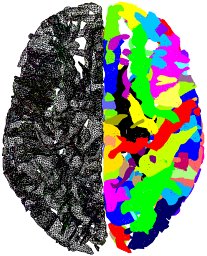 Fabrizio Pizzagalli合作论文数1
 Stéphane Mermoz合作论文数GlobEO1
 David Balding合作论文数Department of Genetics, Evolution & Environment, Division of Biosciences, UCL1
 Blin Muriel G合作论文数1
 Pathak Ajai Kumar合作论文数Institute of Molecular and Cell Biology, University of Tartu1
 Christopher Clarkson合作论文数School of Social Science, Faculty of Humanities and Social Sciences, University of Queensland, Australia.1
 Claudia Ximena Jaramillo Gonzalez合作论文数1




