Designing de novo proteins, synthetic proteins with functions not found in nature, is a complex and resource-intensive process. Traditional methods face limitations due to high computational costs, manual intervention, and inefficient exploration of the vast protein sequence space. This work presents Protogenix, a modular multi-agent system powered by large language models (LLMs) to automate the protein design pipeline. The system leverages tools such as Chroma, OmegaFold, and Anisotropic Network Model (ANM) analysis to handle generation, structure prediction, and mechanical analysis. Through LangGraph and Retrieval-Augmented Generation (RAG), agents collaborate asynchronously, enabling efficient planning, execution, and refinement. This architecture reduces human oversight and accelerates protein design, democratizing access to cutting-edge computational biology tools. Protogenix achieved RMSD values as low as 1.2 Å, pLDDT scores above 89, and 95
Wearable device data enable new perspectives on global mobility beyond average step counts, highlighting variability as a critical marker of health inequality, especially in aging populations. As average ages increase worldwide, such data provide opportunities to understand how activity levels vary across societies and how these variabilities affect healthy aging. This study investigates how demographic, economic, and environmental parameters shape physical activity variability across 34 countries. We integrate step inequality, gender gaps, urbanization, and WHO aging metrics, and apply clustering algorithms, principal component analysis, and graph-based community detection to reveal hidden structures. Multivariate statistics and network-based analysis identify structural patterns and clusters of countries with shared characteristics. The findings highlight how demographic aging and urban environments shape variability in activity and related health outcomes. Results demonstrate the value of combining clustering with network science to uncover hidden structures in population health, offering actionable insights for aging research, public health, and urban planning.
This study examines four Kolmogorov-Arnold Networks (KANs) variations where B-splines were replaced with polynomials as approximation functions—Chebyshev, Hermite, and Legendre—for electrocardiogram forecasting on the MIT-BIH arrhythmia dataset. The existing architectures of KAN variants were surveyed and compared to the suggested models. In our research, all networks have a three-layer structure and are trained using different polynomial classes instead of B-splines to approximate the learnable activation functions. Our findings reveal an accuracy-efficiency trade-off: locally supported B-splines improve predictive precision, whereas global-polynomial KANs have a better accuracy-to-cost ratio, making them appealing for resource-constrained time-series applications.
As AI begins to augment and enhance traditional teaching and learning, Engineering Education 5.0 must undergo a radical transformation of pedagogy to meet the demands of Industry 5.0. The main contribution is a hybrid pedagogical framework combining of Bloom’s revised taxonomy and SAMR-Model for Generative AI-enhanced Learning, as evidenced by three real-world case studies. In the context of Engineering Education, the development of problem solving, critical thinking, and analytical thinking skills is essential. This development must be accompanied by the creation of novel methods for teaching and learning. Three case studies from Germany, Jordan and Portugal, illustrate how AI-driven teaching strategies helping educators move beyond AI usage towards transformative educational experiences. This aligns with Industry 5.0 demands, ensuring students gain essential AI skills for future engineering challenges. This preliminary study aims to propose potential directions for future, more systematic research. At this stage, it is not yet possible to make conclusive interpretations. Further research is needed to better understand the cognitive load, bias and AI overconfidence.
This concluding chapter synthesizes insights from the volume, highlighting the transformative potential of AI in education alongside the ethical, cultural, and pedagogical challenges it raises. Common themes include balancing standardization with innovation, ensuring fairness for neurodiverse and culturally diverse learners, and fostering responsible AI mindsets. Looking ahead, the chapter outlines priorities for future research on ethical benchmarks, inclusive design, and human–AI collaboration. Policy implications center on aligning global standards and safeguarding learners' rights. International collaboration is emphasized as essential to building a responsible and inclusive AI-learning ecosystem grounded in shared values and collective innovation.
In this work, we present an enhanced version of the Kolmogorov–Arnold network (KAN) algorithm, called Cheby-KAN, that offers a more efficient, more reliable, and faster alternative to conventional KANs. We integrated our algorithm with a geometric deep learning model (SchNet) to assess the effect of integrating KANs representation on geometric deep learning by combining domain knowledge of quantum chemistry and our new representation. We initially tested our model on benchmark datasets, then we integrated Cheby-KAN with SchNet to obtain an enhanced model, called Cheby-KAN-SchNet.We used Cheby-KAN-SchNet to predict six quantum properties of molecules, and compared our results against the original SchNet results and another model integrating SchNet with the original KANs using basis splines to give a fair and objective comparison of our model.We expected to obtain the benefits of the powerful KANs representation and to reduce the high time and computational costs of KANS. We applied the algorithm to quantum chemistry because quantum chemistry requires extremely high precision modeling of the system where error rates increase exponentially. Our algorithm outperformed the original KANs with B-splines in terms of both speed and accuracy, and outperformed Schnet in terms of accuracy and consistency. These results demonstrate the potential of Cheby-KAN in addressing the approximation of multi-variate and complex functions under high levels of uncertainty, while offering enhanced interpretability compared to traditional neural network models or KANs with B-splines.
In recent years, remarkable progress has been made in generative models, particularly in the fields of computer vision and natural language processing. The ability of generative models to generate new and diverse samples has resulted in a wide range of applications, such as image and video synthesis, text generation, and music composition. This study investigates generative modeling advances made using Variational Autoencoders (VAEs), Generative Adversarial Networks (GANs), and diffusion models. Although VAEs and GANs have been widely used for generative modeling tasks in the past, diffusion models have recently emerged as state-of-the-art models. This study provides a detailed analysis of each model, including its strengths and limitations, as well as its applications in image synthesis and video generation. Furthermore, this paper discusses recent developments in diffusion models such as denoising. Finally, this paper implements these proposed models to generate water crystal images.
Large vision models (LVMs), particularly vision transformers (ViTs), stand at the forefront of computer vision ad-vancements, demonstrating exceptional capabilities in processing and understanding visual data at a large scale. These models, with their deep learning frameworks and extensive parameter spaces, excel in tasks from object detection to complex scene comprehension, surpassing traditional models like CNNs and GANs. This paper explores the progression of LVMs, emphasizing the advantages of ViTs in video summarization and prediction. It highlights the limitations of CNNs, including their vulnerability to adversarial attacks and difficulties with minor image variations, and commends ViTs for their effective handling of long-range dependencies through self-attention mechanisms. The paper also examines LVM applications in both supervised and unsupervised video summarization, and introduces multimodal approaches that integrate visual, textual, and audio data, underlining the superiority of ViTs in a variety of computer vision tasks due to their advanced learning capabilities.
Finding new molecules with desirable properties has high computational and overhead costs. Much research has focused on generating candidate molecules in one- and two-dimensional spaces, which has produced some favorable results. However, extending these approaches to molecules in three-dimensional space would be far more useful because the representation of molecules is more realistic, although three-dimensional methods have much higher computational costs. In this work, we developed a geometric deep reinforcement learning agent that generates and optimizes molecules that could interact with a biochemical target. The agent can be used for generating molecules from scratch or for lead optimization when it enhances the properties of a given molecule, whether by enhancing its drug-likeness or increasing its activity toward the target via implicit learning. Thus, the agent works with molecules in three-dimensional space without high computational costs.
This position paper presents a method to ease the management of data security from the user point of view. Nowadays, users have many ways to access the same data: direct connection to the host, shared filesystem or web drive-like solutions. This leads to complex data access control policies. At the same time, users have more and more liberty in resource instantiation. They can benefit from various self service storage facilities from many Cloud operators in an on-premise or remote way. Moreover, interfaces with these providers are designed in a way that real locations of data are hidden to give an illusion of infinite resources availability. Obviously, Cloud providers have many ways to fine tune resource allocation but users may not be aware of it. With this growth of resource distribution, access control also evolved. Formerly, a simple access control scheme based on identity was sufficient for data security (IBAC). With the complexity increase of access control, new schemes emerged based on roles (RBAC) or attributes (ABAC). We will investigate the last one because attributes rules access control but it also gives information on a user’s profile that may be used to ease the creation and configuration of data services on distributed resources such as Cloud providers.
Large Language Models represent a significant breakthrough in Natural Language Processing research and opened a wide range of application domains. This paper demonstrates the successful integration of Large Language Models into immersive learning environments. The review highlights how this emerging technology aligns with pedagogical principles, enhancing the effectiveness of current educational systems. It also reflects recent advancements in integrating Large Language Models, including fine-tuning, hallucination reduction, fact-checking, and human evaluation of generated results.
In many tasks related to an object’s observation or real-time monitoring, the gathering of temporal multimodal data is required. Such data sets are semantically connected as they reflect different aspects of the same object. However, data sets of different modalities are usually stored and processed independently. This paper presents an approach based on the application of the Algebraic System of Aggregates (ASA) operations that enable the creation of an object’s complex representation, referred to as multi-image (MI). The representation of temporal multimodal data sets as the object’s MI yields simple data-processing procedures as it provides a solid semantic connection between data describing different features of the same object, process, or phenomenon. In terms of software development, the MI is a complex data structure used for data processing with ASA operations. This paper provides a detailed presentation of this concept.
Underwater image processing area has been a central point of interest to many people in many fields such as control of underwater vehicles, archaeology, marine biology research, etc. Underwater exploration is becoming a big part of our life such as underwater marine and creatures research, pipeline and communication logistics, military use, touristic and entertainment use. Underwater images are subject to poor visibility, distortion, poor quality, etc., due to several reasons such as light propagation. The real problem occurs when these images have to be taken at a depth which is more than 500 feet where artificial light needs to be introduced. This work tackles the underwater environment challenges such as as colour casts, lack of image sharpness, low contrast, low visibility, and blurry appearance in deep ocean images by proposing an end-to-end deep underwater image enhancement network (WGH-net) based on convolutional neural network (CNN) algorithm. Quantitative and qualitative metrics results proved that our method achieved competitive results with the previous work methods as it was experimentally tested on different images from several datasets.
This chapter presents an AI-based approach to the systemic collection of user experience data for further analysis. This is an important task because user feedback is essential in many use cases, such as serious games, tourist and museum applications, food recognition applications, and other software based on Augmented Reality (AR). For AR game-based learning environments user feedback can be provided as Multimodal Learning Analytics (MMLA) which has been emerging in the past years as it exploits the fusion of sensors and data mining techniques. A wide range of sensors have been used by MMLA experiments, ranging from those collecting students' motoric (relating to muscular movement) and physiological (heart, brain, skin, etc.) behaviour, to those capturing social (proximity), situational, and environmental (location, noise) contexts in which learners are placed. Recent research achievements in this area have resulted in several techniques for gathering user experience data, including eye-movement tracking, mood tracking, facial expression recognition, etc. As a result of user's activity monitoring during AR-based software use, it is possible to obtain temporal multimodal data that requires rectifying, fusion, and analysis. These procedures can be based on Artificial Intelligence, Fuzzy logic, algebraic systems of aggregates, and other approaches. This chapter covers theoretical and practical aspects of handling AR user's experience data, in particular, MMLA data. The chapter gives an overview of sensors, tools, and techniques for MMLA data gathering as well as presenting several approaches and methods for user experience data processing and analysis.
: Underwater image processing area has been a central point of interest to many people in many fields such as control of underwater vehicles, archaeology, marine biology research, etc. Underwater exploration is becoming a big part of our life such as underwater marine and creatures research, pipeline and communication logistics, military use, touristic and entertainment use. Underwater images are subject to poor visibility, distortion, poor quality, etc., due to several reasons such as light propagation. The real problem occurs when these images have to be taken at a depth which is more than 500 feet where artificial light needs to be introduced. This work tackles the underwater environment challenges such as as colour casts, lack of image sharpness, low contrast, low visibility, and blurry appearance in deep ocean images by proposing an end-to-end deep underwater image enhancement network (WGH-net) based on convolutional neural network (CNN) algorithm. Quantitative and qualitative metrics results proved that our method achieved competitive results with the previous work methods as it was experimentally tested on different images from several datasets
The research areas of the Immersive Learning community cover many different interests and perspectives on teaching and learning with immersive technologies. Based on existing efforts to map the field of research, we gathered 35 participants at the iLRN 2022 conference during an open hybrid workshop. These volunteers formed expert groups focusing on five possible perspectives on Immersive Learning. The expert groups gathered and summarized possible research questions with regards to an “Agenda 2030”, meaning the most intriguing questions that should be addressed during the years to come. We let all participants vote on these research endeavors regarding their academic value and importance for the community. As a results, we gathered a total of 23 ranked questions. These questions were subsumed into ten topics forming a Research Agenda for Immersive Learning 2030 (RAIL.2030).
Many people have expressed an interest in underwater image processing in a variety of fields, including underwater vehicle control, archaeology, marine biological studies, etc. Underwater exploration is becoming an increasingly important element of our lives, with applications ranging from underwater marine and creature research to pipeline and communication logistics, touristic and entertainment use. Underwater images suffer from poor visibility, distortion, and poor quality for a variety of causes, including light propagation. The major issue arises when these images must be captured at depths greater than 500 feet and artificial lighting needs to be provided. Efficient algorithms and models were proposed to enhance the images taken underwater. However, these networks challenge efficient real-time deployment and needs significant computational resources and energy costs. In this paper these challenges will be tackled by using different network compression techniques such as pruning and quantization. These techniques will be applied on a model named WGH-net and the resulting in a tiny machine learning model is named tiny WGH-net model. Moreover, we compare the results of both models along with other models proposed by other researchers. Sustainable Development Goals (SDG) will also be discussed along with our contribution to some of the goals.
Generating a new molecule that satisfies certain desirable objectives or optimizing an existing molecule to meet additional requirements continues to play a crucial part in the important area of computer-aided drug design. Many research studies have been conducted to improve this process in order to reduce time and all costs associated with proposing a new drug to markets. Moreover, any progress in generating or optimizing useful molecules would help reduce the risk of clinical trials and prevent potential side effects including possible severe consequences. In this paper, we propose MolGraphEnv, a new multi-objective molecular generation and optimization environment that models the process of generating and/or optimizing molecules as a Markov Decision Process (MDP) and provides a smooth integration with graph machine learning framework PyTorch Geometric (PYG) and RDKit [2, 7, 15]. In the proposed environment, molecules are modeled using graphs where atoms are represented by nodes and bonds are represented by edges. The observations are stored as a PYG Data object that accounts for the computed features for each node (atom) and each edge (bond). Some of these features are obtained from the chemical domain, such as Hybridization and atomic numbers, while other features are obtained from pure graph theory such as node degrees. By integrating such features from both the chemistry and the graphs’ domain, we ensure a better representation of the atoms and their interrelationships. The action space is multi-discrete and inherited from the gymnasium for better functionality. We show that the proposed environment provides a smooth and flexible experience for the end user by designing a reward system to intelligently bias the searching process toward desired properties, such as obtaining molecules with higher QED (Quantitative Estimate of Drug-likeness) and ensuring chemical and structural validity. MolGraphEnv represents a significant step forward in computer-aided drug design, providing a powerful platform for generating and optimizing molecules with specific objectives. It is a seamless integration with established graph machine-learning tools and cheminformatics frameworks makes it a valuable resource for researchers in the field.
"Carbon Footprint" (CF) term has become popular over the last decade due to the high rate of climate change. Food related GHG emissions is a main cause of climate change, which needs to be reduced. Following the raising awareness of the food impact on carbon footprint of consumers, a number of recent studies have analysed how the citizen contribute to the reduction of emission of carbon 'footprint'. This paper identifies the challenges and opportunities in being able to evaluate carbon 'footprint' (named CF) of food choices and we reviewed some current approaches of CF calculator tools at dish ingredient level, or recipe level, and finally, applications that help to reduce Carbon Footprint of foods.
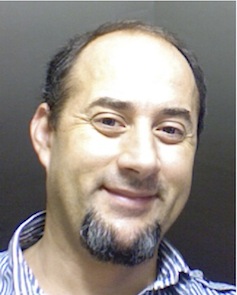 Gustavo Alves合作论文数Polytechnic of Porto - School of Engineering18
 Manuel Alonso Castro Gil合作论文数Department of Electrical and Computer Engineering, Spanish University15
 André V. Fidalgo合作论文数Dep . of Electrical Engineering14
 Wlodek J Kulesza合作论文数University of Kalmar12
 Arcelina Marques合作论文数12
 Thomas Klinger合作论文数11
 Michael E. Auer合作论文数Carinthia University of Applied Sciences11
 Christian Kreiter合作论文数10
 Gabriel Diaz合作论文数Electrical and Computer Engineering Dep., Spanish University for Distance Education (UNED),9
 Frederic Andres合作论文数Digital Content and Media Sciences Research Division, National Institute of Informatics;Software Division, The Graduate University for Advanced Studies9
 Christian V. Madritsch合作论文数8
 Unai Hernández-Jayo合作论文数University of Deusto8
 Felix Garcia Loro合作论文数8
 Javier García Zubía合作论文数Fac Engn, Univ Deusto8Rubén Fernández合作论文数7Ana M. B. Pavani合作论文数Pontificia Univ Catolica Rio de Janeiro, BR-22451900 Rio De Janeiro, Brazil7
 Maria Isabel Pozzo合作论文数Consejo Nacl Invest Cient & Tecn, Inst Rosario Invest Ciencias Educ, Buenos Aires, DF, Argentina7Luis Carlos Martinhago Schlichting合作论文数7
 Clara Viegas合作论文数7
 Susana Marchisio合作论文数National University of Rosario;Faculty of Exact Sciences;Engineering and Surveying;Faculty of Exact Sciences, National University of Rosario7
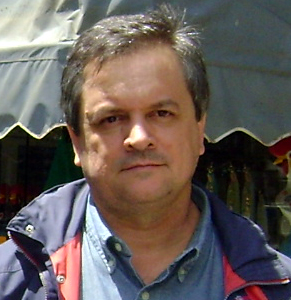 Juarez Bento Da Silva合作论文数Universidade Federal de Santa Catarina7ingvar gustavsson合作论文数6
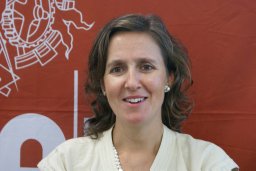 Natercia Lima合作论文数6Golberi Ferreira合作论文数5Kati Valtonen合作论文数5
 Ricardo J. Costa合作论文数5Ramona Georgiana Oros合作论文数5
 Kristian Nilsson合作论文数Blekinge Institute of Technology;School of Engineering;School of Engineering, Blekinge Institute of Technology5
 Carlos Felgueiras合作论文数5
 Yevgeniya S. Sulema合作论文数5Daniel de Bona合作论文数4Hector Paz合作论文数4
 Delberis A. Lima合作论文数4
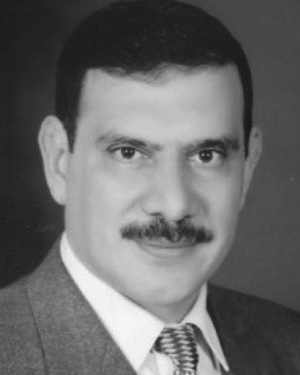 Hesham Arafat Ali合作论文数4n n almeida合作论文数Educational Sciences Research Institute of Rosario4Ricardo Tavio合作论文数4Carla Garcia-Hernandez合作论文数4
 ELSA DOBBOLETTA合作论文数4
 Shihori Tanabe合作论文数Div Risk Assessment, Natl Inst Hlth Sci4
 Federico Lerro合作论文数4
 Vanderli Fava de Oliveira合作论文数4
 Sonia Concari合作论文数Faculty of Chemical Engineering;National University;Faculty of Chemical Engineering, National University4
 Guilherme P Temporao合作论文数Center for Telecommunication Studies, Pontifical Catholic University of Rio de Janeiro4
 Joao Bosco da Mota Alves合作论文数Departamento de Engenharia Elétrica, Universidade Federal do Pará, CT.4
 Simone Meister Sommer Bilessimo合作论文数4e san cristobal合作论文数3Elina Lehtikangas合作论文数3
 Alejandro Macho合作论文数UNED, Madrid, Spain3Garbi Zutin, D.合作论文数3




