If the Universe has non-trivial spatial topology, observables depend on both the parameters of the spatial manifold and the position and orientation of the observer. In infinite Euclidean space, most cosmological observables arise from the amplitudes of Fourier modes of primordial scalar curvature perturbations. Topological boundary conditions replace the full set of Fourier modes with specific linear combinations of selected Fourier modes as the eigenmo des of the scalar Laplacian. In an earlier work we provided a comprehensive treatment of orientable Euclidean three-manifolds; but a thorough exploration of cosmic topology must include non-orientable three-manifolds as candidates for the geometry of space. In this paper we consider the non-orientable Euclidean topologies E7-E10, E13-E15, and E17, encompassing the full range of manifold parameters and observer positions, generalizing previous treatments. Under the assumption that the amplitudes of primordial scalar curvature eigenmo des are independent random variables, for each topology we obtain the correlation matrices of Fourier-mode amplitudes (of scalar fields linearly related to the scalar curvature) and the correlation matrices of spherical-harmonic coefficients of such fields sampled on a sphere, such as the temperature of the cosmic microwave background (CMB). We evaluate the detectability of these correlations given the cosmic variance of the CMB sky. As for orientable three-manifolds, we find that in manifolds where the distance to our nearest clone is less than about 1.2 times the diameter of the last scattering surface of the CMB, we expect a correlation signal that is larger than cosmic variance noise in the CMB. The parameter space of the nonorientable Euclidean manifolds is quite rich, supporting, for example, complex dependencies of clone distances on those parameters. Our limited selection of manifold parameters both the values of those we fix, and the choices of which to vary are therefore exemplary of interesting behaviors (e.g., of how well the manifold can be distinguished from the covering space), but not necessarily representative. Future searches for topology will certainly require a much more thorough exploration of the parameter space to determine what values of the parameters predict statistical correlations that are convincingly attributable to topology.
Gravitational wave (GW) observations probe both a diffuse, stochastic gravitational wave background (SGWB) as well as individual cataclysmic events such as the merger of two compact objects. The detection and description of the gravitational-wave background requires somewhat different techniques than required for individual events. In this paper, we probe the sensitivity of present and future GW telescopes to different background sources, including both those expected from unresolved compact binaries in both their quasi-Newtonian quiescent and their eventual mergers, as well as more speculative cosmological sources such as inflation, cosmic strings, and phase transitions, over regions in which those sources can be described by a single power law. We develop a Fisher matrix formalism to forecast coming sensitivities of single and multiple experiments, and novel visualizations taking into account the increase in sensitivity to a background over time.
Cosmic microwave background (CMB) temperature and polarization observations indicate that in the best-fit Λ Cold Dark Matter model of the Universe, the local geometry is consistent with at most a small amount of positive or negative curvature, i.e., |Ω_K|≪1. However, whether the geometry is flat (E^3), positively curved (S^3) or negatively curved (H^3), there are many possible topologies. Among the topologies of S^3 geometry, the lens spaces L(p,q), where p and q (p>1 and 0<q<p) are positive integers, are quotients of the covering space of S^3 (the three-sphere) by ℤ_p, the cyclic group of order p. We use the absence of any pair of circles on the CMB sky with matching patterns of temperature fluctuations to establish constraints on p and q as a function of the curvature scale that are considerably stronger than those previously asserted for most values of p and q. The smaller the value of |Ω_K|, i.e., the larger the curvature radius, the larger the maximum allowed value of p. For example, if |Ω_K|≃ 0.05 then p≤ 9, while if |Ω_K|≃ 0.02, p can be as high as 24. Future work will extend these constraints to a wider set of S^3 topologies.
We study the eigenmodes of the spin-2 Laplacian in orientable Euclidean manifolds and their implications for the tensor-induced part of the cosmic microwave background (CMB) temperature and polarization anisotropies. We provide analytic expressions for the correlation matrices of Fourier-mode amplitudes and of spherical harmonic coefficients. We demonstrate that non-trivial spatial topology alters the statistical properties of CMB tensor anisotropies, inducing correlations between harmonic coefficients of differing ℓ and m and across every possible pair of temperature and E- and B-modes of polarization. This includes normally forbidden TB and EB correlations. We compute the Kullback-Leibler (KL) divergence between the pure tensor-induced CMB fluctuations in the usual infinite covering space and those in each of the non-trivial manifolds under consideration, varying both the size of the manifolds and the location of the observer. We find that the amount of information about the topology of the Universe contained in tensor-induced anisotropies does not saturate as fast as its scalar counterpart; indeed, the KL divergence continues to grow with the inclusion of higher multipoles up to the largest ℓ we have computed. Our results suggest that CMB polarization measurements from upcoming experiments can provide new avenues for detecting signatures of cosmic topology, motivating a full analysis where scalar and tensor perturbations are combined and noise is included.
The standard cosmological model, which assumes statistical isotropy and parity invariance, predicts the absence of correlations between even-parity and odd-parity observables of the cosmic microwave background (CMB). Contrary to these predictions, large-angle CMB temperature anomalies generically involve correlations between even-& ell; and odd-& ell; angular power spectrum C & ell; , while recent analyses of CMB polarization have revealed non-zero equal & ell; EB correlations. These findings challenge the conventional understanding, suggesting deviations from statistical isotropy, violations of parity, or both. Cosmic topology, which involves changing only the boundary conditions of space relative to standard cosmology, offers a compelling framework to potentially account for such parity-violating observations. Topology inherently breaks statistical isotropy, and can also break homogeneity and parity, providing a natural paradigm for explaining observations of parity-breaking observables without the need to add parity violation to the underlying microphysics. Our investigation delves into the harmonic space implications of topology for CMB correlations, using as an illustrative example EB correlations generated by tensor perturbations under both parity- preserving and parity-violating scenarios. Consequently, these findings not only challenge the foundational assumptions of the standard cosmological model but also open new avenues for exploring the topological structure of the Universe through CMB observations.
The shortest distance around the Universe through us is unlikely to be much larger than the horizon diameter if microwave background anomalies are due to cosmic topology. We show that observational constraints from the lack of matched temperature circles in the microwave background leave many possibilities for such topologies. We evaluate the detectability of microwave background multipole correlations for sample cases. Searches for topology signatures in observational data over the large space of possible topologies pose a formidable computational challenge.
We use time-domain simulations of Jupiter observations to test and develop a beam reconstruction pipeline for the Simons Observatory Small Aperture Telescopes. The method relies on a mapmaker that estimates and subtracts correlated atmospheric noise and a beam fitting code designed to compensate for the bias caused by the mapmaker. We test our reconstruction performance for four different frequency bands against various algorithmic parameters, atmospheric conditions, and input beams. We additionally show the reconstruction quality as a function of the number of available observations and investigate how different calibration strategies affect the beam uncertainty. For all of the cases considered, we find good agreement between the fitted results and the input beam model within an similar to 1.5% error for a multipole range l = 30-700 and an similar to 0.5% error for a multipole range l = 50-200. We conclude by using a harmonic-domain component separation algorithm to verify that the beam reconstruction errors and biases observed in our analysis do not significantly bias the Simons Observatory r-measurement
If the Universe has non-trivial spatial topology, observables depend on both the parameters of the spatial manifold and the position and orientation of the observer. In infinite Euclidean space, most cosmological observables arise from the amplitudes of Fourier modes of primordial scalar curvature perturbations. Topological boundary conditions replace the full set of Fourier modes with specific linear combinations of selected Fourier modes as the eigenmodes of the scalar Laplacian. We present formulas for eigenmodes in orientable Euclidean manifolds with the topologies $E_{1}-E_{6}$, $E_{11}$, $E_{12}$, $E_{16}$, and $E_{18}$ that encompass the full range of manifold parameters and observer positions, generalizing previous treatments. Under the assumption that the amplitudes of primordial scalar curvature eigenmodes are independent random variables, for each topology we obtain the correlation matrices of Fourier-mode amplitudes (of scalar fields linearly related to the scalar curvature) and the correlation matrices of spherical-harmonic coefficients of such fields sampled on a sphere, such as the temperature of the cosmic microwave background (CMB). We evaluate the detectability of these correlations given the cosmic variance of the observed CMB sky. We find that topologies where the distance to our nearest clone is less than about 1.2 times the diameter of the last scattering surface of the CMB give a correlation signal that is larger than cosmic variance noise in the CMB. This implies that if cosmic topology is the explanation of large-angle anomalies in the CMB, then the distance to our nearest clone is not much larger than the diameter of the last scattering surface. We argue that the topological information is likely to be better preserved in three-dimensional data, such as will eventually be available from large-scale structure surveys.
The Einstein field equations of general relativity constrain the local curvature at every point in spacetime, but say nothing about the global topology of the Universe. Cosmic microwave background anisotropies have proven to be the most powerful probe of non-trivial topology since, within $\Lambda$CDM, these anisotropies have well-characterized statistical properties, the signal is principally from a thin spherical shell centered on the observer (the last scattering surface), and space-based observations nearly cover the full sky. The most generic signature of cosmic topology in the microwave background is pairs of circles with matching temperature and polarization patterns. No such circle pairs have been seen above noise in the WMAP or Planck temperature data, implying that the shortest non-contractible loop around the Universe through our location is longer than 98.5% of the comoving diameter of the last scattering surface. We translate this generic constraint into limits on the parameters that characterize manifolds with each of the nine possible non-trivial orientable Euclidean topologies, and provide a code which computes these constraints. In all but the simplest cases, the shortest non-contractible loop in the space can avoid us, and be shorter than the diameter of the last scattering surface by a factor ranging from 2 to at least 6. This result implies that a broader range of manifolds is observationally allowed than widely appreciated. Probing these manifolds will require more subtle statistical signatures than matched circles, such as off-diagonal correlations of harmonic coefficients.
We present a field-based signal extraction of weak lensing from noisy observations on the curved and masked sky. We test the analysis on a simulated Euclid-like survey, using a Euclid-like mask and noise level. To make optimal use of the information available in such a galaxy survey, we present a Bayesian method for inferring the angular power spectra of the weak lensing fields, together with an inference of the noise-cleaned tomographic weak lensing shear and convergence (projected mass) maps. The latter can be used for field-level inference with the aim of extracting cosmological parameter information including non-gaussianity of cosmic fields. We jointly infer all-sky $E$-mode and $B$-mode tomographic auto- and cross-power spectra from the masked sky, and potentially parity-violating $EB$-mode power spectra, up to a maximum multipole of $\ell_{\rm max}=2048$. We use Hamiltonian Monte Carlo sampling, inferring simultaneously the power spectra and denoised maps with a total of $\sim 16.8$ million free parameters. The main output and natural outcome is the set of samples of the posterior, which does not suffer from leakage of power from $E$ to $B$ unless reduced to point estimates. However, such point estimates of the power spectra, the mean and most likely maps, and their variances and covariances, can be computed if desired.
We present a reproduction of the Planck 2018 angular power spectra at ℓ > 30, and associated covariance matrices, for intensity and polarization maps at 100, 143 and 217 GHz. This uses a new, publicly available, pipeline that is part of the PSpipe package. As a test case we use the same input maps, ancillary products, and analysis choices as in the Planck 2018 analysis, and find that we can reproduce the spectra to 0.1 σ precision, and the covariance matrices to 10%. We show that cosmological parameters estimated from our re-derived products agree with the public Planck products to 0.1 σ , providing an independent cross-check of the Planck team's analysis. Going forward, the publicly-available code can be easily adapted to use alternative input maps, data selections and analysis choices, for future optimal analysis of Planck data with new ground-based Cosmic Microwave Background data.
Inference in cosmology often starts with noisy observations of random fields on the celestial sphere, such as maps of the microwave background radiation, continuous maps of cosmic structure in different wavelengths, or maps of point tracers of the cosmological fields. Almanac uses Hamiltonian Monte Carlo sampling to infer the underlying all-sky noiseless maps of cosmic structures, in multiple redshift bins, together with their auto- and cross-power spectra. It can sample many millions of parameters, handling the highly variable signal-to-noise of typical cosmological signals, and it provides science-ready posterior data products. In the case of spin-weight 2 fields, Almanac infers $E$- and $B$-mode power spectra and parity-violating $EB$ power, and, by sampling the full posteriors rather than point estimates, it avoids the problem of $EB$-leakage. For theories with no $B$-mode signal, inferred non-zero $B$-mode power may be a useful diagnostic of systematic errors or an indication of new physics. Almanac's aim is to characterise the statistical properties of the maps, with outputs that are completely independent of the cosmological model, beyond an assumption of statistical isotropy. Inference of parameters of any particular cosmological model follows in a separate analysis stage. We demonstrate our signal extraction on a CMB-like experiment.
The 3D matter power spectrum, Pδ(k, z) is a fundamental quantity in the analysis of cosmological data such as large-scale structure, 21cm observations, and weak lensing. Existing computer models (Boltzmann codes) such as CLASS can provide it at the expense of immoderate computational cost. In this paper, we propose a fast Bayesian method to generate the 3D matter power spectrum, for a given set of wavenumbers, k and redshifts, z. Our code allows one to calculate the following quantities: the linear matter power spectrum at a given redshift (the default is set to 0); the non-linear 3D matter power spectrum with/without baryon feedback; the weak lensing power spectrum. The gradient of the 3D matter power spectrum with respect to the input cosmological parameters is also returned and this is useful for Hamiltonian Monte Carlo samplers. The derivatives are also useful for Fisher matrix calculations. In our application, the emulator is accurate when evaluated at a set of cosmological parameters, drawn from the prior, with the fractional uncertainty, ∆Pδ/Pδ centered on 0. It is also ∼ 300 times faster compared to CLASS, hence making the emulator amenable to sampling cosmological and nuisance parameters in a Monte Carlo routine. In addition, once the 3D matter power spectrum is calculated, it can be used with a specific redshift distribution, n(z) to calculate the weak lensing and intrinsic alignment power spectra, which can then be used to derive constraints on cosmological parameters in a weak lensing data analysis problem. The software (emuPK) can be trained with any set of points and is distributed on Github, and comes with with a pre-trained set of Gaussian Process (GP) models, based on 1000 Latin Hypercube (LH) samples, which follow roughly the current priors for current weak lensing analyses.
Conclusions: Our results are limited by their retrospective nature, variable time between lipid assessments and exposure to HEMT, but in this small sample, the increases in TC, TC/HDL ratio, and LDL may be clinically meaningful because higher values were associated with greater CVD risk.HDL, a cardioprotective lipid, did not change.If confirmed in larger, more tightly controlled studies, this could mean that long-term exposure to HEMT increases CVD risk.This knowledge may influence health screening practices.When combined with other CVD risk factors, lipid-lowering therapy may be considered for some PwCF on HEMT.
Measurements of secondary cosmic microwave background (CMB) anisotropies, such as the Sunyaev-Zel'dovich (SZ) effect, will enable new tests of neutrino and dark sector properties. The kinetic SZ (kSZ) effect is produced by cosmological flows, probing structure growth. Ultra-light axions (ULAs) are a well-motivated dark-matter candidate. Here the impact of ULA dark matter (with mass $10^{-27}~{\rm eV}$ to $10^{-23}~{\rm eV}$) on kSZ observables is determined, applying new analytic expressions for pairwise cluster velocities and Ostriker-Vishniac signatures in structure-suppressing models. For the future CMB-S4 and ongoing DESI galaxy surveys, the kSZ effect (along with primary anisotropies) will probe ULA fractions $\eta_a = \Omega_{\rm{axion}}/\Omega_{\rm DM}$ as low as $\sim 5\%$ if $m_{a}\simeq 10^{-27}~{\rm eV}$ (at 95\% C.L.), with sensitivity extending up to $m_{a}\simeq 10^{-25}~{\rm eV}$. If reionization and the primary CMB can be adequately modeled, Ostriker-Vishniac measurements could probe values $\eta_{a}\simeq 10^{-3}$ if $10^{-27}~{\rm eV}\lesssim m_{a}\lesssim 10^{-24}~{\rm eV}$, or $\eta_{a}\simeq 1$ if $m_{a}\simeq 10^{-22}~{\rm eV}$, within the fuzzy dark matter window.
In this paper we will list a few important goals that need to be addressed in the next decade, also taking into account the current discordances between the different cosmological probes, such as the disagreement in the value of the Hubble constant $H_0$, the $\sigma_8$--$S_8$ tension, and other less statistically significant anomalies. While these discordances can still be in part the result of systematic errors, their persistence after several years of accurate analysis strongly hints at cracks in the standard cosmological scenario and the necessity for new physics or generalisations beyond the standard model. In this paper, we focus on the $5.0\,\sigma$ tension between the {\it Planck} CMB estimate of the Hubble constant $H_0$ and the SH0ES collaboration measurements. After showing the $H_0$ evaluations made from different teams using different methods and geometric calibrations, we list a few interesting new physics models that could alleviate this tension and discuss how the next decade's experiments will be crucial. Moreover, we focus on the tension of the {\it Planck} CMB data with weak lensing measurements and redshift surveys, about the value of the matter energy density $\Omega_m$, and the amplitude or rate of the growth of structure ($\sigma_8,f\sigma_8$). We list a few interesting models proposed for alleviating this tension, and we discuss the importance of trying to fit a full array of data with a single model and not just one parameter at a time. Additionally, we present a wide range of other less discussed anomalies at a statistical significance level lower than the $H_0$--$S_8$ tensions which may also constitute hints towards new physics, and we discuss possible generic theoretical approaches that can collectively explain the non-standard nature of these signals.[Abridged]
Many Bayesian inference problems in cosmology involve complex models. Despite the fact that these models have been meticulously designed, they can lead to intractable likelihood and each forward simulation itself can be computationally expensive, thus making the inverse problem of learning the model parameters a challenging task. In this paper, we develop an approximate model for the 3D matter power spectrum, Pδ(k, z), which is a central quantity in a weak lensing analysis. An important output of this approximate model, often referred to as surrogate model or emulator, are the first and second derivatives with respect to the input cosmological parameters. Without the emulator, the calculation of the derivatives requires multiple calls of the simulator, that is, the accurate Boltzmann solver, CLASS (Lesgourgues, 2011). We illustrate the application of the emulator in the calculation of different weak lensing and intrinsic alignment power spectra and we also demonstrate its performance on a toy simulated weak lensing dataset.
Planck Collaboration: N. Aghanim54, Y. Akrami15,57,59, M. Ashdown65,5, J. Aumont95, C. Baccigalupi78, M. Ballardini21,41, A. J. Banday95,8, R. B. Barreiro61, N. Bartolo29,62, S. Basak85, R. Battye64, K. Benabed55,90, J.-P. Bernard95,8, M. Bersanelli32,45, P. Bielewicz75,78, J. J. Bock63,10, J. R. Bond7, J. Borrill12,93, F. R. Bouchet55,90, F. Boulanger89,54,55, M. Bucher2,6, C. Burigana44,30,47, R. C. Butler41, E. Calabrese82, J.-F. Cardoso55,90, J. Carron23, A. Challinor58,65,11, H. C. Chiang25,6, J. Chluba64, L. P. L. Colombo32, C. Combet68, D. Contreras20, B. P. Crill63,10, F. Cuttaia41, P. de Bernardis31, G. de Zotti42, J. Delabrouille2, J.-M. Delouis67, E. Di Valentino64, J. M. Diego61, O. Doré63,10, M. Douspis54, A. Ducout66, X. Dupac35, S. Dusini62, G. Efstathiou65,58 , F. Elsner72, T. A. Enßlin72, H. K. Eriksen59, Y. Fantaye3,19, M. Farhang76, J. Fergusson11, R. Fernandez-Cobos61, F. Finelli41,47, F. Forastieri30,48, M. Frailis43, A. A. Fraisse25, E. Franceschi41, A. Frolov87, S. Galeotta43, S. Galli55,90 , K. Ganga2, R. T. Génova-Santos60,16, M. Gerbino38, T. Ghosh81,9, J. González-Nuevo17, K. M. Górski63,97, S. Gratton65,58, A. Gruppuso41,47, J. E. Gudmundsson94,25, J. Hamann86, W. Handley65,5, F. K. Hansen59, D. Herranz61, S. R. Hildebrandt63,10, E. Hivon55,90, Z. Huang83, A. H. Jaffe53, W. C. Jones25, A. Karakci59, E. Keihänen24, R. Keskitalo12, K. Kiiveri24,40, J. Kim72, T. S. Kisner70, L. Knox27, N. Krachmalnicoff78, M. Kunz14,54,3, H. Kurki-Suonio24,40, G. Lagache4, J.-M. Lamarre89, A. Lasenby5,65, M. Lattanzi48,30, C. R. Lawrence63, M. Le Jeune2, P. Lemos58,65, J. Lesgourgues 56, F. Levrier89, A. Lewis23 , M. Liguori29,62, P. B. Lilje59, M. Lilley55,90, V. Lindholm24,40, M. López-Caniego35, P. M. Lubin28, Y.-Z. Ma77,80,74, J. F. Macías-Pérez68, G. Maggio43, D. Maino32,45,49, N. Mandolesi41,30, A. Mangilli8, A. Marcos-Caballero61, M. Maris43, P. G. Martin7, M. Martinelli96, E. Martínez-González61, S. Matarrese29,62,37, N. Mauri47, J. D. McEwen73, P. R. Meinhold28, A. Melchiorri31,50, A. Mennella32,45, M. Migliaccio34,51, M. Millea27,88,55, S. Mitra52,63, M.-A. Miville-Deschênes1,54, D. Molinari30,41,48, L. Montier95,8, G. Morgante41, A. Moss84, P. Natoli30,92,48, H. U. Nørgaard-Nielsen13, L. Pagano30,48,54, D. Paoletti41,47, B. Partridge39, G. Patanchon2, H. V. Peiris22, F. Perrotta78, V. Pettorino1, F. Piacentini31, L. Polastri30,48, G. Polenta92, J.-L. Puget54,55, J. P. Rachen18, M. Reinecke72, M. Remazeilles64, A. Renzi 62, G. Rocha63,10, C. Rosset2, G. Roudier2,89,63, J. A Rubiño-Martín60,16, B. Ruiz-Granados60,16, L. Salvati54, M. Sandri41, M. Savelainen24,40,71, D. Scott20, E. P. S. Shellard11, C. Sirignano29,62, G. Sirri47, L. D. Spencer82, R. Sunyaev72,91, A.-S. Suur-Uski24,40, J. A. Tauber36, D. Tavagnacco43,33, M. Tenti46, L. Toffolatti17,41, M. Tomasi32,45, T. Trombetti44,48, L. Valenziano41, J. Valiviita24,40, B. Van Tent69, L. Vibert54,55, P. Vielva61, F. Villa41, N. Vittorio34, B.D. Wandelt55,90, I. K. Wehus59, M. White26, S. D. M. White72, A. Zacchei43, and A. Zonca79
 Paolo de Bernardis合作论文数Dipartimento di Fisica, Sapienza Università di Roma218
 J. Richard Bond合作论文数Department of Physics, University of Toronto;Canadian Institute for Theoretical Astrophysics, University of Toronto216
 Julian Borrill合作论文数Computational Cosmology Center, Lawrence Berkeley National Laboratory;Space Sciences Laboratory, UC Berkeley216
 Francesco Piacentini合作论文数Dipartimento di Fisica, Sapienza - Università di Roma199
 Brendan Crill合作论文数Jet Propulsion Laboratory, California Institute of Technology199
 Eric Hivon合作论文数Institut d'Astrophysique de Paris, CNRS Délégation Paris B195
 Alessandro Melchiorri合作论文数Dipartimento di Fisica, Sapienza Universita di Roma194
 Carlo Baccigalupi合作论文数SISSA191Gustavo Polenta合作论文数Dipartimento di Fisica, Universitá di Roma La Sapienza183Ganga K合作论文数182
 Paolo Natoli合作论文数Dipartimento di Fisica e Scienze della Terra, Università degli Studi di Ferrara179
 Reijo Keskitalo合作论文数Lawrence Berkeley National Laboratory177S. Masi合作论文数169
 François Bouchet合作论文数Laboratoire d'Informatique de Paris 6, Sorbonne Université;CNRS;Institut d'Astrophysique de Paris166
 Jacques Delabrouille合作论文数Astronomy Department, Shanghai Jiao Tong University;Laboratoire AstroParticule et Cosmologie166
 Marco Bersanelli合作论文数Dipartimento di Fisica;Universita degli Studi di Milano;Dipartimento di Fisica, Universita degli Studi di Milano165Fabio Finelli合作论文数Istituto Nazionale Dl Astrofisica, Osservatorio di Astrofsica e Scienza dello Spazio di Bologna163
 Gianfranco De Zotti合作论文数INAF - Astronomical Observatory of Padova163Carlo Burigana合作论文数INAF163
 Simon Prunet合作论文数Laboratoire Lagrange, Observatoire de la Côte d'Azur163
 Alessandro Gruppuso合作论文数INAF OAS Bologna163
 R. Belén Barreiro合作论文数Instituto de Física de Cantabria, Joint Centre with the combined effort of Spanish National Research Council and University of Cantabria161
 Hannu Kurki-Suonio合作论文数Division of Particle Physics and Astrophysics, Department of Physics, Faculty of Science, University of Helsinki;Helsinki Institute of Physics, Faculty of Science, University of Helsinki161
 n mandolesi合作论文数160G. Rocha合作论文数160
 Patricio Vielva合作论文数Instituto de Fisica de Cantabria159
 Maurizio Tomasi合作论文数Laboratorio di Strumentazione Spaziale, Dipartimento di Fisica Aldo Pontremoli, Università degli Studi di Milano159
 Jonathan Aumont合作论文数Institut de Recherche en Astrophysique et Planétologie159
 Samuele Galeotta合作论文数Osservatorio Astronomico di Trieste, Istituto Nazionale di Astrofisica159
 Jean-Michel Lamarre合作论文数Laboratoire D'Études Du Rayonnement Et De La Matière En Astrophysique Et Atmosphères, À L’Observatoire De Paris158J. A. Tauber合作论文数158
 Krzysztof Gorski合作论文数158
 Andrea Zonca合作论文数San Diego Supercomputer Center, University of California San Diego158Radek Stompor合作论文数158
 Gianluca Morgante合作论文数158
 Ben Wandelt合作论文数Sorbonne Université;Calda AI;Lagrange Institute, Institut Lagrange de Paris158
 Xavier Dupac合作论文数European Space Agency158A. Lasenby合作论文数157
 Enrico Franceschi合作论文数Osservatorio di Astrofisica e Scienza dello Spazio di Bologna, Istituto Nazionale di Astrofisica157
 Andrea Zacchei合作论文数Osservatorio Astronomico di Trieste156
 Aniello Mennella合作论文数Universitá di Milano;Dipartimento di Fisica;Dipartimento di Fisica, Universitá di Milano156Aj Banday合作论文数155
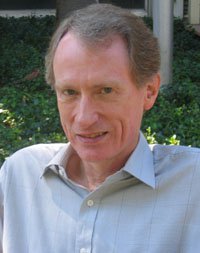 Charles Lawrence合作论文数Jet Propulsion Laboratory, California Institute of Technology155L. A. Montier合作论文数155
 M. Tristram合作论文数College de France155
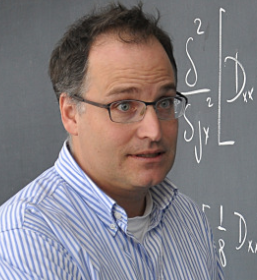 Torsten Enßlin合作论文数Max-Planck-Institut für Astrophysik;The International Max Planck Research School on Astrophysics, Ludwig Maximilians University155M. Reinecke合作论文数154
 Francesco Cuttaia合作论文数INAF-IASF154
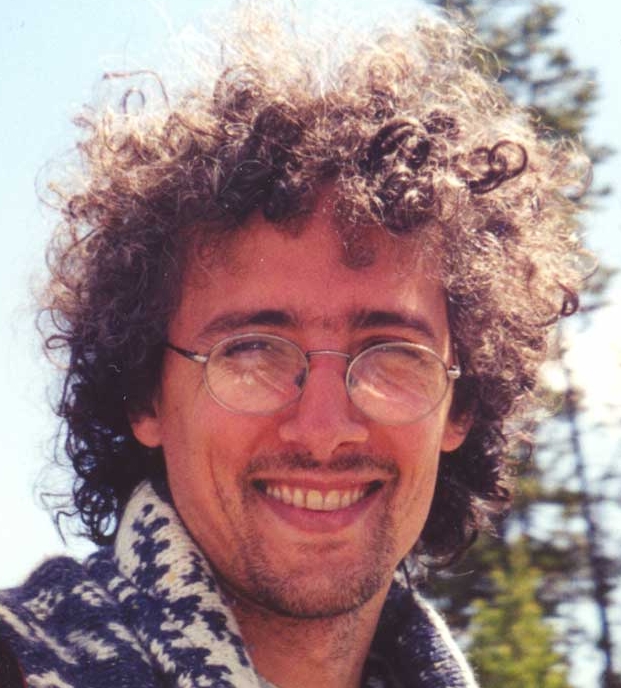 Jean-Philippe Bernard合作论文数Centre National De La Recherche Scientifique154




