The Juvenile Justice Reform Act of 2018 (Public Law 115-385) indicates that juvenile correctional facilities (JCF) are to use evidence-based programming. However, little is known about implementing effective literacy interventions in JCF. The purpose of this qualitative study was to identify challenges and supports to implementing Read 180 (R), a blended learning literacy program, from the perspectives of 11 JCF personnel. Using semi-structured interviews and inductive and deductive coding, themes related to Read 180 (R) implementation supports and challenges were identified. Themes surrounding the challenges and supports to implementing Read 180 (R) included technology, perceived student engagement, access and use of materials or resources, intended program model/structure, student behavior, teacher's understanding of materials, and student perception of instructional materials. Implications include the need for Read 180 (R) professional development that focuses on the contextual needs of the JCF, the safe and effective use of technology, and classroom management. Limitations and future directions for research are discussed.
Abstract Participation in inclusive postsecondary education (IPSE) programs yields benefits for students with intellectual disability, yet little is known about their classroom-related, nonacademic thoughts, attitudes, and behaviors, sometimes referred to as academic enabling behaviors (AEBs). AEBs include academic engagement, interpersonal skills, motivation, and study skills. The research team explored IPSE staff’s understandings of IPSE students’ AEB strengths. Ten staff from IPSE programs participated in semistructured interviews. Data were analyzed using Consensual Qualitative Research. Results suggest students have strengths that span multiple AEBs and that these strengths can be leveraged to support strengths-based assessment and intervention.
Leadership Education in Neurodevelopmental and Related Disabilities (LEND) programs are interdisciplinary, graduate-level training programs that seek to promote improved outcomes for individuals with disabilities and their families. Many of these programs include individuals with disabilities as members of the self-advocacy discipline. In this study, 10 self-advocate trainees were interviewed to provide insight into the value of including self-advocates in training and the kinds of accommodations and supports that facilitated their success and inclusion. Interviewees endorsed the importance of including self-advocates in LEND programs. Although several accommodations were discussed as helpful, interpersonal supports from faculty and peers were equally important in ensuring their success and inclusion in LEND. The findings from this study provide support for the expansion of self-advocacy as a formal discipline in LEND programs.
Despite research indicating evidence-based sexual health education results improved student outcomes, students with intellectual and developmental disabilities (I/DD) do not typically receive sexual health education. While school psychologists possess skills that could contribute to sexual health education for students with I/DD, there is no existing research on this topic. To address this, we conducted a survey of school psychologists in a state in the Southeastern United States regarding their attitudes, perceptions of social norm and self-efficacy, and training and familiarity in regard to sexual health education for students with I/DD. The survey's focus and design were guided by the Reasoned Action Approach. Data collection and analyzes addressed (a) the underlying structure and internal consistency of our survey's scales; (b) school psychologists' level of training, knowledge, and beliefs about implementing sexual health education programs with students with I/DD; and (c) the relationship between school psychologists' previous training, knowledge, and beliefs and their implementation of and advocacy for sexual health education for students with I/DD. Descriptive statistics, principal component analyzes, and multiple regression were used to summarize the data and address the research questions. Data from the multiple regression analysis indicated that a significant amount of the variance in participants' implementation/advocacy scores was explained by attitude, social norms, behavioral control/self-efficacy, and training/familiarity. Our findings suggest that school psychologists' engagement in implementation of and advocacy for sexual health education for students with I/DD can be influenced by level of training and knowledge and perceived capability and behavioral control. There is a need for provision of sexual health education for students with intellectual and developmental disabilities (I/DD). School psychologists' engagement in implementation and advocacy for sexual health education of I/DD students can be influenced by level of training and knowledge. School psychologists' engagement in implementation and advocacy for sexual health education of I/DD students can also be influenced by perceived capability and behavioral control.
The purpose of this study is to examine how the perceptions of school climate, specifically school relationships, differ for Black girls with and without an individualized education plan (IEP) as compared to their peers. The study utilized survey responses from high school students in a Georgia school district who participated in the 2020 Georgia Student Health Survey (GSHS) prior to the COVID-19 pandemic. A confirmatory factor analysis confirmed a second-order model with eight subscales and measurement invariance was established among ethnicity (race), gender, and disability variables. Results from the ANOVA illustrated that the differences between the mean school climate ratings for Black girls with IEPs as compared to their peers in the Peer Social Support, Adult Social Support, and Cultural Acceptance subscales of the GSHS were statistically significant. Further, small effects for race were detected. Additionally, Black girls with and without IEPs consistently rated school climate the lowest among the subgroups examined. This study should be used to prompt further examination of the influence of intersectionality on schooling experiences, specifically for double or triple-minority students, and to understand what (if any) cultural adaptations exist for frequently used evidence-based strategies/interventions designed to promote a positive school climate.Impact StatementSchool psychologists play a critical role in creating and maintaining a positive school climate. As leaders in this space, school psychologists can partner with school leaders, teachers, and families to raise awareness of the schooling experiences of minoritized groups, examine how current practices incorporate cultural adaptations, and develop effective interventions that foster relationships, connectedness, cultural acceptance, and community. As such, school psychologists will be primed to think about culturally responsive approaches that will improve schooling experiences and by in large school climate for minoritized groups.
This qualitative study examined supports in inclusive postsecondary education programs (IPSE) that facilitate the development of academic-related behaviors, or academic enabling behaviors (AEB; i.e., interpersonal skills, academic engagement, motivation, and study skills). The researchers interviewed 10 IPSE staff using semi-structured interviews and analyzed data using Consensual Qualitative Research (CQR). AEB supports existed at the individual, IPSE program, and university levels. Some supports addressed a single academic enabling behavior, and some addressed multiple areas. Six types of support spanned two or more academic enablers: (a) support from peer mentors; (b) support provided by IPSE and other university staff; (c) support related to courses/instruction; (d) opportunities for practice, reinforcement; (e) support related to social/emotional supports; and (f) executive function support. IPSE students can compensate for academic challenges by developing their enabling behaviors, and strong academic enabling behaviors can result in improved academic performance and assist IPSE students in employment and throughout life.
The current study reviewed the practice and application of social validity assessments in single-case design (SCD) studies within the field of school psychology. Social validity refers to the acceptability of intervention or program goals, procedures, and outcomes to educators, families, and students. Understanding the ways social validity is assessed and analyzed in recent publications has the potential to improve both school psychology research and practice. Adopting similar procedures described in the (Snodgrass et al., Research in Developmental Disabilities 74:160–173, 2018) analysis, this review systematically investigated the extent to which social validity was evaluated in school psychology SCD studies, the characteristics of social validity assessments, the prevalence of assessing total construct social validity (i.e., goals, procedures, and outcomes), and the extent to which social validity findings were integrated with visual analyses to form conclusions about interventions. A total of 1371 articles were reviewed from six prominent school psychology journals between 2016 and 2020. Reviewed articles included 89 from the Journal of Applied School Psychology , 227 from the Journal of School Psychology , 471 from Psychology in the Schools , 177 from School Psychology International , 259 from School Psychology (Quarterly) , and 148 from School Psychology Review . Although the content analysis revealed several encouraging aspects of the current state of social validity assessment, the majority of the findings suggested that there was still much to be done to advance the rigor of social validity practice.
There is high demand for future school psychologists to address the need for continuous evidence-based consultation that moves beyond K-12 settings, and includes evidence-based consultation to promote school readiness for infants and toddlers with and at risk for developmental disabilities. While there exists a demand for school psychologists in infant and toddler settings, the primary focus of training programs is preparing graduates to work in school-based settings. Currently, a gap exists in graduate training opportunities in evidence-based consultation practices that support school readiness for infants and toddlers with and at risk for disabilities served through Part C services. While school psychologists typically are trained on evidence-based consultation mechanisms that have largely been utilized in K-12 contexts, they rarely receive consultation training with families of infants and toddlers. Therefore, expansion of training is necessary to support infants and toddlers through evidence-based consultation models. To underscore the importance of continuity in application of evidence-based consultation models, the current manuscript compares an evidence-based consultation model validated in K-12 settings and a consultation model for promoting infant and toddler developmental competencies. An illustration of the application of evidence-based consultation frameworks within multi-tiered systems of support and recommendations for graduate training, to better prepare school psychologists for work in birth-to-three settings, is provided.
This study used item response theory (IRT) methods to investigate group differences in responses to the 12-item Student Risk Screening Scale–Internalizing and Externalizing (SRSS-IE12) in a sample of 3,837 U.S. elementary school students. Using factor analysis and graded response models from IRT methods, we examined the factor structure and the item and test functioning of the SRSS-IE12. The SRSS-IE12 internalizing and externalizing factors reflected the hypothesized two-factor model. IRT analyses indicated that SRSS-IE12 items and tests measure internalizing and externalizing traits similarly across students from different race, ethnicity, gender, and elementary level (K–Grade 2 vs. Grades 3–5) groups. Moreover, the mostly negligible differential item functioning (DIF) and differential test functioning (DTF) observed suggest these scales render equitable trait ratings. Collectively, the results provide further support for the SRSS-IE12 for universal screening in racially diverse elementary schools.
Successful family-professional partnerships (FPP) have been shown to positively impact both satisfaction with care and health outcomes for children with disabilities and their families. Many healthcare training programs have recognized the benefit of FPP training and often include learning experiences that feature families as teachers or mentors. However, most research on FPP training has focused on professionals' experiences, and not on families' experience in the roles of mentors and experts. The Leadership Education in Neurodevelopmental and Related Disabilities (LEND) program is a graduate-level interdisciplinary training program with sites across the country. LEND programs train future healthcare and service professionals in the disability field and often utilize a Family Mentor Experience (FME) as one aspect of their training. This study used qualitative interviews to examine the experiences of eight family mentors who worked with trainees in one LEND program. Overall, the family mentors expressed positive views regarding the FME, describing how it allowed them to connect with trainees, other families, and community resources, as well as educating trainees. Family mentors also identified several facilitators and barriers to participation. Study findings provide information on the FFP's impact on family mentors and guidance on how programs can support sustainable, effective FPP experiences.
This study aimed to investigate the added value of universal mental health screening in school settings. A total of 1735 students were screened using the youth self-report version of Strengths and Difficulties Questionnaire (SDQ-SR). Non-parametric models were fit to data from the SDQ-SR Internalizing and Externalizing subscales to predict total ODRs by the end of the school year. Final models confirmed the positive predictive relationship between SDQ-SR externalizing scores and ODRs and consistently found internalizing scores to be a negative predictor of ODRs. Specifically, for every 1-point increase in the Externalizing score, ODRs increase by .09 standard deviations; for every 1-point increase in Internalizing scores, ODRs decrease by 0.02 standard deviations. Findings suggested that students with internalizing concerns were likely under-identified when examining patterns in ODRs alone. The implementation of school-based universal mental health screening in addition to examining patterns in academic and behavioral outcomes may assist school personnel in identifying students with emerging social-emotional difficulties.
Schools have become the most common setting for youth to receive additional supports-including access to mental health services serving as an entry point for identification and subsequent provision of these services. Many schools rely on office discipline referral (ODR) or suspension data as informal screeners for students who may need additional supports. Discipline data may be effective at identifying students with externalizing behaviors, yet students with internalizing behaviors may not engage in behaviors that warrant an ODR or suspension. As such, these students may go undetected in the absence of systematic screenings. This study explored whether a universal behavior screener identified students at risk for externalizing and internalizing concerns who may not have been identified through ODRs. The Student Risk Screening Scale for Internalizing/Externalizing (SRSS-IE) was completed for 1,201 elementary students in 3 elementary schools. SRSS-IE data were used to predict year-end ODRs. Results showed externalizing scores (SRSS-E7) on the SRSS-IE predicted year-end ODRs, with higher SRSS-E7 scores predicting with more ODRs. However, internalizing scores (SRSS-I5) on the SRSS-IE did not significantly predict year-end ODRs suggesting ODRs may not be an effective data source for identifying students with internalizing behaviors absent of externalizing behaviors.
The following study examines the impact of an online stress intervention on teacher burnout and teacher efficacy. Using a group experimental design, researchers tested the preliminary efficacy of the intervention: an online professional development program created for teachers that instructs coping strategies and promotes social-emotional competencies. Fifty-one teachers and classroom staff were randomly assigned to the intervention or control group. After four weeks, participation in the program was associated with increases in coping practices, teacher efficacy, and personal accomplishment as well as decreases in emotional exhaustion and depersonalization. Implications for research and professional development are discussed.
To appropriately route children with developmental disabilities to appropriate early interventions, those children must first be identified via developmental screening and/or developmental monitoring. Most early identification research emphasizes the relationship between developmental screening and Part C early intervention (EI) receipt for children birth to two. The relationship between developmental monitoring and service receipt is understudied, particularly for 3 to 5-year-old children are routed to Part B (619) early childhood special education services. Thus, this study used data from the National Surveys of Children’s Health (2007, 2012) to investigate the relationship between community-based health care providers (HCP) developmental screening and/or monitoring and the odds of early childhood special education receipt for preschool aged children (3 to 5). Across years, children whose HCP provided both developmental screening and monitoring, or developmental monitoring alone, had substantially greater odds of receiving special education compared to those who did not receive screening or monitoring. Receipt of developmental screening alone was associated with special education receipt in 2012, but not 2007. Developmental monitoring is understudied compared to developmental screening. Data presented here indicate that monitoring is associated with Part B 619 special education receipt and warrants further investigation to better understand how, with developmental screening, developmental monitoring might improve the identification of young children in need of 619 services. In particular, longitudinal analyses capturing data across systems, from screening and monitoring to assessment and service receipt, is needed to understand the effectiveness of monitoring for early identification and appropriate routing of children to relevant care systems.
The Strengths and Difficulties Questionnaire (SDQ) is a widely used mental health screening instrument developed in the United Kingdom that measures five proposed factors. U.S. research, however, historically supports a slightly different three-factor solution. The present study reports results using both principal factor analysis (PFA) and confirmatory factor analysis (CFA) on data from multiple waves of an ongoing mental health project in middle school aged children. PFA analyses suggested three, five and six-factor solutions with substantial cross-loadings from items. CFAs showed alternative five and six-factor solutions fit well when items guided by the initial PFA were allowed to cross-load. Neither the original five-factor nor popular three-factor models fit well without allowing cross-loading items. These data suggest that popular SDQ three and five-factor model may have variable fit in certain U.S. populations.
Through this study we compared different informants and different behavior screening tools that are available to screen for behavioral and emotional risk. We examined screening results from 100 students from a high school with a high achiever's magnet program in the Southeastern United States (school demographics: 71% female and 79% black, non-Hispanic). This school conducted behavior screening using both teacher-report via the Student Risk Screening Scale, Internalizing/Externalizing (SRSS-IE) and student report via the Strengths and Difficulties Questionnaire (SDQ). Nonparametric correlation tests were conducted between the SRSS-IE and SDQ externalizing and internalizing scores. Generalized linear regression models were created based on the data (demographics, internalizing, and externalizing scores on both screening tools) to model the two count outcomes (office discipline referrals [ODRs] and absences). Diagnostic accuracy metrics were generated from the scores on both the SRSS-IE and SDQ with the outcome measures (ODRs and absences). Externalizing scores on both screening tools had statistically significant low correlations. The ODR model contained two predictors: externalizing score on the SRSS-IE and internalizing score on the SDQ, while the absence model contained grade and the externalizing score on the SDQ. The highest accuracy and agreement values were seen between students with elevated risks on both screening measures and ODRs. The results confirmed that teacher and student reporting, as well as different screening tools, will result in some different students being identified. The choice of informant and screening tools should be dependent on the needs and resources of the school.
Transition services support students with disabilities in accessing post-secondary school opportunities including employment. This study used both quantitative and qualitative methods to gather data on practicing school psychologists' experiences, attitudes, and training related to the school to employment transition process. Participants' responses on surveys (n = 38) and interviews (n = 7) indicated that school psychologists see themselves as having skills that would contribute to the transition process but that they experience barriers such as resource allocation, lack of training, and minimal knowledge of the empirical support for transition services that make it difficult to participate. The results also suggest that school psychologists have existing skills that could be applied to the transition process. Recommendations are provided as to how school psychologists can support youth school-to-work transition with minimal adjustment to their existing role.
This chapter addresses instructional effectiveness at the graduate and undergraduate education levels. Teaching is a direct way to share our enthusiasm about the field and ensure the next generation of school psychologists. However, despite being a critical skill necessary for academic appointments and the continuation of our field, few school psychologists receive specific training prior to starting a faculty position in the area of teaching. This chapter posits that teaching is as valuable to academia as research and service and should be done with both passion and effectiveness. The act of teaching is broken down into why we teach, how to teach, and what to teach when educating future practitioners and scholars. The importance of instructional excellence is discussed, as are models, philosophies, and assessments of teaching. Considerations for content and curriculum development are also offered. Across each question, personal and professional suggestions are included, from coping with negative student evaluations to developing a program identity for coursework planning. To help guide readers as they choose and evaluate the teaching techniques that are the most effective in their educational setting, the logistics of teaching are deconstructed as actionable steps, real-world examples, and resource toolkits.
Objectives As the U.S. healthcare system shifts toward collaboration, demand for leaders with interdisciplinary skills increases. Leadership competencies guide interdisciplinary training programs; however, identifying cost-effective methods for evaluating leadership competencies is challenging, particularly when interdisciplinary trainees have different areas of expertise and professional goals. Traditional pre-/post-testing, a common method for evaluating leadership competencies, is subject to response-shift bias, which can occur when participants’ understanding of a construct changes between pre- and post-test. As a result, participants may rate their knowledge of the construct lower at post-test. Retrospective pre-tests are one method thought to reduce response-shift bias in pre-/post-tests. The current study explores the use of a retrospective pre-test to control for response-shift bias in an interdisciplinary training program. Methods Over three cohort years, thirty-four trainees from an interdisciplinary leadership program completed a self-assessment aligned with MCH leadership competencies. The traditional pre-test self-assessment was completed at the beginning of the training program. The retrospective pre-/post-test self-assessment was completed at the end of the training program. Results Retrospective pre/post-test scores indicate significant self-reported increases in all 24 leadership areas (p ≤ .001). Furthermore, participants’ self-ratings were significantly higher on the traditional pre-test for all 24 areas than on the retrospective pre-test (p ≤ .001). Conclusions for Practice Retrospective pre-tests appeared to control for response-shift bias and may be a cost-effective way to evaluate trainee change within an interdisciplinary leadership program. These findings suggest the methodology’s usefulness in interdisciplinary training and its potential use in the broader world of community-based MCH training initiatives.
 Stephen N. Elliott合作论文数Sanford School of Social & Family Dynamics, Arizona State University27
 B. Barger合作论文数Sch Publ Hlth, Georgia State Univ13
 Emily Graybill合作论文数13
 Alexander Kurz合作论文数Department of Special Education, Peabody College of Vanderbilt University11
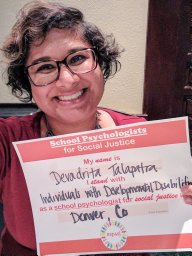 Devadrita Talapatra合作论文数University of Denver10
 Knut Aagaard合作论文数Applied Physics Laboratory, Polar Science Center, University of Washington;School of Oceanography, College of the Environment, University of Washington9
 Kristen Varjas合作论文数Georgia State Univ8
 Peter A. Beddow合作论文数7
 Ryan Kettler合作论文数Department of Special Education, Peabody College of Vanderbilt University7
 corinne wixson合作论文数6Joel Meyers合作论文数6Thomas R. Kratochwill合作论文数5
 Daniel Crimmins合作论文数Mental Retardation Institute USA5David E. Houchins合作论文数5James D Schumacher合作论文数5
 Catherine Rice合作论文数National Center on Birth Defects and Developmental Disabilities, Centers for Disease Control and Prevention, Atlanta, GA 30333, USA4Frank D. Carsey合作论文数4dawn mcgrath合作论文数3Catherine Perkins合作论文数3Mark Crenshaw合作论文数3jackie bialo合作论文数3Erin Vinoski Thomas合作论文数3
 Jennifer L Frank合作论文数Penn State Univ3Barbara Meyers合作论文数3Fd Carsey合作论文数2Jessica A. Carboni合作论文数2Katherine E. McLendon合作论文数2Douglas A. Roberts合作论文数2Quynh Doan Wellons合作论文数2deborah kramb合作论文数2Moriah A. Kearney合作论文数2
 Stephanie Baumann合作论文数2
 Tamika La Salle合作论文数Dept Educ Psychol, Univ Connecticut2Michael C. Rodriguez合作论文数2
 Kathleen Lynne Lane合作论文数Department of Special Education, School of Education and Human Sciences, The University of Kansas2Craig A. Albers合作论文数2Daphne Greenberg合作论文数Department of Educational Psychology and Special Education, Georgia State University2Norman L. Webb合作论文数2Diana Gordick合作论文数2Randy W. Kamphaus合作论文数2
 Patricia Snyder合作论文数2
 Phyllis Stabeno合作论文数Pacific Marine Environmental Laboratory, National Oceanic and Atmospheric Administration, U.S. Department of Commerce2
 Bradley Niebling合作论文数2Stephen D. Truscott合作论文数2Elizabeth Compton合作论文数2James C. Diperna合作论文数2
 Bridget V. Dever合作论文数College of Education, Georgia State University2Jennifer L. White合作论文数1R. A. Beach合作论文数1




