This paper describes data resources created for Phase 1 of the DARPA Active Interpretation of Disparate Alternatives (AIDA) program, which aims to develop language technology that can help humans manage large volumes of sometimes conflicting information to develop a comprehensive understanding of events around the world, even when such events are described in multiple media and languages. Especially important is the need for the technology to be capable of building multiple hypotheses to account for alternative interpretations of data imbued with informational conflict. The corpus described here is designed to support these goals. It focuses on the domain of Russia-Ukraine relations and contains multimedia source data in English, Russian and Ukrainian, annotated to support development and evaluation of systems that perform extraction of entities, events, and relations from individual multimedia documents, aggregate the information across documents and languages, and produce multiple "hypotheses" about what has happened. This paper describes source data collection, annotation, and assessment.
This paper describes a new morphology resource created by Linguistic Data Consortium and the University of Pennsylvania for the DARPA LORELEI Program. The data consists of approximately 2000 tokens annotated for morphological segmentation in each of 9 low resource languages, along with root information for 7 of the languages. The languages annotated show a broad diversity of typological features. A minimal annotation scheme for segmentation was developed such that it could capture the patterns of a wide range of languages and also be performed reliably by non-linguist annotators. The basic annotation guidelines were designed to be language-independent, but included language-specific morphological paradigms and other specifications. The resulting annotated corpus is designed to support and stimulate the development of unsupervised morphological segmenters and analyzers by providing a gold standard for their evaluation on a more typologically diverse set of languages than has previously been available. By providing root annotation, this corpus is also a step toward supporting research in identifying richer morphological structures than simple morpheme boundaries.
We describe corpora for the LORELEI (Low Resource Languages for Emergent Incidents) Program, whose goal is to build human language technologies to provide situational awareness during emergent incidents, with a particular focus on low resource languages. Incident Language packs are used for system development and testing in machine translation, entity disambiguation and linking, and the “situation frame” task, which requires aggregation of information about the emergent incident. Incident languages, as well as the incidents themselves, remain unknown until the evaluation begins, and no labeled training data is provided; systems developers must rapidly adapt technology for the incident language and return initial results within 24 hours. Given this surprise language evaluation scenario, Representative Language packs are designed to support research into cross-language projection and language universals rather than to provide training data. They contain large volumes of monolingual and parallel text, basic annotations, lexical resources and simple NLP tools for 23 languages selected for typological diversity and coverage. We discuss the creation of the LORELEI language packs with a special focus on resources for machine translation, as well as techniques for maintaining consistency across the language packs. © 2019 The authors. This article is licensed under a Creative Commons 4.0 license, no derivative works, attribution, CCBY-ND.
The ReORIENT (Resources for Operationally Relevant Information Extraction from Non-explicit Text) research effort has developed a set of linguistic resources to support deep natural language understanding in the context of a diffuse, diverse and large community of researchers and stakeholders. To support Relational Analysis research we have developed data sets labeled for entities, relations, events, and AMR sembanking. To support Anomaly Analysis research we have developed resources labeled for sentiment and belief-based and event-based phenomena. To support Smart Filtering research we have created data sets labeled for textual entailment and inference. A total of 240 distinct data sets were developed under this effort and distributed to DEFT performers during the program. These resources have been consolidated into 34 corpora that have been or will soon be published in LDCs public catalog, making DEFT data available to the wider research community, thus amplifying the governments investment in linguistic data and stimulating relevant research outside of the program.Descriptors: natural language understanding, data sets, linguisticsSubject Categories: LinguisticsInformation ScienceDistribution Statement: APPROVED FOR PUBLIC RELEASEDEFENSE TECHNICAL INFORMATION CENTER8725 John J. Kingman Road, Fort Belvoir, VA 22060-62181-800-CAL-DTIC (1-800-225-3842)
We discuss the development and implementation of an approach for cross-document, cross-lingual event coreference for the DEFT Rich Entities, Relations and Events (Rich ERE) annotation task. Rich ERE defined the notion of event hoppers to enable intuitive within-document coreference for the DEFT event ontology, and the expansion of coreference to cross-document, cross-lingual event mentions relies crucially on this same construct. We created new annotation guidelines, data processes and user interfaces to enable annotation of 505 documents in three languages selected from data already labeled for Rich ERE, yielding 389 cross-document event hoppers. We discuss the data creation process and the central role of event hoppers in making cross-document, cross-lingual coreference decisions. We present the challenges encountered during annotation along with three directions for future work.
We present two types of semantic annotation developed for the DARPA Low Resource Languages for Emerging Incidents (LORELEI) program: Simple Semantic Annotation (SSA) and Situation Frames (SF). Both of these annotation approaches are concerned with labeling basic semantic information relevant to humanitarian aid and disaster relief (HADR) scenarios, with SSA serving as a more general resource and SF more directly supporting the evaluation of LORELEI technology. Mapping between information in different annotation tasks is an area of ongoing research for both system developers and data providers. We discuss the similarities and differences between the two types of LORELEI semantic annotation, along with ways in which the general semantic information captured in SSA can be leveraged in order to recognize HADR-oriented information captured by SF. To date we have produced annotations for nineteen LORELEI languages; by the program's end both SF and SSA will be available for over two dozen typologically diverse languages. Initially data is provided to LORELEI performers and to participants in NIST's Low Resource Human Language Technologies (LoReHLT) evaluation series. After their use in LORELEI and LoReHLT evaluations the data sets will be published in the LDC catalog.
. The objective of the LORELEI Situation Frame task is to aggregate information from multiple data streams – including social media – into a comprehensive, actionable understanding of the basic facts needed to mount a response to an emerging situation. Rather than evaluating these capabilities in English, LORELEI is particularly concerned with advancing human language technology performance for low resource languages. The combination of domain, genre and language requirements make creation of linguistic resources for LORELEI in general, and the Situation Frame task in particular, especially challenging. Data is by definition relatively scarce for these languages, and real operational data may be impossible to come by, necessitating the use of “proxy” data sources. The annotation task itself, while superficially straightforward, requires navigating many difficult decisions involving the use of inference and the presence of widespread ambiguity and under-specification in the source data. We introduce the Situation Frame annotation task in the context of the goals of the larger LORELEI program, explore some of the most prevalent annotation challenges, and discuss the impact of various data types on annotation consistency. The data described in this paper will be made available to the wider research community after its use in LORELEI program evaluations.
This paper introduces the parallel Chinese- English Entities, Relations and Events (ERE) corpora developed by Linguistic Data Consortium under the DARPA Deep Exploration and Filtering of Text (DEFT) Program. Original Chinese newswire and discussion forum documents are annotated for two versions of the ERE task. The texts are manually translated into English and then annotated for the same ERE tasks on the English translation, resulting in a rich parallel resource that has utility for performers within the DEFT program, for participants in NIST's Knowledge Base Population evaluations, and for cross-language projection research more generally.
The Low Resource Language research conducted under DARPA's Broad Operational Language Translation (BOLT) program required the rapid creation of text corpora of typologically diverse languages (Turkish, Hausa, and Uzbek) which were annotated with morphological information, along with other types of annotation. Since the output of morphological analyzers is a significant aid to morphological annotation, we developed a morphological analyzer for each language in order to support the annotation task, and also as a deliverable by itself. Our framework for analyzer creation results in tables similar to those used in the successful SAMA analyzer for Arabic (Maamouri et al., 2010), but with a more abstract linguistic level, from which the tables are derived. A lexicon was developed from available resources for integration with the analyzer, and given the speed of development and uncertain coverage of the lexicon, we assumed that the analyzer would necessarily be lacking in some coverage for the project annotation. Our analyzer framework was therefore focused on rapid implementation of the key structures of the language, together with accepting "wildcard" solutions as possible analyses for a word with an unknown stem, building upon our similar experiences with morphological annotation with Modern Standard Arabic and Egyptian Arabic.
This paper will discuss and compare event representations across a variety of types of event annotation: Rich Entities, Relations, and Events (Rich ERE), Light Entities, Relations, and Events (Light ERE), Event Nugget (EN), Event Argument Extraction (EAE), Richer Event Descriptions (RED), and Event-Event Relations (EER). Comparisons of event representations are presented, along with a comparison of data annotated according to each event representation. An event annotation ex-periment is also discussed, including annotation for all of these representations on the same set of sample data, with the purpose of being able to compare actual annotation across all of these approaches as directly as possible. We walk through a brief example to illustrate the various annotation approaches, and to show the intersections among the various annotated data sets.
High accuracy for automated translation and information retrieval calls for linguistic annotations at various language levels. The plethora of informal internet content sparked the demand for porting state-of-art natural language processing (NLP) applications to new social media as well as diverse language adaptation. Effort launched by the BOLT (Broad Operational Language Translation) program at DARPA (Defense Advanced Research Projects Agency) successfully addressed the internet information with enhanced NLP systems. BOLT aims for automated translation and linguistic analysis for informal genres of text and speech in online and in-person communication. As a part of this program, the Linguistic Data Consortium (LDC) developed valuable linguistic resources in support of the training and evaluation of such new technologies. This paper focuses on methodologies, infrastructure, and procedure for developing linguistic annotation at various language levels, including Treebank (TB), word alignment (WA), PropBank (PB), and co-reference (CoRef). Inspired by the OntoNotes approach with adaptations to the tasks to reflect the goals and scope of the BOLT project, this effort has introduced more annotation types of informal and free-style genres in English, Chinese and Egyptian Arabic. The corpus produced is by far the largest multi-lingual, multi-level and multi-genre annotation corpus of informal text and speech.
In this paper, we describe the event nugget annotation created in support of the pilot Event Nugget Detection evaluation in 2014 and in support of the Event Nugget Detection and Coreference open evaluation in 2015, which was one of the Knowledge Base Population tracks within the NIST Text Analysis Conference.We present the data volume annotated for both training and evaluation data for the 2015 evaluation as well as changes to annotation in 2015 as compared to that of 2014.We also analyze the annotation for the 2015 evaluation as an example to show the annotation challenges and consistency, and identify the event types and subtypes that are most difficult for human annotators.Finally, we discuss annotation issues that we need to take into consideration in the future.
We describe the evolution of the Entities, Relations and Events (ERE) annotation task, created to support research and technology development within the DARPA DEFT program. We begin by describing the specification for Light ERE annotation, including the motivation for the task within the context of DEFT. We discuss the transition from Light ERE to a more complex Rich ERE specification, enabling more comprehensive treatment of phenomena of interest to DEFT.
This paper presents the Latin American Spanish Discussion Forum Treebank (LAS-DisFo). This corpus consists of 50,291 words and 2,846 sentences that are part-of-speech tagged, lemmatized and syntactically annotated with constituents and functions. We describe how it was built and the methodology followed for its annotation, the annotation scheme and criteria applied for dealing with the most problematic phenomena commonly encountered in this kind of informal unedited web text. This is the first available Latin American Spanish corpus of non-standard language that has been morphologically and syntactically annotated. It is a valuable linguistic resource that can be used for the training and evaluation of parsers and PoS taggers.
Teruko Mitamura, Yukari Yamakawa, Susan Holm, Zhiyi Song, Ann Bies, Seth Kulick, Stephanie Strassel. Proceedings of the The 3rd Workshop on EVENTS: Definition, Detection, Coreference, and Representation. 2015.
The importance of balancing linguistic considerations, annotation practicalities, and end user needs in developing language annotation guidelines is discussed.Maintaining a clear view of the various goals and fostering collaboration and feedback across levels of annotation and between corpus creators and corpus users is helpful in determining this balance.Annotating non-canonical language brings additional challenges that serve to highlight the necessity of keeping these goals in mind when creating corpora.
This paper introduces a new technique for phrase-structure parser analysis, categorizing possible treebank structures by integrating regular expressions into derivation trees. We analyze the performance of the Berkeley parser on OntoNotes WSJ and the English Web Treebank. This provides some insight into the evalb scores, and the problem of domain adaptation with the web data. We also analyze a “test-ontrain” dataset, showing a wide variance in how the parser is generalizing from different structures in the training material.
 Seth Kulick合作论文数Department of Computer and Information Science
University of Pennsylvania31Stephanie Strassel合作论文数Linguistic Data Consortium;University of Pennsylvania23Mohamed Maamouri合作论文数23Justin Mott合作论文数12Zhiyi Song合作论文数11
Seth Kulick合作论文数Department of Computer and Information Science
University of Pennsylvania31Stephanie Strassel合作论文数Linguistic Data Consortium;University of Pennsylvania23Mohamed Maamouri合作论文数23Justin Mott合作论文数12Zhiyi Song合作论文数11 Martha Palmer合作论文数Department of Linguistics, College of Arts and Sciences, University of Colorado Boulder;Department of Computer Science, College of Arts and Sciences, University of Colorado Boulder8jennifer tracey合作论文数7Xuansong Li合作论文数6
 Stephen Grimes合作论文数Indiana University6Joe Ellis合作论文数5Jeremy Getman合作论文数4
 Nizar Habash合作论文数Department of Computer Science, College of Arts & Science, New York University4
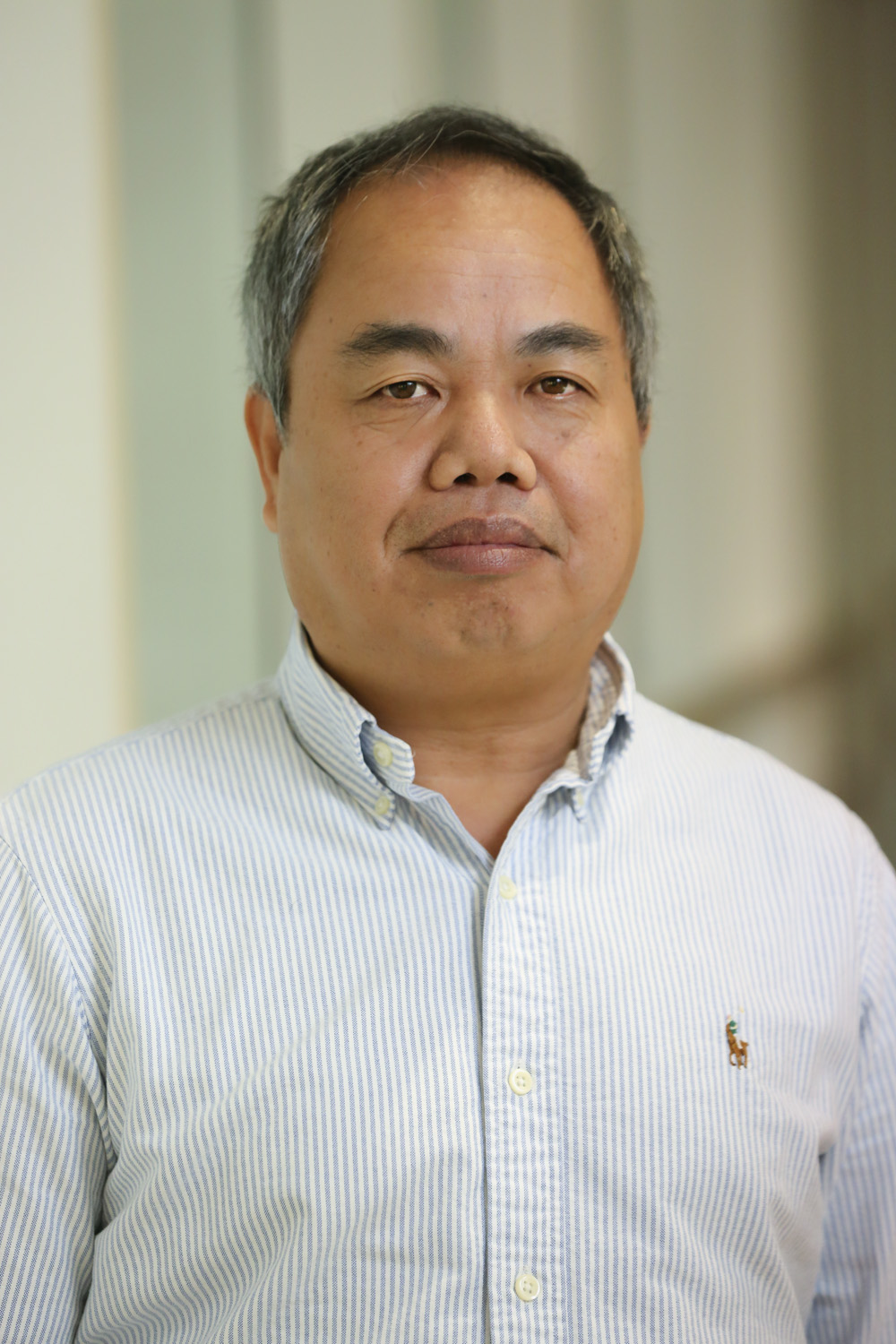 Nianwen Xue合作论文数Computer Science Department, Brandeis University4Xiaoyi Ma合作论文数4Kira Griffitt合作论文数4
 Mark Liberman合作论文数Department of Linguistics, College of Arts & Sciences, University of Pennsylvania;Department of Computer and Information Science, University of Pennsylvania;Ware College House, University of Pennsylvania3
 Wajdi Zaghouani合作论文数Northwestern University3
 Teruko Mitamura合作论文数Language Technologies Institute, School of Computer Science, Carnegie Mellon University3
 Mitch Marcus合作论文数Department of Computer & Information Science, School of Engineering and Applied Science, University of Pennsylvania3Olga Babko-Malaya合作论文数3Safa Ismael合作论文数3Tim Buckwalter合作论文数Linguistic Data Consortium;University of Pennsylvania;Linguistic Data Consortium, University of Pennsylvania3
 Ramy Eskander合作论文数Columbia University3
 Mona Diab合作论文数Language Technologies Institute, School of Computer Science, Carnegie Mellon University3Susan Holm合作论文数2Mark A. Mandel合作论文数2Neil Kuster合作论文数2Yukari Yamakawa合作论文数2
 Owen Rambow合作论文数Department of Linguistics, College of Arts and Sciences, Stony Brook University2Susan Phillips合作论文数2Michael King合作论文数2Mike Lynch合作论文数2Chris Foster合作论文数2Barbara Knaack合作论文数2Allen Haase合作论文数2Dale Knaack合作论文数2Jay Schroeder合作论文数2John Rath合作论文数2Karen Tweedie合作论文数2Lynn Wientzel合作论文数2Dennis Jochman合作论文数2Kate Mcquillan合作论文数2Joan Burrill合作论文数2Betty Zaborsky合作论文数2Britta Schasberger合作论文数2Steve Laabs合作论文数2Jill Haygood合作论文数2Betsy Rozelle合作论文数2Michael Kading合作论文数2




