The advances in generative AI have enabled the creation of synthetic audio which is perceptually indistinguishable from real, genuine audio. Although this stellar progress enables many positive applications, it also raises risks of misuse, such as for impersonation, disinformation and fraud. Despite a growing number of open-source fake audio detection codes released through numerous challenges and initiatives, most are tailored to specific competitions, datasets or models. A standardized and unified toolkit that supports the fair benchmarking and comparison of competing solutions with not just common databases, protocols, metrics, but also a shared codebase, is missing. To address this, we propose WeDefense, the first open-source toolkit to support both fake audio detection and localization. Beyond model training, WeDefense emphasizes critical yet often overlooked components: flexible input and augmentation, calibration, score fusion, standardized evaluation metrics, and analysis tools for deeper understanding and interpretation. The toolkit is publicly available at https://github.com/zlin0/wedefense with interactive demos for fake audio detection and localization.
Self-supervised learning (SSL) models like WavLM can be effectively utilized when building speaker diarization systems but are often large and slow, limiting their use in resource constrained scenarios. Previous studies have explored compression techniques, but usually for the price of degraded performance at high pruning ratios. In this work, we propose to compress SSL models through structured pruning by introducing knowledge distillation. Different from the existing works, we emphasize the importance of fine-tuning SSL models before pruning. Experiments on far-field single-channel AMI, AISHELL-4, and AliMeeting datasets show that our method can remove redundant parameters of WavLM Base+ and WavLM Large by up to 80% without any performance degradation. After pruning, the inference speeds on a single GPU for the Base+ and Large models are 4.0 and 2.6 times faster, respectively. Our source code is publicly available.
We present an analysis of the classification backends of the ABC submission for the audio tracks of the NIST 2024 Speaker Recognition Evaluation (SRE24). Our analysis covers embedding pre-processing, classification and score-level normalization, calibration and fusion strategies adopted to cope with the source, language and duration mismatch challenges of SRE24. We show that Pairwise Support Vector Machines provide the best results, which can be further improved, for single frontends, through score-level fusion of additional classifiers. We also show that condition-aware score calibration can mitigate the effects of source mismatch, whereas score normalization methods proved ineffective. Finally, we show that generative calibration is able to achieve competitive results with respect to other approaches.
End-to-end neural diarization has evolved considerably over the past few years, but data scarcity is still a major obstacle for further improvements. Self-supervised learning methods such as WavLM have shown promising performance on several downstream tasks, but their application on speaker diarization is somehow limited. In this work, we explore using WavLM to alleviate the problem of data scarcity for neural diarization training. We use the same pipeline as Pyannote and improve the local end-to-end neural diarization with WavLM and Conformer. Experiments on far-field AMI, AISHELL-4, and AliMeeting datasets show that our method substantially outperforms the Pyannote baseline and achieves new state-of-the-art results on AMI and AISHELL4, respectively. In addition, by analyzing the system performance under different data quantity scenarios, we show that WavLM representations are much more robust against data scarcity than filterbank features, enabling less data hungry training strategies. Furthermore, we found that simulated data, usually used to train end-to-end diarization models, does not help when using WavLM in our experiments. Additionally, we also evaluate our model on the recent CHiME8 NOTSOFAR-1 task where it achieves better performance than the Pyannote baseline. Our source code is publicly available at https://github.com/BUTSpeechFIT/DiariZen.
We present a comprehensive analysis of the embedding extractors (frontends) developed by the ABC team for the audio track of NIST SRE 2024. We follow the two scenarios imposed by NIST: using only a provided set of telephone recordings for training (fixed) or adding publicly available data (open condition). Under these constraints, we develop the best possible speaker embedding extractors for the pre-dominant conversational telephone speech (CTS) domain. We explored architectures based on ResNet with different pooling mechanisms, recently introduced ReDimNet architecture, as well as a system based on the XLS-R model, which represents the family of large pre-trained self-supervised models. In open condition, we train on VoxBlink2 dataset, containing 110 thousand speakers across multiple languages. We observed a good performance and robustness of VoxBlink-trained models, and our experiments show practical recipes for developing state-of-the-art frontends for speaker recognition.
In spite of the popularity of end-to-end diarization systems nowadays, modular systems comprised of voice activity detection (VAD), speaker embedding extraction plus clustering, and overlapped speech detection (OSD) plus handling still attain competitive performance in many conditions. However, one of the main drawbacks of modular systems is the need to run (and train) different modules independently. In this work, we propose an approach to jointly train a model to produce speaker embeddings, VAD and OSD simultaneously and reach competitive performance at a fraction of the inference time of a standard approach. Furthermore, the joint inference leads to a simplified overall pipeline which brings us one step closer to a unified clustering-based method that can be trained end-to-end towards a diarization-specific objective.
Speaker embedding extractors are typically trained using a classification loss over the training speakers. During the last few years, the standard softmax/cross-entropy loss has been replaced by the margin-based losses, yielding significant improvements in speaker recognition accuracy. Motivated by the fact that the margin merely reduces the logit of the target speaker during training, we consider a probabilistic framework that has a similar effect. The variational information bottleneck provides a principled mechanism for making deterministic nodes stochastic, resulting in an implicit reduction of the posterior of the target speaker. We experiment with a wide range of speaker recognition benchmarks and scoring methods and report competitive results to those obtained with the state-of-the-art Additive Angular Margin loss.
This paper describes the BUT submitted systems for the ASVspoof 5 challenge, along with analyses. For the conventional deepfake detection task, we use ResNet18 and self-supervised models for the closed and open conditions, respectively. In addition, we analyze and visualize different combinations of speaker information and spoofing information as label schemes for training. For spoofing-robust automatic speaker verification (SASV), we introduce effective priors and propose using logistic regression to jointly train affine transformations of the countermeasure scores and the automatic speaker verification scores in such a way that the SASV LLR is optimized.
Speaker modeling plays a crucial role in various tasks, and fixed-dimensional vector representations, known as speaker embeddings, are the predominant modeling approach. These embeddings are typically evaluated within the framework of speaker verification, yet their utility extends to a broad scope of related tasks including speaker diarization, speech synthesis, voice conversion, and target speaker extraction. This paper presents Wespeaker, a user-friendly toolkit designed for both research and production purposes, dedicated to the learning of speaker embeddings. Wespeaker offers scalable data management, state-of-the-art speaker embedding models, and self-supervised learning training schemes with the potential to leverage large-scale unlabeled real-world data. The toolkit incorporates structured recipes that have been successfully adopted in winning systems across various speaker verification challenges, ensuring highly competitive results. For production-oriented development, Wespeaker integrates CPU- and GPU-compatible deployment and runtime codes, supporting mainstream platforms such as Windows, Linux, Mac and on-device chips such as horizon X3’PI. Wespeaker also provides off-the-shelf high-quality speaker embeddings by providing various pretrained models, which can be effortlessly applied to different tasks that require speaker modeling. The toolkit is publicly available at https://github.com/wenet-e2e/wespeaker.
In this paper, we apply the variational information bottleneck approach to end-to-end neural diarization with encoder-decoder attractors (EEND-EDA). This allows us to investigate what information is essential for the model. EEND-EDA utilizes vector representations of the speakers in a conversation - attractors. Our analysis shows that, attractors do not necessarily have to contain speaker characteristic information. On the other hand, giving the attractors more freedom allowing them to encode some extra (possibly speaker-specific) information leads to small but consistent diarization performance improvements. Despite architectural differences in EEND systems, the notion of attractors and frame embeddings is common to most of them and not specific to EEND-EDA. We believe that the main conclusions of this work can apply to other variants of EEND. Thus, we hope this paper will be a valuable contribution to guide the community to make more informed decisions when designing new systems.
Bayesian HMM clustering of x-vector sequences (VBx) has become a widely adopted diarization baseline model in publications and challenges. It uses an HMM to model speaker turns, a generatively trained probabilistic linear discriminant analysis (PLDA) for speaker distribution modeling, and Bayesian inference to estimate the assignment of x-vectors to speakers. This paper presents a new framework for updating the VBx parameters using discriminative training, which directly optimizes a predefined loss. We also propose a new loss that better correlates with the diarization error rate compared to binary cross-entropy — the default choice for diarization end-to-end systems. Proof-of-concept results across three datasets (AMI, CALLHOME, and DIHARD II) demonstrate the method’s capability of automatically finding hyperparameters, achieving comparable performance to those found by extensive grid search, which typically requires additional hyperparameter behavior knowledge. Moreover, we show that discriminative fine-tuning of PLDA can further improve the model’s performance. We release the source code with this publication.
In speaker recognition, where speech segments are mapped to embeddings on the unit hypersphere, two scoring back-ends are commonly used, namely cosine scoring and PLDA. We have recently proposed PSDA, an analog to PLDA that uses Von Mises-Fisher distributions instead of Gaussians. In this paper, we present toroidal PSDA (T-PSDA). It extends PSDA with the ability to model within and between-speaker variabilities in toroidal submanifolds of the hypersphere. Like PLDA and PSDA, the model allows closed-form scoring and closed-form EM updates for training. On VoxCeleb, we find T-PSDA accu-racy on par with cosine scoring, while PLDA accuracy is inferior. On NIST SRE’21 we find that T-PSDA gives large accuracy gains compared to both cosine scoring and PLDA. 1
This paper summarizes our efforts in the NIST Language Recognition Evaluations 2022 resulting in systems providing competitive performance. We provide both the description and analysis of the systems. We describe what data we have used to train our models, and we follow with embedding extractors and backend classifiers. After covering the architecture, we concentrate on post-evaluation analysis. We compare different topologies of DNN, different backend classifiers, and the impact of the data used to train them. We also report results with XLS-R pretrained models. We present the performance of the systems in the Fixed condition, where participants are required to use only predefined data sets, and also in the Open condition allowing to use any data to train the systems.
Combining end-to-end neural speaker diarization (EEND) with vector clustering (VC), known as EEND-VC, has gained interest for leveraging the strengths of both methods. EEND-VC estimates activities and speaker embeddings for all speakers within an audio chunk and uses VC to associate these activities with speaker identities across different chunks. EEND-VC generates thus multiple streams of embeddings, one for each speaker in a chunk. We can cluster these embeddings using constrained agglomerative hierarchical clustering (cAHC), ensuring embeddings from the same chunk belong to different clusters. This paper introduces an alternative clustering approach, a multi-stream extension of the successful Bayesian HMM clustering of x-vectors (VBx), called MS-VBx. Experiments on three datasets demonstrate that MS-VBx outperforms cAHC in diarization and speaker counting performance.
In this paper, we demonstrate a method for training speaker embedding extractors using weak annotation. More specifically, we are using the full VoxCeleb recordings and the name of the celebrities appearing on each video without knowledge of the time intervals the celebrities appear in the video. We show that by combining a baseline speaker diarization algorithm that requires no training or parameter tuning, a modified loss with aggregation over segments, and a two-stage training approach, we are able to train a competitive ResNet-based embedding extractor. Finally, we experiment with two different aggregation functions and analyze their behaviour in terms of their gradients.
In this contribution, we provide a description of the ABC team’s collaborative efforts toward the development of speaker verification systems for the NIST Speaker Recognition Evaluation 2021 (NIST-SRE2021). Cross-lingual and cross-dataset trials are the two main challenges introduced in the NIST-SRE2021. Submissions of ABC team are the result of active collaboration of researchers from BUT, CRIM, Omilia and Innovatrics. We took part in all three close condition tracks for audio-only, audio-visual and visual-only verification tasks. Our audio-only systems follow deep speaker embeddings (e.g., x-vectors) with a subsequent PLDA scoring paradigm. As embeddings extractor, we select some variants of residual neural network (ResNet), factored time delay neural network (FTDNN) and Hybrid Neural Network (HNN) architectures. The HNN embeddings extractor employs CNN, LSTM and TDNN networks and incorporates a multi-level global-local statistics pooling method in order to aggregate the speaker information within short time-span and utterance-level context. Our visual-only systems are based on pretrained embeddings extractors employing some variants of ResNet and the scoring is based on cosine distance. When developing an audio-visual system, we simply fuse the outputs of independent audio and visual systems. Our final submitted systems are obtained by performing score level fusion of subsystems followed by score calibration.
In this paper, we analyze the behavior and performance of speaker embeddings and the back-end scoring model under domain and language mismatch. We present our findings regarding ResNet-based speaker embedding architectures and show that reduced temporal stride yields improved performance. We then consider a PLDA back-end and show how a combination of small speaker subspace, language-dependent PLDA mixture, and nuisance-attribute projection can have a drastic impact on the performance of the system. Besides, we present an efficient way of scoring and fusing class posterior logit vectors recently shown to perform well for speaker verification task. The experiments are performed using the NIST SRE 2021 setup.
In speaker recognition, where speech segments are mapped to embeddings on the unit hypersphere, two scoring backends are commonly used, namely cosine scoring or PLDA. Both have advantages and disadvantages, depending on the context. Cosine scoring follows naturally from the spherical geometry, but for PLDA the blessing is mixed -- length normalization Gaussianizes the between-speaker distribution, but violates the assumption of a speaker-independent within-speaker distribution. We propose PSDA, an analogue to PLDA that uses Von Mises-Fisher distributions on the hypersphere for both within and between-class distributions. We show how the self-conjugacy of this distribution gives closed-form likelihood-ratio scores, making it a drop-in replacement for PLDA at scoring time. All kinds of trials can be scored, including single-enroll and multi-enroll verification, as well as more complex likelihood-ratios that could be used in clustering and diarization. Learning is done via an EM-algorithm with closed-form updates. We explain the model and present some first experiments.
This paper describes the system developed by the BUT team for the fourth track of the VoxCeleb Speaker Recognition Challenge, focusing on diarization on the VoxConverse dataset. The system consists of signal pre-processing, voice activity detection, speaker embedding extraction, an initial agglomerative hierarchical clustering followed by diarization using a Bayesian hidden Markov model, a reclustering step based on per-speaker global embeddings and overlapped speech detection and handling. We provide comparisons for each of the steps and share the implementation of the most relevant modules of our system. Our system scored second in the challenge in terms of the primary metric (diarization error rate) and first according to the secondary metric (Jaccard error rate).
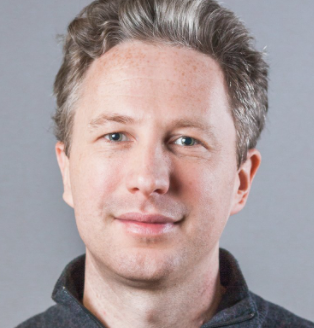 Oldrich Plchot合作论文数Department of Computer Graphics and Multimedia, Faculty of Information Technology, Brno University of Technology26
 Johan Andréas Rohdin合作论文数Department of Computer Graphics and Multimedia, Faculty of Information Technology, Brno University of Technology25
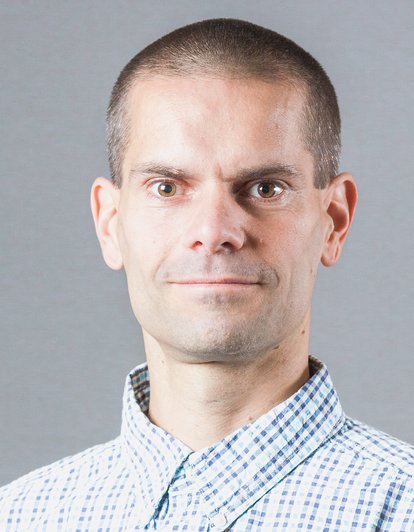 Pavel Matejka合作论文数Základní škola a Střední škola CoLibri;Phonexia21
 Mireia Díez合作论文数Dept Elect & Elect, Univ Basque Country UPV EHU19
 Ondrej Glembek合作论文数Phrase16
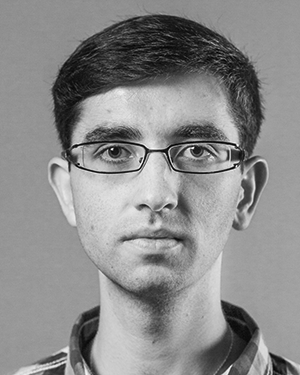 Ladislav Mosner合作论文数Brno University of Technology13
 Themos Stafylakis合作论文数Department of Informatics, Athens University of Economics and Business;Omilia - Conversational Intelligence13
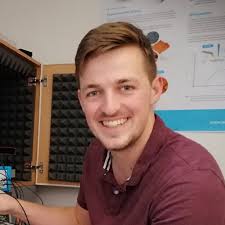 Ondřej Novotný合作论文数NenoVision s.r.o.12
 Lukáš Burget合作论文数Department of Computer Graphics and Multimedia, Faculty of Information Technology, Brno University of Technology12
 Federico Landini合作论文数Deepgram11
 Hossein Zeinali合作论文数Brno University of Technology7
 Alicia Lozano-Diez合作论文数7
 Niko Brümmer合作论文数Brno University of Technology7Josef Slavicek合作论文数5
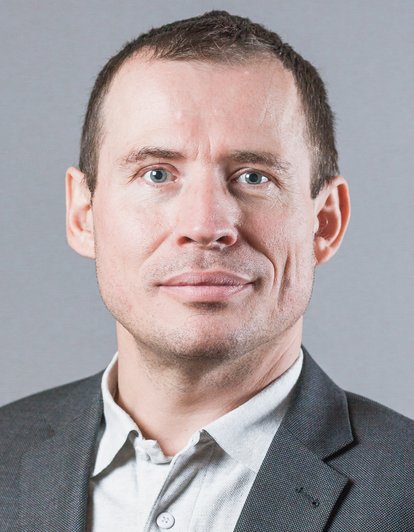 Jan Černocký合作论文数Department of Computer Graphics and Multimedia, Faculty of Information Technology, Brno University of Technology5
 Sandro Cumani合作论文数Politecn Torino5
 Shuai Wang (王帅)合作论文数School of Intelligence Science and Technology, Nanjing University4
 Junyi Peng合作论文数Peking University4
 Frantisek Grezl合作论文数School of Science & Engineering, OGI;Computer Science Institute, International;Qualcomm Inc;OGI School of Science & Engineering, International Computer Science Institute4
 Santosh Kesiraju合作论文数Department of Computer Graphics and Multimedia, Faculty of Information Technology, Brno University of Technology3
 Jahangir Alam合作论文数TasWater3
 Lukas Burget合作论文数Department of Computer Graphics and Multimedia (DCGM)3
 Marc Delcroix合作论文数Media Information Laboratory, NTT Communication Science Laboratories3Lucas Ondel合作论文数Speech FIT and IT4I Center of Excellence, Brno University of Technology3Albert Swart合作论文数3Dominik Klement合作论文数2
 Kateřina Žmolíková合作论文数Meta2
 Karel Veselý合作论文数Department of cybernetics;University of West Bohemia;Department of cybernetics, University of West Bohemia2
 Naohiro Tawara (俵直弘)合作论文数Waseda University;Aoyama Gakuin University;NTT Communication Science Laboratories2
 Mohamed Dahmane合作论文数Université des Sciences et de la Technologie Houari Boumediène Laboratoire de Chromatographie, Faculté de Chimie B.P. 32, El-Alia 16111 Bab-Ezzouar Alger Algeria2
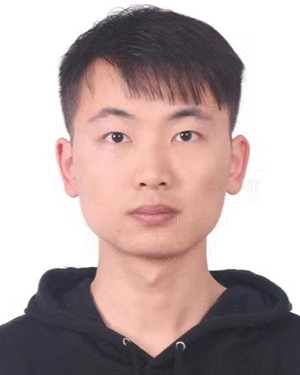 Bing Han合作论文数X-LANCE Lab, Department of Computer Science and Engineering, Shanghai Jiao Tong University;Auditory Cognition and Computational Acoustics Lab, Shanghai Jiao Tong University1
 Marie Tahon合作论文数1Tianchi Liu合作论文数1Jesús Jorrín-Prieto合作论文数1Chengdong Liang合作论文数1
 Joaquin Gonzalez-Rodriguez合作论文数1
 Martin Lebourdais合作论文数1Joao Monteiro合作论文数ServiceNow Research1
 Abderrahim Fathan合作论文数1
 Cedric Noiseux合作论文数Computer Research Institute of Montreal (CRIM1
 Bhargav Pulugundla合作论文数Speech FIT, Brno Univ Technol1
 You Zhang合作论文数Dept Elect & Comp Engn, Univ Rochester1
 Wen Ding合作论文数1
 Jan Profant合作论文数Brno Univ Technol, Brno, Czech Republic1
 Pablo Gimeno合作论文数ViVoLab, Univ Zaragoza1Zhengyang Chen合作论文数1
 Hamed Ghodrati合作论文数Concordia Inst Informat Syst Engn, Concordia Univ1
 Hieu-Thi Luong合作论文数Natl Inst Informat, Tokyo, Japan1




