This work presents a framework for compressing self-supervised models for speaker diarization through structured pruning guided by knowledge distillation. We investigate pruning objectives that target reducing both model parameters and computational complexity, where knowledge distillation enables compact models and pruning removes unnecessary parameters to improve hardware efficiency. We further analyze alternative pruning strategies, showing that a simple overall pruning approach provides the best balance between efficiency and accuracy. Compared to the original unpruned model, our method achieves up to 80% model size reduction and 4x faster inference without performance degradation. Comprehensive experiments across eight public diarization datasets demonstrate that the pruned models consistently match or surpass the performance of their uncompressed counterparts. Furthermore, we show strong out-of-domain generalization on the CHiME-6 dataset, achieving accuracy comparable to the top systems in the CHiME-7 challenge without any domain adaptation. These results highlight that structured pruning, when guided by distillation, can yield efficient and generalizable diarization systems suitable for real-world applications.
Speaker-attributed automatic speech recognition (ASR) in multi-speaker environments remains a significant challenge, particularly when systems conditioned on speaker embeddings fail to generalize to unseen speakers. In this work, we propose Diarization-Conditioned Whisper (DiCoW), a novel approach to target-speaker ASR that leverages speaker diarization outputs as conditioning information. DiCoW extends the pre-trained Whisper model by integrating diarization labels directly, eliminating reliance on speaker embeddings and reducing the need for extensive speaker-specific training data. Our method introduces frame-level diarization-dependent transformations (FDDT) and query-key biasing (QKb) techniques to refine the model's focus on target speakers while effectively handling overlapping speech. By leveraging diarization outputs as conditioning signals, DiCoW simplifies the workflow for multi-speaker ASR, improves generalization to unseen speakers and enables more reliable transcription in real-world multi-speaker recordings. Additionally, we explore the integration of a connectionist temporal classification (CTC) head to Whisper and demonstrate its ability to improve transcription efficiency through hybrid decoding. Notably, we show that our approach is not limited to Whisper; it also provides similar benefits when applied to the Branchformer model. We validate DiCoW on real-world datasets, including AMI and NOTSOFAR-1 from CHiME-8 challenge, as well as synthetic benchmarks such as Libri2Mix and LibriCSS, enabling direct comparisons with previous methods. Results demonstrate that DiCoW enhances the model's target-speaker ASR capabilities while maintaining Whisper's accuracy and robustness on single-speaker data.
Recent advances in speaker diarization exploit large pretrained foundation models, such as WavLM, to achieve state-of-the-art performance on multiple datasets. Systems like DiariZen leverage these rich single-channel representations, but are limited to single-channel audio, preventing the use of spatial cues available in multi-channel recordings. This work analyzes the impact of incorporating spatial information into a state-of-the-art single-channel diarization system by evaluating several strategies for conditioning the model on multi-channel spatial features. Experiments on meeting-style datasets indicate that spatial information can improve diarization performance, but the overall improvement is smaller than expected for the proposed system, suggesting that the features aggregated over all WavLM layers already capture much of the information needed for accurate speaker discrimination, also in overlapping speech regions. These findings provide insight into the potential and limitations of using spatial cues to enhance foundation model-based diarization.
We present improvements to speaker diarization in the two-stage end-to-end neural diarization with vector clustering (EEND-VC) framework. The first stage employs a Conformer-based EEND model with WavLM features to infer frame-level speaker activity within short windows. The identities and counts of global speakers are then derived in the second stage by clustering speaker embeddings across windows. The focus of this work is to improve the second stage; we filter unreliable embeddings from short segments and reassign them after clustering. We also integrate the VBx clustering to improve robustness when the number of speakers is large and individual speaking durations are limited. Evaluation on a compound benchmark spanning multiple domains is conducted without fine-tuning the EEND model or tuning clustering parameters per dataset. Despite this, the system generalizes well and matches or exceeds recent state-of-the-art performance.
Self-supervised models such as WavLM have demonstrated strong performance for neural speaker diarization. However, these models are typically pre-trained on single-channel recordings, limiting their effectiveness in multi-channel scenarios. Existing diarization systems built on these models often rely on DOVER-Lap to combine outputs from individual channels. Although effective, this approach incurs substantial computational overhead and fails to fully exploit spatial information. In this work, building on DiariZen, a pipeline that combines WavLM-based local endto-end neural diarization with speaker embedding clustering, we introduce a lightweight approach to make pre-trained WavLM spatially aware by inserting channel communication modules into the early layers. Our method is agnostic to both the number of microphone channels and array topologies, ensuring broad applicability. We further propose to fuse multi-channel speaker embeddings by leveraging spatial attention weights. Evaluations on five public datasets show consistent improvements over single-channel baselines and demonstrate superior performance and efficiency compared with DOVER-Lap. Our source code is publicly available at https://github.com/BUTSpeechFIT/DiariZen.
Multi-channel speaker verification (SV), employing numerous microphones for capturing enrollment and/or test recordings, gained attention for its benefits in far-field scenarios. While some studies approach the problem by designing multi-channel embedding extractors, we focus on building and thoroughly analyzing a framework integrating beamforming pre-processing paired with single-channel embedding extraction. This strategy benefits from accommodating both multi-channel and single-channel inputs. Furthermore, it provides human-interpretable intermediate output — enhanced speech — that can be independently evaluated and related to SV performance. We first focus on the front-end, taking advantage of deep-learning source separation for direct or indirect mask estimation required by the beamformer. We alternate single-channel network architectures, subsequently extended to multi-channel ones by reference channel attention (RCA). We also analyze the impact of beamformer and network output fusion. Finally, we show improvements brought by end-to-end fine-tuning the entire architecture facilitated by our newly designed multi-channel corpus, MultiSV2, extending our previous MultiSV dataset.
This paper presents the development and evaluation of an automated system for classifying therapist interventions in psychotherapy sessions. In the first study, we introduce a new transtheoretical taxonomy of therapeutic interventions and examine its application across a sample of Czech psychotherapists. The resulting distribution of intervention categories provides an empirical foundation for automation. In the second study, we assess the performance of different language-modeling approaches for predicting these intervention categories from session transcripts, comparing fine-tuned masked language models with large pretrained language models evaluated in zero- and few-shot settings. Model accuracy, contextual sensitivity, and efficiency are analyzed to identify the most effective strategy for automatic intervention recognition. Together, the studies demonstrate the feasibility of applying modern language modeling techniques to the analysis of psychotherapy process, highlighting practical implications for research, training, and feedback systems.
Conversational automatic speech recognition remains challenging due to overlapping speech, far-field noise, and varying speaker counts. While recent LLM-based systems perform well on single-speaker benchmarks, their robustness in multi-speaker settings is unclear. We systematically compare LLM-based and modular pipeline approaches along four axes: overlap robustness, semantic fidelity, speaker count, and single- versus multi-channel input. To capture meaning-altering errors that conventional metrics miss, we introduce tcpSemER, which extends tcpWER by replacing Levenshtein distance with embedding-based semantic similarity. We further decompose tcpWER into overlapping and non-overlapping components for finer-grained analysis. Experiments across three datasets show that LLM-based systems are competitive in two-speaker settings but degrade as speaker count and overlap increase, whereas modular pipelines remain more robust.
We propose to model parallel streams of data, such as overlapped speech, using shuffles. Specifically, this paper shows how the shuffle product and partial order finite-state automata (FSAs) can be used for alignment and speaker-attributed transcription of overlapped speech. We train using the total score on these FSAs as a loss function, marginalizing over all possible serializations of overlapping sequences at subword, word, and phrase levels. To reduce graph size, we impose temporal constraints by constructing partial order FSAs. We address speaker attribution by modeling (token, speaker) tuples directly. Viterbi alignment through the shuffle product FSA directly enables one-pass alignment. We evaluate performance on synthetic LibriSpeech overlaps. To our knowledge, this is the first algorithm that enables single-pass alignment of multi-talker recordings. All algorithms are implemented using k2 / Icefall.
We propose diarization-conditioned spoken language models (SLMs), a strategy for extending SLMs to far-field multi-talker audio. Rather than adapting the decoder via Serialized Output Training, which risks catastrophic forgetting, we condition the acoustic encoder on diarization masks to extract target-speaker representations, keeping the decoder frozen. We instantiate this as Dixtral, integrating a Diarization Conditioned Whisper (DiCoW) encoder into the Voxtral SLM. On AMI, NOTSOFAR-1, LibriSpeechMix, and Mixer6, Dixtral outperforms Gemini 3.0 Flash, VibeVoice, and Voxtral Mini Transcribe V2 on speaker-attributed transcription by 29.0%, 19.8%, and 16.0% absolute cpWER respectively. On a novel long-form multi-speaker QA benchmark, zero-shot Dixtral matches Gemini on far-field content understanding, and when fine-tuned surpasses both Gemini and Voxtral operating on close-talk across all tasks.
Real-world meeting conversations often show stylistic continuity within each speaker’s utterances, and adjacent segments are typically bound by strong semantic dependencies. To leverage these properties, this work incorporates textual information to assist streaming speaker diarization. Given the superior capability of large language models (LLMs) in long-context understanding, we employ an LLM for long-range semantic modeling. Specifically, we first use an automatic speech recognition (ASR) model to segment the input audio into sentence-level chunks according to its turning points. For each sentence, we extract speaker embeddings and obtain corresponding token-level textual representations using the LLM. We then investigate several fusion strategies to combine textual and audio features, and feed the fused representations into a similarity measurement module to determine the speaker identity of each sentence. Experimental results on in-house in-domain dataset and the public out-of-domain AISHELL-4 benchmark demonstrate that LLM-derived textual representations can effectively complement speaker embeddings and enhance streaming speaker diarization performance, confirming the effectiveness of our approach across domains.
Speaker-attributed automatic speech recognition (ASR) in multi-speaker environments remains a major challenge. While some approaches achieve strong performance when fine-tuned on specific domains, few systems generalize well across out-of-domain datasets. Our prior work, Diarization-Conditioned Whisper (DiCoW), leverages speaker diarization outputs as conditioning information and, with minimal fine-tuning, demonstrated strong multilingual and multi-domain performance. In this paper, we address a key limitation of DiCoW: ambiguity in Silence-Target-Non-target-Overlap (STNO) masks, where two or more fully overlapping speakers may have nearly identical conditioning despite differing transcriptions. We introduce SE-DiCoW (Self-Enrolled Diarization-Conditioned Whisper), which uses diarization output to locate an enrollment segment anywhere in the conversation where the target speaker is most active. This enrollment segment is used as fixed conditioning via cross-attention at each encoder layer. We further refine DiCoW with improved data segmentation, model initialization, and augmentation. Together, these advances yield substantial gains: SE-DiCoW reduces macro-averaged tcpWER by 52.4
Recent breakthroughs in multi-talker ASR (MT-ASR) and speaker diarization (SD) rely on synthetic data to mitigate the scarcity of large-scale conversational recordings, yet the impact of specific simulation choices remains poorly understood. To mind the gap between simulated mixtures and real-world interactions, we present a study of synthetic data generation for leading MT-ASR (DiCoW) and SD (Sortformer) systems. By introducing FastMSS, a highly efficient open-source simulator, we analyze turn-taking dynamics, source domain, acoustic augmentation, and data mixing strategies. Our findings reveal that optimal simulation recipes are highly task-dependent: increasing speech overlap benefits ASR but degrades diarization. Furthermore, broad source diversity consistently outperforms exact domain matching. Ultimately, synthetic-only training approaches real-data baselines, and combining simulated data with real recordings yields substantial gains over real-only training across both tasks.
Multi-talker automatic speech recognition (ASR) in conversational recordings remains an open problem, particularly in scenarios with large portion of overlapping speech where identifying and transcribing a target speaker is difficult from audio alone. Visual cues can help resolve speaker ambiguity, yet their integration into long-context audio-visual (AV) ASR systems has been limited. The CHiME-9 MCoRec task addresses this challenge by requiring transcription of audio-visual recordings of heavily-overlapped parallel conversations, followed by clustering the participants into conversational groups. In this work, we present the BUT system based on a long-context target-speaker AV-ASR model capable of processing long-form recordings in a single decoding pass. Our architecture conditions a pre-trained NVIDIA Parakeet-v2 ASR model on visual representations from a pre-trained AV-HuBERT model. To cluster participants into conversation groups, we employ Qwen3.5-122B LLM to estimate transcript topic similarity followed by hierarchical agglomerative clustering. On the MCoRec development set, the proposed system achieves 33.7
This work presents a framework for compressing self-supervised models for speaker diarization through structured pruning guided by knowledge distillation. We investigate pruning objectives that target both model parameters and computational complexity, and analyze alternative strategies, showing that a simple overall pruning approach provides the best balance between efficiency and accuracy. Our method achieves up to 80% model size reduction and 4x faster inference without performance degradation. Comprehensive experiments across eight public diarization datasets demonstrate that the pruned models consistently match or surpass the performance of their uncompressed counterparts. Furthermore, we show strong out-of-domain generalization on the CHiME-6 dataset, achieving accuracy comparable to the top systems in the CHiME-7 challenge without any domain adaptation. These results highlight that structured pruning, when guided by distillation, can yield efficient and generalizable diarization systems suitable for real-world applications.
Self-supervised learning (SSL) models like WavLM can be effectively utilized when building speaker diarization systems but are often large and slow, limiting their use in resource constrained scenarios. Previous studies have explored compression techniques, but usually for the price of degraded performance at high pruning ratios. In this work, we propose to compress SSL models through structured pruning by introducing knowledge distillation. Different from the existing works, we emphasize the importance of fine-tuning SSL models before pruning. Experiments on far-field single-channel AMI, AISHELL-4, and AliMeeting datasets show that our method can remove redundant parameters of WavLM Base+ and WavLM Large by up to 80% without any performance degradation. After pruning, the inference speeds on a single GPU for the Base+ and Large models are 4.0 and 2.6 times faster, respectively. Our source code is publicly available.
Self-supervised learning (SSL) models for speaker verification (SV) have gained significant attention in recent years. However, existing SSL-based SV systems often struggle to capture local temporal dependencies and generalize across different tasks. In this paper, we propose context-aware multi-head factorized attentive pooling (CA-MHFA), a lightweight framework that incorporates contextual information from surrounding frames. CA-MHFA leverages grouped, learnable queries to effectively model contextual dependencies while maintaining efficiency by sharing keys and values across groups. Experimental results on the VoxCeleb dataset show that CA-MHFA achieves EERs of 0.42%, 0.48%, and 0.96% on Vox1-0, Voxl-E, and Voxl-H, respectively, outperforming complex models like WavLM-TDNN with fewer parameters and faster convergence. Additionally, CA-MHFA demonstrates strong generalization across multiple SSL models and tasks, including emotion recognition and anti-spoofing, highlighting its robustness and versatility.(1)
We present a two-speaker automatic speech recognition (ASR) system that combines DiCoW – a diarization-conditioned variant of Whisper – with DiariZen, a diarization pipeline built on top of Pyannote. We first evaluate both systems in out-of-domain (OOD) multilingual scenarios without any fine-tuning. In this scenario, DiariZen consistently outperforms the baseline Pyannote diarization model, demonstrating strong generalization. Despite being fine-tuned on English-only data for target-speaker ASR, DiCoW retains solid multilingual performance, indicating that encoder modifications preserve Whisper's multilingual capabilities. We then fine-tune both DiCoW and DiariZen on the MLC-SLM challenge data. The fine-tuned DiariZen continues to outperform the fine-tuned Pyannote baseline, while DiCoW sees further gains from domain adaptation. Our final system achieves a micro-average tcpWER/CER of 16.75 ranks second in Task 2 of the MLC-SLM challenge. Lastly, we identify several labeling inconsistencies in the training data – such as missing speech segments and incorrect silence annotations – which can hinder diarization fine-tuning. We propose simple mitigation strategies to address these issues and improve system robustness.
This paper presents a simple yet effective regularization for the internal language model induced by the decoder in encoder-decoder ASR models, thereby improving robustness and generalization in both in- and out-of-domain settings. The proposed method, Decoder-Centric Regularization in Encoder-Decoder (DeCRED), adds auxiliary classifiers to the decoder, enabling next token prediction via intermediate logits. Empirically, DeCRED reduces the mean internal LM BPE perplexity by 36.6
In contrast to text-independent speaker verification, which has received significant attention from researchers and has many competitions dedicated to it, text-dependent speaker verification (TdSV) has been less explored recently. The TdSV Challenge 2024 was organized to analyze and explore novel methods for this type of speaker verification and aims to motivate participants to develop new approaches to TdSV, conduct comprehensive analyses, and investigate advanced techniques such as self-supervised learning. This challenge builds on the achievements of the short-duration speaker verification (SdSV) Challenges held in 2020 and 2021 and focuses specifically on TdSV in two distinct scenarios. The first scenario involves conventional TdSV, while the second focuses on speaker enrollment using user-defined passphrases. This paper provides a detailed description of both tasks, introduces the evaluation rules, and presents a comprehensive analysis of the results obtained from this challenge.
 Jan Černocký合作论文数Department of Computer Graphics and Multimedia, Faculty of Information Technology, Brno University of Technology54
 Oldrich Plchot合作论文数Department of Computer Graphics and Multimedia, Faculty of Information Technology, Brno University of Technology28
 Ondrej Glembek合作论文数Phrase25
 Pavel Matejka合作论文数Základní škola a Střední škola CoLibri;Phonexia23
 Anna Silnova合作论文数Brno University of Technology22
 Johan Andréas Rohdin合作论文数Department of Computer Graphics and Multimedia, Faculty of Information Technology, Brno University of Technology20
 Martin Karafiat合作论文数DCGM19
 Mireia Díez合作论文数Dept Elect & Elect, Univ Basque Country UPV EHU19
 Federico Landini合作论文数Deepgram18
 Themos Stafylakis合作论文数Department of Informatics, Athens University of Economics and Business;Omilia - Conversational Intelligence13
 Ondřej Novotný合作论文数NenoVision s.r.o.11
 Ladislav Mosner合作论文数Brno University of Technology11
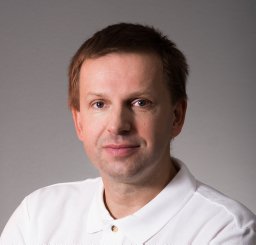 Petr Schwarz合作论文数Faculty of Information Technology;University of Technology;Faculty of Information Technology, University of Technology11
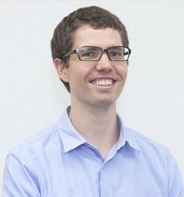 Marc Delcroix合作论文数Media Information Laboratory, NTT Communication Science Laboratories10Lucas Ondel合作论文数Speech FIT and IT4I Center of Excellence, Brno University of Technology10
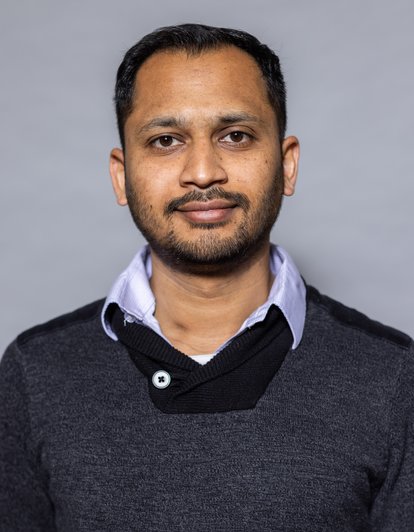 Santosh Kesiraju合作论文数Department of Computer Graphics and Multimedia, Faculty of Information Technology, Brno University of Technology9
 Frantisek Grezl合作论文数School of Science & Engineering, OGI;Computer Science Institute, International;Qualcomm Inc;OGI School of Science & Engineering, International Computer Science Institute9
 Sanjeev Khudanpur合作论文数Center for Language and Speech Processing, Whiting School of Engineering, Johns Hopkins University;Department of Electrical and Computer Engineering, Whiting School of Engineering, Johns Hopkins University8
 Junyi Peng合作论文数Peking University7
 Samuele Cornell合作论文数Language Technologies Institute, Carnegie Mellon University6Dominik Klement合作论文数5
 Karel Beneš合作论文数Brno Univ Technol5
 Bolaji Yusuf合作论文数5
 Alicia Lozano-Diez合作论文数5
 Naohiro Tawara (俵直弘)合作论文数Waseda University;Aoyama Gakuin University;NTT Communication Science Laboratories5
 Matthew Wiesner合作论文数Human Language Technology Center of Excellence5
 Igor Szöke合作论文数Faculty of Information Technology, Brno University of Technology5Feng Kai合作论文数4Hossein Zeinali合作论文数Brno University of Technology4
 Samuel Thomas合作论文数Thomas J. Watson Research Center, IBM Research AI4
 Karel Veselý合作论文数Department of cybernetics;University of West Bohemia;Department of cybernetics, University of West Bohemia4
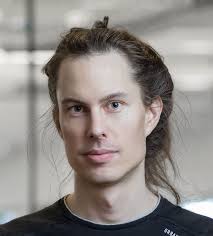 Tomas Mikolov合作论文数Czech Institute of Informatics, Robotics and Cybernetics, Czech Technical University4
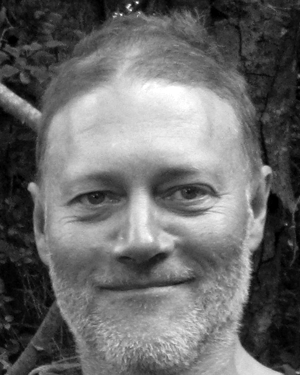 Niko Brümmer合作论文数Brno University of Technology4
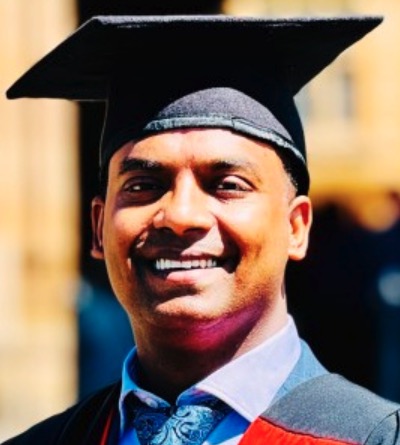 Jahangir Alam合作论文数TasWater4
 Arnab Ghoshal合作论文数Pryon4Michal Fapso合作论文数4
 Ariya Rastrow合作论文数Amazon4
 Pinar Akyazi合作论文数Brno University of Technology4
 Shinji Watanabe合作论文数Department of Electrical and Computer Engineering, College of Engineering, Carnegie Mellon University4Alexander Polok合作论文数3Josef Slavicek合作论文数3Mohit Agarwal合作论文数3Nagendra Goel合作论文数Go-Vivace Inc., Virginia, USA3
 Martin Kocour合作论文数Fac Informat Technol, Brno Univ Technol3Jiangyu Han合作论文数Shanghai Normal Univ, Key Innovat Grp Digital Humanities Resource & Res, Shanghai 200234, Peoples R China3
 Murali Karthick Baskar合作论文数Brno University of Technology3
 Hari Krishna合作论文数3
 Kong Aik Lee合作论文数Department of Electrical and Electronic Engineering, The Hong Kong Polytechnic University3
 Stefan Kombrink合作论文数University of Ulm3




