In this contribution, we provide a description of the ABC team’s collaborative efforts toward the development of speaker verification systems for the NIST Speaker Recognition Evaluation 2021 (NIST-SRE2021). Cross-lingual and cross-dataset trials are the two main challenges introduced in the NIST-SRE2021. Submissions of ABC team are the result of active collaboration of researchers from BUT, CRIM, Omilia and Innovatrics. We took part in all three close condition tracks for audio-only, audio-visual and visual-only verification tasks. Our audio-only systems follow deep speaker embeddings (e.g., x-vectors) with a subsequent PLDA scoring paradigm. As embeddings extractor, we select some variants of residual neural network (ResNet), factored time delay neural network (FTDNN) and Hybrid Neural Network (HNN) architectures. The HNN embeddings extractor employs CNN, LSTM and TDNN networks and incorporates a multi-level global-local statistics pooling method in order to aggregate the speaker information within short time-span and utterance-level context. Our visual-only systems are based on pretrained embeddings extractors employing some variants of ResNet and the scoring is based on cosine distance. When developing an audio-visual system, we simply fuse the outputs of independent audio and visual systems. Our final submitted systems are obtained by performing score level fusion of subsystems followed by score calibration.
In this paper, we analyze the behavior and performance of speaker embeddings and the back-end scoring model under domain and language mismatch. We present our findings regarding ResNet-based speaker embedding architectures and show that reduced temporal stride yields improved performance. We then consider a PLDA back-end and show how a combination of small speaker subspace, language-dependent PLDA mixture, and nuisance-attribute projection can have a drastic impact on the performance of the system. Besides, we present an efficient way of scoring and fusing class posterior logit vectors recently shown to perform well for speaker verification task. The experiments are performed using the NIST SRE 2021 setup.
This paper describes the system developed by the BUT team for the fourth track of the VoxCeleb Speaker Recognition Challenge, focusing on diarization on the VoxConverse dataset. The system consists of signal pre-processing, voice activity detection, speaker embedding extraction, an initial agglomerative hierarchical clustering followed by diarization using a Bayesian hidden Markov model, a reclustering step based on per-speaker global embeddings and overlapped speech detection and handling. We provide comparisons for each of the steps and share the implementation of the most relevant modules of our system. Our system scored second in the challenge in terms of the primary metric (diarization error rate) and first according to the secondary metric (Jaccard error rate).
In this paper, we present a Bayesian multilingual document model for learning language-independent document embeddings. The model is an extension of BaySMM [Kesiraju et al 2020] to the multilingual scenario. It learns to represent the document embeddings in the form of Gaussian distributions, thereby encoding the uncertainty in its covariance. We propagate the learned uncertainties through linear classifiers that benefit zero-shot cross-lingual topic identification. Our experiments on 17 languages show that the proposed multilingual Bayesian document model performs competitively, when compared to other systems based on large-scale neural networks (LASER, XLM-R, mUSE) on 8 high-resource languages, and outperforms these systems on 9 mid-resource languages. We revisit cross-lingual topic identification in zero-shot settings by taking a deeper dive into current datasets, baseline systems and the languages covered. We identify shortcomings in the existing evaluation protocol (MLDoc dataset), and propose a robust alternative scheme, while also extending the cross-lingual experimental setup to 17 languages. Finally, we consolidate the observations from all our experiments, and discuss points that can potentially benefit the future research works in applications relying on cross-lingual transfers.
In this paper, we present a brief history and a "longitudinal study" of all important milestone modelling techniques used in text independent speaker recognition since Brno University of Technology (BUT) first participated in the NIST Speaker Recognition Evaluation (SRE) in 2006-GMM MAP, GMM MAP with eigen-channel adaptation, Joint Factor Analysis, i-vector and DNN embedding (x-vector). To emphasize the historical context, the techniques are evaluated on all NIST SRE sets since 2004 on a time-machine principle, i.e. a system is always trained using all data available up till the year of evaluation. Moreover, as user-contributed audiovisual content dominates nowadays' Internet, we representatively include the Speakers In The Wild (SITW) and VOiCES challenge datasets in the evaluation of our systems. Not only we present a comparison of the modelling techniques, but we also show the effect of sampling frequency. (c) 2019 Elsevier Ltd. All rights reserved.
In this paper, we present the winning BUT submission for the text-dependent task of the SdSV challenge 2020. Given the large amount of training data available in this challenge, we explore successful techniques from text-independent systems in the text-dependent scenario. In particular, we trained x-vector extractors on both in-domain and out-of-domain datasets and combine them with i-vectors trained on concatenated MFCCs and bottleneck features, which have proven effective for the text-dependent scenario. Moreover, we proposed the use of phrase-dependent PLDA backend for scoring and its combination with a simple phrase recognizer, which brings up to 63% relative improvement on our development set with respect to using standard PLDA. Finally, we combine our different i-vector and x-vector based systems using a simple linear logistic regression score level fusion, which provides 28% relative improvement on the evaluation set with respect to our best single system.
In this paper, we present a Bayesian multilingual document model for learning language-independent document embeddings. The model is an extension of BaySMM [Kesiraju et al 2020] to the multilingual scenario. It learns to represent the document embeddings in the form of Gaussian distributions, thereby encoding the uncertainty in its covariance. We propagate the learned uncertainties through linear classifiers that benefit zero-shot cross-lingual topic identification. Our experiments on 17 languages show that the proposed multilingual Bayesian document model performs competitively, when compared to other systems based on large-scale neural networks (LASER, XLM-R, mUSE) on 8 high-resource languages, and outperforms these systems on 9 mid-resource languages. We revisit cross-lingual topic identification in zero-shot settings by taking a deeper dive into current datasets, baseline systems and the languages covered. We identify shortcomings in the existing evaluation protocol (MLDoc dataset), and propose a robust alternative scheme, while also extending the cross-lingual experimental setup to 17 languages. Finally, we consolidate the observations from all our experiments, and discuss points that can potentially benefit the future research works in applications relying on cross-lingual transfers.
We present a condensed description and analysis of the joint submission of ABC team for NIST SRE 2019, by BUT, CRIM, Phonexia, Omilia and UAM. We concentrate on challenges that arose during development and we analyze the results obtained on the evaluation data and on our development sets. The conversational telephone speech (CMN2) condition is challenging for current state-of-the-art systems, mainly due to the language mismatch between training and test data. We show that a combination of adversarial domain adaptation, backend adaptation and score normalization can mitigate this mismatch. On the VAST condition, we demonstrate the importance of deploying diarization when dealing with multi-speaker utterances and the drastic improvements that can be obtained by combining audio and visual modalities.
This paper is a post-evaluation analysis of our efforts in VOiCES 2019 Speaker Recognition challenge. All systems in the fixed condition are based on x-vectors with different features and DNN topologies. The single best system reaches minDCF of 0.38 (5.25% EER) and a fusion of 3 systems yields minDCF of 0.34 (4.87% EER). We also analyze how speaker verification (SV) systems evolved in last few years and show results also on SITW 2016 Challenge. EER on the core-core condition of the SITW 2016 challenge dropped from 5.85% to 1.65% for system fusions submitted for SITW 2016 and VOiCES 2019, respectively. The less restrictive open condition allowed us to use external data for PLDA adaptation and achieve additional small performance improvement. In our submission to open condition, we used three x-vector systems and also one system based on i-vectors.
This is a description of our effort in VOiCES 2019 Speaker Recognition challenge. All systems in the fixed condition are based on the x-vector paradigm with different features and DNN topologies. The single best system reaches 1.2% EER and a fusion of 3 systems yields 1.0% EER, which is 15% relative improvement. The open condition allowed us to use external data which we did for the PLDA adaptation and achieved less than ~10% relative improvement. In the submission to open condition, we used 3 x-vector systems and also one i-vector based system.
In this work, we continue in our research on i-vector extractor for speaker verification (SV) and we optimize its architecture for fast and effective discriminative training. We were motivated by computational and memory requirements caused by the large number of parameters of the original generative i-vector model. Our aim is to preserve the power of the original generative model, and at the same time focus the model towards extraction of speaker-related information. We show that it is possible to represent a standard generative i-vector extractor by a model with significantly less parameters and obtain similar performance on SV tasks. We can further refine this compact model by discriminative training and obtain i-vectors that lead to better performance on various SV benchmarks representing different acoustic domains.
In this work we revisit discriminative training of the i-vector extractor component in the standard speaker verification (SV) system. The motivation of our research lies in the robustness and stability of this large generative model, which we want to preserve, and focus its power towards any intended SV task. We show that after generative initialization of the i-vector extractor, we can further refine it with discriminative training and obtain i-vectors that lead to better performance on various benchmarks representing different acoustic domains.
In this work, we present an analysis of a DNN-based autoencoder for speech enhancement, dereverberation and denoising. The target application is a robust speaker verification (SV) system. We start our approach by carefully designing a data augmentation process to cover wide range of acoustic conditions and obtain rich training data for various components of our SV system. We augment several well-known databases used in SV with artificially noised and reverberated data and we use them to train a denoising autoencoder (mapping noisy and reverberated speech to its clean version) as well as an x-vector extractor which is currently considered as state-of-the-art in SV. Later, we use the autoencoder as a preprocessing step for text-independent SV system. We compare results achieved with autoencoder enhancement, multi-condition PLDA training and their simultaneous use. We present a detailed analysis with various conditions of NIST SRE 2010, 2016, PRISM and with re-transmitted data. We conclude that the proposed preprocessing can significantly improve both i-vector and x-vector baselines and that this technique can be used to build a robust SV system for various target domains.
Recently several end-to-end speaker verification systems based on deep neural networks (DNNs) have been proposed. These systems have been proven to be competitive for text-dependent tasks as well as for text-independent tasks with short utterances. However, for text-independent tasks with longer utterances, end-to-end systems are still outperformed by standard i-vector + PLDA systems. In this work, we present an end-to-end speaker verification system that is initialized to mimic an i-vector + PLDA baseline. The system is then further trained in an end-to-end manner but regularized so that it does not deviate too far from the initial system. In this way we mitigate overfitting which normally limits the performance of end-to-end systems. The proposed system outperforms the i-vector + PLDA baseline on both long and short duration utterances.
This paper presents the approach developed by the BUT team for the first DIHARD speech diarization challenge, which is based on our Bayesian Hidden Markov Model with eigenvoice priors system. Besides the description of the approach, we provide a brief analysis of different techniques and data processing methods tested on the development set. We also introduce a simple attempt for overlapped speech detection that we used for attaining cleaner speaker models and reassigning overlapped speech to multiple speakers. Finally, we present results obtained on the evaluation set and discuss findings we made during the development phase and with the help of the DIHARD leaderboard feedback.
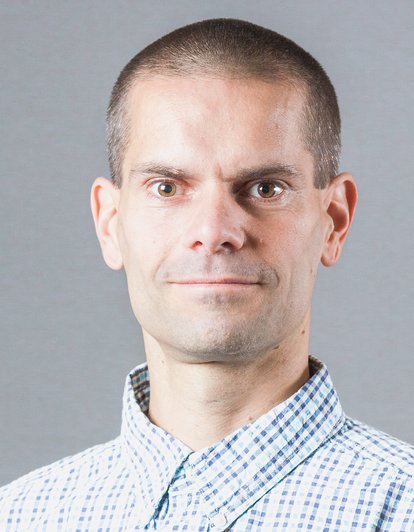 Pavel Matejka合作论文数Základní škola a Střední škola CoLibri;Phonexia63
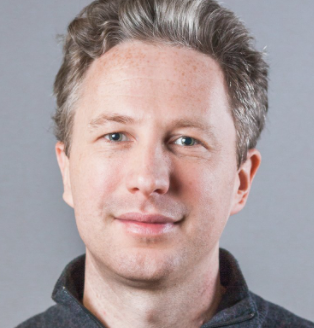 Oldrich Plchot合作论文数Department of Computer Graphics and Multimedia, Faculty of Information Technology, Brno University of Technology45
 Lukáš Burget合作论文数Department of Computer Graphics and Multimedia, Faculty of Information Technology, Brno University of Technology43
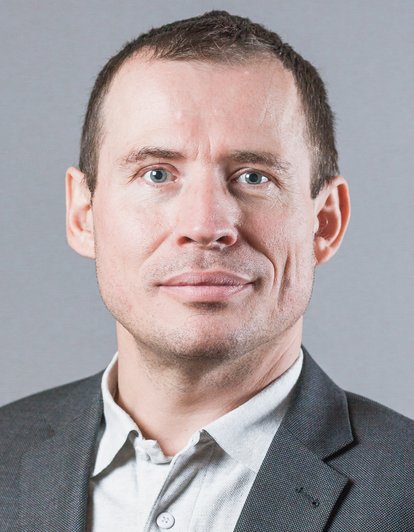 Jan Černocký合作论文数Department of Computer Graphics and Multimedia, Faculty of Information Technology, Brno University of Technology31
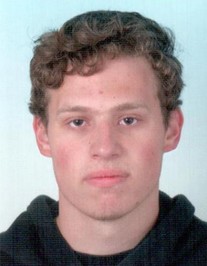 Martin Karafiat合作论文数DCGM24
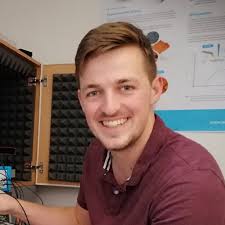 Ondřej Novotný合作论文数NenoVision s.r.o.22
 Petr Schwarz合作论文数Faculty of Information Technology;University of Technology;Faculty of Information Technology, University of Technology20
 Anna Silnova合作论文数Brno University of Technology16
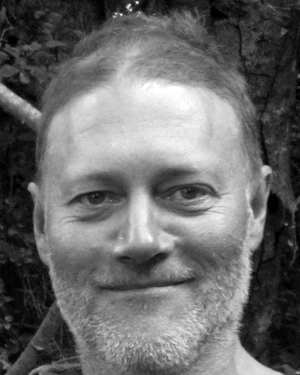 Niko Brümmer合作论文数Brno University of Technology15
 Frantisek Grezl合作论文数School of Science & Engineering, OGI;Computer Science Institute, International;Qualcomm Inc;OGI School of Science & Engineering, International Computer Science Institute15
 Johan Andréas Rohdin合作论文数Department of Computer Graphics and Multimedia, Faculty of Information Technology, Brno University of Technology12
 Mireia Díez合作论文数Dept Elect & Elect, Univ Basque Country UPV EHU10
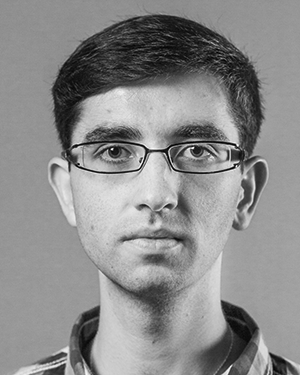 Ladislav Mosner合作论文数Brno University of Technology9
 Santosh Kesiraju合作论文数Department of Computer Graphics and Multimedia, Faculty of Information Technology, Brno University of Technology8
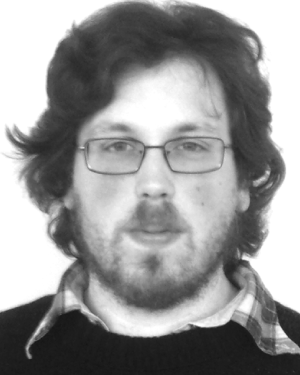 Sandro Cumani合作论文数Politecn Torino8Michal Fapso合作论文数8
 Lukas Burget合作论文数Department of Computer Graphics and Multimedia (DCGM)8
 Karel Veselý合作论文数Department of cybernetics;University of West Bohemia;Department of cybernetics, University of West Bohemia7
 Tomas Mikolov合作论文数Czech Institute of Informatics, Robotics and Cybernetics, Czech Technical University7
 Arnab Ghoshal合作论文数Pryon7Valiantsina Hubeika合作论文数Faculty of Information Technology, Brno University of Technology7Feng Kai合作论文数6Nagendra Goel合作论文数Go-Vivace Inc., Virginia, USA6
 Alicia Lozano-Diez合作论文数6
 Samuel Thomas合作论文数Thomas J. Watson Research Center, IBM Research AI6Jiří Kopecký合作论文数6
 Igor Szöke合作论文数Faculty of Information Technology, Brno University of Technology6
 Ariya Rastrow合作论文数Amazon6
 Pinar Akyazi合作论文数Brno University of Technology6Hossein Zeinali合作论文数Brno University of Technology5
 Nikolaos Malandrakis合作论文数SAIL, USC5
 Shrikanth (Shri) S. Narayanan合作论文数Signal Analysis and Interpretation Laboratory, Ming Hsieh Department of Electrical and Computer Engineering, Viterbi School of Engineering, University of Southern California;Google;Behavioral Signal Technologies, Inc.5
 Patrick Kenny合作论文数Centre de Recherche Informatique de Montreal5
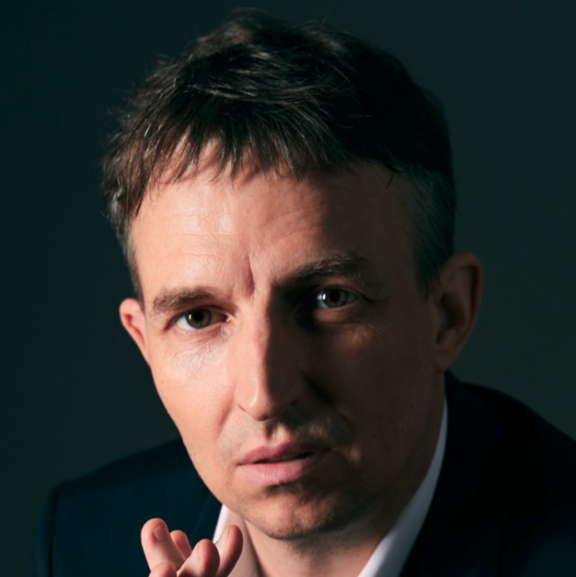 Dan Povey合作论文数Xiaomi5Josef Slavicek合作论文数4Mohit Agarwal合作论文数4
 Mark Hasegawa-Johnson合作论文数Department of Electrical and Computer Engineering, The Grainger College of Engineering, University of Illinois at Urbana-Champaign4
 Murali Karthick Baskar合作论文数Brno University of Technology4
 Michael Pust合作论文数4
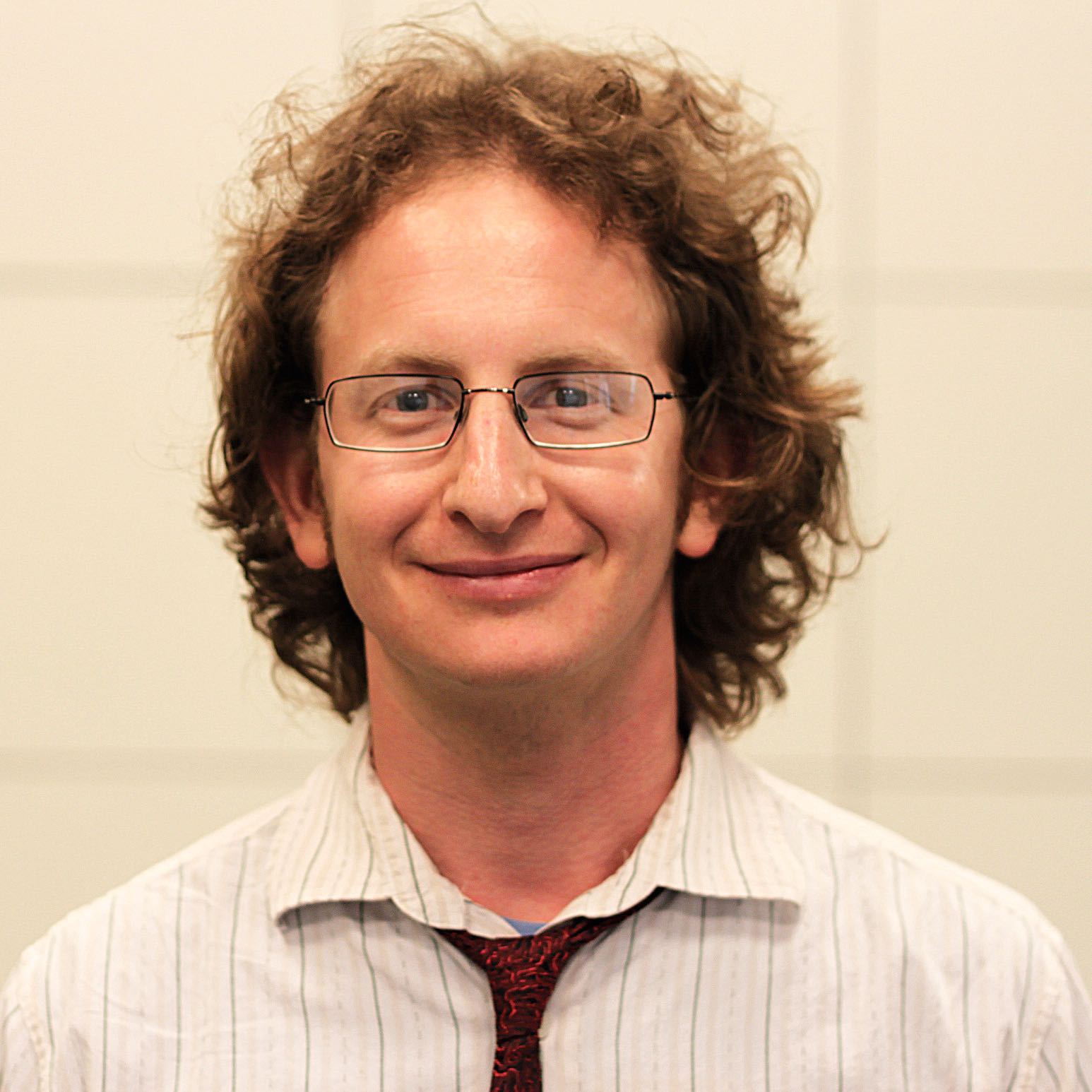 Jonathan May合作论文数Thomas Lord Department of Computer Science, Viterbi School of Engineering, University of Southern California;Amazon4
 Richard Rose合作论文数Department of Electrical and Computer Engineering, McGill University4Ying Lin合作论文数Apple4
 Di Lu (卢迪)合作论文数Dataminr Inc.4
 Jeff Ma合作论文数4
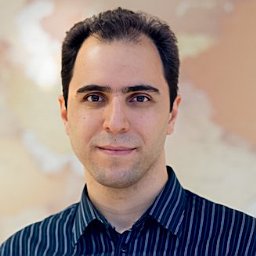 Mehdi Soufifar合作论文数4
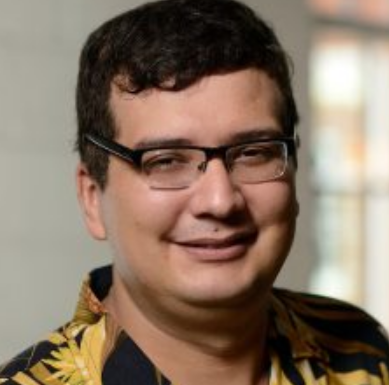 Najim Dehak合作论文数Department of Electrical and Computer Engineering, Whiting School of Engineering, Johns Hopkins University4
 Jahangir Alam合作论文数TasWater4
 Gilles Boulianne合作论文数Centre De Recherche Informatique De Montreal4