Coral skeletons were long assumed to have a spherulitic structure, that is, a radial distribution of acicular aragonite (CaCO3) crystals with their c-axes radiating from series of points, termed centers of calcification (CoCs). This assumption was based on morphology alone, not on crystallography. Here we measure the orientation of crystals and nanocrystals and confirm that corals grow their skeletons in bundles of aragonite crystals, with their c-axes and long axes oriented radially and at an angle from the CoCs, thus precisely as expected for feather-like or "plumose" spherulites. Furthermore, we find that in both synthetic and coral aragonite spherulites at the nanoscale adjacent crystals have similar but not identical orientations, thus demonstrating by direct observation that even at nanoscale the mechanism of spherulite formation is non-crystallographic branching (NCB), as predicted by theory. Finally, synthetic aragonite spherulites and coral skeletons have similar angle spreads, and angular distances of adjacent crystals, further confirming that coral skeletons are spherulites. This is important because aragonite grows anisotropically, 10 times faster along the c-axis than along the a-axis direction, and spherulites fill space with crystals growing almost exclusively along the c-axis, thus they can fill space faster than any other aragonite growth geometry, and create isotropic materials from anisotropic crystals. Greater space filling rate and isotropic mechanical behavior are key to the skeleton's supporting function and therefore to its evolutionary success. In this sense, spherulitic growth is Nature's 3D printing.
Nacre, the iridescent outer lining of pearls and inner lining of many mollusk shells, is composed of periodic, parallel, organic sheets alternating with aragonite (CaCO3) tablet layers. Nacre tablet thickness (TT) generates both nacre's iridescence and its remarkable resistance to fracture. Despite extensive studies on how nacre forms, the mechanisms controlling TT remain unknown, even though they determine the most conspicuous of nacre's characteristics, visible even to the naked eye.Thermodynamics predicts that temperature (T) will affect both physical and chemical components of biomineralized skeletons. The chemical composition of biominerals is well-established to record environmental parameters, and has therefore been extensively used in paleoclimate studies. The physical structure, however, has been hypothesized but never directly demonstrated to depend on the environment. Here we observe that the physical TT in nacre from modern and fossil shallow-water shells of the bivalves Pinna and Atrina correlates with T as measured. by the carbonate clumped isotope thermometer. Based on the observed TT vs. T correlation, we anticipate that TT will be used as a paleothermometer, useful to estimate paleotemperature in shallow-water paleoenvironments. Here we successfully test the proposed new nacre TT thermometer on two Jurassic Pinna shells. The increase of TT with T is consistent with greater aragonite growth rate at higher T, and with greater metabolic rate at higher T. Thus, it reveals a complex, T-dependent biophysical mechanism for nacre formation. (C) 2016 Elsevier B.V. All rights reserved.
Do corals form their skeletons by precipitation from solution or by attachment of amorphous precursor particles as observed in other minerals and biominerals? The classical model assumes precipitation in contrast with observed "vital effects," that is, deviations from elemental and isotopic compositions at thermodynamic equilibrium. Here, we show direct spectromicroscopy evidence in Stylophora pistillata corals that two amorphous precursors exist, one hydrated and one anhydrous amorphous calcium carbonate (ACC); that these are formed in the tissue as 400-nm particles; and that they attach to the surface of coral skeletons, remain amorphous for hours, and finally, crystallize into aragonite (CaCO3). We show in both coral and synthetic aragonite spherulites that crystal growth by attachment of ACC particles is more than 100 times faster than ion-by-ion growth from solution. Fast growth provides a distinct physiological advantage to corals in the rigors of the reef, a crowded and fiercely competitive ecosystem. Corals are affected by warming-induced bleaching and postmortem dissolution, but the finding here that ACC particles are formed inside tissue may make coral skeleton formation less susceptible to ocean acidification than previously assumed. If this is how other corals form their skeletons, perhaps this is how a few corals survived past CO2 increases, such as the Paleocene-Eocene Thermal Maximum that occurred 56 Mya.
In contrast to synthetic materials, materials produced by organisms are formed in ambient conditions and with a limited selection of elements. Nevertheless, living organisms reveal elegant strategies for achieving specific functions, ranging from skeletal support to mastication, from sensors and defensive tools to optical function. Using state-of-the-art characterization techniques, we present a biostrategy for strengthening and toughening the otherwise brittle calcite optical lenses found in the brittlestar Ophiocoma wendtii This intriguing process uses coherent nanoprecipitates to induce compressive stresses on the host matrix, functionally resembling the Guinier-Preston zones known in classical metallurgy. We believe that these calcitic nanoparticles, being rich in magnesium, segregate during or just after transformation from amorphous to crystalline phase, similarly to segregation behavior from a supersaturated quenched alloy.
Observations that some biogenic and sedimentary calcites grow from amorphous calcium carbonate (ACC) raise the question of how this mineralization process influences composition. However, the detailed pathway and geochemical consequences of the ACC to calcite transformation are not well constrained. This experimental study investigated the formation of calcite from ACC by using magnesium and calcium stable isotope labeling to directly probe the transformation pathway and controls on composition. Four processes were considered: dissolution-reprecipitation, solid state transformation, and combinations of these end-members. To distinguish between these scenarios, ACC was synthesized from natural isotope abundance solutions and subsequently transferred to spiked solutions that were enriched in Ca-43 and Mg-25 for the transformation to calcite. Isotope measurements by NanoSIMS determined the Ca-43/Ca-40, and Mg-25/Mg-24 ratios of the resulting calcite crystals.Analysis of the data shows the transformation is best explained by a dissolution-reprecipitation process. We find that when a small amount of ACC is transferred, the isotopic signals in the resulting calcite are largely replaced by the composition of the surrounding spiked solution. When larger amounts of ACC are transferred, calcite compositions reflect a mixture between the ACC and initial solution end-member. Comparisons of the measurements to the predictions of a simple mixing model indicate that calcite compositions (1) are sensitive to relative amounts of ACC and the surrounding solution reservoir and (2) are primarily governed by the conditions at the time of ACC transformation rather than the initial ACC formation. Shifts in calcite composition over the duration of the transformation period reflect the progressive evolution of the local solution conditions. This dependence indicates the extent to which there is water available would change the end point composition on the mixing line. While these findings have significant geochemical implications, the question remains whether this transformation pathway is generally followed when biomineralization involves ACC or is particular to these inorganic experiments. Insights from this study nonetheless suggest that some types of compositional variability, such as 'vital effects', may be explained in-part by a co-evolution of reservoir and products over the duration of the transformation. (C) 2015 Elsevier Ltd. All rights reserved.
The physical basis for how macromolecules regulate the onset of mineral formation in calcifying tissues is not well established. A popular conceptual model assumes the organic matrix provides a stereochemical match during cooperative organization of solute ions. In contrast, another uses simple binding assays to identify good promoters of nucleation. Here, we reconcile these two views and provide a mechanistic explanation for template-directed nucleation by correlating heterogeneous nucleation barriers with crystal-substrate-binding free energies. We first measure the kinetics of calcite nucleation onto model substrates that present different functional group chemistries (carboxyl, thiol, phosphate, and hydroxyl) and conformations (C11 and C16 chain lengths). We find rates are substrate-specific and obey predictions of classical nucleation theory at supersaturations that extend above the solubility of amorphous calcium carbonate. Analysis of the kinetic data shows the thermodynamic barrier to nucleation is reduced by minimizing the interfacial free energy of the system, γ. We then use dynamic force spectroscopy to independently measure calcite-substrate-binding free energies, ΔGb. Moreover, we show that within the classical theory of nucleation, γ and ΔGb should be linearly related. The results bear out this prediction and demonstrate that low-energy barriers to nucleation correlate with strong crystal-substrate binding. This relationship is general to all functional group chemistries and conformations. These findings provide a physical model that reconciles the long-standing concept of templated nucleation through stereochemical matching with the conventional wisdom that good binders are good nucleators. The alternative perspectives become internally consistent when viewed through the lens of crystal-substrate binding.
The interactions of amino acids with mineral surfaces have potential relevance for processes ranging from pre-biotic chemistry to biomineralization to protein adsorption on biomedical implants in vivo. Here, we report the results of experiments investigating the adsorption of l-glutamic (Glu) and l-aspartic (Asp) acids to γ-Al2O3. We examined the extent of Glu and Asp coverage as a function of pH and solution concentration (pH edges and isotherms) in solution-depletion experiments and used in situ Attenuated Total Refkectance Fourier Transform Infrared (ATR-FTIR) spectroscopy to estimate the molecular conformations of the adsorbed molecules. Glu and Asp exhibited similar adsorption behavior on γ-Al2O3 with respect to pH and solution concentration. In general, adsorption decreased as pH increased. At low and high amino acid concentrations, the isotherms exhibited two apparent saturation coverages, which could be interpreted as 1:4 or 1:2 ratios of adsorbed molecule/surface Al sites. Tetradentate tetranuclear and bidentate binuclear species were the dominant conformations inferred independently from FTIR spectra. In these conformations, both carboxylate groups are involved in bonding to either four or to two Al surface atoms, through direct covalent bonds or via H-bonds. An outer sphere species, in which one carboxylate group interacts with a surface Al atom, could not be ruled out based on the FTIR spectra.
Calcified skeletons are produced within complex assemblages of proteins and polysaccharides whose roles in mineralization are not well understood. Here we quantify the kinetics of calcite nucleation onto a suite of high-purity polysaccharide (PS) substrates under controlled conditions. The energy barriers to nucleation are PS-specific by a systematic relationship to PS charge density and substrate structure that is rooted in minimization of the competing substrate-crystal and substrate-liquid interfacial energies. Chitosan presents a low-energy barrier to nucleation because its near-neutral charge favors formation of a substrate-crystal interface, thus reducing substrate interactions with water. Progressively higher barriers are measured for negatively charged alginates and heparin that favor contact with the solution over the formation of new substrate-crystal interfaces. The findings support a directing role for PS in biomineral formation and demonstrate that substrate-crystal interactions are one end-member in a larger continuum of competing forces that regulate heterogeneous crystal nucleation.
Chemical proxy models are based upon the assumption that isotopic signatures and concentrations of minor and trace elements reflect equilibrium fractionation processes that occurred during mineralization. This picture is rooted in the fundamental assumptions of BCF crystal growth theory— a thermodynamicbased model that was derived for step growth at very near equilibrium conditions. However, the applicability of these assumptions are being called into question with the realization that many carbonate biominerals form by non-classical processes. Here, mineralization begins with accumulation of amorphous calcium carbonate (ACC) in a localized environment that subsequently transforms to the crystal/organic composites we know as skeletal structures. It is not yet known 1) if the transformation involves classical microscopic dissolution-reprecipitation or an altogether different type of process and 2) the consequences of this process for composition and isotopic signatures. This study investigates the influence of the ACC to calcite pathway on the Mg content and isotopic signature of calcites. For low solution levels of Mg/Ca, Mg content is insufficient to inhibit step growth and ACC transforms into crystallites of Mg calcites that exhibit the expected linear fractionation with Mg/Ca of initial solutions (0-20 mol% MgCO3). In contrast, when initial Mg levels are above the threshold for step growth, ACC transforms to nanoparticle aggregates of very high Mg calcite (30-50 mol% MgCO3). The Mg content of calcites formed by this process is independent of solution chemistry, without evidence of fractionation. The data suggest mineralization is biased to the alternative pathway when the Mg level in the local environment is too high for significant calcite growth beyond nanoparticle sizes. This pathway is allowed because high levels of supersaturation render thermodynamic barriers to nucleation less significant than the larger kinetic barriers. Thus, the alternative pathway is a consequence of interplays between kinetic and thermodynamic factors. Parallel experiments used enriched isotope labels (43Ca and 25Mg) to distinguish dissolution-reprecipitation from direct conversion during the ACC to calcite transformation. When solution Mg/Ca is low calcite assumes the isotopic label of the growth media consistent with a dissolution-repreciptiation pathway. In contrast, very high Mg calcites that grow from high Mg solutions retain a portion of the ACC isotope signature. This suggests the transformation of high Mg ACC occurs by an alternative pathway that involves a substantial fraction of direct transformation. Collectively our data show that mineralization pathway dramatically affects composition. This type of mechanistic understanding of mineralization processes will be necessary to explain proxy behavior and more accurately reconstruct past environental conditions. Constraining dehydration rates during regional metamorphism, Townshend Dam, Vermont, U.S.A. BESIM DRAGOVIC, MATTHEW GATEWOOD, ETHAN F. BAXTER, HAROLD STOWELL, DAVID M. HIRSCH AND ROSE BLOOM Boston University, Deparrtment of Earth Sciences, Boston, MA, U.S.A, dragovic@bu.edu (* presenting author), efb@bu.edu University of Alabama, Department of Geological Sciences, Tuscaloosa, AL, U.S.A, matthewpgatewood@gmail.com, hstowell@geo.ua.edu Western Washington University, Department of Geology, Bellingham, WA, U.S.A., hirschd@geol.wwu.edu, bloomr3@students.wwu.edu
Oxide-supported phospholipid bilayers (SPBs) used as biomimetic membranes are significant for a broad range of applications including improvement of biomedical devices and biosensors, and in understanding biomineralization processes and the possible role of mineral surfaces in the evolution of pre-biotic membranes. Continuous-coverage and/or stacked SPBs retain properties (e.g., fluidity) more similar to native biological membranes, which is desirable for most applications. Using neutron reflectivity, we examined the role of oxide surface charge (by varying pH and ionic strength) and of divalent Ca(2+) in controlling surface coverage and potential stacking of dipalmitoylphosphatidylcholine (DPPC) bilayers on the (11 ̅20) face of sapphire (α-Al(2)O(3)). Nearly full bilayers were formed at low to neutral pH, when the sapphire surface is positively charged, and at low ionic strength (I=15 mM NaCl). Coverage decreased at higher pH, close to the isoelectric point of sapphire, and also at high I≥210 mM, or with addition of 2mM Ca(2+). The latter two effects are not additive, suggesting that Ca(2+) mitigates the effect of higher I. These trends agree with previous results for phospholipid adsorption on α-Al(2)O(3) particles determined by adsorption isotherms and on single-crystal (10 ̅10) sapphire by atomic force microscopy, suggesting consistency of oxide surface chemistry-dependent effects across experimental techniques.
 Patricia M. Dove合作论文数Department of Geosciences, Virginia Polytechnic Institute and State University11
 James J. De Yoreo合作论文数Department of Materials Science & Engineering, College of Arts & Sciences, University of Washington;Pacific Northwest National Laboratory9
 Han Nizhou合作论文数6
 Matthew A. Marcus合作论文数Lawrence Berkeley National Laboratory5
 Chang-Yu Sun (孫彰佑)合作论文数Department of Materials Science and Engineering, National Cheng Kung University5Laura M. Hamm合作论文数Department of Geosciences, Virginia Polytechnic Institute and State University;Earth Sciences Division, Lawrence Berkeley National Laboratory;Lawrence Berkeley National Laboratory, Virginia Polytechnic Institute and State University4
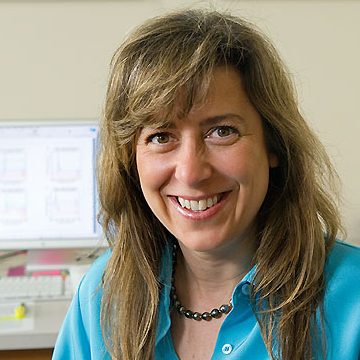 Pupa Gilbert合作论文数Department of Physics, University of Wisconsin–Madison4Matthew J. Frazier合作论文数3
 Tali Mass合作论文数Dept Marine Biol, Univ Haifa3
 Nobumichi Tamura合作论文数Advanced Light Source, Lawrence Berkeley National Laboratory3
 Nita Sahai合作论文数Department of Chemistry and Biochemistry, University of Maryland3
 Sebastian T. Mergelsberg合作论文数Phys & Computat Sci Directorate, Pacific Northwest Natl Lab2
 Camelia V. Stan合作论文数Lawrence Livermore National Laboratory2
 Cayla A Stifler合作论文数Univ Wisconsin Madison, Dept Phys, Madison, WI 53706 USA2
 Maayan Neder合作论文数Univ Haifa, Leon H Charney Sch Marine Sci, Dept Marine Biol, IL-3498838 Haifa, Israel2Timothy A. Oleson合作论文数2Alex Gagnon合作论文数1Howard J. Spero合作论文数1james j de yoreo合作论文数1Stas Kozachkevich合作论文数1Yael Etinger-Geller合作论文数1Erik Tamre合作论文数1Kartik Kumar合作论文数1
 Corinne E. Myers合作论文数Earth & Planetary Sciences, University of New Mexico1
 Iryna Polishchuk合作论文数Technion Israel Inst Technol, Dept Mat Sci & Engn, IL-32000 Haifa, Israel1jennifer jie xu合作论文数1
 Besim Dragovic合作论文数School of the Earth, Ocean and Environment, University of South Carolina1
 Jinhui Tao合作论文数Pacific Northwest Natl Lab, Phys & Computat Sci Directorate, Richland, WA 99352 USA1
 Joseph A. Dura合作论文数National Institute of Standards and Technology1
 Manfred Burghammer合作论文数1
 Lakshminath Kundanati合作论文数1
 Weilong Zhao合作论文数Goodyear Polymer Center, The University of Akron1
 John M. Eiler合作论文数Division of Geological and Planetary Sciences, California Institute of Technology1Leonid Bloch合作论文数ESRF1
 Kristin D Bergmann合作论文数Earth, Atmospheric and Planetary Sciences, Massachusetts Institute of Technology1Blonsky Adam Z合作论文数1Ross T. Devol合作论文数1Katsman Alex合作论文数1
 Sumit Madhuresh合作论文数Mechanobiology Institute and Department of Biological Sciences, NUS1
 Charles F. Majkrzak合作论文数Center for Neutron Research, National Institute of Standards and Technology1
 Davide Levy合作论文数Dipartimento Scienze Mineralogiche e Petrologiche, Università degli Studi di Torino1
 Gonzalo Giribet合作论文数Department of Organismic and Evolutionary Biology, Harvard University;Museum of Comparative Zoology, Harvard University1Debin Wang合作论文数Georgia Institute of Technology1
 Andrew Knoll合作论文数Department of Earth and Planetary Sciences, Faculty of Arts and Sciences, Harvard University1
 Donald Depaolo合作论文数Department of Earth & Planetary Science, University of California, Berkeley;Center for Isotope Geochemistry, Lawrence Berkeley National Laboratory;Earth Sciences Division, Lawrence Berkeley National Laboratory1
 David J. Wesolowski合作论文数Chemical Sciences Division, Oak Ridge National Laboratory;FIRST Energy Frontier Research Center, Oak Ridge National Laboratory;Geochemistry and Interfacial Sciences Group, Oak Ridge National Laboratory1
 Nicola Pugno合作论文数Department of Civil, Environmental and Mechanical Engineering, University of Trento;School of Engineering and Materials Science, Queen Mary University of London1
 Sarah Lemer合作论文数Institut1Gordon Hendler合作论文数Smithsonian OceanographicSorting Center;Smithsonian Institution;Smithsonian OceanographicSorting Center, Smithsonian Institution1




