Property Graphs are rapidly being adopted as database frameworks for representing heterogeneous data sources. To enable precise access to the information contained in them we need conversational interfaces based on Text-To-Cypher (Text2Cypher) parsers. This paper presents an automatic synthetic data generation method that can be leveraged to fine-tune small LLMs for this task. We conduct experiments on all the major Text-To-Cypher benchmarks, demonstrating that with our synthetic data generation approach we can significantly increase the performance of small LLMs, allowing them to compete with much larger proprietary models. This means that in settings in which models must be locally deployed we can ensure data-sovereignty without sacrificing accuracy and without costly annotation campaigns.
In recent years, the need for natural language interfaces to knowledge graphs has become increasingly important since they enable easy and efficient access to the information contained in them. In particular, property graphs (PGs) have seen increased adoption as a means of representing complex structured information. Despite their growing popularity in industry, PGs remain relatively underrepresented in semantic parsing research with a lack of resources for evaluation. To address this gap, we introduce ZOGRASCOPE, a benchmark designed specifically for PGs and queries written in Cypher. Our benchmark includes a diverse set of manually annotated queries of varying complexity and is organized into three partitions: iid, compositional and length. We complement this paper with a set of experiments that test the performance of different LLMs in a variety of learning settings.
This empirical study analyzes the effects of the pre-training corpus on the quality of learned transformer representations. We focus on the representation quality induced solely through pre-training. Our experiments show that pre-training on a small, specialized corpus can yield effective representations, and that the success of combining a generic and a specialized corpus depends on the distributional similarity between the target task and the specialized corpus.
Most current state-of-the-art approaches for text classification are based on fine-tuning the representations computed by large language models (LLMs). This strategy has led to significant improvements in classification performance and contributed to a reduction of the amount of labeled data required for training a model. However, for some challenging classification tasks, providing enough annotations to ensure a reliable classification continues to be the main bottleneck. This is especially true in settings of highly imbalanced class distributions. This paper proposes to tackle this bottleneck by exploiting structural properties of pre-trained embeddings. More precisely, we develop a label propagation method that uses pre-trained embeddings to spread information from the labeled samples to nearby samples in the induced space, ensuring the optimal use of annotations. Our approach is simple and relatively low-cost since it only requires computing some distances in the embedded space. We conduct experiments on different text classification datasets showing that the proposed method is efficient and significantly outperforms both self-training and random walk label propagation strategies.
In recent years, the two-step approach for text classification based on pre-training plus finetuning has led to significant improvements in classification performance. In this paper, we study the low-budget scenario, and we ask whether it is justified to allocate the additional resources needed for fine-tuning complex models. To do so, we isolate the gains obtained from pre-training from those obtained from fine-tuning. We find out that, when the gains from pre-training are factored out, the performance attained by using complex transformer models leads to marginal improvements over simpler models. Therefore, in this scenario, utilizing simpler classifiers on top of pre-trained representations proves to be a viable alternative.
Recent work on semantic parsing has shown that seq2seq models find compositional generalization challenging. Several strategies have been proposed to mitigate this challenge. One such strategy is to improve compositional generalization via data augmentation techniques. In this paper we follow this line of work and propose ARCHER, a data-augmentation strategy that exploits alignment annotations between sentences and their corresponding meaning representations. More precisely, we use alignments to train a two step generative model that combines monotonic lexical generation with reordering. Our experiments show that ARCHER leads to significant improvements in compositional generalization performance.
Many real-world NLP applications face the challenge of training an entity disambiguation model for a specific domain with a small labeling budget. In this setting there is often access to a large unlabeled pool of documents. It is then natural to ask the question: which samples should be selected for annotation? In this paper we propose a solution that combines feature diversity with low rank correction. Our sampling strategy is formulated in the context of bilinear tensor models. Our experiments show that the proposed approach can significantly reduce the amount of labeled data necessary to achieve a given performance.
Prior work in semantic parsing has shown that conventional seq2seq models fail at compositional generalization tasks. This limitation led to a resurgence of methods that model alignments between sentences and their corresponding meaning representations, either implicitly through latent variables or explicitly by taking advantage of alignment annotations. We take the second direction and propose TPOL, a two-step approach that first translates input sentences monotonically and then reorders them to obtain the correct output. This is achieved with a modular framework comprising a Translator and a Reorderer component. We test our approach on two popular semantic parsing datasets. Our experiments show that by means of the monotonic translations, TPOL can learn reliable lexico-logical patterns from aligned data, significantly improving compositional generalization both over conventional seq2seq models, as well as over other approaches that exploit gold alignments.
Textual representations based on pre-trained language models are key, especially in few-shot learning scenarios. What makes a representation good for text classification? Is it due to the geometric properties of the space or because it is well aligned with the task? We hypothesize the second claim. To test it, we develop a task alignment score based on hierarchical clustering that measures alignment at different levels of granularity. Our experiments on text classification validate our hypothesis by showing that task alignment can explain the classification performance of a given representation.
Prior to deep learning the semantic parsing community has been interested in understanding and modeling the range of possible word alignments between natural language sentences and their corresponding meaning representations. Sequence-to-sequence models changed the research landscape suggesting that we no longer need to worry about alignments since they can be learned automatically by means of an attention mechanism. More recently, researchers have started to question such premise. In this work we investigate whether seq2seq models can handle both simple and complex alignments. To answer this question we augment the popular Geo semantic parsing dataset with alignment annotations and create Geo-Aligned. We then study the performance of standard seq2seq models on the examples that can be aligned monotonically versus examples that require more complex alignments. Our empirical study shows that performance is significantly better over monotonic alignments.
Recent advances in deep learning models for sequence classification have greatly improved their classification accuracy, specially when large training sets are available. However, several works have suggested that under some settings the predictions made by these models are poorly calibrated. In this work we study binary sequence classification problems and we look at model calibration from a different perspective by asking the question: Are deep learning models capable of learning the underlying target class distribution? We focus on sparse sequence classification, that is problems in which the target class is rare and compare three deep learning sequence classification models. We develop an evaluation that measures how well a classifier is learning the target class distribution. In addition, our evaluation disentangles good performance achieved by mere compression of the training sequences versus performance achieved by proper model generalization. Our results suggest that in this binary setting the deep-learning models are indeed able to learn the underlying class distribution in a non-trivial manner, i.e. by proper generalization beyond data compression.
Annotating large collections of textual data can be time consuming and expensive. That is why the ability to train models with limited annotation budgets is of great importance. In this context, it has been shown that under tight annotation budgets the choice of data representation is key. The goal of this paper is to better understand why this is so. With this goal in mind, we propose a metric that measures the extent to which a given representation is structurally aligned with a task. We conduct experiments on several text classification datasets testing a variety of models and representations. Using our proposed metric we show that an efficient representation for a task (i.e. one that enables learning from few samples) is a representation that induces a good alignment between latent input structure and class structure.
We address the annotation data bottleneck for sequence classification. Specifically we ask the question: if one has a budget of N annotations, which samples should we select for annotation? The solution we propose looks for diversity in the selected sample, by maximizing the amount of information that is useful for the learning algorithm, or equivalently by minimizing the redundancy of samples in the selection. This is formulated in the context of spectral learning of recurrent functions for sequence classification. Our method represents unlabeled data in the form of a Hankel matrix, and uses the notion of spectral max-volume to find a compact sub-block from which annotation samples are drawn. Experiments on sequence classification confirm that our spectral sampling strategy is in fact efficient and yields good models.
We compare a classical CNN architecture for sequence classification involving several convolutional and max-pooling layers against a simple model based on weighted finite state automata (WFA). Each model has its advantages and disadvantages and it is possible that they could be combined. However, we believe that the first research goal should be to investigate and understand how do these two apparently dissimilar models compare in the context of specific natural language processing tasks. This paper is the first step towards that goal. Our experiments with five sequence classification datasets suggest that, despite the apparent simplicity of WFA models and training algorithms, the performance of WFAs is comparable to that of the CNNs.
Spectral models for learning weighted non-deterministic automata have nice theoretical and algorithmic properties. Despite this, it has been challenging to obtain competitive results in language modeling tasks, for two main reasons. First, in order to capture long-range dependencies of the data, the method must use statistics from long substrings, which results in very large matrices that are difficult to decompose. The second is that the loss function behind spectral learning, based on moment matching, differs from the probabilistic metrics used to evaluate language models. In this work we employ a technique for scaling up spectral learning, and use interpolated predictions that are optimized to maximize perplexity. Our experiments in character-based language modeling show that our method matches the performance of state-of-the-art ngram models, while being very fast to train.
Event Schema Induction is the task of learning a representation of events (e.g., bombing) and the roles involved in them (e.g, victim and perpetrator). This paper presents InToEventS, an interactive tool for learning these schemas. InToEventS allows users to explore a corpus and discover which kind of events are present. We show how users can create useful event schemas using two interactive clustering steps.
We present a solution to scale spectral algorithms for learning sequence functions. We are interested in the case where these functions are sparse (that is, for most sequences they return 0). Spectral algorithms reduce the learning problem to the task of computing an SVD decomposition over a special type of matrix called the Hankel matrix. This matrix is designed to capture the relevant statistics of the training sequences. What is crucial is that to capture long range dependencies we must consider very large Hankel matrices. Thus the computation of the SVD becomes a critical bottleneck. Our solution finds a subset of rows and columns of the Hankel that realizes a compact and informative Hankel submatrix. The novelty lies in the way that this subset is selected: we exploit a maximal bipartite matching combinatorial algorithm to look for a sub-block with full structural rank, and show how computation of this sub-block can be further improved by exploiting the specific structure of Hankel matrices.
We present a low-rank multi-linear model for the task of solving prepositional phrase attachment ambiguity (PP task). Our model exploits tensor products of word embeddings, capturing all possible conjunctions of latent embeddings. Our results on a wide range of datasets and task settings show that tensor products are the best compositional operation and that a relatively simple multi-linear model that uses only word embeddings of lexical features can outperform more complex non-linear architectures that exploit the same information. Our proposed model gives the current best reported performance on an out-of-domain evaluation and performs competively on out-of-domain dependency parsing datasets.
The Sequence PredIction ChallengE (SPiCe) is an on-line competition that took place between March and July 2016. Each of the 15 problems was made of a set of whole sequences as training sample, a validation set of prefixes, and a test set of prefixes. The aim was to submit a ranking of the 5 most probable symbols to be the next symbol of each prefix.
 Xavier Carreras合作论文数DMetrics;Institut d'Investigació en Intel.ligéncia Artificial, CSIC23
 Trevor Darrell合作论文数Department of Electrical Engineering and Computer Science, University of California, Berkeley14
 Michael Collins合作论文数Google Research;Department of Computer Science, Columbia University8
 Borja de Balle Pigem合作论文数DeepMind;Quipu7
 Audi Primadhanty合作论文数Universitat Politècnica de Catalunya6
 Francesco Cazzaro合作论文数6
 Pranava Madhyastha合作论文数Department of Computer Science, City, University of London;Department of Computing, Faculty of Engineering, Imperial College London5
 Cesar Gonzalez-Gutierrez合作论文数Universitat Politècnica de Catalunya5
 Franco M. Luque合作论文数Universidad Nacional de Córdoba & Conicet5
 Davide Locatelli合作论文数3
 Louis-Philippe Morency合作论文数Multimodal Communication and Machine Learning Laboratory, Language Technology Institute, School of Computer Science, Carnegie Mellon University;Human-Computer Interaction Institute, School of Computer Science, Carnegie Mellon University3
 Adrià Recasens合作论文数Google DeepMind2
 M. Raphael Bailly合作论文数Centre Pierre Mendès France, Université Paris 1 Panthéon-Sorbonne2
 Francesc Moreno-Noguer合作论文数Amazon2
 Antonio Torralba合作论文数Computer Science and Artificial Intelligence Laboratory, Department of Electrical Engineering and Computer Science, School of Engineering, Massachusetts Institute of Technology2
 Neil Lawrence合作论文数Department of Computer Science and Technology, University of Cambridge;Department of Computer Science, The University of Sheffield2
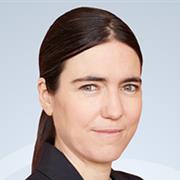 Raquel Urtasun合作论文数Department of Computer Science, Faculty of Arts and Science, University of Toronto;Waabi2
 Edgar Simo-Serra合作论文数Department of Computer Science and Engineering, School of Fundamental Science and Engineering, Faculty of Science and Engineering, Waseda University2Sy Bor Wang合作论文数2
 Arnau Ramisa合作论文数Amazon2F. Moreno-Noguer合作论文数1Lp Morency合作论文数1Lily Ellebracht合作论文数1
 Matthias Gallé合作论文数Cohere1David Demirdjian合作论文数MIT Computer Science and Artificial Intelligence Laboratory1
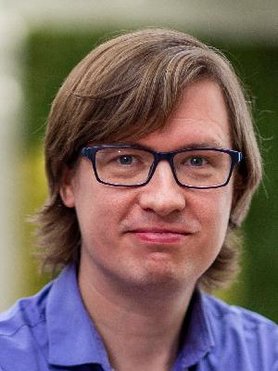 Sicco E. Verwer合作论文数Intelligent Systems, Faculty of Electrical Engineering, Mathematics and Computer Science, Delft University of Technology1Sivaram Cheekiralla合作论文数1
 Daniel W. Engels合作论文数Dragon Associates, LLC;The AT&T Center for Virtualization, Southern Methodist University1
 Remi Eyraud合作论文数1Cati Vaucelle合作论文数Microsoft1Paul Nemirovsky合作论文数1
 Carme Torras合作论文数Spanish Council of Scientific Research;Consejo Superior de Investigaciones Científicas1
 Amir Globerson合作论文数The Blavatnik School of Computer Science, The Raymond and Beverly Sackler Faculty of Exact Sciences, Tel Aviv University;Google1




