In response to commentaries, we refine our Merit-Appreciation (M-A) love model and extend it. The model's revised formulation highlights its flexibility over personal and life circumstances in that (1) the emphasis on partner's Merit versus Appreciation may differ across life phases and individuals' own sense of Merit, (2) the Novelty of a given love relationship enhances the significance partners derive from it; their shared experiences in novel domains may revitalize it, however (3) the weight of an instance of romantic love as a significance source may depend on the availability of other sources of significance (e.g., work/career and alternative relationships), The latter may differ across cultures, of which some (e.g., the traditional ones) may view alternative pairwise arrangements (e.g., arranged marriages) as sources of significance. Even though its prevalence may vary, however, there is evidence that romantic love constitutes a universal experience manifest across societies and cultures. We view the M-A love model as compatible with broader conceptualizations such as evolutionary or goal theories, yet as occupying a unique niche and level of analysis, allowing insights into love as a lived experience with its many vicissitudes. The understandings it affords suggest ways of addressing love's "trials and tribulations" to reduce the suffering it might entail and enhance its potential to promote happiness and well-being.
Drawing on the model of affective reactions to outcome uncertainty (Kruglanski et al., 2025), we carried out two studies concerning conditions under which people have positive or negative affective reactions to outcome uncertainty (i.e., uncertainty as to whether the situation will afford positive or negative outcomes). Study 1 (N = 431) demonstrated that one’s short-term history of positive or negative outcomes determines people’s affective reactions to a given situation only when that situation has an uncertain outcome. Study 2 (N = 461) confirmed that short-term history of positive or negative outcomes determined people’s affective reactions to situations with uncertain outcomes when that situation was presented immediately after the short-term outcome experience, but not when a long delay occurred between the two. By contrast, long-term history of positive or negative outcomes determined people’s affective reactions to an outcome uncertainty after a long delay. The discussion considered the implications of these findings in reference to approach-avoidance tendencies toward uncertain situations.
ObjectiveStudies on radicalization require a nuanced understanding of the narratives that legitimize violent actions, as well as the complex processes underlying radicalization, in order to formulate effective and targeted counter-radicalization strategies.MethodTo address this gap, a mixed-methods approach was conducted using the 3N Model of Radicalization and Identity Fusion Theory as a theoretical framework. A total of 41 convicted terrorists (97.6% male; M = 39.0 years, SD = 10.47; age range = 24–59 years) across Indonesia agreed to participate in this study. Participants were affiliated with Negara Islam Indonesia (NII), Jemaah Islamiyah (JI), and Jamaah Ansharut Daulah (JAD).ResultsQuantitative results indicated that loss of significance, extremist narratives, networks, and identity fusion (with group, leader, and ideology) were significantly correlated with activism and radicalism intentions. Qualitative thematic analysis enriched the findings by revealing distinct patterns in narratives and strategies that emerged across the different groups. JI members were older, more educated, and motivated by collective grievances and ideology, with less violent narratives. In contrast, JAD and NII members often experienced personal crises (loss of significance) that were linked to quest for significance as the driver toward radicalization and more violent adherence to Takfiri narratives.ConclusionThese findings highlight that radicalization pathways vary based on group context—JAD favors rapid recruitment via social media, JI emphasizes long-term ideological dissemination, and NII relies on passive indoctrination. This nuanced understanding can inform tailored, evidence-based counter-radicalization programs sensitive to group-specific dynamics.
IntroductionExtreme feelings, behaviors, and cognitions, although often considered outside the bounds of normality, are part of human nature. This study examined whether variables proven to be related to extremism, including personal significance, collective narcissism, and willingness to make sacrifices, are related to, and could incipiently explain, extreme personality.MethodsData was collected from the Spanish general population (n = 328, 92.4% males) and individuals from a Spanish prison (n = 222, 95.5% males). Multiple linear regression and mediation analyses were conducted, with extreme personality being the outcome variable.ResultsFor the general population, two regression analyses showed that collective narcissism, sacrifice for values, sacrifice for group, and either quest for significance (Radjusted2 = 0.071; F = 5.61; p = 0.004) or loss of significance (Radjusted2 = 0.077; F = 4.73; p = 0.009) predicted extreme personality. For the prison sample, only collective narcissism along with quest for significance (Radjusted2 = 0.252; F = 10.84; p = 0.001) or loss of significance (Radjusted2 = 0.170; F = 7.53; p = 0.007) predicted extreme personality. Mediation analysis showed that collective narcissism and willingness to sacrifice for one's highest values partially mediated the relationship between personal significance and extreme personality in the general population, while only collective narcissism did so for the prison sample.DiscussionThese results underscore the role that personal significance has in explaining extreme personality and could also indicate that in-group superiority and self-sacrifice (for those in the general population) act as partial psychological pathways, linking personal significance to extreme personality.
We offer a model of romantic love as a means to the end of feeling significant and worthy. According to this model, the partner's perceived merits and their appreciation of the actor combine with the actor's magnitude of significance quest to determine the likelihood of the actor falling in love with the partner. Our model affords a broad account of diverse love phenomena and the derivation of specific hypotheses supported by prior and new data and offers novel avenues for further research on classic issues in romantic love. The discussion considers our model's unique implications and its relation to other theories of love. We offer a novel motivational account of romantic love, which portrays it as a means to the end of feeling significant and worthy. According to the model, falling in love with a partner depends on the actor’s perceptions that (1) the partner possesses meritorious characteristics and (2) that they appreciate the actor and view them as significant. We assume that these two factors multiplicatively combine with the magnitude of the actor’s quest for significance to determine the likelihood of the actor becoming enamored with the partner. The multiplicative model has two major implications: 1. If any one of the partner’s merit, appreciation, or actor’s significance quest factors falls below its respective threshold of acceptability (such that it is subjectively non-existent), the likelihood of falling in love will be negligible. 2. Above their acceptability thresholds, levels of (partner’s) merit, appreciation, and (actor’s) significance quest factors compensate for one another. A partner’s lower standing on merit or appreciation is compensated in its impact on falling in love by the partner’s higher standing on the remaining dimension. Furthermore, lower levels of either or both of these factors are compensated for by the actor’s higher level of significance quest.Our model affords a broad account of diverse love phenomena, allows the derivation of several specific hypotheses supported by prior close-relations research as well as new data, and it offers novel avenues for further research on classic issues in romantic love. The discussion considers our model’s unique implications and examines its relation to other theories of love.
Motivation science and psychology in general are at a crossroads. Advancements in methodological rigor yielded sophisticated experiments and exacting statistical analyses; yet, the pursuit of empirical precision may have overshadowed the field's commitment to theoretical depth. This article argues that motivation science has become structurally imbalanced, prioritizing puzzle solving over genuine theory building, leading to fragmented findings and diminished understanding of the profound why behind human behavior. Drawing parallels with natural sciences, we contend that robust theory is essential for observation and discovery, akin to a lens through which data gain meaning. We trace the historical trajectory of this imbalance, from the field's early, theoretically vibrant period to its current prevention-focused climate, shaped by crises and institutional pressures. We propose a strategic recalibration: cultivating theorizing as a teachable skill within graduate curricula and advocating for differentiated research roles to foster collaborative teams of conceptual "builders" and empirical "testers." Our rigorous methodologies will then serve a renewed theoretical ambition, enriching our understanding of human motivation.
 Antonio Pierro合作论文数Radiology Department, San Timoteo Hospital Termoli127
 Jocelyn J Belanger合作论文数Dept Psychol, New York Univ Abu Dhabi59
 E. Tory Higgins合作论文数Department of Psychology, Columbia University;Columbia Business School, Columbia University54
 Lucia Mannetti合作论文数Dipartimento di Psicologia dei Processi di Sviluppo e Socializzazione, Sapienza Università di Roma43
 Erica Molinario合作论文数College Pk, Univ Maryland38
 David Webber合作论文数L Douglas Wilder Sch Govt & Publ Affairs, Virginia Commonwealth Univ37Gennaro Pica合作论文数36
 Michele Gelfand合作论文数Department of Psychology, School of Humanities and Sciences, Stanford University;Stanford Graduate School of Business35
 Marina Chernikova合作论文数Department of Psychology, University of Maryland35
 Edward Orehek合作论文数University of Maryland College Park32
 Molly Ellenberg合作论文数Int Ctr Study Violent Extremism31
 Katarzyna Jasko合作论文数30
 Rohan Gunaratna合作论文数S. Rajaratnam School of International Studies, Nanyang Technological University28
 Sophia Moskalenko合作论文数Department of Psychology, University of Pennsylvania24
 Ewa Szumowska合作论文数Jagiellonian Univ, Inst Psychol, Dept Philosophy, Krakow, Poland23
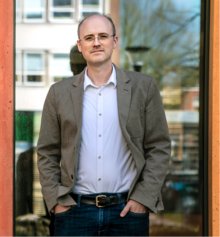 Pontus Leander合作论文数Ctr Psychol Gun Res, Univ Groningen22
 Birga M Schumpe合作论文数Univ Amsterdam18
 Catalina Kopetz合作论文数Department of Psychology, Wayne State University18
 Manuel Moyano合作论文数17Daniela Di Santo合作论文数17
 Ernst Joachim Wolfgang Stroebe合作论文数Department Social Psychology, Faculty of Behavioural and Social Sciences, University of Groningen17
 Mark Dechesne合作论文数Center for Terrorism and Counterterrorism (CTC),, University of Leiden—Campus The Haguem17Mauro Giacomantonio合作论文数Department of Social and Developmental Psychology, “Sapienza” University of Rome17
 Conrad Baldner合作论文数16
 Edward P Lemay合作论文数Yale University15
 Shira Fishman合作论文数15James Y. Shah合作论文数15
 Jannis Kreienkamp合作论文数14
 Maximilian Agostini合作论文数Department of Psychology, University of Groningen14Woo Young Chun合作论文数13
 Hans-Peter Erb合作论文数Helmut-Schmidt-Universität Hamburg13Donna M. Webster合作论文数12
 Elena Resta合作论文数12
 Ben Gützkow合作论文数Department of Psychology, University of Groningen12
 Daniel Koehler合作论文数German Inst Radicalizat & Radicalizat Studies12
 Rullo Marika合作论文数Dipartimento di Psicologia dei Processi di Sviluppo e Socializzazione, Sapienza University of Rome12Xiaoyan Chen合作论文数12
 Karen Douglas合作论文数School of Psychology, University of Kent11Joshua Krause合作论文数11
 Mohsin Atta合作论文数Univ Sargodha11
 Anne Margit Reitsema合作论文数Dept Dev Psychol, Univ Groningen11
 Claudia Nisa合作论文数New York Univ Abu Dhabi11Silvana Mula合作论文数Sapienza University of Rome11
 Bang Zheng (郑棒)合作论文数School of Public Health, Health Science Center, Peking University11
 Anton Kurapov合作论文数Dept Expt & Appl Psychol, Taras Shevchenko Natl Univ Kyiv11
 Sabahat Cigdem Bagci合作论文数Fac Arts & Social Sci, Sabanci Univ11
 Nora Anna Lantos合作论文数Dept Social Psychol, Eotvos Lorand Univ11
 Yasin Koc合作论文数Department of Psychology, University of Groningen11
 Ángel Gómez合作论文数Universidad Nacional de Educacion a Distancia11




