Artificial intelligence (AI) is increasingly capable of replacing people in interpersonal communication, yet it remains unclear how willing leaders will be to delegate communication to AI. Four preregistered studies examine leaders' willingness to delegate specific employee interactions to AI and explore the underlying psychology behind these preferences. Results indicate that leaders are reluctant to rely on AI assistants to automate employee interactions (Studies 1–4). This reluctance is consistently driven by leaders' role-based expectations to signal care to employees, while leaders' desire to maintain control over interactions with employees plays a more context-dependent role (Studies 2–3). Importantly, we find that leaders’ reluctance to delegate communication to AI is specific to AI and not merely a reluctance to delegate communication in general (Study 3). Finally, building on these findings, we show that leaders are most reluctant to delegate communication to AI assistants when interacting about sensitive issues (i.e., issues that heighten the need to signal care and maintain control), in contrast to operational issues (Study 4). Practical and theoretical implications are discussed.
Autonomous technological agents, such as algorithms and robots, are increasingly entering the workforce and society. We draw upon theories of machines and moralization to examine people's assumptions about the degree to which creators' moral convictions "spill over" to the autonomous technological agents they design, as well as the consequences stemming from these attributions. A field experiment in a Taoist temple indicated that creator moral (vs. nonmoral) conviction led to greater assumed belief spillover to a robot that recited scripture, which mediated both mind perception in that robot and subsequent support for the organization (Study 1). Two additional experiments replicated these findings in contexts of creators developing algorithms for advertising (Study 2) and drones for deforestation-focused mapping, additionally finding that this effect emerges only given fully autonomous (vs. human-controlled) machines (Study 3). Finally, we demonstrate a potential downside associated with moral spillover from creators to autonomous technological agents: When creators justify particularly controversial practices using moral conviction, assumed belief spillover is associated with less positivity toward a creating organization (Study 4). We conclude by discussing theoretical and practical implications related to how creators' moral convictions appear particularly likely to spill over and imbue "mind" in machines that otherwise might appear "mindless," as well as how spillover attributions can garner more support for-or resistance toward-automation efforts. (PsycInfo Database Record (c) 2025 APA, all rights reserved).
AI-powered algorithms can reinforce and erode elements of existing organizational culture and can also be used to infuse new changes. Arthur S. Jago and Nathanael J. Fast explain why understanding these processes is critical.
As artificial intelligence (AI) proliferates throughout society, it brings the potential to reshape how people perceive social roles and relationships. Across five preregistered studies, we investigated how AI-based algorithmic management influences perceptions and forecasts of social status. We found that people believe algorithmic management, compared to prototypical human management, leads to lower status in the eyes of others (Study 1). Moreover, forecasts of lower status mediated people's anticipated negative emotions when assessing remote jobs that were framed as primarily algorithmically managed (Study 2). Further, we found that people infer lower status given algorithmic management because they believe it signals that job tasks lack complexity, both when evaluating themselves or others (Studies 3 and 4). Finally, using OpenAI's natural language processing algorithm (GPT-3), we created an actual managerial algorithm and found that the lowered status inferences persist when people are managed by an algorithm that provides instructions, feedback, and monetary incentives (Study 5). We discuss theoretical implications for research on status, hierarchy, and the psychology of technology.
Artificial intelligence (AI) and algorithms are increasingly prevalent in the management of organizational processes. Organizations use algorithms and AI for a variety of functions—from providing advice and assistance, to monitoring and evaluating performance, to automating roles altogether. Whereas much interdisciplinary research has focused on the creation and optimization of AI and algorithms, relatively less research has examined how human workers react to the implementation and utilization of AI in organizations. Given the importance of understanding the ways in which these technological advancements impact organizational members and outcomes, this symposium brings together papers identifying the effects of AI and algorithms upon individual perception, cognition, and behavior across various organizational domains. The research showcased in this symposium explores (1) how assistance from algorithms affects perceptions of authorship credit, (2) the role of inventor bias in the implementation and utilization of algorithmic advice and automation, (3) the role of stereotypic bias on judgments of algorithmic advice quality, (4) how evaluation by AI can affect behavioral consequences for organizational creativity, and (5) the effects of algorithmic management on worker’s perceived autonomy and engagement in resistance behaviors. Specifically focusing on the perspective of the worker, this symposium aims to shed further light on when and how the utilization of AI engenders algorithm aversion or appreciation and the resulting impact on various individual and organizational outcomes. In doing so, it provides insight on how to harness the benefits of AI and algorithms, while mitigating the negative downstream consequences that can arise when AI and algorithms are implemented in organizations without consideration for the workers within them. Who Made This? Algorithms and Authorship Credit Author: Arthur S. Jago; U. of Washington, Tacoma “Inventor’s Bias” at Work: When Low-Performing Algorithms Seem Fair Author: Maya J. Cratsley; - Author: Nathanael Fast; U. of Southern California Anti-Algorithmic Advice: Stereotypic Bias Leads to Lower Judgements of Advice Quality Author: Heather Hee Jin Yang; Department of Management and Technology, Bocconi U. The Behavioral Consequences for Organizational Creativity of Being Evaluated by AI Author: Federico Magni; ETH Zürich Author: Martha Jeong; Hong Kong U. of Science and Technology Algorithmic (vs. Human) Management Leads to Lower Perceptions of Autonomy and Increased Resistance Author: Rachel Schlund; Cornell U. Author: Emily Zitek; Cornell U.
The Fourth Industrial Revolution has already arrived and is revolutionizing the landscape of organizational research (e.g., Brynjolfsson & McAfee, 2014; 2017; Brynjolfsson & Mitchell, 2017). In particular, as organizations worldwide are navigating through this new wave of industrial revolution (in which intelligent machines are increasingly becoming part of modern workplace), our conventional wisdom about work practices, interpersonal relationships, and the management of organizations needs to be refined. Each of the papers provides a new avenue to the implications of intelligent technologies on people and practices in organizations by emphasizing how the incorporation of such technologies may specifically affect individuals, managers, as well as other organizational stakeholders. Towards this end, the papers in this symposium take on the challenge to understanding more broadly on how intelligent technologies may affect people and practices across different levels of theorization and analysis. Overall, this symposium seeks to continue the societal conversation inspired by the uprise of intelligent technologies and provide answers to outstanding questions (raised by both organizational scholars and managers), while also setting a research agenda for the future. Interacting with Artificial Intelligence and Its Implications on Employee Work and Non-work Behavior Author: Pok Man Tang; U. of Georgia Author: Joel Koopman; Texas A&M U. Author: Haoyue Zhang; Nanyang Business School, NTU Singapore Author: Philipp Reynders; Cardiff U. Author: Chin Tung Stewart Ng; Institute of Human Resource Management, National Sun Yat-sen U. Author: I-Heng Chen; National Sun Yat-Sen U. Feedback from Artificial Intelligence: Reactions of the Stigmatized to Algorithm-driven Feedback Author: Ji Woon Ryu; Portland State U. Author: Roshni Raveendhran; U. of Virginia Darden School of Business Author: Cristiano L O Guarana; Indiana U. - Kelley School of Business Using Advanced Text Analysis to Increase Prediction and Reduce Subgroup Differences in Selection Author: Emily D. Campion; U. of Iowa Author: Michael A Campion; Purdue U. Author: James Johnson; United States Air Force Academy Author: Thomas Carretta; United States Air Force Author: Sophie Romay; United States Air Force Author: Bobbie Dirr; U.S. Air Force Author: Andrew Deregla; United States Air Force Author: Amanda Mouton; United States Air Force Hungry for Data: Examining How Developing AI Technology Reconfigures Organizations Author: Jodie Koh; Northwestern Kellogg School of Management Author: Hatim A. Rahman; Northwestern Kellogg School of Management Moral Spillover from Creators to Autonomous Technological Agents Author: Arthur S. Jago; U. of Washington, Tacoma
Producers and creators often receive assistance with work from other people. Increasingly, algorithms can provide similar assistance. When algorithms assist or augment producers, does this change individuals' willingness to assign credit to those producers? Across four studies spanning several domains (e.g., painting, construction, sports analytics, and entrepreneurship), we find evidence that producers receive more credit for work when they are assisted by algorithms, compared with humans. We also find that individuals assume algorithmic assistance requires more producer oversight than human assistance does, a mechanism that explains these higher attributions of credit (Studies 1-3). The greater credit individuals assign to producers assisted by algorithms (vs. other people) also manifests itself in increased support for those producers' entrepreneurial endeavors (Study 4). As algorithms proliferate, norms of credit and authorship are likely changing, precipitating a variety of economic and social consequences.
Although their implementation has inspired optimism in many domains, algorithms can both systematize discrimination and obscure its presence. In seven studies, we test the hypothesis that people instead tend to assume algorithms discriminate less than humans due to beliefs that algorithms tend to be both more accurate and less emotional evaluators. As a result of these assumptions, people are more interested in being evaluated by an algorithm when they anticipate that discrimination against them is possible. We finally investigate the degree to which information about how algorithms train using data sets consisting of human judgments and decisions change people's increased preferences for algorithms when they themselves anticipate discrimination. Taken together, these studies indicate that algorithms appear less discriminatory than humans, making people (potentially erroneously) more comfortable with their use.
In an increasing number of domains, people interact with automated agents (such as algorithms, robots, and computers) instead of humans. Across five studies, we explore the role of authenticity in shaping people's reactions to automated agents' work. In doing so, we examine two basic ways to generate authenticity in autonomous technological work: (a) highlighting the human origins of autonomous technologies and (b) anthropomorphizing autonomous technologies, or presenting them with human-like qualities. We find strong evidence that human origin stories generate authenticity, but much less evidence that simple anthropomorphic cues do so to the same degree (Studies 1-3). Simply prompting people to consider human origins can also generate attributions of authenticity (Study 4), which translates into intended and recommended support for automated work (Study 5). We discuss how managers of organizations can implement automated systems in ways that encourage attributions of authenticity. (PsycInfo Database Record (c) 2022 APA, all rights reserved).
Technological advancements, such as the increasing use of algorithms and artificial intelligence (AI), have become embedded in organizations. This introduction of algorithms and AI is drastically changing the nature of work, impacting organizations, the individuals within them, and the work itself. Given the importance of understanding the impacts of such technological advancements on the future of work, more research has started focusing on this topic. This symposium brings together papers identifying the impacts and outcomes of AI and algorithms upon individual perception, cognition, and behavior across various organizational domains, such as advice taking, management, and the automation of work. The research showcased in this symposium explores how (1) AI influences employees’ perceptions of the meaning of work, (2) automation affects individuals’ valuation of employees’ skills, (3) algorithms impact employees’ perceived status, and (4) people show different anticipated preferences for algorithmic versus human judgment and actual use of those sources. Furthermore, this set of papers demonstrates ways to harness the benefits of AI and algorithms while mitigating the adverse consequences that can arise when AI and algorithms are implemented in organizations without consideration for individual cognitive processes and perceptions. Taken together, this symposium features the effects of the implementation of technological advancements on individual perception, cognition, and behavior and the resulting consequences for individual and organizational outcomes. Does Automation Lower Meaningful Work? Presenter: Sarah Ward; U. of Illinois at Urbana-Champaign Presenter: Roshni Raveendhran; U. of Virginia Darden School of Business The Impact of Automation on Creative Skills Presenter: Monica Gamez-Djokic; Northwestern Kellogg School of Management When Algorithms Replace Human Bosses: Algorithmic Management Diminishes Workers' Anticipated Status Presenter: Arthur S. Jago; U. of Washington, Tacoma Presenter: Roshni Raveendhran; U. of Virginia Darden School of Business Presenter: Nathanael Fast; U. of Southern California Presenter: Jonathan Gratch; U. of Southern California Algorithmic Management Aversion: A Potential Gap between Anticipation and Experience Presenter: Menchang Dong; Max-Planck Institute for Human Development Presenter: Jean-François Bonnefon; U. Toulouse 1 Capitole Presenter: Iyad Rahwan; Max Planck Institute for Human Development Preferring People but Listening to Algorithms: Anticipated Preferences vs. Utilization of Advice Presenter: Jennifer Marie Logg; Georgetown U. Presenter: Rachel Schlund; Cornell U.
Companies often benefit from others’ attributions of moral conviction for prosocial behavior, for example, attributions that a company has a sincere moral desire to improve the environment when behaving sustainably. Across four studies, we explored how organizations’ changing resource positions influenced people’s attributions for the motivations underlying prosocial organizational behaviors. Observers attributed less moral conviction following prosocial behavior when they believed an organization was losing (vs. gaining) economic resources (Studies 1 and 2). This effect was primarily a “penalty” assessed against organizations that were losing resources, as opposed to a “reward” given to organizations gaining resources (Study 3). Finally, we found that this effect occurred because people perceive organizations that are losing resources as more situationally constrained, leading them to attribute less dispositional moral conviction (Study 4). We discuss theoretical and practical implications stemming from how changes in resource access can lead people to be more skeptical of organizations’ motivations following prosocial behavior.
We propose that using algorithms to make human resource decisions (e.g., selection, promotion, compensation, etc.) will undermine employees’ affective commitment. Specifically, we posit that algorithms signal a lack of individualized concern, which lowers perceived organizational support, and, in turn, feelings of affective commitment. In a series of five studies, we find strong support for this model, using a wide range of samples, methods, and contexts. We also identify a potential intervention: human beings teaming with algorithms to jointly make decisions partially restores perceptions of individualized concern, as well as feelings of organizational support and affective commitment. We discuss the implications of these findings for future research on how organizations can integrate algorithms into decision processes and successfully navigate the process of automation.
The literature on voice has arrived at a consensus about several reasons why employees speak up or stay silent. However, management theory and organizational practices have not reached a complete understanding of how to encourage employee voice and maximize supervisor receptiveness. To broaden the view of voice, the presentations in this symposium address contextual factors that affect the voice process and voicer outcomes at different levels. Three presentations investigate contextual factors for voice within work groups while two presentations address voice within employee-supervisor dyads. Taken together, this symposium adds to the field’s understanding of voice by highlighting critical contextual factors — diversity, courage attributions, artificial intelligence tools, supervisor delegation to voicers, and supervisor self-reflections on employee objections — that shape voice outcomes for groups and employee-supervisor dyads. Bridging Team Perception Faultlines and Voice on Career Development: A Moderated Mediation Model Presenter: Ethan Burris; U. of Texas at Austin Presenter: Hong Yu; Teachers College, Columbia U. Presenter: Elizabeth McCune; Microsoft Corporation “I’d Speak Up if You Didn’t Make Me Step Up”: Voicer Regret Following Supervisor Delegation Presenter: Daniel Newton; U. of Iowa Presenter: Hudson Sessions; U. of Oregon Presenter: Chak Fu Lam; City U. of Hong Kong Presenter: David Welsh; Arizona State U. Taking it Personally: Supervisor Pride & Guilt in Response to Employee Moral Objections Presenter: Sophie Pychlau; U. of Oregon Presenter: Hudson Sessions; U. of Oregon Presenter: Michael Frankel; U. of Oregon Above and Beyond: Demonstrating the Additive Impact of Observer Perceptions of Courage Presenter: Evan Bruno; Darden Graduate School of Business Voice Solicitation Through Technology Presenter: Roshni Raveendhran; U. of Virginia Darden School of Business Presenter: Arthur S. Jago; U. of Washington, Tacoma Presenter: Nathanael Fast; U. of Southern California Presenter: Jonathan Gratch; U. of Southern California
Both individuals and organizations can (and do) engage in unethical behaviors. Across six experiments, we examine how people’s ethical judgments are affected by whether the agent engaging in unethical action is a person or an organization. People believe organizations are more unethical than individuals, even when both agents engage in identical behaviors (Experiments 1–2). Using both mediation (Experiments 3a–3b) and moderation (Experiment 4) analytical approaches, we find that this effect is explained by people’s beliefs that organizations produce more harm when behaving unethically, even when they do not, as well as people’s perceptions that organizations are relatively more blameworthy agents. We then explore how these judgments manifest across different kinds of organizations (Experiment 5) as well as how they produce discrepant punishments following ethically questionable business activities (Experiment 6). Although society and the law often treat individuals and organizations as equivalent, people believe for-profit organizations’ behaviors are less ethical than identical individual behaviors. We discuss the ethical implications of this discrepancy, as well as additional implications concerning reputation management, punishment, and signaling in organizational contexts.
The purpose of this symposium is to deepen our understanding of how organizations are morally judged by leveraging a variety of empirical perspectives across organizational research, and to contribute to a wide domain of scholarly fields, including behavioral ethics and the micro-foundations of corporate social responsibility. This symposium touches on an array of phenomena related to moral judgments of organizations, including how we distribute blame within groups, how ideological attitudes drive judgments of organizations, how organizations’ post-violation behaviors are perceived, how an organization’s internal diversity affects judgments of the organization, and how organizations are anthropomorphized. Solving the Apportionment Problem: How We Assign Praise and Blame in Groups Presenter: Chelsea Schein; The Wharton School, U. of Pennsylvania Presenter: Joshua Jackson; U. of North Carolina, Chapel Hill Presenter: Terri Frasca; Pennsylvania State U. Presenter: Kurt Gray; U. of North Carolina, Chapel Hill When, How, And Why A Brazen Organizational Response To Wrongdoing Works Presenter: Arthur S. Jago; U. of Washington - Tacoma Presenter: Jeffrey Pfeffer; Stanford U. The Role of CEO Gender on How People Perceive and Judge Organizations After Wrongdoing Presenter: Simone Tang; Cornell U. Presenter: Edward Chang; The Wharton School, U. of Pennsylvania Why Anti-Egalitarians Judge Organizational Misconduct Less Harshly Presenter: Jeffrey Martin Lees; Harvard Business School Presenter: Jim Sidanius; Harvard U.
[Correction Notice: An Erratum for this article was reported online in Journal of Experimental Psychology: General on Oct 24 2019 (see record 2019-63657-001). In the article "Collectives in Organizations Appear Less Morally Motivated Than Individuals" by Arthur S. Jago, Tamar A. Kreps, and Kristin Laurin, the second affiliation of the first author was omitted from the byline and author note. The byline should appear instead as University of Southern California and University of Washington-Tacoma. The first paragraph of the author note should appear instead as Arthur S. Jago, Department of Management and Organization, University of Southern California, and Milgard School of Business, University of Washington-Tacoma. The third paragraph of the author note should appear instead as the following: Correspondence concerning this article should be addressed to Arthur S. Jago, Milgard School of Business, University of Washington - Tacoma, 1900 Commerce Street DOU 306, Tacoma, WA 98402. Email: ajago@uw.edu] Organizations often benefit from signaling moral values. Across 5 studies, we explore how people attribute moral conviction to different organizational agents. We find that people believe collectives (e.g., groups; entire organizations) have less moral conviction than individuals, even when both agents behave identically (Studies 1 and 2). We test a variety of potential mechanisms for this effect, and find evidence for two parallel pathways: first, people believe collectives have less of a capacity for emotional experience, and therefore are less likely to use emotions when making decisions; and second, people believe collectives are also more self-interested, and therefore more likely to behave out of concern for their reputations rather than morality (Study 3). In examining boundary conditions for this effect, we find that it occurs when people judge generic for-profit companies and government entities, but not family businesses or charities (Study 4). Finally, we demonstrate that, because collectives appear less morally motivated than individuals, people also assume collectives will exhibit less persistence after enacting prosocial initiatives (Study 5). We discuss theoretical, practical, and social implications of these differing attributions of moral conviction. (PsycINFO Database Record (c) 2019 APA, all rights reserved).
Products and services built around artificially intelligent algorithms offer a host of benefits to users but they require vast amounts of personal data in return. As a result, privacy is perhaps more vulnerable today than ever before. We posit that this vulnerability is not only technical, but psychological. Whereas people have historically cared about and fought for the right to privacy, the diffusion and conveniences of algorithms could be systematically eroding people’s capacity and psychological motivation to take meaningful action. Specifically, we examine four factors that increase the tendency to rationalize privacy-reducing algorithms: 1) awareness of the benefits and conveniences of algorithms, 2) a low perceived probability of experiencing harm, 3) exposure to negative consequences only after usage has already begun, and 4) certainty that losing privacy is inevitable. We suggest that future research should consider these and related factors in order to better understand the changing psychology of privacy.
Organizations often implement changes that can signal their values. However, the most objectively efficient changes do not necessarily serve as the best signals. Across seven experiments, we investigate how different rates of transition influence people’s perceptions of how committed organizations are to the values underlying changes or improvements. We find that slower, less efficient transitions signal greater commitment compared with faster, more efficient transitions that reach otherwise identical endpoints (Experiment 1). Using mediation and moderation strategies, we demonstrate that this discontinuity occurs because people assume slower transitions require relatively more effort to enact (Experiments 2 and 3). Moreover, these commitment inferences persist beyond the point at which changes end (Experiment 4), when further improvement along the same dimension is no longer possible (Experiment 5), and regardless of whether the organization decided to transition either quickly or slowly (Experiment 6). This effect reverses, however, when people can directly compare slower and faster transitions that ultimately reach identical endpoints (Experiment 7). Taken together, these findings suggest that people often infer greater commitment from slower transitions that unfold over time, even when those transitions are objectively inferior to faster alternatives. Data are available at https://doi.org/10.1287/mnsc.2017.2980 . This paper was accepted by Yuval Rottenstreich, judgment and decision making.
As technology advances, artificially intelligent algorithms are becoming increasingly capable of human work. Across four experiments, I investigate people's beliefs about the authenticity of algorithmic work, compared with human work. People believe algorithmic work is less authentic than human work because they believe it exhibits comparatively less moral authenticity, or sincerity relevant to a specific category (Experiments 1 and 2). However, people do not distinguish between human and algorithmic work when it comes to type authenticity, or accuracy when it comes to representing a specific category. Because of these authenticity attributions, people also believe algorithms' characteristically moral decisions are relatively less ethical than identical human decisions (Experiment 3). To address these perceptions, organizations can increase algorithms' seeming authenticity by highlighting human involvement in their creation or training processes (Experiment 4). I discuss implications given the increasing prevalence of automation.
 Nathanael J. Fast合作论文数Graduate School of Business, Stanford University6
 Kristin Laurin合作论文数Department of Psychology, Faculty of Arts, The University of British Columbia5
 Roshni Raveendhran合作论文数3
 Rachel Schlund合作论文数Cornell University2
 Jonathan Gratch合作论文数Institute for Creative Technologies, Viterbi School of Engineering, University of Southern California;Thomas Lord Department of Computer Science, Viterbi School of Engineering, University of Southern California2
 Simone Tang合作论文数School of Hotel Administration, Cornell SC Johnson College of Business, Cornell University2
 Glenn R. Carroll合作论文数Graduate School of Business, Stanford University/Sociology Department, Stanford University2
 Jeffrey Pfeffer合作论文数Graduate School of Business, Stanford University;Center for Advanced Study in the Behavioral Sciences, Stanford University2
 Bobbie Dirr合作论文数1Sophie Romay合作论文数1Sophie Pychlau合作论文数1Chin Tung Stewart Ng合作论文数1Amanda Mouton合作论文数1David Mayer合作论文数1Philipp Reynders合作论文数1Haoyue Zhang合作论文数1
 Maya Cratsley合作论文数1Chunchen Xu合作论文数1
 Monica Gamez-Djokic合作论文数1
 Ji Woon Ryu合作论文数1
 Emily D. Campion合作论文数Dept Management, Old Dominion Univ1
 Evan A Bruno合作论文数Darden Graduate School of Business1
 Daniel W. Newton合作论文数Dept Management, Univ Missouri1
 Pok Man Tang合作论文数Dept Management, Texas A&M Univ1
 Hudson Sessions合作论文数Lundquist Coll Business, Univ Oregon1
 Federico Magni合作论文数Dept Management Technol & Econ, Swiss Fed Inst Technol1
 Roman Briker合作论文数Maastricht U.1
 Cristiano L. Guarana合作论文数Department of Management & Entrepreneurship.1
 Martha Jeong合作论文数Department of Management, The Hong Kong University of Science and Technology1
 Elizabeth Wolfe Morrison合作论文数Department of Management and Organizations, Leonard N. Stern School of Business, New York University1
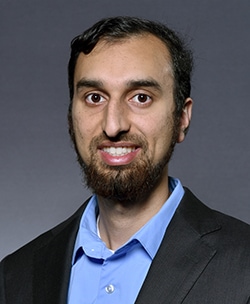 Hatim Rahman合作论文数Management & Organizations, Kellogg School of Management, Northwestern University1
 Adam Waytz合作论文数Department of Psychology, Weinberg College of Arts and Sciences, Northwestern University1
 Juliana Schroeder合作论文数Haas School of Business, University of California, Berkeley1
 Emily Zitek合作论文数School of Industrial and Labor Relations, Cornell University1
 Andrew Carton合作论文数Management Department, The Wharton School, University of Pennsylvania1
 Chelsea Schein合作论文数Legal Studies and Business Ethics Department, The Wharton School, University of Pennsylvania1
 Chak Fu Lam (林澤富)合作论文数Department of Management, College of Business, City University of Hong Kong1
 Kai Chi Sam Yam合作论文数Departments of Management and Organisation, National University of Singapore Business School1Belmi Peter合作论文数1
 Joel Koopman合作论文数Department of Management.1
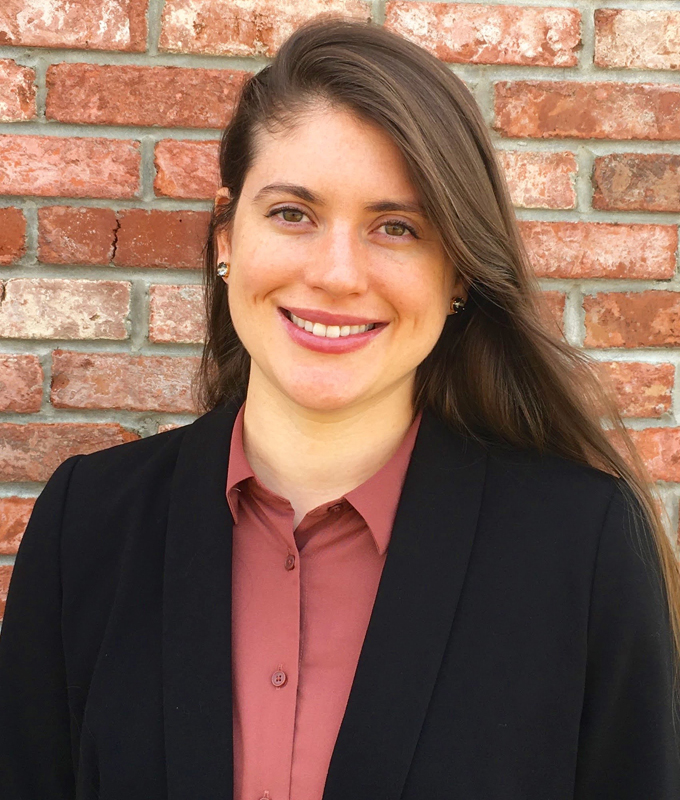 Sarah Ward合作论文数Department of Finance, Gies College of Business, University of Illinois at Urbana-Champaign1
 James F Johnson合作论文数Department of Biological Sciences;University of Alberta;Department of Biological Sciences, University of Alberta1Batia M. Wiesenfeld合作论文数Stern School of Business, New York University1
 Kurt Gray合作论文数University of Maryland1
 David T Welsh合作论文数1
 Michael A. Campion合作论文数Krannert School of Management, Purdue University1Thomas R. Carretta合作论文数1
 Tamar Admati Kreps合作论文数Department of Psychology, Stanford University1I-Heng Chen合作论文数1




