Why might people make negative moral judgments about others' consensual exchanges? Within triple theory, these should count as mutually beneficial agreements and therefore enjoy uncontroversial moral approval. We propose two explanations: observers of an exchange may (1) do their own cost-benefit analysis or (2) prioritize moral norms. Additional theorizing is required for either of these to align with resource rationality.
Gratitude expressions provide shared warmth benefits to both the thanker and the helper. Little work has explored how gratitude expressions shift how observers see these individuals on another important dimension: their relative rank. We consider how the magnitude of gratitude expressions shapes observers’ perceptions of the thanker’s and helper’s relative status and power. Seven studies find that thankers who expressed more, compared to less, intense gratitude than expected made their helpers seem relatively higher rank, though this pattern was inconsistent across metrics of gratitude in studies using real-world expressions. These effects emerged across a range of contexts and relationships. Mechanism analyses yielded several null results, while underscoring the role of perceptions of agency. Observers may make their inferences directly, based on intuiting the real association between a thanker’s gratitude and their helper’s power and status. Our findings demonstrate that gratitude signals rank relationships, qualifying current recommendations to express gratitude publicly.
Leaders' behavior can powerfully alter group outcomes. In a programmatic series of preregistered studies, we provide the first rigorous test of whether and why leaders behave differently toward groups of men versus women. In a within-subjects pilot study (N = 336) and in between-subjects Study 1 (N = 368), American adults said they would lead groups of men (vs. women) in a more dominant (e.g., intimidating, controlling) manner. Study 2 (N = 361) replicated this pattern and found that people lead mixed-gender groups similarly to how they lead groups of all women. In Study 3 (N = 314), coaches of boys' (vs. girls') sports teams-real leaders of gender-segregated groups-also said that they led more dominantly. In Study 4 (N = 161), students who believed that they would be leading men (vs. women) were rated by trained coders as more dominant in a videotaped introduction to their group. The pilot study and Studies 1, 2, and 4 all tested for and found evidence suggesting that the underlying mechanism was related to leaders' stereotypes about their followers' communion. In Study 5 (N = 844), men evaluated dominant leaders more positively than women, suggesting that followers may reinforce leaders' tendency to lead men with more dominance. Leaders are likely to treat-and be reinforced for treating-groups of men in a more dominant way, with implications for group outcomes and group members' well-being. (PsycInfo Database Record (c) 2025 APA, all rights reserved).
Trust is vital for success in all kinds of social interactions. But how do people decide whether an individual can be trusted? One factor people may consider is that individual's social class. We hypothesize that people trust others from lower social class contexts more than others from higher class contexts; we also consider nuances between current and childhood class context and between trust as a behavior and trust as an expectation. Five preregistered studies (total N = 1,934, with three of five studies including a within-subjects component), and 12 preregistered replications summarized in the supplement, yielded two sets of findings. First, people consistently behaviorally trusted others whose childhoods were spent in low-class (compared to high-class) contexts and expected them to honor that trust. These effects were mediated by perceived morality. Second, people behaviorally trusted others currently in low-class (compared to high-class) contexts, but they did not expect these individuals to honor that trust or perceive them as moral. Instead, the effect of current class was linked to altruism. Our findings emerged in samples drawn from different populations, across varying manipulations of social class, in actual and hypothetical decisions, and with imaginary targets and real acquaintances. We consider implications for the psychology of trust and of social class. (PsycInfo Database Record (c) 2026 APA, all rights reserved).
Socioeconomic status (SES) predicts a large number of thoughts, feelings, and behaviors; here, we build on these findings to try to paint a comprehensive picture of what people who occupy different SES ranks are like. Existing findings attribute a mixed set of psychological patterns to people who consider themselves near the top of the socioeconomic hierarchy; these individuals are variously portrayed as selfish yet generous, entitled yet happy, and narcissistic yet tolerant. Building on previous efforts to characterize distinct dimensions of SES, we wondered whether there might be distinct but overlapping ways of experiencing one's status in the socioeconomic hierarchy, each linked to a different psychological profile, and each potentially corresponding to a different theoretical approach to the study of SES. We employed a bottom-up, participant-driven approach (total N = 3,338) to identify the thoughts, feelings, and behaviors that factor into people's subjective SES. Exploratory and confirmatory factor analyses showed that these experiences are best represented by two distinct dimensions-a sense that one belongs to a historical cultural elite (corresponding to SES as early life cultural context) and a sense that one's life is easy (corresponding, though less conclusively, to SES as current rank). We developed scales to measure each dimension and, using these scales, found that the two dimensions help categorize the known correlates of SES into two separate but internally coherent sets of psychological patterns-one magnanimous and one self-focused.
Many people, and American Christians in particular, view God as a benevolent protector. Those who believe in God may therefore expect that they can safely engage in potentially risky activities, secure in the knowledge that God will look out for their best interests and ensure good outcomes. Initial experiments supported this hypothesis, but recent attempts to replicate them failed. This unreliable pattern may reflect a false conceptual hypothesis, or an inadequate method: Both the initial reports and the replication attempts used outdated religious priming methods we now know to be ineffective. The present research aimed to clarify the relationship between thinking about God and risk-taking behaviors. A pilot study (N = 264) showed that American Christians do expect that God will protect them during risky activities; moreover, those who hold this expectation more strongly report greater willingness to take risks. This registered report then used a high-powered preregistered experiment to test whether having participants explicitly think about God's (presumably protective) influence over what happens in their lives increases their willingness to take risks. Results confirmed that American Christian participants were more willing to take non-moral risks when thinking about God, compared to a control condition, d = 0.28, 95% CI [0.12, 0.44], p < .001. This pattern was robust to different exclusion criteria and was consistent across domains of career, recreational, and social risks. By using the most recent and sensitive methods, this study provides a more definitive test of the conceptual hypothesis that thinking about God can influence risk-taking.
Recent evidence has shown that social-media platforms like Twitter (now X) reward politically divisive content, even though most people disapprove of interparty conflict and negativity. We document this discrepancy and provide the first evidence explaining it, using tweets by U.S. Senators and American adults' responses to them. Studies 1a and 1b examined 6,135 such tweets, finding that dismissing tweets received more Likes and Retweets than tweets that engaged constructively with opponents. In contrast, Studies 2a and 2b (N = 856; 1,968 observations) revealed that the broader public, if anything, prefers politicians' engaging tweets. Studies 3 (N = 323; 4,571 observations) and 4 (N = 261; 2,610 observations) supported two distinct explanations for this disconnect. First, users who frequently react to politicians' tweets are an influential yet unrepresentative minority, rewarding dismissing posts because, unlike most people, they prefer them. Second, the silent majority admit that they too would reward dismissing posts more, despite disapproving of them. These findings help explain why popular online content sometimes distorts true public opinion.
Children use school as a way to imagine and strive toward their futures. We analyzed thousands of essays written by children in Britain in the late 1960s about what their lives would be like as adults. We used a bottom-up approach to explore naturally occurring topics in these essays and tested how these topics varied with children's social class context and their adult outcomes. Higher education was the most prevalent topic in these children's essays; children whose fathers-and maternal grandfathers-had higher-status occupations were especially likely to write about this, as well as about interests in teaching, medicine, and the military. Children in lower class contexts were especially likely to write about making money, but also about family and daily responsibilities. We further found that-controlling for family background-children who wrote more about higher education and less about money-making tended to achieve education, status, and income.
The commencement of a new editorial tenure within the Journal of Personality and Social Psychology: Attitudes and Social Cognition (JPSP: ASC) provides an opportunity for reflection regarding the journal's core mission. The editors recognize that social psychology is at a crossroads due to competing demands that may have led to reduced submissions and posed challenges for previous editors in filling the journal's pages. Now, JPSP: ASC has been allotted more pages to allow for growth during this editorial term. Although this is desirable for the field, it adds to the pressure of identifying articles for publication given the difficulties filling the pages during previous editorial terms. As the premier outlet of social psychology since 1965, JPSP: ASC will retain its centrality if we increase submissions and publish more articles, while continuing to strive to communicate methodologically trustworthy, intellectually stimulating, and socially relevant research, in a responsible fashion. (PsycInfo Database Record (c) 2024 APA, all rights reserved).
People often face conflicts where they must choose between their long-term goals and tempting alternatives. Using an open-ended daily diary design, we investigated the characteristics of self-control conflicts in daily life, both replicating and extending past work. Specifically, we examined the factors that affected self-control conflict success, as well as how the nature and resolution of the conflict affected general perceptions of self-regulatory effectiveness. Self-control conflicts varied considerably within-persons including the domain of the conflict, the use of strategies, and whether they were successfully resolved. There was also variability in people’s subjective perceptions of how pulled they felt towards the temptation and the opposing goal, as well as how difficult and important the overall decision was. Furthermore, these factors predicted whether a conflict was resolved successfully (i.e., in favor of the goal), with pull towards the temptation emerging as the strongest predictor. People were also more successful in resolving self-control conflicts when they reported using any type of self-regulatory strategy; no specific strategy emerged as most effective. On days when participants successfully resolved conflicts, they also felt more confident in their general ability to self-regulate. Overall, our findings largely conceptually replicate past work using an open-ended diary format, and suggest that factors influencing self-control conflict resolution are also linked to general feelings of self-regulatory effectiveness.
We expand Chater & Loewenstein's discussion of barriers to s-frames by highlighting moral psychological mechanisms. Systemic aspects of moralized social issues can be neglected because of (a) the individualistic frame through which we perceive moral transgressions; (b) the desire to punish elicited by moral emotions; and (c) the motivation to attribute agency and moral responsibility to transgressors.
Religion makes unique claims (e.g., the existence of supernatural agents) not found in other belief systems, but is religion itself psychologically special? Furthermore, religion is related to many domains of psychological interest, such as morality, health and well-being, self-control, meaning, and death anxiety. Does religion act on these domains via special mechanisms that are unlike secular mechanisms? These could include mechanisms such as beliefs in supernatural agents, providing ultimate meaning, and providing literal immortality. We apply a critical eye to these questions of specialness and conclude that although it is clear that religion is psychologically important, there is not yet strong evidence that it is psychologically special, with the possible exception of its effects on health. We highlight what would be required of future research aimed at convincingly demonstrating that religion is indeed psychologically special, including careful definitions of religion and careful attention to experimental design and causal inference.
How does a person's socioeconomic status (SES) relate to how she thinks others see her? Seventeen studies (eight pre-registered; three reported in-text and 14 replications in supplemental online material [SOM], total N = 6,124) found that people with low SES believe others see them as colder and less competent than those with high SES. The SES difference in meta-perceptions was explained by people's self-regard and self-presentation expectations. Moreover, lower SES people's more negative meta-perceptions were not warranted: Those with lower SES were not seen more negatively, and were less accurate in guessing how others saw them. They also had important consequences: People with lower SES blamed themselves more for negative feedback about their warmth and competence. Internal meta-analyses suggested this effect was larger and more consistent for current socioeconomic rank than cultural background.
What does it feel like to be on the receiving end of a person’s implicit or intentional bias? There is an ongoing debate in academic and non-academic circles about the harm bias does. One view is that because implicit bias is perceived as less blameworthy (Daumeyer et al., 2019), it might also be experienced as less harmful. However, another view is that because impact is more critical than intention (Williams, 2020), implicit bias that has the same impact might hurt the same as (or even more than) intentional bias. Setting aside the question of whether implicit behavior is less wrong, I ask what is the experience of psychological harm of those with marginalized identities targeted by such behaviors? In a programmatic series of experiments, I ask whether implicit bias and intentional bias are experienced as similarly or differentially harmful. I use a theoretically derived approach to develop tightly controlled vignettes that manipulate two types of unbiased, two types of implicitly biased, and two types of intentionally biased behavior. I validate these scenarios for testing perceptions of stereotyping across five different social identity groups (Study 1, N = 205). I then ask whether vignettes of implicit and intentional gender bias are perceived as differentially harmful by women (Study 2, N = 302). Finally, I sought to replicate my findings by having people recall their experience of harm from lived experiences of implicit and intentional bias (Study 3, N = 138). Across these studies, both implicit and intentional bias (with equal impact) were more harmful than unbiased behavior (Study 2 3). When hypothetical instances of bias were intentional (vs. implicit), women anticipated more pain but similar levels of exclusion (Study 2). When recalling instances (controlling for impact), intentional bias was again experienced as more painful but similarly exclusionary as implicit bias (Study 3). Together, this research reveals that both forms of bias are perceived and experienced as harmful, but implicit bias was experienced as somewhat less painful than intentional bias. By understanding the consequences for the way bias unfolds, we may better mitigate the psychological harm from instances of bias.
Are people with lower socioeconomic status (SES) better than those with higher SES at empathic accuracy, or recognizing others' thoughts and feelings? Two psychological approaches to the study of SES say they are, but emphasize different reasons. The rank approach argues that because individuals with lower SES experience low rank, they feel less in control and more threatened by others, so it is more valuable for them to understand others' mental states. The cultural approach argues that because lower SES cultures foster more interdependent values, people steeped in those cultures focus more on others, leading them to better understand others' mental states. Previous tests of the basic hypothesis these two approaches share have yielded mixed evidence. This registered report uses a large-scale, nationally representative sample to accomplish two goals. First, it tests the basic shared hypothesis, finding that lower subjective rank, social class cultural group, and income—but not education—all predict better empathic accuracy. Second, it explores additional research questions, finding that subjective rank more strongly predicts empathic accuracy compared to SES cultural group (consistent with the rank approach), but childhood SES more strongly predicts empathic accuracy than adulthood SES (consistent with the cultural approach). Results regarding the moderating role of the valence of the mental state being recognized were not consistent. We conclude there is indeed a negative association between social class and empathic accuracy, and discuss the degree to which this is due to the psychology of rank and childhood cultural socialization.
Although their implementation has inspired optimism in many domains, algorithms can both systematize discrimination and obscure its presence. In seven studies, we test the hypothesis that people instead tend to assume algorithms discriminate less than humans due to beliefs that algorithms tend to be both more accurate and less emotional evaluators. As a result of these assumptions, people are more interested in being evaluated by an algorithm when they anticipate that discrimination against them is possible. We finally investigate the degree to which information about how algorithms train using data sets consisting of human judgments and decisions change people's increased preferences for algorithms when they themselves anticipate discrimination. Taken together, these studies indicate that algorithms appear less discriminatory than humans, making people (potentially erroneously) more comfortable with their use.
 Aaron C. Kay合作论文数16Holly R Engstrom合作论文数Department of Psychology, University of British Columbia8Danielle Gaucher合作论文数University of Waterloo8
 Aaron Charles Kay合作论文数Department of Psychology and Neuroscience, Trinity College of Arts & Sciences, Duke University7Grainne Fitzsimons合作论文数Department of Psychology and Neuroscience, Trinity College of Arts & Sciences, Duke University6
 Kupor Daniella M合作论文数Graduate School of Business, Stanford University6
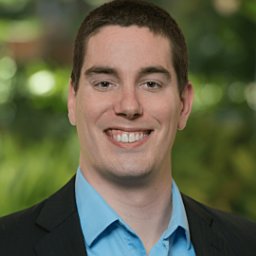 Arthur S. Jago合作论文数Univ Washington5
 Steven Shepherd合作论文数4
 Justin P. Friesen合作论文数4Adam Alic合作论文数3
 Gordon Heltzel合作论文数Dept Psychol, Univ British Columbia3
 Gavan J. Fitzsimons合作论文数Department of Psychology and Neuroscience, Trinity College of Arts & Sciences, Duke University3Nick R. Kay合作论文数2Irein A. Thomas合作论文数2
 Jamel Khenfer合作论文数Zayed University2
 Toni Schmader合作论文数Department of Psychology, Faculty of Arts, The University of British Columbia2
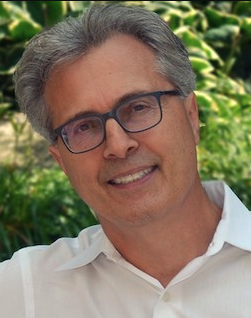 Leslie Atkinson合作论文数Department of Psychology, Toronto Metropolitan University;Institute for Stress and Wellbeing Research, Toronto Metropolitan University;Mount Sinai Hospital;Department of Psychology, University of Toronto;Department of Psychiatry, University of Toronto2Napier Jamie L合作论文数2
 Stéphane Côté合作论文数Rotman School of Management, University of Toronto2
 John Grenville Holmes合作论文数Department of Psychology, University of Waterloo2
 Schumann Karina合作论文数Stanford University2
 Thomas R. Shultz合作论文数Department of Psychology, McGill University2Belmi Peter合作论文数2
 Andrea Dittmann合作论文数St. Olaf College, St. Olaf College2
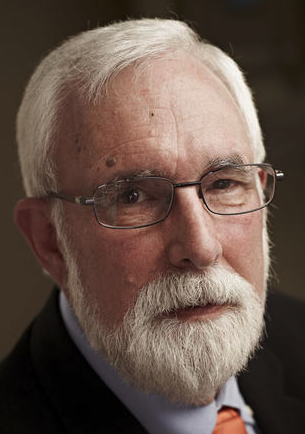 Mark Zanna合作论文数Department of Psychology, University of Waterloo2
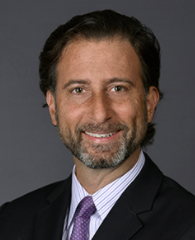 Eli J. Finkel合作论文数Department of Management and Organizations, Kellogg School of Management, Northwestern University;Department of Psychology, Northwestern University2
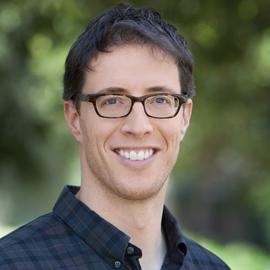 Jonathan Levav合作论文数Graduate School of Business, Stanford University2
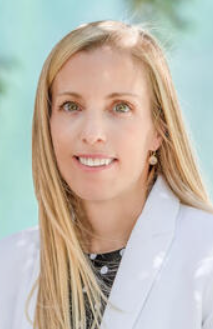 Sheri Madigan合作论文数Department of Psychology, Faculty of Arts, University of Calgary2
 Jeanphilippe Thivierge合作论文数2Jennifer M. Peach合作论文数2
 David A Moscovitch合作论文数Department of Psychology;University of Waterloo;Department of Psychology, University of Waterloo2
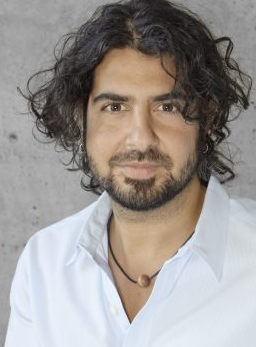 Azim Shariff合作论文数Department of Psychology, Faculty of Arts, The University of British Columbia2Diane Benoit合作论文数2
 Mitchell J. Callan合作论文数Department of Psychology, University of Calgary2
 Eric Tafani合作论文数2
 Steven J. Spencer合作论文数University of Waterloo2
 Tamar Admati Kreps合作论文数Department of Psychology, Stanford University2Mark J. Landau合作论文数2
 Elyette Roux合作论文数2
 Maferima Toure‐Tillery合作论文数1Emily Britton合作论文数1
 Michelle Lee合作论文数1Kelly Raz合作论文数1Paul Conway合作论文数1
 William Jettinghoff合作论文数1Holly Engstrom合作论文数1Mindy Truong合作论文数1David Mauricio Munguia Gomez合作论文数1
 Karen Douglas合作论文数School of Psychology, University of Kent1




