This paper presents AESOP, a software tool for automatic event detection in video. AESOP employs a supervised learning approach for constructing event models, given training examples from different event classes. A trajectory-based formulation is used for modeling events with an aim towards incorporating invariance to changes in the camera location and orientation parameters. The proposed formulation is designed to accommodate events that involve interactions between two or more entities over an extended period of time. AESOP's event models are formulated as HMMs to improve the event detection algorithm's robustness to noise in input data and to achieve computationally efficient algorithms for event model training and event detection. AESOP's performance is demonstrated on a wide range of different scenarios, including stationary camera surveillance and aerial video footage captured in land and maritime environments.
We describe methods that can learn a single family of classifiers for detecting object classes that exhibit large within-class variation. One common solution is to use a divide-and-conquer strategy, where the space of possible within-class variations is partitioned, and different detectors are trained for different partitions. However, these discrete partitions tend to be arbitrary in continuous spaces, and the classifiers have limited power when there are too few training samples in each subclass. To address this shortcoming, explicit feature sharing has been proposed, but it also makes training more expensive. We show that foreground-background classification (detection) and within-class classification of the foreground class (pose estimation) can be jointly solved in a multiplicative form of two kernel functions. One kernel measures similarity for foreground-background classification. The other kernel accounts for latent factors that control within-class variation and implicitly enables feature sharing among foreground training samples. The multiplicative kernel formulation enables feature sharing implicitly; the solution for the optimal sharing is a byproduct of SVM learning. The resulting detector family is tuned to specific variations in the foreground. The effectiveness of this framework is demonstrated in experiments that involve detection, tracking, and pose estimation of human hands, faces, and vehicles in video.
The American Sign Language Lexicon Video Dataset (ASLLVD) consists of videos of >3,300 ASL signs in citation form, each produced by 1-6 native ASL signers, for a total of almost 9,800 tokens. This dataset, including multiple synchronized videos showing the signing from different angles, will be shared publicly once the linguistic annotations and verifications are complete. Linguistic annotations include gloss labels, sign start and end time codes, start and end handshape labels for both hands, morphological and articulatory classifications of sign type. For compound signs, the dataset includes annotations for each morpheme. To facilitate computer vision-based sign language recognition, the dataset also includes numeric ID labels for sign variants, video sequences in uncompressed-raw format, camera calibration sequences, and software for skin region extraction. We discuss here some of the challenges involved in the linguistic annotations and categorizations. We also report an example computer vision application that leverages the ASLLVD: the formulation employs a HandShapes Bayesian Network (HSBN), which models the transition probabilities between start and end handshapes in monomorphemic lexical signs. Further details and statistics for the ASLLVD dataset, as well as information about annotation conventions, are available from http://www.bu.edu/asllrp/lexicon.
We present a novel framework for multiple object tracking in which the problems of object detection and data association are expressed by a single objective function. The framework follows the Lagrange dual decomposition strategy, taking advantage of the often complementary nature of the two subproblems. Our coupling formulation avoids the problem of error propagation from which traditional “detection-tracking approaches” to multiple object tracking suffer. We also eschew common heuristics such as “nonmaximum suppression” of hypotheses by modeling the joint image likelihood as opposed to applying independent likelihood assumptions. Our coupling algorithm is guaranteed to converge and can handle partial or even complete occlusions. Furthermore, our method does not have any severe scalability issues but can process hundreds of frames at the same time. Our experiments involve challenging, notably distinct datasets and demonstrate that our method can achieve results comparable to those of state-of-art approaches, even without a heavily trained object detector.
Object detection is challenging when the object class exhibits large within-class variations. In this work, we show that foreground-background classification (detection) and within-class classification of the foreground class (pose estimation) can be jointly learned in a multiplicative form of two kernel functions. Model training is accomplished via standard SVM learning. When the foreground object masks are provided in training, the detectors can also produce object segmentations. A tracking-by-detection framework to recover foreground state in video sequences is also proposed with our model. The advantages of our method are demonstrated on tasks of object detection, view angle estimation, and tracking. Our approach compares favorably to existing methods on hand and vehicle detection tasks. Quantitative tracking results are given on sequences of moving vehicles and human faces.
Handshape is a key linguistic component of signs, and thus, handshape recognition is essential to algorithms for sign language recognition and retrieval. In this work, linguistic constraints on the relationship between start and end handshapes are leveraged to improve handshape recognition accuracy. A Bayesian network formulation is proposed for learning and exploiting these constraints, while taking into consideration inter-signer variations in the production of particular handshapes. A Variational Bayes formulation is employed for supervised learning of the model parameters. A non-rigid image alignment algorithm, which yields improved robustness to variability in handshape appearance, is proposed for computing image observation likelihoods in the model. The resulting handshape inference algorithm is evaluated using a dataset of 1500 lexical signs in American Sign Language (ASL), where each lexical sign is produced by three native ASL signers.
Looking up the meaning of an unknown sign is not nearly so straightforward as looking up a word from a written language in a dictionary. This paper describes progress in an ongoing project to build a system that helps users look up the meaning of ASL signs. An important part of the project is building a video database with examples of a large number of signs. So far we have recorded video examples for almost all of the 3,000 signs contained in the Gallaudet dictionary (and some others not listed there). Locations of hands and the face have been manually annotated for a large number of videos. Using this data, we have built an application that lets the user submit a video of a sign as a query, and presents to the user the most similar signs from the system database. System performance has been evaluated in user-independent experiments with a system vocabulary of 921 signs. For 67% of the test signs, the correct sign is included in the 20 most similar signs retrieved by the system.
author={S. Escalera and J. Gonz {\a} lez and X. Bar {\'o} and M. Reyes and I. Guyon and V. Athitsos and HJ Escalante and L. Sigal and A. Argyros and C. Sminchisescu and R. Bowden and S. Sclaroff},
Locating hands in sign language video is challenging due to a number of factors. Hand appearance varies widely across signers due to anthropometric variations and varying levels of signer proficiency. Video can be captured under varying illumination, camera resolutions, and levels of scene clutter, e.g., high-res video captured in a studio vs. low-res video gathered by a Web cam in a user's home. Moreover, the signers' clothing varies, e.g., skin-toned clothing vs. contrasting clothing, short-sleeved vs. long-sleeved shirts, etc. In this work, the hand detection problem is addressed in an appearance matching framework. The histogram of oriented gradient (HOG) based matching score function is reformulated to allow non-rigid alignment between pairs of images to account for hand shape variation. The resulting alignment score is used within a support vector machine hand/not-hand classifier for hand detection. The new matching score function yields improved performance (in ROC area and hand detection rate) over the vocabulary guided pyramid match kernel (VGPMK) and the traditional, rigid HOG distance on American Sign Language video gestured by expert signers. The proposed match score function is computationally less expensive (for training and testing), has fewer parameters and is less sensitive to parameter settings than VGPMK. The proposed detector works well on test sequences from an inexpert signer in a non-studio setting with cluttered background.
Adding American Sign Language (ASL) animation to websites can improve information access for people who are deaf with low levels of English literacy. Given a script representing the sequence of ASL signs, we must generate an animation, but a challenge is selecting accurate speed and timing for the resulting animation. In this work, we analyzed motion-capture data recorded from human ASL signers to model the realistic timing of ASL movements, with a focus on where to insert prosodic breaks (pauses), based on the sentence syntax and other features. Our methodology includes extracting data from a pre-existing ASL corpus at our lab, selecting suitable features, and building machine learning models to predict where to insert pauses. We evaluated our model using cross-validation and compared various subsets of features. Our model had 80% accuracy at predicting pause locations, out-performing a baseline model on this task.
The lack of a written representation for American sign language (ASL) makes it difficult to do something as commonplace as looking up an unknown word in a dictionary. The majority of printed dictionaries organize ASL signs (represented in drawings or pictures) based on their nearest English translation; so unless one already knows the meaning of a sign, dictionary look-up is not a simple proposition. In this paper we introduce the ASL lexicon video dataset, a large and expanding public dataset containing video sequences of thousands of distinct ASL signs, as well as annotations of those sequences, including start/end frames and class label of every sign. This dataset is being created as part of a project to develop a computer vision system that allows users to look up the meaning of an ASL sign. At the same time, the dataset can be useful for benchmarking a variety of computer vision and machine learning methods designed for learning and/or indexing a large number of visual classes, and especially approaches for analyzing gestures and human communication.
Object detection is challenging when the object class exhibits large within-class variations. In this work, we show that foreground-background classification (detection) and within-class classification of the foreground class (pose estimation) can be jointly learned in a multiplicative form of two kernel functions. One kernel measures similarity for foreground-background classification. The other kernel accounts for latent factors that control within-class variation and implicitly enables feature sharing among foreground training samples. Detector training can be accomplished via standard SVM learning. The resulting detectors are tuned to specific variations in the foreground class. They also serve to evaluate hypotheses of the foreground state. When the foreground parameters are provided in training, the detectors can also produce parameter estimate. When the foreground object masks are provided in training, the detectors can also produce object segmentation. The advantages of our method over past methods are demonstrated on data sets of human hands and vehicles.
In this paper, we focus on the problem of automated surveillance in a parking lot scenario. We call our research system VANESSA, for Video Analysis for Nighttime Surveillance and Situational Awareness. VANESSA is capable of. 1) detecting moving objects via background modeling and false motion suppression, 2) tracking and classifying pedestrians and vehicles, and 3) detecting events such as person entering or exiting a vehicle. Moving object detection utilizes a multi-stage cascading approach to identify pixels that belong to the true objects and reject any spurious motion, (e.g., due to vehicle headlights or moving foliage). Pedestrians and vehicles are tracked using a multiple hypothesis tracker coupled with a particle filter for state estimation and prediction. The space-time trajectory of each tracked object is stored in an SQL database along with sample imagery to support video forensics applications. The detection of pedestrians entering/exiting vehicles is accomplished by first estimating the three-dimensional pose and the corresponding entry and exit points of each tracked vehicle in the scene. A pedestrian activity model is then used to probabilistically assign pedestrian tracks that appear or disappear in the vicinity of these entry/exit points. We evaluate the performance of tracking and pedestrian-vehicle association on an extensive data set collected in a challenging real-world scenario.
Object detection can be challenging when the object class exhibits large variations. One commonly-used strategy is to first partition the space of possible object variations and then train separate classifiers for each portion. However, with continuous spaces the partitions tend to be arbitrary since there are no natural boundaries (for example, consider the continuous range of human body poses). In this paper, a new formulation is proposed, where the detectors themselves are associated with continuous parameters, and reside in a parameterized function space. There are two advantages of this strategy. First, a-priori partitioning of the parameter space is not needed; the detectors themselves are in a parameterized space. Second, the underlying parameters for object variations can be learned from training data in an unsupervised manner. In profile face detection experiments, at a fixed false alarm number of 90, our method attains a detection rate of 75% vs. 70% for the method of Viola-Jones. In hand shape detection, at a false positive rate of 0.1%, our method achieves a detection rate of 99.5% vs. 98% for partition based methods. In pedestrian detection, our method reduces the miss detection rate by a factor of three at a false positive rate of 1%, compared with the method of Dalal-Triggs.
Nearest neighbor search is commonly employed in face recognition but it does not scale well to large dataset sizes. A strategy to combine rejection classifiers into a cascade for face identification is proposed in this paper. A rejection classifier for a pair of classes is defined to reject at least one of the classes with high confidence. These rejection classifiers are able to share discriminants in feature space and at the same time have high confidence in the rejection decision. In the face identification problem, it is possible that a pair of known individual faces are very dissimilar. It is very unlikely that both of them are close to an unknown face in the feature space. Hence, only one of them needs to be considered. Using a cascade structure of rejection classifiers, the scope of nearest neighbor search can be reduced significantly. Experiments on Face Recognition Grand Challenge (FRGC) version 1 data demonstrate that the proposed method achieves significant speed up and an accuracy comparable with the brute force Nearest Neighbor method. In addition, a graph cut based clustering technique is employed to demonstrate that the pairwise separability of these rejection classifiers is capable of semantic grouping.
A novel technique to detect and localize periodic movements in video is presented. The distinctive feature of the technique is that it requires neither feature tracking nor object segmentation. Intensity patterns along linear sample paths in space-time are used in estimation of period of object motion in a given sequence of frames. Sample paths are obtained by connecting (in space-time) sample points from regions of high motion magnitude in the first and last frames. Oscillations in intensity values are induced at time instants when an object intersects the sample path. The locations of peaks in intensity are determined by parameters of both cyclic object motion and orientation of the sample path with respect to object motion. The information about peaks is used in a least squares framework to obtain an initial estimate of these parameters. The estimate is further refined using the full intensity profile. The best estimate for the period of cyclic object motion is obtained by looking for consensus among estimates from many sample paths. The proposed technique is evaluated with synthetic videos where ground-truth is known, and with American Sign Language videos where the goal is to detect periodic hand motions.
 Stan Sclaroff合作论文数Department of Computer Science, College of Arts & Sciences, Boston University15
 Carol Neidle合作论文数Boston University6
 Quan Yuan合作论文数Facebook5
 Vitaly Ablavsky合作论文数Applied Physics Laboratory, University of Washington;Department of Electrical & Computer Engineering, University of Washington5Alexandra Stefan合作论文数3
 Vassilis Athitsos合作论文数Computer Science and Engineering Department, University of Texas at Arlington3Nash, J.P.合作论文数2
 Haijing Wang合作论文数Microsoft2Quart Yuan合作论文数1Atul Kanaujia合作论文数1daniel gutchess合作论文数1
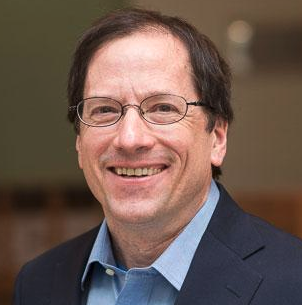 William T. Freeman合作论文数Department of Electrical Engineering and Computer Science, Massachusetts Institute of Technology;Computer Science & Artificial Intelligence Laboratory, Massachusetts Institute of Technology;Google Research1
 Naznin Virji-Babul合作论文数Graduate Program in Neuroscience, Faculty of Medicine, The University of British Columbia1Zheng Wu合作论文数1David Demirdjian合作论文数MIT Computer Science and Artificial Intelligence Laboratory1
 Dimitris N. Metaxas合作论文数Department of Computer Science, School of Arts and Sciences, Rutgers University1
 Thad Starner合作论文数Contextual Computing Group, College of Computing, Georgia Institute of Technology;School of Interactive Computing, College of Computing, Georgia Institute of Technology;GVU Center, Georgia Institute of Technology1
 Richard E. Ladner合作论文数Paul G. Allen School of Computer Science & Engineering, University of Washington1
 Ajay Kapur合作论文数Department of Radiation Oncology;Stanford University;School of Medicine;School of Medicine, Stanford University1
 George Tzanetakis合作论文数Department of Computer Science, University of Victoria;Department of Electrical & Computer Engineering, University of Victoria1Joan Nash合作论文数1Gabriele Tiotto合作论文数1
 Andrew Zisserman合作论文数Department of Engineering Science, University of Oxford1
 Sid Fels合作论文数Department of Electrical and Computer Engineering, Faculty of Applied Science, The University of British Columbia;School of Biomedical Engineering, Faculty of Medicine, The University of British Columbia;School of Biomedical Engineering, Faculty of Applied Science, The University of British Columbia1
 Cristian Sminchisescu合作论文数Department of Mathematics, Faculty of Engineering, Lund University;Google DeepMind1Neal Checka合作论文数1
 Helene Brashear合作论文数Georgia Institute of Technology1
 Ingmar Rauschert合作论文数Department Computer Science and Engineering, Pennsylvania State University;Laboratory for Perception, Action and Cognition, Pennsylvania State University1Isaac Brewer合作论文数1
 Elio Piccolo合作论文数Dipartimento di Automatica e Informatica, Politecnico di Torino1Sven Fuhrmann合作论文数The Pennsylvania State University1Magnús Snorrason合作论文数1Zahoor Zafrulla合作论文数Georgia Institute of Technology1
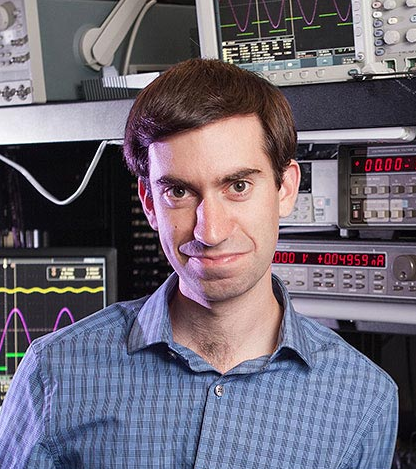 Gabe Cohn合作论文数Microsoft Research Cambridge United Kingdom Redmond WA USA1
 Neva Cherniavsky合作论文数1Peter F. Driessen合作论文数Department of Electrical and Computer Engineering
School of Music and Department of Computer Science1
Neva Cherniavsky合作论文数1Peter F. Driessen合作论文数Department of Electrical and Computer Engineering
School of Music and Department of Computer Science1 Giuseppe Castellano合作论文数Nephrology, Dialysis, and Transplantation Unit, University of Bari1
 Mark Everingham合作论文数School of Computing, University of Leeds1
 Eve Riskin合作论文数Stevens Institute of Technology1Abdulaziz Almohimeed合作论文数1Ugur Murat Erdem合作论文数Boston University1
 Margrit Betke合作论文数Department of Computer Science, Boston University Arts & Sciences;Faculty of Computing & Data Sciences, Boston University1
 Sebastian Nowozin合作论文数Google DeepMind1
 Fabrizio Nunnari合作论文数German Research Center for Artificial Intelligence, Deutsches Forschungszentrum für Künstliche Intelligenz1




