The Covid-19 pandemic is being apprehended by many experts as one of the symptoms of the Anthropocene, the new geological era characterised by the structural impact of human activities on the dynamic of our ecosystems. While the Anthropocene era will accelerate crises and pressures on the natural heritage, what approach will our economic and managerial systems take to natural resources? Two scenarios are possible: an acceleration of predatory dynamics, a grab for natural resources, leading to an acceleration of the ecological crisis and a radical increase in inequalities, or a reasoned political choice to adopt a model of moderate energy and resource consumption, preserving our habitat and thinking about the commons.
This study examines the paradoxical portrayal of supply chain workers in the literature as passive and obedient while complicit or rebellious in the face of substandard working conditions in supplier facilities. Specifically, it examines how workers respond to poor labor conditions caused by corporate social responsibility (CSR) decoupling, or the discrepancy between suppliers' formal policies and actual factory-floor practices. Drawing from 40 interviews in Vietnam's garment industry and building on Hirschman's exit, voice, and loyalty framework and its extensions, the authors develop a dynamic framework of when and how workers respond to decoupled practices. This article contributes to three key areas of research. First, it elucidates workers' role in both accepting and resisting CSR decoupling, advancing the literature on CSR decoupling in global supply chains, which has traditionally focused on buyers or suppliers. Second, it responds to calls for humanizing the sustainable supply chain management literature by emphasizing factory-level workers and the value of studying less powerful actors. Third, it adapts Hirschman's model to supply chain contexts and their unique dynamics. The findings also provide relevant guidance for policymakers and practitioners, demonstrating the need to strengthen worker voice through a multipronged approach.
In a context of growing environmental challenges, circular economy (CE) business models appear necessary for business to contribute positively to the ecological transition. While platform business models have been identified as a new and promising model in CE, we still lack a fine-grained understanding of the critical capabilities involved in developing and scaling them. To fill this gap, we build on a single case study of Phenix, a French-based fast-growing start-up in the food industry, tackling the issue of food waste. We identify three core managerial capabilities involved in the successful scaling of Phenix's business model. In addition to ecosystem orchestration capabilities, we identify two types of ambidextrous capabilities - forms of ambidexterity operating both at the organizational and at the institutional level. Our analysis highlights the importance of considering these capabilities in a bundle as they collectively contribute to the performance and scaling potential of the business model. We also call for an increased consideration of the role of institutional factors in shaping opportunities to design and scale profitable business models.
À l'heure de l'accélération des déstabilisations globales des écosystèmes naturels, les sciences de gestion sont directement interpellées et elles n'ont pas pleinement pris la mesure des phénomènes en cours.En préambule des dix articles de ce dossier spécial, dédié aux bouleversements organisationnels et gestionnaires induits par l'Anthropocène et le franchissement des limites planétaires, cette introduction dresse un constat et un agenda de recherche.Nous identifions quatre points de bascule disciplinaires majeurs, dessinant de nouvelles frontières pour les sciences de gestion : la raréfaction des ressources naturelles, la non-linérarité et l'irréversibilité des risques, la conception naturaliste de l'action collective, et l'identité des enseignants chercheurs.
This article analyses the political dynamics taking place within a Colombian supplier company during the implementation of a client’s global Corporate Social Responsibility (CSR) programme, which radically transformed the local understandings of the supplier’s social responsibilities. We distinguish two forms of politics in political CSR – coercive and deliberative politics – and examine how they unfold through lower-level managers’ institutional work. Our longitudinal case study identifies four types of institutional work, which combine into three political configurations – irreconcilable politics, complementary politics and aligned deliberative politics – resulting in the hybridization of explicit and implicit CSR. By analysing how local managers from emerging countries and at the bottom of the supply chain cope with the new political role of MNCs, we expand the political microfoundations of CSR and highlight the interactive and political nature of institutional work aimed at addressing major societal challenges.
In order to re-engage organizational studies with organization design and formal structures, this paper explores the contemporary rise of a new type of organization, which we label ‘indicatocracy’. As a neologism combining of the concepts of “bureaucracy” and “indicators”, we define indicatocracy as a new organizational form that operates at the level of an organizational field, spanning across multiple professional organizations through the disciplinary power of indicators. Exploring the characteristics of indicatocracies as compared to classic approaches to bureaucracies and markets, we reveal their central disciplinary effects and how they constitute central vehicles for introducing change within professional bureaucracies through increased managerial control, thus reshaping internal and external power structures. We make propositions on the emergence and effects of indicatocracies, and propose a research agenda to stimulate future research on indicatocracies.
This chapter explores how classic and institutional entrepreneurs in the sharing economy (SE) frame and make sense of the emergent, plural, and contested SE concept. The authors address this question through an investigation of an attempt to institutionalize the SE as a separate field in France, through data collected among SE entrepreneurs gravitating around OuiShare, a leading institutional entrepreneur for the SE. To analyze the plurality of discursive framings within the SE field, we explored how classic entrepreneurs affiliated with the SE and institutional entrepreneurs made sense of the concept and its related practices by referring to different theories and narratives. The results reveal that classic entrepreneurs used and combined four distinct theoretical currents (access economy, commons, gift, and libertarianism) to frame their projects. This framing diversity was further reinforced at the meso level by specific forms of institutional entrepreneurship which reflected and actively built on such framing diversity. However, over time, such heterogeneity negatively affects the internal coherence of the field. Based on these results, the authors discuss the impact of enduring framing diversity on the SE organizational field emergence and development.
By organizing peer-to-peer exchanges and promoting access over ownership, the sharing economy is transforming a great variety of sectors. Enjoying fast growth, the sharing economy is an umbrella term encompassing heterogeneous initiatives that create different types of economic, environmental, or social value. This heterogeneity triggers tensions and intense disputes about the perimeter of the field. Do Airbnb and Uber belong to the sharing economy? How do we consider practices such as gifting, renting, and swapping that existed before the sharing economy boom? To sort out this complexity, we have adopted a pragmatic and grounded approach examining 27 initiatives that claim to be part of, or are perceived as emblematic of the sharing economy. We develop a typology of sharing economy business models revealing four configurations: shared infrastructure providers, commoners, mission-driven platforms, and matchmakers. Each configuration exhibits specific value-creation logics, scalability issues, sustainability impacts, and potential controversies. Our results provide guidance for sharing entrepreneurs, for established businesses that want to embrace the principles of the sharing economy, and for public actors wishing to regulate or support the field.
 Valentina Carbone合作论文数ESCP-EAP—Ecole Supérieure du Commerce de Paris15
 Jean-Pascal Gond合作论文数HEC Montréal7
 Franck Aggeri合作论文数Mines ParisTech7
 Thibault Daudigeos合作论文数6
 Bertrand Valiorgue合作论文数6
 Pilar Acosta合作论文数Sch Business & Econ Sci, Univ Icesi5
 rebecca pinheirocroisel合作论文数4
 David Massé合作论文数Département Sciences Economiques et Sociales4
 Mathias Szpirglas合作论文数4
 Eva Boxenbaum合作论文数4
 Sebastien Gand合作论文数4
 olivier delbard合作论文数3
 Gabriela Garza de Linde合作论文数3
 Alf Rehn合作论文数Dep. of Business Administration, Åbo Akademi University3
 Delphine Manceau合作论文数2
 Cécile Ezvan合作论文数2
 Julie Fabbri合作论文数emlyon business school, OCE research center2Alban Ouahab合作论文数1jeanphilippe denis合作论文数1satu reijonen合作论文数1
 Jean Pasquero合作论文数1
 Chikako Oka合作论文数1
 Odile Chanut合作论文数1laurence bouveresse合作论文数1
 jeanphilippe robe合作论文数1
 Marion Vieu合作论文数Aix Marseille Univ1
 Mathias Bejean合作论文数IRG, Univ Paris Est Creteil1
 Walid Adam Nakara合作论文数Montpellier Business Sch, Montpellier, France1
 jean-Francois Chanlat合作论文数UNIVERSITÉ PARIS-DAUPHINE1
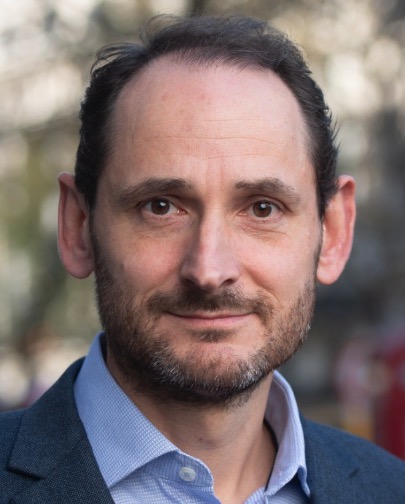 Jonatan Pinkse合作论文数Centre for Sustainable Business, King's Business School, King's College London;Department of Strategy, International Management & Entrepreneurship, King's Business School, King's College London1
 Gilles Guieu合作论文数1
 Henri Zimnovitch合作论文数1Bertrand Collomb合作论文数1Isabelle Prim-Allaz合作论文数1
 Marine Le Gall-Ely合作论文数Université de Rennes 11Philippe Gillet合作论文数1
 Philippe Very合作论文数Promenade des Anglais1
 Gilles Paché合作论文数Centre d'Etudes et de Recherche en Gestion d'Aix-Marseille, Aix-Marseille Université1
 Armand Hatchuel合作论文数Ecole des Mines de Paris1Alain-Charles Martinet合作论文数1
 Barthe Nicole合作论文数1Cedric Dalmasso合作论文数INRIA INRIA Sophia-Antipolis, Univ. de Nice Sophia-Antipolis1
 Valerie Moatti合作论文数1
 Susse Georg合作论文数Department of Sustainability and Planning, Technical Faculty of IT and Design, Aalborg Universitet1Alain Fayolle合作论文数CREA UniCa, Università degli Studi di Cagliari1




