Using the topological equivalence between the Riemann sphere $$\mathbb {S}$$ S and the extended complex plane $$\overline{\mathbb {C}} = \mathbb {C} \cup \{\infty \}$$ C ¯ = C ∪ { ∞ } , where $$\mathbb {C}$$ C is the field of complex numbers, we establish 2D-bijective representations of 3D point clouds. Points of 3D point clouds are mapped into the Riemann sphere $$\mathbb {S}$$ S , and a stereographic projection is implemented to map the points into the complex plane $$\mathbb {C}$$ C . The way the 3D objects are mapped into $$\mathbb {S}$$ S may be varied for various applications. To prove the accuracy and efficiency of the proposed 2D representation of 3D objects, we apply this correspondence to 3D point cloud encryption. We utilize chaotic permutations, chaotic circuits, and Latin cubes in addition to the stereographic projection representation to construct our scheme. The permutation steps using chaotic maps and Latin cubes are carried out on the object data points in both $$\mathbb {S}$$ S and $$\overline{\mathbb {C}}$$ C ¯ , while the chaotic circuits are applied to 2D projections of the 3D objects. To the best of our knowledge, no earlier work employed stereographic projections for 3D object encryption. Experimental simulations of this method show high encryption strength and strong confusion and diffusion properties based on quantitative and statistical measures.
Abstract Three-dimensional point-cloud data has been enormously abundant with the emergence of numerous technologies for 3D data acquisition, processing, and visualization. Encryption algorithms have been recently introduced to ensure secure storage and communication for this type of data. However, maintaining the correctness and the geometric stability of such algorithms are still key challenges towards the construction of reliable, trustful, and practical ciphers of 3D point clouds. Few attempts have been made to establish geometrically stable algorithms for 3D point cloud encryption, without compromising the cipher robustness. In particular, Jolfaei et al. [IEEE Transactions on Information Forensics and Security , vol. 10, no. 2, pp. 409-422, 2015] proposed a 3D object encryption algorithm along with geometric notions of dimensional and spatial stability. However, these notions are not consistent and the geometric stability and correctness of that cipher are not guaranteed as we show through counterexamples. In this paper, we introduce an enhanced cipher with correctness, reversibility, and geometric stability guarantees. The soundness and significance of the proposed scheme are demonstrated by rigorous mathematical proofs, extensive experimentation, and comparisons against state-of-the-art methods.
We compute precise estimates for dimensions of 3D-encryption techniques of 3D-point clouds which use permutations and rigid body motion, in which geometric stability is to be guaranteed. Few attempts are made in this direction. An attempt is established using the notions of dimensional and spatial stability by Jolfaei et al. (2015), who also proposed a 3D object encryption algorithm, claiming that it preserves dimensional and spatial stability. However, as we mathematically prove neither the algorithm, nor the associated estimates are correct. We introduce more rigorous definitions of the geometric stability of such 3D data encryption algorithms, followed by dimensionality measures
Image encryption has become an indispensable tool for achieving highly secure image-based communications. Numerous encryption approaches have appeared and demonstrated varying degrees of robustness to adversarial attacks. In this paper, an efficient and robust image encryption algorithm is established based on randomized difference equations, random permutations and randomized logic circuits. Specifically, hyperchaotic and chaotic systems are used to generate pseudo-random sequences. These sequences are thus used to define random first-order difference equations, chaotic permutations and logic circuits. Image encryption based on these three randomized modules shows high computational efficiency as well as strong robustness against statistical, differential, and chosen-plaintext attacks. The proposed scheme leads to almost zero correlation in the encrypted images, entropy values of more than 7.99 for the test images, and a key space size of 2(572). Furthermore, differential analysis shows that the number of pixel change rate (NPCR) and the unified average change intensity (UACI) for the proposed technique are on average 99.61 and 33.35%, respectively.
Applications of discrete orthogonal polynomials (DOPs) in image processing have been recently emerging. In particular, Krawtchouk, Chebyshev, and Charlier DOPs have been applied as bases for image analysis in the frequency domain. However, fast realizations and fractional-type generalizations of DOP-based discrete transforms have been rarely addressed. In this paper, we introduce families of multiparameter discrete fractional transforms via orthogonal spectral decomposition based on Krawtchouk, Chebyshev, and Charlier DOPs. The eigenvalues are chosen arbitrarily in both unitary and non-unitary settings. All families of transforms, for varieties of eigenvalues, are applied in image watermarking. We also exploit recently introduced fast techniques to reduce complexity for the Krawtchouk case. Experimental results show the robustness of the proposed transforms against watermarking attacks.
Linear skin lesions have several anatomical and causative factors, which are associated with numerous pigmentary disorders. The automatic detection of such linear lesions in clinical images improves the diagnosis process to distinguish between the potential complications. In this paper, we have proposed an efficient detection framework for linear skin lesions. This framework is based on the linear and curvilinear patterns of the cutaneous pigmentary signs related to these lesions. The proposed detection framework can detect either single or multiple lesion patterns. The detection process is achieved by discovering the line segments of the lesions' objects and finding the layout of their configurations. Several examples of pigmentary disorders of linear diseases are presented in order to evaluate the detection framework, such as Linea Nigra and Striae.
This paper introduces sampling representations for discrete signals arising from self adjoint difference operators with mixed boundary conditions. The theory of linear operators on finite-dimensional inner product spaces is employed to study the second-order difference operators. We give necessary and sufficient conditions that make the operators self adjoint. The equivalence between the difference operator and a Hermitian Green's matrix is established. Sampling theorems are derived for discrete transforms associated with the difference operator. The results are exhibited via illustrative examples, involving sampling representations for the discrete Hartley transform. Families of discrete fractional Fourier-type transforms are introduced with an application to image encryption.
The fractional Fourier transform (FrFr) is a major tool in signal and image processing. Since its computation for analog signals includes the evaluation of improper integrals involving e(-x2),x is an element of R, several methods have been proposed to approximate the FrFT for various signals. These methods include spectral decomposition techniques, which are based on the theory of second-order self-adjoint operators. This approach led to a tremendous stream of research on various spectral decomposition methods, including multi-parameter and randomized transforms. In this paper, we introduce generalized discrete transforms that extend the known discrete-type transforms and introduce new types as well. The derivations are carried out in both unitary and non-unitary settings. The strengths of the proposed transforms are demonstrated through numerical simulations and applications in image encryption and watermarking. (C) 2018 Elsevier B.V. All rights reserved.
This paper introduces a cryptanalysis of image encryption techniques that are using chaotic scrambling and logic gates/circuits. Chaotic scrambling, as well as general permutations are considered together with reversible and irreversible gates, including XOR, Toffoli and Fredkin gates. We also investigate ciphers based on chaotic permutations and balanced logic circuits. Except for the implementation of Fredkin's gate, these ciphers are insecure against chosen-plaintext attacks, no matter whether a permutation is applied globally on the image or via a block-by-block basis. We introduce a new cipher based on chaotic permutations, logic circuits and randomized Fourier-type transforms. The strength of the new cipher is statistically verified with standard statistical encryption measures.
Image segmentation is the process of dividing an image into meaningful objects to perform different analysis operations. Fuzzy connectedness (FC)-based segmentation methods usually give robust segmentation results; on the other hand, they suffer from some weaknesses. The generalized or absolute fuzzy connectivity (GFC) segmentation method is the foundation of most FC-based methods. This method has two apparent weaknesses: It combines different objects in the case of their boundaries are blurred, and it can not find the object of interest if the threshold value determined without interactive manner. In this manuscript, we introduce extensions to the GFC algorithm to tackle the mentioned weaknesses. The FC and affinity functions in the extended algorithm utilize region- and boundary-based information to overcome the first weakness. Moreover, this algorithm suggests a near optimal threshold generated automatically to eliminate the need for any interaction. Comparisons has been made to quantitatively evaluate the proposed algorithm over a three sorts of data set of scenes. Measures of relevance have been calculated for two data sets. Results indicate improved segmentation accuracy and also showed that the weaknesses of the traditional GFC algorithms have been eliminated to some extent.
 Mahmoud H. Annaby合作论文数Department of Mathematics, Statistics & Physics, Qatar University8
 Muhammad Rushdi合作论文数Department of Computer and Information Science and Engineering, University of Florida7
 H. A. Abdusalam合作论文数3
 Walaa Hassan合作论文数1
 E. A. Nehary合作论文数Syst & Comp Engn, Carleton Univ1
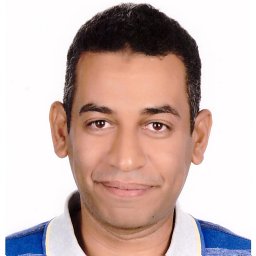 Tamer Farag合作论文数Dept Management Informat Syst, Imam Abdurrahman Bin Faisal Univ1
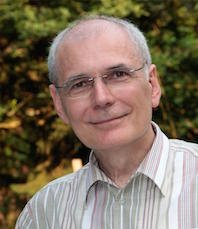 Jurgen Prestin合作论文数Institute of Mathematics, University of Lübeck1
 H.A. Hassan合作论文数Faculty of Science, Cairo University1M.Z. Abd-Alla合作论文数1
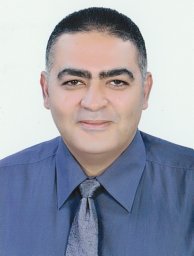 Usama Badawi合作论文数Department of Mathematics;Faculty of Science;Department of Mathematics|Faculty of Science1
 Tawfik Ismail合作论文数Department of EAL National Institute of Laser Enhanced Sciences, Cairo University1
 Mutasem Khalil Sari Alsmadi合作论文数1




