In stars that lie on the main sequence in the Hertzsprung-Russel diagram, like our sun, hydrogen is fused to helium in a number of nuclear reaction chains and series, such as the proton-proton chain and the carbon-nitrogen-oxygen cycles. Precisely determined thermonuclear rates of these reactions lie at the foundation of the standard solar model. This review, the third decadal evaluation of the nuclear physics of hydrogen-burning stars, is motivated by the great advances made in recent years by solar neutrino observatories, putting experimental knowledge of the proton-proton chain neutrino fluxes in the few-percent precision range. The basis of the review is a one-week community meeting held in July 2022 in Berkeley, California, and many subsequent digital meetings and exchanges. The relevant reactions of solar and stellar hydrogen burning are reviewed here, from both theoretical and experimental perspectives. Recommendations for the state of the art of the astrophysical S-factor and its uncertainty are formulated for each of them. Several other topics of paramount importance for the solar model are reviewed, as well: recent and future neutrino experiments, electron screening, radiative opacities, and current and upcoming experimental facilities. In addition to reaction-specific recommendations, also general recommendations are formed.
Recently, the TRIUMF Storage Ring (TRISR), a storage ring for the existing Isotope Separator and Accelerator-I (ISAC-I) radioactive ion beam facility at TRIUMF, was proposed. It may be possible to directly measure neutron-induced radiative capture reactions in inverse kinematics by combining the ring with a high-flux neutron generator as the neutron target. Herein, we present the conceptual design of a low-energy ion storage ring as well as a fusion product extraction system with a Wien filter and recoil separator for detecting neutron capture products based on ion optical calculations and particle-tracking simulations.
Measurements of the elastic scattering cross section of $^{3}\mathrm{He}$ and $^{4}\mathrm{He}$ are important in order to improve constraints on theoretical models of $^{4}\mathrm{He}(^{3}\mathrm{He},\ensuremath{\gamma})^{7}\mathrm{Be}$, a key reaction in Big Bang nucleosynthesis and solar neutrino production. The astrophysical $S$ factor for this reaction is a significant source of uncertainty in the standard-solar-model prediction of the $^{7}\mathrm{Be}$ and $^{8}\mathrm{B}$ solar neutrino fluxes. The elastic scattering measurements reported in the literature do not extend to low energies and lack proper uncertainty quantification. A new measurement of the $^{4}\mathrm{He}(^{3}\mathrm{He},^{3}\mathrm{He})^{4}\mathrm{He}$ reaction has been made at center-of-mass energies ${E}_{\text{c.m.}}=0.38\ensuremath{-}3.13$ MeV using the Scattering of Nuclei in Inverse Kinematics (SONIK) scattering chamber: a windowless, extended gas target surrounded by an array of 30 collimated silicon charged particle detectors situated at TRIUMF. This is the first elastic scattering measurement of $^{3}\mathrm{He}+^{4}\mathrm{He}$ made below 500 keV and it has greater angular range and better precision than previous measurements. The elastic scattering data were analyzed using both $R$-matrix and halo effective field theory frameworks, and values of the $s$-wave scattering length and effective range were extracted. The resulting improvement in knowledge of the $s$-wave effective-range function at low energies reduces the overall uncertainty in ${S}_{34}$ at solar energies.
Measurements of the elastic scattering cross section of 3He and 4He are important in order to improve constraints on theoretical models of 4He(3He, gamma)7Be, a key reaction in Big Bang nucleosynthesis and solar neutrino production. The astrophysical S factor for this reaction is a significant source of uncertainty in the standard -solar -model prediction of the 7Be and 8B solar neutrino fluxes. The elastic scattering measurements reported in the literature do not extend to low energies and lack proper uncertainty quantification. A new measurement of the 4He(3He, 3He) 4He reaction has been made at center-of-mass energies Ec.m. = 0.38-3.13 MeV using the Scattering of Nuclei in Inverse Kinematics (SONIK) scattering chamber: a windowless, extended gas target surrounded by an array of 30 collimated silicon charged particle detectors situated at TRIUMF. This is the first elastic scattering measurement of 3He + 4He made below 500 keV and it has greater angular range and better precision than previous measurements. The elastic scattering data were analyzed using both R-matrix and halo effective field theory frameworks, and values of the s-wave scattering length and effective range were extracted. The resulting improvement in knowledge of the s-wave effective-range function at low energies reduces the overall uncertainty in S34 at solar energies.
We have measured the cross section of the $^{83}$Rb(p,$\gamma)^{84}$Sr radiative capture reaction in inverse kinematics using a radioactive beam of $^{83}$Rb at incident energies of 2.4 and $2.7 A$ MeV. Prior to the radioactive beam measurement, the $^{84}$Kr(p,$\gamma)^{85}$Rb radiative capture reaction was measured in inverse kinematics using a stable beam of $^{84}$Kr at an incident energy of $2.7 A$ MeV. The effective relative kinetic energies of these measurements lie within the relevant energy window for the $\gamma$ process in supernovae. The central values of the measured partial cross sections of both reactions were found to be $0.17-0.42$ times the predictions of statistical model calculations. Assuming the predicted cross section at other energies is reduced by the same factor leads to a slightly higher calculated abundance of the $p$ nucleus $^{84}$Sr, caused by the reduced rate of the $^{84}$Sr($\gamma$,p)$^{83}$Rb reaction derived from the present measurement.
Globular clusters contain multiple stellar populations, with some previous generation of stars polluting the current stars with heavier elements. Understanding the history of globular clusters is helpful in understanding how galaxies merged and evolved and therefore constraining the site or sites of this historic pollution is a priority. The acceptable temperature and density conditions of these polluting sites depend on critical reaction rates. In this paper, three experimental studies helping to constrain astrophysically important reaction rates are briefly discussed.
The r-process has been shown to be robust in reproducing the abundance distributions of heavy elements, such as europium, seen in ultra-metal poor stars. In contrast, observations of elements 26 < Z < 47 display overabundances relative to r-process model predictions. A proposed additional source of early nucleosynthesis is the weak r-process in neutrino-driven winds of core-collapse supernovae. It has been shown that in this site (α,n) reactions are both crucial to nucleosynthesis and the main source of uncertainty in model-based abundance predictions. Aiming to improve the certainty of nucleosynthesis predictions, the cross section of the important reaction 86Kr(α,n)89Sr has been measured at an energy relevant to the weak r-process. This experiment was conducted in inverse kinematics at TRIUMF with the EMMA recoil mass spectrometer and the TIGRESS gamma-ray spectrometer. A novel type of solid helium target was used.
Motivated primarily by the large uncertainties in the thermonuclear rate of the 30P(p,γ)31S reaction that limit our understanding of classical novae, we carried out lifetime measurements of 31S excited states using the Doppler Shift Lifetimes (DSL2) facility at the TRIUMF Isotope Separator and Accelerator (ISAC-II) facility. The 31S excited states were populated by the 3He(32S,α)31S reaction. The deexcitation γ rays were detected by a clover-type high-purity germanium detector in coincidence with the α particles detected by a silicon detector telescope. We have applied modern Markov chain Monte Carlo-based Bayesian statistical techniques to perform lineshape analyses of Doppler-shift attenuation method γ-ray data for the first time. We have determined the lifetimes of the two lowest-lying 31S excited states. First experimental upper limits on the lifetimes of four higher-lying states have been obtained. The experimental results were compared to shell-model calculations using five universal sd-shell Hamiltonians. Evidence for γ rays originating from the astrophysically important Jπ=3/2+, 260-keV 30P(p,γ)31S resonance with an excitation energy of Ex=6390.2(7) keV in 31S has also been observed, although strong constraints on the lifetime will require better statistics.
We have measured the cross section of the $^{83}$Rb(p,$\gamma)^{84}$Sr radiative capture reaction in inverse kinematics using a radioactive beam of $^{83}$Rb at incident energies of 2.4 and $2.7 A$ MeV. Prior to the radioactive beam measurement, the $^{84}$Kr(p,$\gamma)^{85}$Rb radiative capture reaction was measured in inverse kinematics using a stable beam of $^{84}$Kr at an incident energy of $2.7 A$ MeV. The effective relative kinetic energies of these measurements lie within the relevant energy window for the $\gamma$ process in supernovae. The central values of the measured partial cross sections of both reactions were found to be $0.17-0.42$ times the predictions of statistical model calculations. Assuming the predicted cross section at other energies is reduced by the same factor leads to a slightly higher calculated abundance of the $p$ nucleus $^{84}$Sr, caused by the reduced rate of the $^{84}$Sr($\gamma$,p)$^{83}$Rb reaction derived from the present measurement.
The low-lying structure of 13Be has remained an enigma for decades. Despite numerous experimental and theoretical studies, large inconsistencies remain. Being both unbound and one neutron away from 14Be, the heaviest bound beryllium nucleus, 13Be is difficult to study through simple reactions with weak radioactive-ion beams or more complex reactions with stable-ion beams. Here, we present the results of a study using the 12Be(d, p)13Be reaction in inverse kinematics using a 9.5 MeV per nucleon 12Be beam from the ISAC-II facility. The solid deuteron target of IRIS was used to achieve an increased areal thickness compared to conventional deuterated polyethylene targets. The Q-value spectrum below -4.4 MeV was analyzed using a Bayesian method with GEANT4 simulations. A three-point angular distribution with the same Q-value gate was fit with a mixture of s- and p-wave, s- and d-wave, or pure p-wave transfer. The Q-value spectrum was also compared with GEANT simulations obtained using the energies and widths of states reported in four previous works. It was found that our results are incompatible with works that revealed a wide 5/2+ resonance but shows better agreement with ones that reported a narrower width.
The low-lying structure of $^{13}\mathrm{Be}$ has remained an enigma for decades. Despite numerous experimental and theoretical studies, large inconsistencies remain. Being both unbound and one neutron away from $^{14}\mathrm{Be}$, the heaviest bound beryllium nucleus, $^{13}\mathrm{Be}$ is difficult to study through simple reactions with weak radioactive-ion beams or more complex reactions with stable-ion beams. Here, we present the results of a study using the $^{12}\mathrm{Be}(d,p)^{13}\mathrm{Be}$ reaction in inverse kinematics using a 9.5 MeV per nucleon $^{12}\mathrm{Be}$ beam from the ISAC-II facility. The solid deuteron target of IRIS was used to achieve an increased areal thickness compared to conventional deuterated polyethylene targets. The $Q$-value spectrum below $\ensuremath{-}4.4$ MeV was analyzed using a Bayesian method with geant4 simulations. A three-point angular distribution with the same $Q$-value gate was fit with a mixture of $s$- and $p$-wave, $s$- and $d$-wave, or pure $p$-wave transfer. The $Q$-value spectrum was also compared with geant simulations obtained using the energies and widths of states reported in four previous works. It was found that our results are incompatible with works that revealed a wide $5/{2}^{+}$ resonance but shows better agreement with ones that reported a narrower width.
We have measured the cross section of the( 83)Rb(p, ? ) Sr-84 radiative capture reaction in inverse kinematics using a radioactive beam of Rb-83 at incident energies of 2.4 and 2.7A MeV. Prior to the radioactive beam measurement, the Kr-84(p, ? ) Rb-85 radiative capture reaction was measured in inverse kinematics using a stable beam of Kr-84 at an incident energy of 2.7A MeV. The effective relative kinetic energies of these measurements lie within the relevant energy window for the ? process in supernovae. The central values of the measured partial cross sections of both reactions were found to be 0.17-0.42 times the predictions of statistical model calculations. Assuming the predicted cross section at other energies is reduced by the same factor leads to a slightly higher calculated abundance of the p nucleus Sr-84, caused by the reduced rate of the Sr-84(? , p) Rb-83 reaction derived from the present measurement.
To analyze the cause of the destruction of thin, carbon-backed lithium fluoride targets during a measurement of the fusion of 7Li and 17O, we estimate theoretically the lifetimes of carbon and LiF films due to sputtering, thermal evaporation, and lattice damage and compare them with the lifetime observed in the experiment. Sputtering yields and thermal evaporation rates in carbon and LiF films are too low to play significant roles in the destruction of the targets. We estimate the lifetime of the target due to lattice damage of the carbon backing and the LiF film using a previously reported model. In the experiment, elastically scattered target and beam ions were detected by surface silicon barrier (SSB) detectors so that the product of the beam flux and the target density could be monitored during the experiment. The areas of the targets exposed to different beam intensities and fluences were degraded and then perforated, forming holes with a diameter around the beam spot size. Overall, the target thickness tends to decrease linearly as a function of the beam fluence. However, the thickness also exhibits an increasing interval after SSB counts per beam ion decreases linearly, extending the target lifetime. The lifetime of thin LiF film as determined by lattice damage is calculated for the first time using a lattice damage model, and the calculated lifetime agrees well with the observed target lifetime during the experiment. In experiments using a thin LiF target to induce nuclear reactions, this study suggests methods to predict the lifetime of the LiF film and arrange the experimental plan for maximum efficiency.
We have performed the first direct measurement of two resonances of the 7Be(alpha, gamma )11C reaction with unknown strengths using an intense radioactive 7Be beam and the DRAGON recoil separator. We report on the first measurement of the 1155 and 1110 keV resonance strengths of 1.73 +/- 0.25(stat) +/- 0.40(syst) eV and 125+27 -25 (stat) +/- 15(syst) meV, respectively. The present results have reduced the uncertainty in the 7Be(alpha, gamma )11C reaction rate to similar to 9.4%-10.7% over T = 1.5-3 GK, which is relevant for nucleosynthesis in the neutrino-driven outflows of core-collapse supernovae (vp process). We find no effect of the new, constrained reaction rate on vp-process nucleosynthesis.
Measurements of the elastic scattering cross section of 3He and 4He are important in order to improve constraints on theoretical models of 4He(3He,g)7Be, a key reaction in Big Bang nucleosynthesis and solar neutrino production. The astrophysical S-factor for this reaction is a significant source of uncertainty in the standard solar-model prediction of the 7Be and 8B solar neutrino fluxes. The elastic scattering measurements reported in the literature do not extend to low energies and lack proper uncertainty quantification. A new measurement of the 4He(3He,3He)4He reaction has been made at center-of-mass energies Ec.m. = 0.38-3.13 MeV using the Scattering of Nuclei in Inverse Kinematics (SONIK) scattering chamber: a windowless, extended gas target surrounded by an array of 30 collimated silicon charged particle detectors situated at TRIUMF. This is the first elastic scattering measurement of 3He+4He made below 500 keV and it has greater angular range and better precision than previous measurements. The elastic scattering data were analyzed using both R-matrix and Halo Effective Field Theory (Halo EFT) frameworks, and values of the s-wave scattering length and effective range were extracted. The resulting improvement in knowledge of the s-wave effective-range function at low energies will reduce the overall uncertainty in S34 at solar energies.
A possible mechanism to explain the origin of the light $p$ nuclei in the Galaxy is the nucleosynthesis in the proton-rich neutrino-driven wind ejecta of core-collapse supernovas via the $\ensuremath{\nu}p$ process. However, this production scenario is very sensitive to the underlying supernova dynamics and the nuclear physics input. As far as the nuclear uncertainties are concerned, the breakout from the $pp$ chains via the $^{7}\mathrm{Be}(\ensuremath{\alpha},\ensuremath{\gamma})^{11}\mathrm{C}$ reaction has been identified as an important link which can influence the nuclear flow and, therefore, the efficiency of the $\ensuremath{\nu}p$ process. However, its reaction rate is poorly known over the relevant temperature range, $T$ = 1.5--3 GK. We report on the first direct measurement of two resonances of the $^{7}\mathrm{Be}(\ensuremath{\alpha},\ensuremath{\gamma})^{11}\mathrm{C}$ reaction with previously unknown strengths using an intense radioactive $^{7}\mathrm{Be}$ beam from the Isotope Separator and Accelerator (ISAC-I) Center facility and the DRAGON recoil separator in inverse kinematics. We have decreased the $^{7}\mathrm{Be}(\ensuremath{\alpha},\ensuremath{\gamma})^{11}\mathrm{C}$ reaction rate uncertainty to $\ensuremath{\approx}9.4\text{--}10.7$% over the relevant temperature region.
We present the first direct measurement of an astrophysical reaction using a radioactive beam of isomeric nuclei. In particular, we have measured the strength of the key 447-keV resonance in the Al-26m(p, gamma)Si-27 reaction to be 432 thorn 146 -226 meV and find that this resonance dominates the thermally averaged reaction rate for temperatures between 0.3 and 2.5 GK. This work represents a critical development in resolving one of the longest standing issues in nuclear astrophysics research, relating to the measurement of proton capture reactions on excited quantum levels, and offers unique insight into the destruction of isomeric Al-26 in astrophysical plasmas.
The efficiency of the slow neutron-capture process in massive stars is strongly influenced by neutron-capture reactions on light elements. At low metallicity, $^{16}\mathrm{O}$ is an important neutron absorber, but the effectiveness of $^{16}\mathrm{O}$ as a light-element neutron poison is modified by competition between subsequent $^{17}\mathrm{O}(\ensuremath{\alpha},n)^{20}\mathrm{Ne}$ and $^{17}\mathrm{O}(\ensuremath{\alpha},\ensuremath{\gamma})^{21}\mathrm{Ne}$ reactions. The strengths of key $^{17}\mathrm{O}(\ensuremath{\alpha},\ensuremath{\gamma})^{21}\mathrm{Ne}$ resonances within the Gamow window for core helium burning in massive stars are not well constrained by experiment. This work presents more precise measurements of resonances in the energy range ${E}_{\mathrm{c}.\mathrm{m}.}=612\text{--}1319$ keV. We extract resonance strengths of $\ensuremath{\omega}{\ensuremath{\gamma}}_{638}=4.85\ifmmode\pm\else\textpm\fi{}0.79\phantom{\rule{4pt}{0ex}}\ensuremath{\mu}\mathrm{eV}$, $\ensuremath{\omega}{\ensuremath{\gamma}}_{721}=13.{1}_{\ensuremath{-}2.4}^{+3.2}\phantom{\rule{4pt}{0ex}}\ensuremath{\mu}\mathrm{eV}$, $\ensuremath{\omega}{\ensuremath{\gamma}}_{814}=7.72\ifmmode\pm\else\textpm\fi{}0.55\phantom{\rule{0.16em}{0ex}}\mathrm{meV}$, and $\ensuremath{\omega}{\ensuremath{\gamma}}_{1318}=136\ifmmode\pm\else\textpm\fi{}13\phantom{\rule{0.16em}{0ex}}\mathrm{meV}$, for resonances at ${E}_{\mathrm{c}.\mathrm{m}.}=638$, 721, 814, and 1318 keV, respectively. We also report an upper limit for the 612 keV resonance of $\ensuremath{\omega}\ensuremath{\gamma}<140$ neV ($95%$ c.l.), which effectively rules out any significant contribution from this resonance to the reaction rate. From this work, a new $^{17}\mathrm{O}(\ensuremath{\alpha},\ensuremath{\gamma})^{21}\mathrm{Ne}$ thermonuclear reaction rate is calculated and compared to the literature. The effect of present uncertainties in the $^{17}\mathrm{O}(\ensuremath{\alpha},\ensuremath{\gamma})^{21}\mathrm{Ne}$ reaction rate on weak $s$-process yields are then explored using postprocessing calculations based on a rotating $20{M}_{\ensuremath{\bigodot}}$ low-metallicity massive star. The resulting $^{17}\mathrm{O}(\ensuremath{\alpha},\ensuremath{\gamma})^{21}\mathrm{Ne}$ reaction rate is lower with respect to the preexisting literature and found to enhance weak $s$-process yields in rotating massive star models.
A possible mechanism to explain the origin of the light p nuclei in the Galaxy is the nucleosynthesis in the proton-rich neutrino-driven wind ejecta of core-collapse supernovas via the nu p process. However, this production scenario is very sensitive to the underlying supernova dynamics and the nuclear physics input. As far as the nuclear uncertainties are concerned, the breakout from the pp chains via the 7Be(alpha, gamma)11C reaction has been identified as an important link which can influence the nuclear flow and, therefore, the efficiency of the nu p process. However, its reaction rate is poorly known over the relevant temperature range, T = 1.5-3 GK. We report on the first direct measurement of two resonances of the 7Be(alpha, gamma)11C reaction with previously unknown strengths using an intense radioactive 7Be beam from the Isotope Separator and Accelerator (ISAC-I) Center facility and the DRAGON recoil separator in inverse kinematics. We have decreased the 7Be(alpha, gamma)11C reaction rate uncertainty to ,=', 9.4-10.7% over the relevant temperature region.
We present new experimental measurements of resonance strengths in the astrophysical 23Al(p,γ)24Si reaction, constraining the pathway of nucleosynthesis beyond 22Mg in X-ray burster scenarios. Specifically, we have performed the first measurement of the (d,p) reaction using a radioactive beam of 23Ne to explore levels in 24Ne, the mirror analog of 24Si. Four strong single-particle states were observed and corresponding neutron spectroscopic factors were extracted with a precision of ∼20%. Using these spectroscopic factors, together with mirror state identifications, we have reduced uncertainties in the strength of the key ℓ = 0 resonance at Er = 157 keV, in the astrophysical 23Al(p,γ) reaction, by a factor of 4. Our results show that the 22Mg(p,γ)23Al(p,γ) pathway dominates over the competing 22Mg(α,p) reaction in all but the most energetic X-ray burster events (T>0.85 GK), significantly affecting energy production and the preservation of hydrogen fuel.
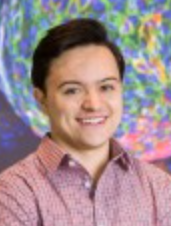 Camilo Ruiz合作论文数Stanford Artificial Intelligence Lab, Stanford University82
 Dave A. Hutcheon合作论文数68
 Rituparna Kanungo合作论文数Physical Sciences Division, TRIUMF54
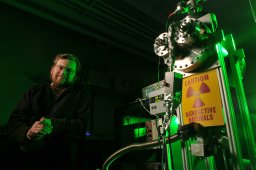 Uwe Greife合作论文数Colorado School of Mines, Golden, CO, USA51
 Bradley M. Sherrill合作论文数Department of Physics & Astronomy, College of Natural Science, Michigan State University50L. Buchmann合作论文数48
 Daniel Bazin合作论文数Department of Physics and Astronomy, Michigan State University47Götz Ruprecht合作论文数47
 Jennifer Fallis合作论文数46
 Ulrike Hager合作论文数39Greg Hackman合作论文数39A. A. Chen合作论文数38D. Connolly合作论文数TRIUMF37Alison Laird合作论文数37N. Galinski合作论文数36
 Annika Lennarz合作论文数36
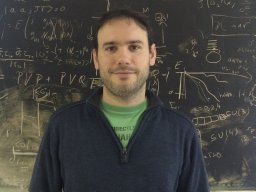 Martin Alcorta合作论文数Instituto de Estructura de la Materia CSIC 28006 Madrid Spain36A. M. Van Den Berg合作论文数Kernfysisch Versneller Instituut34
 M. Hunyadi合作论文数33
 Matthew J. Williams合作论文数Soft Matter Syst Res Grp, Univ Georgia33
 Greg Christian合作论文数32M Steiner合作论文数32
 Isao Tanihata合作论文数School of Physics and Nuclear Energy Engineering, Beihang University;Research Center for Nuclear Science and Technology, Beihang University;RCNP, Osaka University30
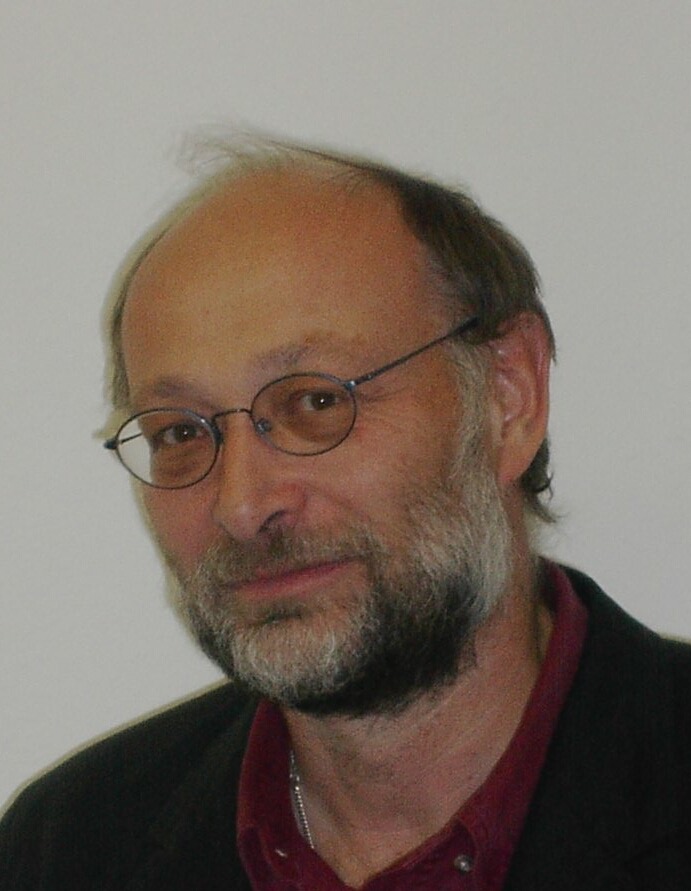 Dieter Frekers合作论文数Institute of Nuclear Physics, University of Münster29
 Heinrich Johannes Wortche合作论文数28Dave Ottewell合作论文数28Alexander Rojas合作论文数27M. N. Harakeh合作论文数26D. Howell合作论文数25
 Athanasios Psaltis合作论文数Inst Kernphys, Tech Univ Darmstadt24J. Yurkon合作论文数21Br Fulton合作论文数21Michael Trinczek合作论文数21T. Aumann合作论文数20M. Lovely. S. N. Paneru合作论文数20
 Alan Shotter合作论文数School of Physics and Astronomy, The University of Edinburgh20
 Jac Caggiano合作论文数19
 Tom Davinson合作论文数School of Physics and Astronomy, The University of Edinburgh19
 Heiko Scheit合作论文数19Christof Vockenhuber合作论文数19b c junk合作论文数18R. W. Ibbotson合作论文数18G. Lotay合作论文数18
 Sky Sjue合作论文数Los Alamos Natl Lab17Jeffrey Tostevin合作论文数Department of Physics, School of Mathematics and Physics, University of Surrey17
 Ahmed H Hussein合作论文数17
 Christopher Wrede合作论文数Facility for Rare Isotope Beams, Michigan State University;Department of Physics and Astronomy, Michigan State University17Petra Haefner合作论文数17E. Grewe合作论文数17




