The paper report the results of studying mitotic activity and cytogenetic disorders in marrow and retinal epithelium cells of Mongolian gerbils in 21 - 23 hrs. of landing space apparatus Foton-M3, and the animals of synchronous and vivarium controls. Cells of the space flown gerbils displayed a statistically significant (p < 0.05) gain in the ratio of mitosis prophases and metaphases to the sum of ana- and telophases (1.7 +/- 0.3 and 2 +/- 0.1, respectively) as compared to these parameters in the synchronous and vivarium controls, where the ratio made up 0.6 +/- 0.1 and 0.7 +/- 0.1, respectively. Frequency of aberrant mytoses in the form of bridges was increased equally in both types of cells. Patterns of chromosome damages occurred in flight infer that the major portion of changes was not due to chromosome breakage but adhesion and ensuing wrong disjunction. These results seem to have been caused by acute g-stress to organism during re-entry and return from micro-g to the normal gravity.
The article discusses the informative significance and pertinence of cytogenetic analysis of peripheral blood lymphocytes to the clinical-physiological investigations of cosmonauts conducted before and after space missions (SM) of varying duration. The authors point out high sensitivity of the technique, relative simplicity and affordability of the analysis of instable chromosomal aberrations including such radiation effect markers as dicentrics and centric rings. Cytogenetic investigation of cosmonauts could be used to estimate ionizing radiation dose, and to predict delayed effects.
Experiments with small test animals have been carried out to study the survival rate of spermatogenic cells in the acute period after exposure to protons with the energy 9 GeV, helium ions with the energy 4 GeV/nucleon, and 60Co gamma radiation in doses of 0.5-7.5 Gy and the reciprocal translocation frequency in spermatocytes under meiosis at the diakinesis-metaphase-1 stage six months after the exposure of the animals to protons with the energy 50 MeV and 9 GeV, helium ions with the energy 4 GeV/nucleon, and 60Co gamma-radiation in doses of 0.5-4.0 Gy. It is shown that the dependence of the effect on the dose is linear or near to linear for all kinds of radiation used. Relative biological effectiveness coefficients of the accelerated nuclei obtained by correlating equally effective doses of the standard and investigated radiations turned out to be higher in survival rate of type B spermatogonium and amounted to 2.0 and 1.3 for 9 GeV protons and helium ions respectively. At the same time, the use of the nonparametric method to determine the RBE coefficients in the course of finding out the reciprocal translocation frequency in spermatocytes points to an increase in the RBE coefficients of charged particles from 1.0 to 2.0.
It was studied the impact effect of «light» and distill water on the cell s stuff of the lymphoid structure of spleen at mice BALB/c 3 and 30 days after gamma-rays influence (in dose 50 radians). It was established, that the speed of restoration of cytoarchitectonic in lymphoid structure of the spleen after gamma-rays influence higher after using «light» water, than distilled water. The structure organization of the periarterial lymphoid muff in the spleen was more resistance to gamma-rays after using of the «light» and distilled water. In distant period after the irradiation (30 days after) the processes of the restoration in cell's stuff at this zone were more intensively than in the germinal centers of the lymphoid nodules.
The partial summation of biological effects evaluated by the anaphasic chromosomal aberration test in the bone marrow karyocytes of mice was determined when the animals were concurrently exposed to chemical substances (acetone, acetaldehyde, ammonia, and ethanol) at low concentrations and gamma-irradiation in a total dose of 30 Gy. Qualitative analysis of chromosomal aberrations in the karyocytes of the bone marrow (ponses, fragments) has indicated that upon combined exposure of the animals to the chemical substances and gamma-irradiation, the chemical factor is dominant since upon combined radiochemical exposure, the number of chromosomal aberration increases mainly at the expense of fragments (91.2%), as does upon isolated exposure to chemical substances (96.4%).
Biological effectiveness and post-radiation recovery of corneal epithelium cells of mice were studied. Mice were exposed to a broad range of doses from accelerated helium ions with the energy of 4 MeV/nucleon and 4 GeV/nucleon once and twice with a 24-hr. interval. LET values for these energies were 120 and 0.88 keV/microm, respectively. Gamma-source 137Cs (LET = 0.3 keV/microm) was used as a radiation standard. Animals irradiated by 25-400 sGy were sacrificed in 24 and 72 hrs. by way of cervical dislocation. Total corneal preparations made from enucleated eyeballs were analyzed for the mitotic index and aberrant mitoses using the anaphase method. High damaging properties of accelerated helium ions with the energy of 4 MeV/nucleon were manifested by a considerable reduction of the mitotic index and a more marked rise in the number of aberrant mitoses following the single and repeated exposure. Fractional irradiation by helium ions with the energy of 4 MeV/nucleon resulted in inhibition and even arrest of reparation suggesting additivity of separate radiation fractions. From the dose values that produced the double reduction of the mitotic index, coefficients of the relative biological effectiveness (RBE) for helium ions with the energy of 4 MeV/nucleon and 4 GeV/nucleon were estimated to be 5.3-8.6 and 1.3-1.8, respectively. In the context of the number of aberrant mitoses, RBE coefficients were significantly lower ranging 2.3-3.5 and 1.1-1.3 for these energies, respectively.
Cytogenetic changes in cultures of blood lymphocytes from 37 cosmonauts returned from space flights of varying duration were analyzed. Prolonged stay in space was shown to increase numbers of stable and unstable chromosomal aberrations. Frequency of dicentric and centric rings depends on flight duration, as well as values of accumulated dose from and dose rate of space radiation. Egress into open space leads to an additional growth in the number of chromosomal aberrations. It was found that frequency of chromosomal aberrations in blood lymphocytes remains altered even after several years of cosmonaut's return from space flight. Based on the counts of symmetric translocations obtained with the FISH-technique, mean dose from space radiation following the maiden prolonged space flight amounted to 110 mGy which is in agreement with the biodosimetric data about frequency of dicentric and centric rings (140 mGy).
The study was made of carcinogenic efficiency of 4 GeV/nucleon helium ions (LET = 0.88 keV/um) in comparison with gamma-radiation 60Co (LET = 0.23 keV/um). Adult outbred female rats underwent a single whole-body irradiation with helium ions in doses 0.25-4.0 Gy at the Synchrophasotron of the Joint Institute for Nuclear Research and with gamma-rays at "PX-gamma-30" irradiator in doses ranged from 0.5 to 4.0 Gy. The yields, histology and occurrence time of hemoblastoses and tumours in mammary glands, in endocrine glands, in soft tissues and in other organs were determined. Histological study was made using conventional methods. The irradiation of experimental animals with accelerated helium ions and standard radiation was shown to result in an increase in the yield of growths of various localizations with decreasing occurrence time and expanding histological spectrum as compared with intact rats. However, helium ions possess a higher carcinogenic efficiency. The coefficients of relative biological effectiveness of helium ions calculated by the nonparametric method appeared to increase with decreasing the radiation dose.
Combined exposure of mice to a mixture of chemicals in small quantities and gamma-radiation at a total dose of 30 sGy cause partial summation of biological effects assessed by cytogenetic disorders in nuclear cells of the bone marrow and changes in erythrocyte metabolism. The level of cytogenetic damages in bone marrow cells remained increased till day 14 of recovery, whereas following exposure to chemicals or radiation alone the number of chromosomal aberrations (ChA) was nearly same as in control at this point of recovery The anaphase method showed prevalence of ChA in the form of fragments over bridges in marrow karyocites. The combination of factors suppressed energy-producing processes in erythrocytes (reliable reductions in lactate dehydrogenase and lactate) and activated oxidation processes (reliable decrease in reduced glutathione). Functional shifts in erythrocyte metabolism persisted till day 30 of recovery Based on results of the investigation, functional status of organism following low-intensity exposures can be assessed, along with cytogenetic, also by indices of erythrocyte metabolism.
Analyzed was the literature and authors' experimental data concerning lesion and recovery of epithelium cells of mice retina immediately and long after irradiation at different sources including single and partly fractionated irradiation by gamma- and X-rays, accelerated protons, helium, carbon and boron ions, and fast neutrons of the reactor range in a large spectrum of doses and LET. Reviewed are some new techniques of determining the RBE coefficient for these types of radiation; large values of the RBE coefficients for accelerated ions and neutrons (5-10 times higher than RBE coefficients calculated for the next day following irradiation) are a result of integration into calculation of the available data about the delayed disorders in retinal epithelium cell regeneration.
Experimental results and literary data were analyzed for the relative biological effectiveness of heavy charged particles in a broad range of energy and LET to cells of humans and other mammals in culture, whole body of laboratory animals, microorganisms, bacteriophages, and plants. Analyzed were data obtained with the use of a diversity of tests of acute and delayed lesions induced by ionizing radiation, cancers and cataracts, specifically. Non-parametric methods are applied in parallel to the classic method of calculating the coefficients of relative biological effectiveness by correlating the equal-effective doses of the standard and a given radiation. Consideration is given to factors that may modify RBE values estimated for different types of radiation.
Effects of low-dose heavy charged particles (HCP) of varying LET on quantitative and qualitative changes in chromosomes of the comeal epithelium cells were studied in mice. Cytogenetic damages in the comeal epithelium cells were analyzed after irradiation by ions of helium and carbon with an energy of 300 MeV/nucleon (LET = 1.36 and 12.6 keV/microm), and 137Cs gamma-rays with the doses from 5 to 200 Gy. Accelerated nuclei were shown to be more effective. On the basis of aberrant mitosis rate, RBE values for helium and carbon ions in 24, 72 and 120 hrs. after irradiation were 6.0; 3.6 and 2.2 for helium ions and 7.0; 3.8 and 2.4 for carbon ions, respectively. The dose region of 20-30 Gy turned to be dose-independent. It was established that the period of chromosomal aberration sustenance in cells is also LET-dependent.
The frequency of tumorigenesis was investigated in the mammary glands of noninbred female rats and Wistar rats, after total-body exposure to a single dose of 60CO gamma radiation, 645 MeV and 9 GeV protons and 4 GeV/nuclon ions of helium. It was found that the relative biological effects of accelerated charged particles was significantly higher. This finding was obtained from calculations of the frequency of mammary tumors.
The study deals with the frequency of tumorigenesis in the endocrine glands, skin, soft tissues and internal organs of sexually mature female rats, exposed to accelerated charged particles with low LPE, such components of cosmic radiation as 645 MeV and 9 GeV protons and 4 GeV/nuclon ions of helium. The experiment continued until the animals' natural death. We established a high frequency of endocrine and uterine tumors and a comparatively wide range of localizations in rats which had received sufficient doses of gamma radiation. There were no intestinal or renal tumors, while very few tumors of the skin and soft tissues were detected in unexposed animals.
Cytogenetical studies of cosmonauts' peripheral blood lymphocytes after space flights on MIR orbital station showed a statistically significant increase in the yields of radiation-induced chromosomal aberrations. However, similar studies with in vitro irradiation of biological objects with accelerated charged particles are of great importance for elucidation of the nature of cytogenetical damage induced in vivo. It is also important to investigate the structure of cosmonatus' diseases over their life, in particular, lens opacities and oncological diseases. Thus, the purpose of the investigations planned is to study cytogenetical damage in blood lymphocytes from cosmonauts after space flights on the ISS in vivo, as well as in donor blood lymphocytes after in vitro exposure to accelerated charged particles. The tasks of the project are as follows: determination of the yields and types of chromosomal aberrations in cosmonauts' blood lymphocytes before and after space flights, comparative studies of biological effects induced in vitro by different types of ionizing radiation in human blood lymphocytes in ground experiments, assessment of cytogenetical risks, analysis of the structure of cosmonatus' diseases comparing with that of whole population, study of the mortality and frequency of cataracts and oncological diseases in cosmonauts. The results to be obtained will be used for setting of health norms applied to the influence of radiations of different types, and for elaboration of measures to reduce health risks from space flight factors.
The Institute for Biomedical Problems in collaboration with the Laboratory of High Energies, JINR, has been carrying out biological experiments to solve problems of the radiation safety during long-term manned space flights. For this purpose investigations of the influence of accelerated charged particles, which are similar to different components of the space radiation, are carried out with laboratory animals, and model biological experiments are going as well. It required to improve the Synchrophasotron beam transportation and diagnostic equipment for proper exposure of biological objects and dose measurements. The new system has allowed one to obtain the required experimental conditions and data on intensity, contamination and spatial characteristics of beams extracted from the accelerator. The results of the performed research have been used to estimate the space radiation hazard, as well as for drawing up the State Normative Documents (GOST) for radiation safety of the manned space flights.
The paper reviews experimental and clinical data on the incidence of opacity of the lens and cataract development in animals and humans due to exposure to different types of radiation. Cataractogenous effectiveness of fast neutrons, accelerated ions of carbon, helium, neon and argon with the energy of 300 MeV/nucleon, and 137Cs gamma-radiation was compared. Analysis of the incidence of opacity of the lens in consequence of low doses gave high RBE estimates (from 10 to 40). The extremely high cataractogenous effectiveness of accelerated ions makes on thing that the existent space radiation limits, particularly in part of the GCR effects on the lens and permissible doses for cosmonauts, should be reconsidered towards mitigation. The authors discuss issues of threshold radiation doses that do not markedly increase incidence and rate of the lens opacity development in the post-exposure period.
 Vorozhtsova S V合作论文数13O SMIRNOVA合作论文数12A N Kabachenko合作论文数10Druzhinin S V合作论文数6Abrosimova A N合作论文数6A.V. Shafirkin合作论文数6D E Grigorenko合作论文数5G P Snigireva合作论文数5E.A. Krasavin合作论文数4M R Sapin合作论文数4V A Shevchenko合作论文数4Ryzhov N I合作论文数4Raisa D Govorun合作论文数4D V Rakov合作论文数3Ni Ryzhov合作论文数3Ra Kabicyna合作论文数3S VIKLICKA合作论文数3Z Karpfel合作论文数3Chertkov K S合作论文数3Tracy Yang合作论文数3L. Tkadleček合作论文数3L. M. Erofeeva合作论文数3An Kabachenko合作论文数2e i kudryashov合作论文数2A I Portman合作论文数2Koshcheeva La合作论文数2Kabitsyna Ra合作论文数2Va Stakanov合作论文数2V.M. Petrov合作论文数2Vg Kondratenko合作论文数2Akatov Iu A合作论文数2Savchenko N Ia合作论文数2Mukhamedieva L N合作论文数2Greinert Rüdiger合作论文数2Gerasimenko V N合作论文数2Vranska T G合作论文数2Barantseva M Iu合作论文数2
 Adayapalam T Natarajan合作论文数J.A. Cohen Institute, Interuniversity Institute for Radiopathology and Radiation Protection2Gunter Obe合作论文数2K. George, H. Wu, V. Willingham, Y. Fu合作论文数2Michal Hofer合作论文数2T. P. Pantev合作论文数2
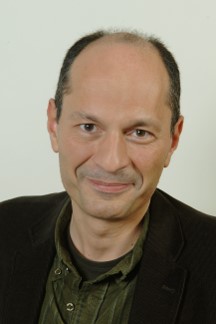 Marco Durante合作论文数Biophysics Division, GSI Helmholtzzentrum fur Schwerionenforschung GmbH;University of Darmstadt2Dietrich Harder合作论文数2Christoph Cremer合作论文数2
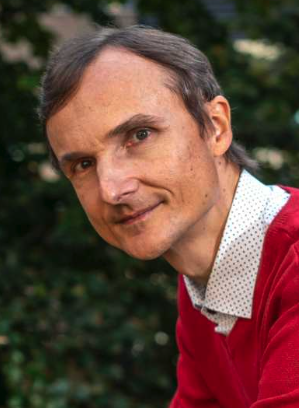 Michal Kozubek合作论文数Department of Visual Computing, Faculty of Informatics, Masaryk University;Centre for Biomedical Image Analysis, Faculty of Informatics, Masaryk University2M. Beno合作论文数2L A Repina合作论文数1l k vekshina合作论文数1




