We study in detail the sensitivity of the Antarctic Impulsive Transient Antenna (ANITA) to possible $\nu_\tau$ point source fluxes detected via $\tau$-lepton-induced air showers. This investigation is framed around the observation of four upward-going extensive air shower events very close to the horizon seen in ANITA-IV. We find that these four upgoing events are not observationally inconsistent with $\tau$-induced EASs from Earth-skimming $\nu_\tau$, both in their spectral properties as well as in their observed locations on the sky. These four events, as well as the overall diffuse and point source exposure to Earth-skimming $\nu_\tau$, are also compared against published ultrahigh-energy neutrino limits from the Pierre Auger Observatory. While none of these four events occurred at sky locations simultaneously visible by Auger, the implied fluence necessary for ANITA to observe these events is in strong tension with limits set by Auger across a wide range of energies and is additionally in tension with ANITA's Askaryan in-ice neutrino channel above $10^{19}$ eV. We conclude by discussing some of the technical challenges with simulating and analyzing these near horizon events and the potential for future observatories to observe similar events.
Over the last several decades, radio detection of air showers has been widely used to detect ultra-high-energy cosmic rays. We developed an experiment under controlled laboratory conditions at SLAC with which we measured the radio-frequency radiation from a charged particle shower produced by bunches of electrons as primaries with known energy. The shower took place in a target made of High Density Polyethylene located in a strong magnetic field. The experiment was designed so that Askaryan and magnetically-induced components of the radio emission could be measured independently. At the same time, we performed a detailed simulation of this experiment to predict the radio signal using two microscopic formalisms, endpoint and ZHS. In this paper, we present the simulation scheme and make a comparison with data characteristics such as linearity with magnetic field and amplitude. The simulations agree with the measurements within uncertainties and present a good description of the data. In particular, reflections within the target that accounted for the largest systematic uncertainties are addressed. The prediction of the amplitude of Askaryan emission agrees with measurements to within 5% for the endpoint formalism and 11% for the ZHS formalism. The amplitudes of magnetically-induced emission agree to within 5% for the endpoint formalism and less than 1% for the ZHS formalism. The agreement of the absolute scale of emission gives confidence in state-of-the-art air shower simulations which are based on the applied formalisms.
The Beamforming Elevated Array for COsmic Neutrinos (BEACON) Experiment aims to implement a new interferometric trigger targeting air showers initiated by the decay of tau leptons created during neutrino interactions in the earth at energies greater than 100 PeV. Over the past decade, interferometric techniques have been successfully implemented in analysis for many of the leading UHE particle experiments. BEACON has included interferometry at the trigger level, by implementing a beamforming technique in which signals are coherently summed, improving overall sensitivity and providing robust rejection against man-made backgrounds. A two-antenna short-term interferometer and a four-antenna long-term interferometer, both targeting the 30-80 MHz range, were installed on White Mountain near Bishop, California, as part of a months-long site study of man-made backgrounds and rates. Successfully suppressing man-made backgrounds will lead future iterations of BEACON to trigger on both cosmic rays from above and tau lepton air showers from tau neutrino interactions near the horizon.
ANITA's fourth long-duration balloon flight in 2016 detected 29 cosmic-ray (CR)-like events on a background of 0.37_{-0.17}^{+0.27} anthropogenic events. CRs are mainly seen in reflection off the Antarctic ice sheets, creating a phase-inverted waveform polarity. However, four of the below-horizon CR-like events show anomalous noninverted polarity, a p=5.3×10^{-4} chance if due to background. All anomalous events are from locations near the horizon; ANITA-IV observed no steeply upcoming anomalous events similar to the two such events seen in prior flights.
The ANtarctic Impulsive Transient Antenna (ANITA) long-duration balloon experiment is sensitive to interactions of ultrahigh-energy (E>1018 eV) neutrinos in the Antarctic ice sheet. The third flight of ANITA, lasting 22 days, began in December 2014. We develop a methodology to search for energetic neutrinos spatially and temporally coincident with potential source classes in ANITA data. This methodology is applied to several source classes: the potential IceCube-identified neutrino sources TXS 0506+056 and NGC 1068, flaring high-energy blazars reported by the Fermi All-Sky Variability Analysis, gamma-ray bursts, and supernovae. Among searches within the five source classes, one candidate was identified as associated with SN 2015D, although not at a statistically significant level. We proceed to place upper limits on the source classes. We further comment on potential application of this methodology to more sensitive future instruments.
Tau neutrinos are expected to comprise one third of both the astrophysical and cosmogenic neutrino flux, but currently the flavor ratio is poorly constrained and the expected flux at energies >100 PeV is low. We present a new concept for a radio detector called BEACON sensitive to tau neutrinos with energies greater than 100 PeV in which a radio interferometer searches for upgoing tau neutrinos from a high elevation mountain. Signals from several antennas are coherently summed at the trigger level, permitting not only directional masking of anthropogenic backgrounds, but also a lower trigger threshold. Simulation studies indicate that a modest array size and small number of stations can achieve competitive sensitivity, provided the receivers are at high enough elevation. As a proof of concept, an array of four 30-80 MHz dual polarized antennas was deployed at the White Mountain Research Station.
A Monte Carlo simulation program for the radio detection of Ultra High Energy (UHE) neutrino interactions in the Antarctic ice as viewed by the Antarctic Impulsive Transient Antenna (ANITA) is described in this article. The program, icemc, provides an input spectrum of UHE neutrinos, the parametrization of the Askaryan radiation generated by their interaction in the ice, and the propagation of the radiation through ice and air to a simulated model of the third and fourth ANITA flights. This paper provides an overview of the icemc simulation, descriptions of the physics models used and of the ANITA electronics processing chain, data/simulation comparisons to validate the predicted performance, and a summary of the impact of published results.
The ANtarctic Impulsive Transient Antenna (ANITA) NASA long-duration balloon payload completed its fourth flight in December 2016, after 28 days of flight time. ANITA is sensitive to impulsive broadband radio emission from interactions of ultra-high-energy neutrinos in polar ice (Askaryan emission). We present the results of two separate blind analyses searching for signals from Askaryan emission in the data from the fourth flight of ANITA. The more sensitive analysis, with a better expected limit, has a background estimate of 0.64^+0.69_-0.45 and an analysis efficiency of 82±2%. The second analysis has a background estimate of 0.34^+0.66_-0.16 and an analysis efficiency of 71±6%. Each analysis found one event in the signal region, consistent with the background estimate for each analysis. The resulting limit further tightens the constraints on the diffuse flux of ultra-high-energy neutrinos at energies above 10^19.5 eV.
Recently, the ANITA collaboration reported on two upward-going extensive air shower events consistent with a primary particle that emerges from the surface of the Antarctic ice sheet. These events may be of ν τ origin, in which the neutrino interacts within the Earth to produce a τ lepton that emerges from the Earth, decays in the atmosphere, and initiates an extensive air shower. In this paper we estimate an upper bound on the ANITA acceptance to a diffuse ν τ flux detected via τ -lepton-induced air showers within the bounds of standard model uncertainties. By comparing this estimate with the acceptance of Pierre Auger Observatory and IceCube and assuming standard model interactions, we conclude that a ν τ origin of these events would imply a neutrino flux at least two orders of magnitude above current bounds.
The NASA supported High-Altitude Calibration (HiCal)-2 instrument flew as a companion balloon to the ANITA-4 experiment in December 2016. Based on a HV discharge pulser producing radio-frequency (RF) calibration pulses, HiCal-2 comprised two payloads, which flew for a combined 18 days, covering 1.5 revolutions of the Antarctic continent. ANITA-4 captured over 10,000 pulses from HiCal, both direct and reflected from the surface, at distances varying from 100-800 km, providing a large dataset for surface reflectivity measurements. Herein we present details on the design, construction and performance of HiCal-2.
The Antarctic Impulsive Transient Antenna (ANITA) is a NASA long-duration balloon experiment with the primary goal of detecting ultra-high-energy (>1018eV) neutrinos via the Askaryan Effect. The fourth ANITA mission, ANITA-IV, recently flew from Dec 2 to Dec 29, 2016. For the first time, the Tunable Universal Filter Frontend (TUFF) boards were deployed for mitigation of narrow-band, anthropogenic noise with tunable, switchable notch filters. The TUFF boards also performed second-stage amplification by approximately 45 dB to boost the ∼μV-level radio frequency (RF) signals to ∼ mV-level for digitization, and supplied power via bias tees to the first-stage, antenna-mounted amplifiers. The other major change in signal processing in ANITA-IV is the resurrection of the 90° hybrids deployed previously in ANITA-I, in the trigger system, although in this paper we focus on the TUFF boards. During the ANITA-IV mission, the TUFF boards were successfully operated throughout the flight. They contributed to a factor of 2.8 higher total instrument livetime on average in ANITA-IV compared to ANITA-III due to reduction of narrow-band, anthropogenic noise before a trigger decision is made.
The balloon-borne HiCal radio-frequency (RF) transmitter, in concert with the ANITA radio-frequency receiver array, is designed to measure the Antarctic surface reflectivity in the RF wavelength regime. The amplitude of surface-reflected transmissions from HiCal, registered as triggered events by ANITA, can be compared with the direct transmissions preceding them by O(10) microseconds, to infer the surface power reflection coefficient $\cal{R}$. The first HiCal mission (HiCal-1, Jan. 2015) yielded a sample of 100 such pairs, resulting in estimates of $\cal{R}$ at highly-glancing angles (i.e., zenith angles approaching $90^\circ$), with measured reflectivity for those events which exceeded extant calculations. The HiCal-2 experiment, flying from Dec., 2016-Jan., 2017, provided an improvement by nearly two orders of magnitude in our event statistics, allowing a considerably more precise mapping of the reflectivity over a wider range of incidence angles. We find general agreement between the HiCal-2 reflectivity results and those obtained with the earlier HiCal-1 mission, as well as estimates from Solar reflections in the radio-frequency regime. In parallel, our calculations of expected reflectivity have matured; herein, we use a plane-wave expansion to estimate the reflectivity R from both a flat, smooth surface (and, in so doing, recover the Fresnel reflectivity equations) and also a curved surface. Multiplying our flat-smooth reflectivity by improved Earth curvature and surface roughness corrections now provides significantly better agreement between theory and the HiCal 2a/2b measurements.
The Antarctic Impulsive Transient Antenna, a NASA long-duration balloon payload, searches for radio emission from interactions of ultrahigh-energy neutrinos in polar ice. The third flight of the Antarctic Impulsive Transient Antenna was launched in December 2014 and completed a 22-day flight. We present the results of three analyses searching for Askaryan radio emission of neutrino origin. In the most sensitive of the analyses, we find one event in the signal region on an expected background of 0.7(-0.3)(+0.5). Though consistent with the background estimate, the event remains compatible with a neutrino hypothesis even after additional postunblinding scrutiny.
(ANITA Collaboration) P. W. Gorham1, J. Nam2, S. Hoover4, P. Allison5,6 O. Banerjee5, L. Batten11, J. J. Beatty5,6, K. Belov3, D. Z. Besson7, W. R. Binns8, V. Bugaev8, P. Cao9, C. Chen2, P. Chen2, J. M. Clem9, A. Connolly5,6, B. Dailey5, C. Deaconu10, L. Cremonesi11, P. F. Dowkontt4, M. A. DuVernois1, R. C. Field12, B. D. Fox1, D. Goldstein14, J. Gordon5, C. Hast12, C. L. Hebert1, B. Hill1, K. Hughes5, R. Hupe5, M. H. Israel8, A. Javaid9, J. Kowalski1, J. Lam4, A. Ludwig10, J. G. Learned1, K. M. Liewer3, T. C. Liu2, J. T. Link1, E. Lusczek15, S. Matsuno1, B. C. Mercurio5, C. Miki1, P.Miočinović1, M. Mottram11, K. Mulrey9, C. J. Naudet3, J. Ng12, R. J. Nichol11, A. Novikov7, K. Palladino5, S. Prohira7, B. F. Rauch8, K. Reil13, J. Roberts1, M. Rosen1, B. Rotter1, J. Russell1, L. Ruckman1, D. Saltzberg4, D. Seckel9, S. Stafford5, J. Stockham7, M. Stockham7, B. Strutt12, K. Tatem1, G. S. Varner1, A. G. Vieregg10, D. Walz12, S. A. Wissel15, and F. Wu4 1University of Hawaii, Manoa, 2National Taiwan University, 3Jet Propulsion Laboratory, 4University of California, Los Angeles 5Ohio State University, 6Center for Cosmology and Particle Astrophysics, Ohio State University, 7University of Kansas, Lawrence, 8Washington University in St. Louis, 9University of Delaware, Newark, 10Department of Physics, Enrico Fermi Institute, Kavli Institute for Cosmological Physics, University of Chicago, 11University College London, 12SLAC National Accelerator Laboratory, 13University of California, Irvine, 14University of Minnesota, Minneapolis, Minnesota, 15California Polytechnic State University,
The primary science goal of the NASA-sponsored ANITA project is measurement of ultra-high energy neutrinos and cosmic rays, observed via radio-frequency signals resulting from a neutrino- or cosmic ray- interaction with terrestrial matter (atmospheric or ice molecules, e.g.). Accurate inference of the energies of these cosmic rays requires understanding the transmission/reflection of radio wave signals across the ice-air boundary. Satellite-based measurements of Antarctic surface reflectivity, using a co-located transmitter and receiver, have been performed more-or-less continuously for the last few decades. Satellite-based reflectivity surveys, at frequencies ranging from 2--45 GHz and at near-normal incidence, yield generally consistent reflectivity maps across Antarctica. Using the Sun as an RF source, and the ANITA-3 balloon borne radio-frequency antenna array as the RF receiver, we have also measured the surface reflectivity over the interval 200-1000 MHz, at elevation angles of 12-30 degrees, finding agreement with the Fresnel equations within systematic errors. To probe low incidence angles, inaccessible to the Antarctic Solar technique and not probed by previous satellite surveys, a novel experimental approach ("HiCal-1") was devised. Unlike previous measurements, HiCal-ANITA constitute a bi-static transmitter-receiver pair separated by hundreds of kilometers. Data taken with HiCal, between 200--600 MHz shows a significant departure from the Fresnel equations, constant with frequency over that band, with the deficit increasing with obliquity of incidence, which we attribute to the combined effects of possible surface roughness, surface grain effects, radar clutter and/or shadowing of the reflection zone due to Earth curvature effects.
These proceedings address a recent publication by the ANITA collaboration of four upward-pointing cosmic-ray-like events observed in the first flight of ANITA. Three of these events were consistent with stratospheric cosmic-ray air showers where the axis of propagation does not intersect the surface of the Earth. The fourth event was consistent with a primary particle that emerges from the surface of the ice suggesting a possible $\tau$-lepton decay as the origin of this event. These proceedings follow-up on the modeling and testing of the hypothesis that this event was of $\tau$ neutrino origin.
The SLAC T-510 experiment provides the first beam-test of radio-frequency radiation from a charged particle cascade in the presence of a magnetic field (up to 970 G), a model system for radio-frequency emission from a cosmic-ray air shower. The primary purpose of this experiment is to provide a suite of controlled laboratory tests to compare to simulations based on particlelevel models of RF emission, making the calibrations of critical importance. We present system calibrations and analysis of the experiment from end to end. Measurements of the beam charge and two-dimensional magnetic field map are fed directly into the simulations using two different formalisms: ZHS and Endpoints. Simulated electric fields are forward-folded with the system response, allowing for direct comparisons of spectra and waveforms with the simulations.
Astrophysics, National Taiwan University, Taipei, Taiwan. 7 Dept. of Physics, Univ. of Delaware, Newark, DE 19716, USA. 8 Dept. of Physics, Stanford University, Stanford, CA, 94305, USA. 9 Dept. of Physics and Astronomy, Univ. of Hawaii, Manoa, HI 96822, USA. 10SLAC National Accelerator Laboratory, Menlo Park, CA, 94025, USA. 11Karlsruher Institut fur Technologie, Institut fur Kernphysik , 76021 Karlsruhe, Germany. 12Physics Dept., College of William & Mary, Williamsburg VA 23187, USA. 13Dept. of Physics and Astronomy, University College London, London, United Kingdom. 14Karlsruher Institut fur Technologie, Institut fur Experimentelle Kernphysik, 76128 Karlsruhe,
We report on four radio-detected cosmic-ray (CR) or CR-like events observed with the Antarctic Impulsive Transient Antenna (ANITA), a NASA-sponsored long-duration balloon payload. Two of the four were previously identified as stratospheric CR air showers during the ANITA-I flight. A third stratospheric CR was detected during the ANITA-II flight. Here, we report on characteristics of these three unusual CR events, which develop nearly horizontally, 20-30 km above the surface of Earth. In addition, we report on a fourth steeply upward-pointing ANITA-I CR-like radio event which has characteristics consistent with a primary that emerged from the surface of the ice. This suggests a possible τ-lepton decay as the origin of this event, but such an interpretation would require significant suppression of the standard model τ-neutrino cross section.
 Abigail Vieregg合作论文数Department of Physics, The University of Chicago;Kavli Institute for Cosmological Physics, The University of Chicago23
 S. Wissel合作论文数Enrico Fermi Institute, University of Chicago23R. Nichol合作论文数Phys & Astron Dept, UCL21B. Rotter合作论文数21
 David Seckel合作论文数Department of Physics and Astronomy, College of Arts & Sciences, University of Delaware21K. Belov合作论文数Department of Physics and High Energy Astrophysics Institute, University of Utah21
 Brian Rauch合作论文数Washington University21
 Andres Romero-Wolf合作论文数Jet Propulsion Laboratory, California Institute of Technology21H. Schoorlemmer合作论文数20J. M. Clem合作论文数Dept . of Physics and Astronomy;University of Delaware;Dept . of Physics and Astronomy, University of Delaware18
 David Saltzberg合作论文数Department of Physics & Astronomy, University of California, Los Angeles;Division of Physical Sciences, University of California, Los Angeles17
 Peter W. Gorham合作论文数Department of Physics & Astronomy, University of Hawaii at Manoa17T. C. Liu合作论文数16
 J. Nam合作论文数Dept Phys, Natl Taiwan Univ16K. Mulrey合作论文数16
 Pisin Chen (陳丕燊)合作论文数National Taiwan University16
 Cosmin Deaconu合作论文数Physics Department;Massachusetts Institute of Technology;Physics Department, Massachusetts Institute of Technology16B. Dailey合作论文数14V. Bugaev合作论文数14R. Hupe合作论文数14O. Banerjee合作论文数14P. Cao合作论文数14
 Carsten Hast合作论文数SLAC National Accelerator Laboratory, Stanford University14C. Miki合作论文数14J. Stockham合作论文数14M. Stockham合作论文数14
 Linda Cremonesi合作论文数School of Physical and Chemical Sciences, Queen Mary University of London14Martin Israel合作论文数Washington University14
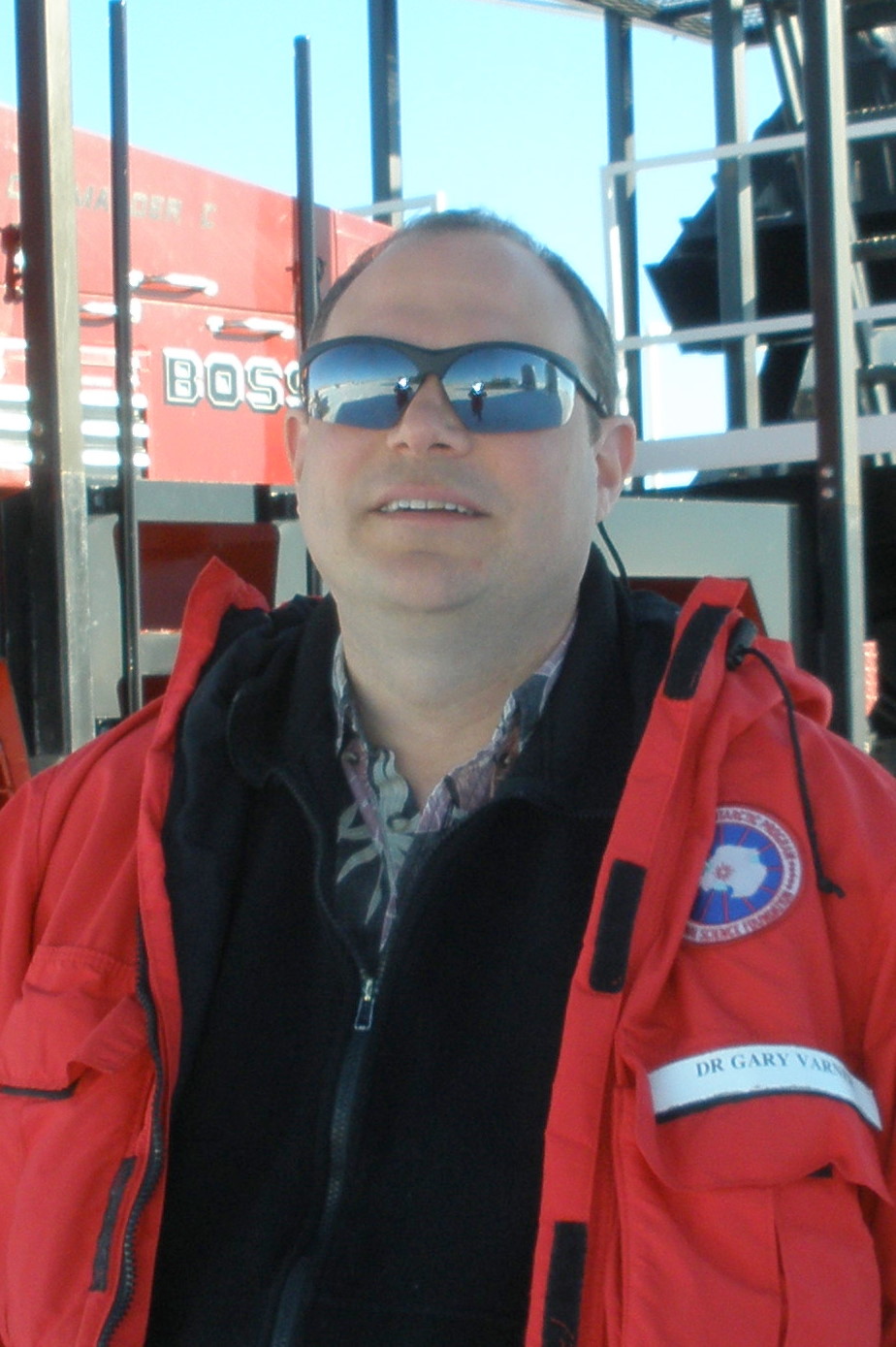 Gary Varner合作论文数University of Hawaii14P. Allison合作论文数14P. F. Dowkontt合作论文数14
 W. Robert Binns合作论文数Department of Physics, Washington University in St. Louis14S. Matsuno合作论文数14S. Stafford合作论文数13B. Hill合作论文数13
 Eric Oberla合作论文数13
 James J. Beatty合作论文数Department of Physics, College of Arts and Sciences, The Ohio State University;NASA13A. Novikov合作论文数Dept Phys & Astron, Univ Kansas12
 Dave Z. Besson合作论文数Department of Physics and Astronomy, College of Liberal Arts & Sciences, University of Kansas12
 K. M. Liewer合作论文数12
 Katie Hughes合作论文数Dept Phys, Ohio State Univ11S. Prohira合作论文数Dept Phys, Ohio State Univ11
 Jarred M. Roberts合作论文数Dept. of Astronomy and Astrophysics, University of California, San Diego;Paradromics Inc;University of California, Berkeley11
 Luke Batten合作论文数11J. Lam合作论文数10Keith Bechtol合作论文数10
 Andrew Connolly合作论文数Department of Astronomy, University of Washington;Institute for Data Intensive Research in Astrophysics and Cosmology, University of Washington10J. Shiao合作论文数8C Naudet合作论文数7




