The Anti-Electron Sub-Orbital Payload Low Energy (AESOP-Lite) is designed to determine the source of the negative spectral index of cosmic-ray electrons below 100 MeV through a series of balloon flights. The entry telescope from the classic LEE (Low Electron Energy) instrument was directly integrated into AESOP-Lite, which utilizes a gas-Cherenkov and magnetic-spectrometer configuration to identify the particle type and measure its energy. Its first flight took place May 15-21, 2018 from Kiruna, Sweden accumulating roughly 130 h of exposure above 130,000 ft altitude before landing on Ellesmere Island, Canada. After recovery, work began to upgrade the instrument for its next flight, from McMurdo Station, Antarctica. In this paper, we report on its updated design, calibration and performance. This includes analyses of ground data taken during integration. The observed muon charge separation from ground runs is discussed and compared to the expected performance of the spectrometer, and the first test results of the new time-of-flight (TOF) system are presented. The energy resolution from track reconstruction algorithms and the energy-dependent geometry factor are tested with Monte Carlo simulations.
The BP28 BF3 proportional tube was specifically designed for the NM64 neutron monitor that was introduced to the cosmic ray community in 1964. This neutron monitor design has remained the standard to date. In 1999, during the construction phase of the Space-Ship Earth NM64 monitors, it was soon realized the cost of the highly efficient He3 filled proportional tubes, manufactured by the LND company, were less than a BP28, and provided nearly the same sensitivity as a BP28 in a NM64 structure. Consequently, the LND He3 tubes were chosen for the new SSE NM64 stations, to upgrade stations Thule, South Pole and Newark. Unfortunately, since then, the price of the He3 tubes has significantly increased, due to the rising cost of He3, and the original BP28 tubes are no longer manufactured. Consequently, we have embarked on an investigation to evaluate a suitable BF3 proportional tube to replace the original BP28. The investigation will include characterization of key performance parameters of two slightly different proportional tubes, with different anode wire and cathode tube thicknesses, while maintaining the same tube geometry, gas volume, pressure and purity. In this paper we will present measurements and discuss the results
In this white paper, we review the status of the US neutron monitor network, the science activities that utilize the network, the long-standing and permanent need for the network, its key role in the national Space Weather Strategy, future scientific and space weather activities and objectives and, lastly, plans for expanding the public profile and improving the security and scientific function of the network.Our utmost priority is to maintain, expand and improve the neutron monitor network under US control and to develop the necessary scientific infrastructure to support the network.
In recent years there has been a growing interest from the aviation community for space weather radiation forecasts tailored to the needs of the aviation industry.In 2019 several space weather centers began issuing advisories for the International Civil Aviation Organization alerting users to enhancements in the radiation environment at aviation flight levels.Due to a lack of routine observations, radiation modeling is required to specify the dose rates experienced by flight crew and passengers.While mature models exist, support for key observational inputs and further modeling advancements are needed.Observational inputs required from the ground-based neutron monitor network must be financially supported for research studies, and operationally supported to ensure real-time data is available for forecast operations and actionable end user decision making.An improved understanding of the geomagnetic field is required to reduce dose rate uncertainties in regions close to the open/closed geomagnetic field boundary, important for flights such as those between the continental US and Europe which operate in this region.Airborne radiation measurements, which are crucial for model validation and improvement, are lacking, particularly during solar energetic particle events.New measurement campaigns must be carried out to ensure progress.Furthermore, solar energetic particle forecasting must be improved to move aviation radiation nowcasts to forecasts in order to meet customer requirements for longer lead times for planning and mitigation.
Neutron monitors (NM) are ground-based cosmic ray detectors that measure the flux of primary cosmic rays at the GeV-energy range by counting (primarily) secondary neutrons in atmospheric cascades. The South Pole NM started in 1964 as an International Geophysical Year (IGY) monitor that operated until 1974. In 1977 three NM64 with boron-trifluoride proportional counters were installed. In January 2004, they were replaced with helium-3 detectors. Apart from a four-year gap (2005-2009), the NM has operated continuously since then. Over decades of its operation, a decline of the South Pole NM counting rate was observed, significantly larger than temporal changes observed by other NM stations. To investigate this decline, we simulated the counting rates of the NM64, for boron-trifluoride and helium-3 configurations, using the FLUKA Monte-Carlo package. We compare the observed count rates from 1964 to December 2021 with simulated count rates obtained using monthly values of the modulation parameter ($\phi$, in MV) determined in two different ways. The extended data set and the simulations indicate that most of the observed decline can be associated with the transition from the IGY to the NM64. Further work with a specific IGY simulation is required.
Magnetic activity on the sun influences the flux of galactic cosmic rays at Earth in the process known as solar modulation. While most pronounced at 1 GeV and below, it also operates at much higher energy, still exhibiting solar magnetic polarity dependence. Historically, an observational gap exists between approximately 17 GeV (the highest geomagnetic cutoff) neutron monitor data and muon observations of primary cosmic rays that are mostly above 50 GeV. We have shown that a neutron monitor can be used as a calorimeter to measure the spectrum of atmospheric secondaries, and thus to infer the primary spectrum. In this paper we examine data over an extended time interval to explore the need to correct for barometric pressure. We compare the results of the calorimeter method to other local measures of the particle spectrum, such as the leader fraction
The status and condition of the various neutron monitors operated by the US reached its nadir in the mid 2000s. Now with significant investments by the National Science Foundation, the existing network will be repaired, upgraded and selectively modernized. Furthermore, a key site on the summit of Haleakala will be outfitted once again with a monitor, supported by a Space Weather Center in Honolulu. We report on the start of this work, plans for the near future with funds from the NSF and longer-term plans to take the network to a new operational and scientific level. We also report on a complementary deployment of a new portable monitor on the summit of Haleakala on Maui - a joint effort between Thai and US institutions.
The flux of low-energy (GeV-range) Galactic cosmic rays at Earth is modulated by the long term magnetic variations of the Sun (11-year sunspot cycle and 22-year magnetic solar cycle). This process known as Solar modulation is most pronounced at 1 GeV and below. However, it also operates at much higher energy, still exhibiting solar magnetic polarity dependence. For the last decades, ground-based neutron monitors provided valuable observations of the solar modulation up to a rigidity cutoff of about 17 GV. To extend the energy range of the neutron monitor observations, we recently upgraded the electronics of the Princess Sirindhorn Neutron Monitor in Thailand (PSNM, the operating neutron monitor at the highest geomagnetic rigidity cutoff) to record complex combinations of hits in multiple proportional counters. We present here the detection of multiple-hit events recorded at the PSNM. We discuss these observations with the help of a detailed Monte-Carlo simulation of energetic neutrons interacting in the detector. Finally, we estimate the nucleonic spectrum of the atmospheric secondary particles at the altitude of the detector.
Magnetic activity on the sun influences the flux of galactic cosmic rays at Earth in the process known as solar modulation. While most pronounced at 1 GeV and below, it also operates at much higher energy, still exhibiting solar magnetic polarity dependence. Historically, an observational gap exists between approximately 17 GeV (the highest geomagnetic cutoff) neutron monitor data and muon observations of primary cosmic rays that are mostly above 50 GeV. Detecting multiple neutrons from the same primary particle has recently been used to monitor the primary energy spectrum using data from a single neutron monitor. Over the past few years we have used details of the timing distribution from individual neutron detectors and pairwise correlations among adjacent detectors to improve the energy resolution of this technique. We present a further extension of our observations to pattern recognition of events comprising hits in multiple detectors in order to identify and study cases where more than one secondary particle from the same primary interacts in the neutron monitor. Our particular focus at present is to distinguish interactions of energetic hadrons from those generated by cores of small air showers.
Solar modulation refers to Galactic cosmic-ray variations with the similar to 11 yr sunspot cycle and similar to 22 yr solar magnetic cycle and is relevant to the space radiation environment and effects on Earth's atmosphere. Its complicated dependence on solar and heliospheric conditions is only roughly understood and has been empirically modeled in terms of a single modulation parameter. Most analyses of solar modulation use neutron monitor (NM) data from locations with relatively low geomagnetic cutoff rigidity, i.e., the threshold for cosmic rays to penetrate Earth's magnetic field. The Princess Sirindhorn Neutron Monitor at Doi Inthanon, Thailand, has the world's highest cutoff rigidity (>> 17 GV) where observations span a complete solar modulation cycle (since late 2007). The pattern of solar modulation at Doi Inthanon during 2011-2014 was qualitatively very different from that at a low geomagnetic cutoff and is not well described by the same modulation parameter. At other times, NM count rates from Doi Inthanon and McMurdo, Antarctica (cutoff similar to 1 GV), were linearly correlated and confirm the observation from latitude surveys in the previous solar cycle that the slope of the correlation changes with solar magnetic polarity. Low solar magnetic tilt angles (<40 degrees at negative polarity) were well correlated with variations at both NM stations, as predicted by drift models. At a higher tilt angle, the Doi Inthanon count rate is well correlated with the interplanetary magnetic field, which is consistent with an increase in diffusion at high rigidity short-circuiting the effects of drifts and the heliospheric current sheet.
Solar modulation refers to Galactic cosmic ray (GCR) variations with the $\sim$11-year sunspot cycle and $\sim$22-year solar magnetic cycle, and is relevant to the space radiation environment and effects on Earth's atmosphere. Its complicated dependence on solar and heliospheric conditions is only roughly understood but has been empirically modeled in terms of a single modulation parameter. Most analyses of solar modulation used neutron monitor (NM) data from locations with relatively low geomagnetic cutoff rigidity, i.e., the threshold for cosmic rays to penetrate Earth's magnetic field. The Princess Sirindhorn Neutron Monitor (PSNM) at Doi Inthanon, Thailand has the highest cutoff rigidity ($\approx$17 GV) where observations span a complete solar modulation cycle (since late 2007). The pattern of solar modulation at Doi Inthanon during 2011-2014 was qualitatively very different from that at low geomagnetic cutoff, and is not well described by the same modulation parameter. At other times, NM count rates from Doi Inthanon and McMurdo, Antarctica (cutoff $<$0.01 GV) are linearly correlated and confirm the observation from latitude surveys in the previous solar cycle that the slope of the correlation changes with solar magnetic polarity. Low solar magnetic tilt angles ($<$40$^{\circ}$, at negative polarity) were well correlated with variations at both NM stations as expected from drift models. At higher tilt angle, the Doi Inthanon count rate is well correlated with the interplanetary magnetic field, which is consistent with an expected increase in diffusion at high rigidity short-circuiting effects of drifts and the heliospheric current sheet.
The SLAC T-510 experiment provides the first beam-test of radio-frequency radiation from a charged particle cascade in the presence of a magnetic field (up to 970 G), a model system for radio-frequency emission from a cosmic-ray air shower. The primary purpose of this experiment is to provide a suite of controlled laboratory tests to compare to simulations based on particlelevel models of RF emission, making the calibrations of critical importance. We present system calibrations and analysis of the experiment from end to end. Measurements of the beam charge and two-dimensional magnetic field map are fed directly into the simulations using two different formalisms: ZHS and Endpoints. Simulated electric fields are forward-folded with the system response, allowing for direct comparisons of spectra and waveforms with the simulations.
Aedes aegypti is a major vector for arboviruses such as dengue, chikungunya and Zika viruses. During acquisition of a viremic bloodmeal, an arbovirus infects mosquito midgut cells before disseminating to secondary tissues, including the salivary glands. Once virus is released into the salivary ducts it can be transmitted to another vertebrate host. The midgut is surrounded by a basal lamina (BL) in the extracellular matrix, consisting of a proteinaceous mesh composed of collagen IV and laminin. BL pore size exclusion limit prevents virions from passing through. Thus, the BL probably requires remodelling via enzymatic activity to enable efficient virus dissemination. Matrix metalloproteinases (MMPs) are extracellular endopeptidases that are involved in remodelling of the extracellular matrix. Here, we describe and characterize the nine Ae. aegypti encoded MMPs, AeMMPs 1−9, which share common features with other invertebrate and vertebrate MMPs. Expression profiling in Ae. aegypti revealed that Aemmp4 and Aemmp6 were upregulated during metamorphosis, whereas expression of Aemmp1 and Aemmp2 increased during bloodmeal digestion. Aemmp1 expression was also upregulated in the presence of a bloodmeal containing chikungunya virus. Using polyclonal antibodies, AeMMP1 and AeMMP2 were specifically detected in tissues associated with the mosquito midgut.
Geological surface-exposure dating using cosmogenic-nuclide accumulation became a practical geochronological endeavor in 1986, when the utility of 10Be, 26Al, 36Cl, and 3He were all demonstrated. In response to the lack of a common basis for quantifying analytical consistency and calibrating cosmogenic-nuclide production, the CRONUS-Earth Project in the U.S. was started in 2005, along with a European partner project, CRONUS-EU. The goal of the CRONUS-Earth Project was to improve the accuracy and precision of terrestrial cosmogenic nuclide dating in general, focusing especially on nuclide production rates and their variation with altitude, latitude, and time, and to attempt to move from empirically based methods to ones with a stronger basis in physics. The CRONUS-Earth Project conducted extensive intercomparisons of reference materials to attempt to quantify analytical reproducibility at the community level. We found that stated analytical uncertainties nearly always underestimate the actual degree of variability, as quantified by the over-all coefficient of variation of the intercalibration data. The average amount by which the actual coefficient of variation exceeded the analytical uncertainty was a factor of two (100%), but ranged from 15% to 300% depending on the nuclide and material. Coefficients of variation ranged from 3−4% for 10Be to 6–8% for 36Cl, 14C, and 21Ne, to 5–11% for 26Al. Both interlaboratory bias and within-laboratory excess spread of the data played a role in increasing variability above the stated analytical uncertainties. The physical basis for cosmogenic nuclide production was investigated through numerical modeling and the measurement of energy-dependent neutron cross sections for nuclide interactions. We formulated new, physically based, scaling models, denoted LSD and LSDn, by generalizing global numerical simulations of cosmic-ray processes. The CRONUS-Earth Project identified new geological calibration sites, including one at low latitude and high elevation (Huancané, Peru), and replicated nuclide measurement at numerous laboratories. At many sites multiple nuclides were measured, providing much more confidence in the equivalence of surface-exposure ages calculated from differing nuclides. The data were interpreted using an original cosmogenic-nuclide calculator, CRONUScalc, that incorporates the new physically based scaling. The new data and model produced significantly better fits than previous efforts, but do not fully resolve apparent spatial variations in production rates. The CRONUS-Earth and CRONUS-EU Projects have provided a firm foundation for assessing the strengths and weaknesses of cosmogenic-nuclide analytical methods, adjusted the AMS standards for 10Be and consequently revised the half-life, and have provided improved calibration data sets and interpretative tools.
Astrophysics, National Taiwan University, Taipei, Taiwan. 7 Dept. of Physics, Univ. of Delaware, Newark, DE 19716, USA. 8 Dept. of Physics, Stanford University, Stanford, CA, 94305, USA. 9 Dept. of Physics and Astronomy, Univ. of Hawaii, Manoa, HI 96822, USA. 10SLAC National Accelerator Laboratory, Menlo Park, CA, 94025, USA. 11Karlsruher Institut fur Technologie, Institut fur Kernphysik , 76021 Karlsruhe, Germany. 12Physics Dept., College of William & Mary, Williamsburg VA 23187, USA. 13Dept. of Physics and Astronomy, University College London, London, United Kingdom. 14Karlsruher Institut fur Technologie, Institut fur Experimentelle Kernphysik, 76128 Karlsruhe,
Arthropod-borne viruses (arboviruses) circulate in nature between arthropod vectors and vertebrate hosts. Arboviruses often cause devastating diseases in vertebrate hosts, but they typically do not cause significant pathology in their arthropod vectors. Following oral acquisition of a viremic bloodmeal from a vertebrate host, the arbovirus disease cycle requires replication in the cellular environment of the arthropod vector. Once the vector has become systemically and persistently infected, the vector is able to transmit the virus to an uninfected vertebrate host. In order to systemically infect the vector, the virus must cope with innate immune responses and overcome several tissue barriers associated with the midgut and the salivary glands. In this review we describe, in detail, the typical arbovirus infection route in competent mosquito vectors. Based on what is known from the literature, we explain the nature of the tissue barriers that arboviruses are confronted with in a mosquito vector and how arboviruses might surmount these barriers. We also point out controversial findings to highlight particular areas that are not well understood and require further research efforts.
We report the direct imaging of a novel modulated flux striped domain phase in a nearly twin-free YBCO crystal. These domains arise from instabilities in the vortex structure within a narrow region of tilted magnetic fields at small angles from the in-plane direction. By comparing the experimental and theoretically derived vortex phase diagrams we infer that the stripe domains emerge from a first-order phase transition of the vortex structure. The size of domains containing vortices of certain orientations is controlled by the balance between the vortex stray field energy and the positive energy of the domain boundaries. Our results confirm the existence of the kinked vortex chain phase in an anisotropic high temperature superconductor and reveal a sharp transition in the state of this phase resulting in regular vortex domains.
 D. Ruffolo合作论文数Mahidol University12
 V. G. Kogan合作论文数11
 Alejandro Sáiz合作论文数UAM Dpt. Física Teórica Cantoblanco9Maamar Benkraouda合作论文数9Mark W. Coffey合作论文数8Yasunori Mawatari合作论文数8s j bending合作论文数7
 Waraporn Nuntiyakul合作论文数Dept Phys & Mat Sci, Chiang Mai Univ7
 John R. Kirtley合作论文数Center for Probing the Nanoscale, Stanford University6D.K. Finnemore合作论文数6Zhidong Hao合作论文数6Surujhdeo Seunarine合作论文数6
 A.P. Malozemoff合作论文数6John W. Bieber合作论文数6Roger Pyle合作论文数5m m fang合作论文数5T. Tamegai合作论文数5R. Nichol合作论文数Phys & Astron Dept, UCL5Jerome E. Ostenson合作论文数5K. Belov合作论文数Department of Physics and High Energy Astrophysics Institute, University of Utah5
 Andres Romero-Wolf合作论文数Jet Propulsion Laboratory, California Institute of Technology5Ali A. Babaei-Brojeny合作论文数Department of Physics, Isfahan University of Technology5
 A. Seripienlert合作论文数5
 Paul Evenson合作论文数5Joe Lam合作论文数4Katharine Mulrey合作论文数4Charles J. Naudet合作论文数4Carsten Hast合作论文数4B. Rotter合作论文数4e moser合作论文数4John Wilson合作论文数4H. Schoorlemmer合作论文数4
 Abigail Vieregg合作论文数Department of Physics, The University of Chicago;Kavli Institute for Cosmological Physics, The University of Chicago4
 Tim Huege合作论文数Institute for Astroparticle Physics, Karlsruhe Institute of Technology;Faculty of Sciences and Bioengineering Sciences, Vrije Universiteit Brussel4
 David Seckel合作论文数Department of Physics and Astronomy, College of Arts & Sciences, University of Delaware4
 Lev Bulaevskii合作论文数Los Alamos National Laboratory;IIP4
 Jiwoo Nam (南智祐)合作论文数Department of Physics, National Taiwan University;Graduate Institute of Astrophysics, National Taiwan University4S. Wissel合作论文数Enrico Fermi Institute, University of Chicago4
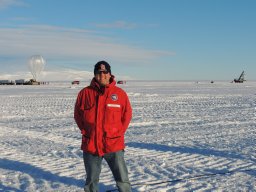 Brian Rauch合作论文数Washington University4
 M. Milošević合作论文数Laboratory for Molecular Biology and Endocrinology, “Vinča” Institute of Nuclear Sciences4
 M. L. Duldig合作论文数Australian Antarctic Division4J. E. Humble合作论文数4W. J. Tomasch合作论文数4
 Malcolm Connolly合作论文数Cavendish Laboratory;Department of Physics;University of Cambridge;Cavendish Laboratory, University of Cambridge4
 Tsung Che Liu合作论文数3Rachel Hyneman合作论文数3g de angelis合作论文数3
 Maiko Suenaga合作论文数3B. Strutt合作论文数3




