In order to find high effective biocontrol strain against cucumber downy mildew,one strain HMQAU19044 with strong antagonistic activity was isolated from diseased roots of tomato.The strain was identified as Bacillus velezensis by morphological observation,physiological and biochemical characteristics and sequence analysis of 16S and gyr B.The effects of fermentation filtrate on the release and swimming of zoospore,the germination of resting spore and the elongation of germ tube of cucumber downy mildew pathogen were determined by concave slide method,and the effects on the lesion expansion,production of sporangiophore and sporangium were determined by the method of in vitro leaf five-point inoculation.The experimental results demonstrated that the fermentation filtrate of HMQAU19044 had the most significant inhibition activity on the release and swimming of zoospore with EC 50 being 43.66 and 48.68 times,respectively,and also had a significant inhibitory activity on resting spore germination and germ tube elongation with EC 50 being 40.73 and 37.58times,respectively.Moreover,the EC 50 of inhibition activity on lesion expansion,production of sporangiophore and sporangium being 29.32,26.95 and 29.70 times,respectively.The results show that HMQAU19044 fermentation filtrate has the bioactivity of antagonizing cucumber downy mildew and has potential value for developing into biological pesticides.
植物病害生物防治实验是植保专业的重要课程.目前面临实验内容多,学时数少;学生人数多,指导教师少;课程内容单一等问题.通过翻转课堂和个性化教学改革,丰富实验教学内容和材料,增加课前教学资源,补充实验指导人员等一系列改革措施及其实施,明显地增加了学生对课程的兴趣,提高了教学效果.
在山东青岛发现一种新的大白菜根腐病,主根下部腐烂,根部维管束变褐变黑,地上部生长缓慢,矮小,甚至死亡.通过组织分离法和单菌丝分离法获得纯化菌株HMQAU170164.经柯赫氏法则验证,综合该病原菌形态学特征、生物学特性、ITS和coxⅠ序列分析,界定其为芸薹腐霉Pythium brassicum.该菌引起的大白菜腐霉根腐病为首次报道.
燕麦孢囊线虫是我国小麦孢囊线虫病的重要病原之一,为寻找适宜的生防菌株,本研究通过室内生测、室内杯栽试验以及田间管栽试验对菌株S01324的菌体和发酵滤液进行了杀线虫活性测定.室内生测结果发现,菌株S01324对孢囊的寄生率达到100.0%;处理8d后,菌株发酵滤液原液对卵孵化的抑制率为98.8%,发酵滤液稀释16倍对卵孵化的抑制率仍能达到42.0%;处理24 h后发酵滤液原液对二龄幼虫(J2)的校正死亡率达到100.0%,而处理6d后发酵滤液8倍稀释液也能杀死全部J2.杯栽试验发现,发酵滤液原液和麦粒培养物处理后,孢囊减少率分别为50.6%和62.1%.管栽试验发现,发酵滤液原液和麦粒培养物处理后,孢囊减少率分别为60.8%和58.9%.通过形态学和序列分析,菌株S01324鉴定为绳状青霉(Penicillium funiculosum).这是关于绳状青霉杀线活性的首次报道.
为了解蓝莓品种对枝枯病的抗性和育种价值,本研究选取18个蓝莓品种,采用枝条刺伤法接种4种蓝莓枝枯病病原(假可可毛色二胞、乌饭树拟茎点霉、葡萄座腔菌、棒状拟盘多毛孢)用于抗性鉴定.结果显示,蓝莓品种对枝枯病的4种病原抗性差异明显.在对假可可毛色二胞枝枯病的抗性上,贵蓝、阳光蓝、安娜、杰兔、奥斯汀为中抗,薄雾为高抗;18个品种中除布里吉塔是中感外,其余品种均抗乌饭树拟茎点霉枝枯病,其中14个品种为高抗;18个品种除雷格西、布里吉塔、灿烂对葡萄座腔菌表现中抗外,其余15个品种均表现高抗;在对拟盘多毛孢枝枯病的抗病表现上,除了雷格西和奥尼尔是高感,布里吉塔和安娜是中感之外,其余均为高抗品种.综合来看,供试蓝莓抗假可可毛色二胞枝枯病的品种较少,抗其它三种枝枯病的品种较多.
BACKGROUND:Fusarium graminearum is the main pathogen of Fusarium head blight (FHB), a worldwide plant disease and one of the most significant wheat diseases in China. Demethylation inhibitor (DMI) fungicides, such as tebuconazole (TEC), are widely used to control FHB, but long-term use leads to low efficacy against FHB. Earlier studies showed that DMI resistance is associated with the fungal sterol 14α-demethylase (cytochrome P450 CYP51) gene, and that point mutations in the CYP51 gene are the primary mechanism of resistance to DMI fungicides. The aims of this study were to clarify the molecular mechanisms of resistance to TEC and identify the binding sites on the FgCYP51B protein.RESULTS:Site-directed mutagenesis was used to change the FgCYP51B gene of wild-type strain PH-1 from tyrosine to histidine at residue 137 (Y137H) to generate a mutant transformant, which was confirmed to be resistant to TEC compared with the parental strains. A three-dimensional FgCYP51B model was constructed, and molecular docking simulation studies were conducted to identify the optimum binding mode with TEC. The wild-type FgCYP51B protein displayed stronger affinity to TEC than that of the mutated FgCYP51B in the molecular docking analysis.CONCLUSION:These results indicate that a Tyr137 amino acid mutation in the cytochrome P450 FgCYP51B could lead to resistance to TEC and that Y137 forms part of the tebuconazole-binding pocket. © 2017 Society of Chemical Industry.
BACKGROUND Fusarium graminearum is the main pathogen of Fusarium head blight (FHB), a worldwide plant disease and a major disease of wheat in China. Control of FHB is mainly dependent on the application of demethylase inhibitor (DMI) fungicides. Fungal sterol 14α-demethylase enzymes (CYP51) are the main target for DMI fungicides. A molecular modeling study and biological evaluation were performed to investigate the binding mechanism between azoles and CYP51B in F. graminearum. RESULTS A homology model based on the crystal structure of Aspergillus fumigatus was built. Molecular docking and molecular dynamics (MD) simulations were then used to identify the optimum binding mode of propiconazole (PRP), diniconazole (DIN), triadimenol (TRL), tebuconazole (TEC) and triadimefon (TRN) with FgCYP51B. Furthermore, the binding free energy of the five protein-inhibitor complexes was calculated using molecular mechanics generalized Born surface area and Poisson-Boltzmann surface area (MM-GB/PBSA) methods. Key residues in the selective binding of azoles to FgCYP51B were recognized by per-residue free energy decomposition analysis. The five ligands have a similar binding mode in the active pocket. The binding free energy to the enzyme for inhibitors PRP and TEC is more favorable than that of TRN, TRL and DIN. Furthermore, the amino acid residues Phe511, Val136, Ile374, Ala308, Ser312 and Try137 of FgCYP51B are key residues interacting with azoles fungicides. From the experimental evaluation, the 50% effective concentration (EC50 ) values for PRP, TEC, DIN, TRL and TRN are 0.024, 0.047, 0.148, 0.154 and 0.474 mg L-1 , respectively. These five molecules exhibit potential inhibitory activity against CYP51B protein from F. graminearum. CONCLUSION Azole fungicides for FgCYP51B should possess more hydrophobic groups interacting with residues Phe511, Val136, Ile374, Ala308, Ser312 and Tyr137. PRP and TEC are preferable for the control of FHB than DIN, TRL and TRN. © 2017 Society of Chemical Industry.
Transgenic tobacco plants which stably overexpressed spinach SoCYP85A1 gene were used as plant materials in our study. Both wild types and transgenic lines were analyzed before and after high-salt stress. The results showed that the germination rate of transgenic plants was significantly higher than that of wild type. Un-der the treatment, activities of SOD, POD and CAT of the two types were increased, and the activities of the three enzymes in transgenic lines were notably enhanced compared with wild type. The contents of proline of the two types were raised, and proline accumulation of the transgenic type was much more than that of the wild type, while the MDA content of the transgenic type was less than that of the wild type. High-salt stress induced upregulation of nine stress-responsive genes at transcriptional level, among which, expressions of NtADC1, NtAPX, NtCAT, NtLEA5, NtGST, NtSOD and NtERD10C were significantly increased in transgenic lines com-pared with wild types, with exception of NtNCED1 and NtSAMDC. The results indicated that overexpression of SoCYP85A1 gene could improve the salt tolerance in tobacco via enhancing antioxidant capacity and regulating expressions of stress-responsive genes. This research laid the theoretical foundation for further exploration of salt tolerance mechanism of SoCYP85A1 in spanich.
The blueberry fruits collected from Rizhao, Qingdao, Weihai of Shandong Province and Jinhua of Zhejiang Province were used as experimental materials in this test.In order to explore the species and community characteristics of blueberry postharvest pathogens from different origins, the isolation, identification, pathogenicity determination and diversity analysis of pathogens were carried out.The results showed that the blueberry postharvest rot diseases were caused by the following twelve fungi: Alternaria alternata, Botrytis cinerea, Rhizopus sp., Aspergillus niger, Epicoccum nigrum, Pestalotiopsis microspora, Phomopsis sp., Cladosporium cladosporioides, Coprinellus radians, Nigrospora oryzae, Nigrospora sphaerica and Pestalotiopsis clavispora.The diversity analysis results demonstrated that there was rich diversity in the blueberry postharvest pathogen community, of which, Alternaria alternata was the dominant species, and Botrytis cinerea and Rhizopus sp.were the subdominant species.There were obvious differences in postharvest fungal pathogen community diversities among four blueberry sampling sites, and Jinhua was the highest in Shannon diversity index (H′=1.5540) and Pielou evenness index (J=0.9658).The similarity coefficients of blueberry postharvest pathogens among the four regions were low, among which, the similarity coefficient between Rizhao and Qingdao was the highest (Cj=0.4444), while that between Weihai and Jinhua was the lowest (Cj=0.1428).
在山东省莱阳的温室大棚中发现,番茄叶霉病病菌Passalora fulva的霉层上发生一种重寄生真菌,导致番茄叶霉病菌的橄榄绿色霉层被一种白色真菌菌丝体覆盖最终导致番茄叶霉的完全崩溃.通过分离培养获得了该重寄生菌的单孢菌株HMQAU130012,经形态学观察和rDNA-ITS基因序列分析确定该重寄生真菌为垫形汉斯霉Hansfordia pulvinata,这是番茄叶霉重寄生真菌在我国的首次报道.
青岛农业大学植物保护专业在卓越农林人才培养方面已经形成了改革思路,并采取了具体的实践措施,包括明确了人才培养目标及标准,建立了科学的人才培养模式,优化了培养方案,构建了培养应用型人才培养的实验实践教学体系,完善大学生创新创业教育体系.通过近2年的工作,取得了一定成效,为进一步构建卓越农林人才教育培养改革体系奠定了实践基础.
近期在山东胶南的蓝莓种植区发现一种枝枯新病害,被侵染的枝条变色坏死,甚至引起全株干枯死亡.通过组织分离法和玻璃毛细管法获得纯化菌株HMQAU140073.通过形态学观察、rDNA-ITS和EF1-a序列分析及柯赫氏法则验证,确定该病原菌为假可可毛色二胞Lasiodiplodia pseudotheobromae.这是假可可毛色二胞所致蓝莓枝枯病的首次发现.
Maize sheath blight is a destructive disease of maize world-wide. The causal pathogens of the disease include multinucleate, binucleate and uninucleate Rhizoctonia isolates according to the latest reports. In this study, the virulence and virulence factors of one uninucleate, two binucleate and nine multinucleate Rhizoctonia isolates were compared. The results showed that there was significant difference in the virulence of the tested Rhizoctonia isolates on maize, with multinucleate Rhizoctonia isolates the most virulent, binucleate Rhizoctonia isolates moderate and uninucleate Rhizoctonia isolate the lowest. The cell wall-degrading enzymes (CWDEs) and phytotoxins of the tested isolates were extracted and their enzymatic or biological activities were detected. The correlation coefficients between the enzymatic activity of polymethylgalacturonase (PMG), polygalacturonase (PG) and endo-β-1,4-glucanase (Cx) and pathogenicity of the isolates were 0.8210, 0.7314 and 0.8497, respectively. The correlation coefficients between the inhibition rate of corn seed germination and root growth caused by the phytotoxins and pathogenicity of the isolates were 0.9257 and 0.9690, respectively. These results indicated that CWDEs and phytotoxins likely act as virulence factors during infection. In conclusion, the lowest virulence of the uninucleate Rhizoctonia isolate JN on maize is possibly due to the low activities of CADEs and phytotoxins.
Objective] Marssonina leaf blotch is a main disease of apple leaf in China, which causes severe defoliation of apple tree in early growth season. The objective of this study is to understand the epidemics of Marssonina leaf blotch in whole apple growth season and provide data or information for prediction and management of the disease.[Method] From March to July during 2009 and 2010, apple leaves with Marssonina leaf blotch lesions were randomly picked every 15 days from ground of two apple orchards in Laiyang and Qingdao, Shandong Province. Fruiting bodies of the fungus were cut out from lesions on the upper side of sampled leaves and examined for asco-spores and pseudo-conidia under a microscope. Development dynamic of primary infection inoculum on overwintered diseased leaves was analyzed base on the percentage data of apothecium and pseudo-acervulus. From June to October during 2008, 2009 and 2010, incidences of diseased and defoliated leaf on the same shoots were surveyed every 15 days in orchards located in Laiyang and Qingdao. The incidence data were used to fit logistic models and model parameters were calculated to describe the epidemic dynamics of the disease. From September to November during 2010 and 2012, apple leaves with typical Marssonina leaf blotch lesions were sampled every 10 days. Acervula were cut out from the lesions and examined under a microscope for the small type spore and the conidia. Percentages of the small type spore relative to conidia were used for analyzing formation dynamics of the small type spores.[Result]Diplocarpon mali produced asco-spores and pseudo-conidia on overwintered disease leaves. Pseudo-conidia were produced from early March to the end of June with peak in middle of May. Pseudo-conidia were mainly dispersed with rain splashing water and mainly infected leaves on the bottom of the trees form the beginning of apple leaf growth. The infected leaves by pseudo-conidia often defoliated before the end of June and had little influence over other leaves on late onset. Asco-spores matured from middle of May to the end of June, discharged in rain and dispersed with airflow. Asco-spores chiefly infected leaves of main parts in apple tree and the infected leaves provided inoculum for the epidemic of the disease in late growing season. The primary infected leaves byD. mali on main part of apple trees began to show symptoms from early or middle of July. Diseased leaves accounted for approximately 2% of all the leaves at the beginning of disease development. In July, the primary infected leaves began to show symptoms and sporulation, and the infected new health leaves. The infected leaves showed symptom continuously in July and incidence of diseased leaves rose up to 5% at the end of the month. In August, most of the infected leaves in early season showed symptom, produced a large amount conidia and infected healthy leaves, resulted in rapid increase of disease leaves. The disease development reached its’ peak on late August and 12 days later the diseased leaves were defoliated. Dynamics of the disease epidemic and defoliation from June to September can be well described by two logistic models. From the beginning of September, the pathogen began to produce a small kind of spore, which was consider as sexual spore, and relative proportion of the small type spore on acervulus were increased in linear style with time elapse. In October, the pathogen gradually stopped to produce conidia, the only infection spores in growing season, on lesions and prepared for overwintering.[Conclusion] Epidemics of apple Marssonina leaf blotch in the central area of Shandong peninsula can be divided into four periods: From apple leaves growth to the end of June is the primary infection stage, and infection by asco-spores is mainly from late May to the end of June; July is the exponential growth stage of the disease; August and September are the logistics growth stage of the disease; October and November are period for the pathogen to prepare for overwintering. The asco-spores infection stage and exponential growth stage of the disease are key period to control the disease epidemics with fungicides.
Glomerella leaf spot, an apple disease caused by Glomerella cingulata, is newly found in China. In order to understand the sexual reproduction, biological characteristics and pathogenicity of the fungal ascospores, diseased leaves were sampled from Dangshan of Anhui and Muping of Shandong, and mono-conidium cultures were obtained. The mono-conidium cultures produced asci on PDA and each had 8 ascospores. Twelve asci were separated from cultures, of which 10 asci crowded 4 spores with "+" mating type and 4 spores with "–" mating types, and the remainder 2 asci produced only spores with "–" mating type. After 72 hours' single ascospore cultivation, colonies of "+" type strains were white and the mycelia were flourishing. The colonies of "–" type strains were gray with white edge and a large number of orange conidia on center. Colony diameter of "–" strains was slightly smaller and the mycelia were thinner than those of "+" strain. Heterothallism of "+" and "–" strains produced abundant perithecia at the junction of the two colonies. The colonies of "+" strains produced sparse fertile perithecia, while, single "–" strain only produced sterile perithecia. There were no significant difference in growth rate between "+" and "–" strains and in sensitivity to temperature, nutrition, illumination and p H. Sexual reproduction of "+" strain did not result in variation of sequences of r DNA-ITS and β-tubulin genes.
为探明大白菜霜霉病病原菌寄生霜霉Peronospora parasitica对氟吡菌胺的敏感性,采用凹玻片保湿法和离体子叶浸泡法测定了氟吡菌胺对寄生霜霉不同生长发育阶段的抑制作用.结果表明:氟吡菌胺对寄生霜霉孢子囊萌发、芽管伸长、病斑扩展、孢囊梗形成及孢子囊产生均有不同程度的抑制作用,其中对孢子囊萌发和芽管伸长的抑制效果最显著,EC50值分别为0.113 3和0.291 8μg/mL;当氟吡菌胺质量浓度为8.00μg/mL时,对病斑扩展和产孢量的抑制率分别达到86.08%和72.48%,且对孢囊梗的产生也有显著的抑制作用.选用离体子叶浸泡法,测定了氟吡菌胺对从山东省不同地区采集分离的60株寄生霜霉菌株的毒力,发现菌株之间对药剂的敏感性差异较小,敏感性频率呈近似正态分布,其EC50值范围为0.163 2~0.802 2μg/mL,因此可以将其EC50平均值0.405 3μg/mL作为寄生霜霉对氟吡菌胺的敏感基线.
对于高校来讲,内部审计是检查评估学校内部管理水平的一项重要工作,是指导学校内部管理工作提水平、上档次的重要手段,在促进规范办学、科学办学中发挥着十分重要的作用,应从四个方面加强. 增强责任意识.通过审计,能够更深刻地认识依法办学、科学办学的重要性.
在《农民专业合作社法》实施的7年半时间里,农民专业合作社正逐步成为引领农民发展规模生产、参与国内外市场竞争的现代农业经营组织,对发展现代农业、促进农民增收、保障粮食和食品安全起到越来越重要的作用.而尽快修改《农民专业合作社法》,不仅是中央一号文件的要求,也是广大农民群众的诉求.
 Chen Liang (梁晨)合作论文数College of Plant Medicine and Medicine of Qingdao Agricultural University21
 Hong Hai Zhao (赵洪海)合作论文数11
 BaoHua Li (李保华)合作论文数9Jing Jin (金静)合作论文数8GuiFang Li (李桂舫)合作论文数8Shanyue Zhou (周善跃)合作论文数7YuCheng Xin (辛玉成)合作论文数6ChongLiang Yang (杨崇良)合作论文数5HongWei Sun (孙红炜)合作论文数5
 Xingbo Lu (路兴波)合作论文数Institute of Plant Protection, Shandong Academy of Agricultural Sciences5Haibin Wu (武海斌)合作论文数5
 Bingsheng Lu (路炳声)合作论文数College Plant Health and Medicine of Qingdao Agricultural University5
 Wenwen Song (宋雯雯)合作论文数4
 Wenxing Liang (梁文星)合作论文数College of Plant Health & Medicine, Qingdao Agricultural University4
 Caixia Wang (王彩霞)合作论文数College of Plant Health & Medicine of Qingdao Agricultural University4Zhen JI (纪震)合作论文数3
 Huang Jinguang合作论文数3
 Sen Lian合作论文数3
 Xujun Chen (陈旭君)合作论文数College of Plant Protection, China Agricultural University3Tianyu Zhang (张天宇)合作论文数3Lu Zhang (张路)合作论文数3Guozhong Lv (吕国忠)合作论文数3Ligong Diao (刁立功)合作论文数3Hengwei Qian合作论文数2Fangmeng Duan合作论文数2XIAO Qian (肖倩)合作论文数2Jing JIN (金静)合作论文数2Yanrui Guo (郭延蕊)合作论文数2LEI Cai-xia (雷彩霞)合作论文数2Xiaomei Sun合作论文数2GAO Yue-e (高月娥)合作论文数2Mei Guo (郭梅)合作论文数2MengYu Chi (迟梦宇)合作论文数2YingHao Zhang (张英昊)合作论文数2YuanLu Wang (王远路)合作论文数2HongHai Yan (鄢洪海)合作论文数2ZuoTing Xu (徐作珽)合作论文数2Bo Zhang (张博)合作论文数2Lin Li (李林)合作论文数2Zhangsong Li (李长松)合作论文数山东省农业科学院植物保护研究所2
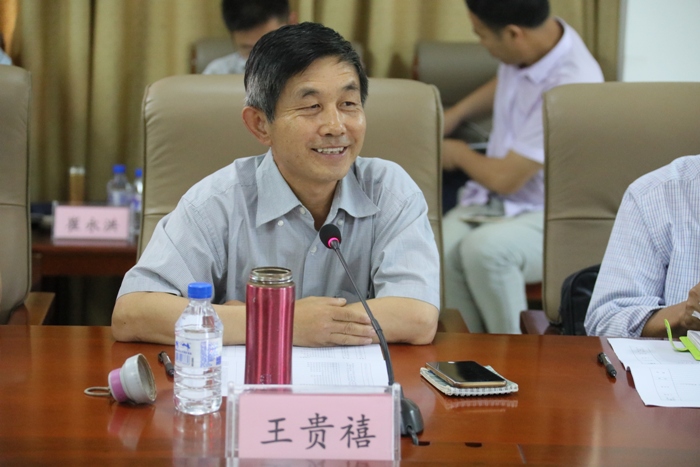 Guixi Wang (王贵禧)合作论文数中国林业科学研究院林业研究所2
 Junshan Qi (齐军山)合作论文数Shandong Academy of Agricultural Sciences2Juan Du (杜娟)合作论文数青岛农业大学生命科学学院2
 Ying Liu合作论文数China Agricultural University, China Agricultural University2
 Xiaoyong Luo (罗小勇)合作论文数College Of Plant Health & Medicine Of Qingdao Agricultural University2Cui Liu (刘翠)合作论文数2
 Tao Kong (孔涛)合作论文数河南科技大学动物与科技学院2Tinggang Li (李廷刚)合作论文数2
 Zejian Guo (郭泽建)合作论文数College of Plant Protection, China Agricultural University2




