A science is defined by a set of encyclopedic knowledge related to facts or phenomena following rules or evidenced by experimentally-driven observations. Computer Science and in particular computer networks is a relatively new scientific domain maturing over years and adopting the best practices inherited from more fundamental disciplines. The design of past, present and future networking components and architectures have been assisted, among other methods, by experimentally-driven research and in particular by the deployment of test platforms, usually named as testbeds. However, often experimentally-driven networking research used scattered methodologies, based on ad-hoc, small-sized testbeds, producing hardly repeatable results. We believe that computer networks needs to adopt a more structured methodology, supported by appropriate instruments, to produce credible experimental results supporting radical and incremental innovations. This paper reports lessons learned from the design and operation of test platforms for the scientific community dealing with digital infrastructures. We introduce the SLICES initiative as the outcome of several years of evolution of the concept of a networking test platform transformed into a scientific instrument. We address the challenges, requirements and opportunities that our community is facing to manage the full research-life cycle necessary to support a scientific methodology.
In this paper, we consider the problem of scheduling network tasks that have to be performed in a given computer network. Each network task consists of the transmission of data files between two nodes of the network and has to be performed in an a priori known time window in such a way that the energy consumed by the network equipment during the transmission of all the considered tasks is minimized. The entire mathematical model of this scheduling problem is proposed. Some results of computational experiments are also presented to show energy savings achieved through implementation of the proposed model in the interdata center network.
Future Internet (FI) test test beds are experimentation platforms comprising different types of resources and located in various geographical locations. The ability to leverage heterogeneous resources across these infrastructures is a key concept in the creation of future intelligent network technologies. This article summarizes the development of a software-defined infrastructure (SDI) that inclu...
This demo paper presents an innovative Software Defined Networking (SDN) based approach to deploying Internet of Things (IoT) applications for Smart Cities. The Poznan Supercomputing and Networking Center (PSNC) together with NoviFlow Inc. and Spirent have jointly developed a demonstration showing how programmable SDN infrastructure can be utilized to significantly simplify the onboarding and provisioning of end-toend IoT solutions for use in multi-tenant networks. The demo features a dynamic global view of the deployed IoT resources with their associated network connections, and the use of OpenFlow Experimenter-based extensions to trigger automated detection and onboarding of IoT devices, ("things") as well as the insertion of metadata into IoT device flows to automate service provisioning. The demonstration also features an SDN application that interfaces between the SDN controller and the cloud orchestrator to instantiate dedicated IoT services inside LXC light containers. The demonstration architecture includes a variety of typical IoT sensors as well as a Spirent TestCenter (STC) emulating metro scale IoT network workflows, interconnected to the cloud via a network composed of NoviFlow 2128 OpenFlow 1.3 switches. To illustrate the use of the solution in a real-world setting, the Poznan Smart City use case is presented, showing how a single common SDN-based platform can be utilized to "slice" a city into multiple smart spaces running over a shared network and cloud infrastructure, and how OpenFlow-enabled network infrastructure can be used to automate the deployment of IoT devices for use in multi-tenant, cloud-based applications.
Public procurements are essential legislative procedures to ensure acquiring best possible costs, to meet the needs of the procurer in terms of quality and quantity, time, and location. In this paper, we provide you with the information about Pre-Commercial Procurement (PCP) procedures being beneficially experienced in a specific area of Optical Networking in public sector, especially National Research and Education Networks (NRENs). To optimize the usage of public funds for building beyond state-of-the-art public networks, this is the main goal of the project: Communication Platform for Tenders of Novels Transport Networks (COMPLETE).
Przedstawiono infrastrukture sieci badawczej PL-LAB2020. Zaprezentowano 7 laboratoriow badawczych PL-LAB umozliwiających prowadzenie badan w glownych ich obszarach zdefiniowanych dla programu Horyzont 2020. Przedstawiono szczegoly struktury operacyjnej PL-LAB2020 lączącej zasoby poszczegolnych laboratoriow zlokalizowane w 6 ośrodkach naukowo-badawczych w jedno rozproszone środowisko badawcze. Ostatecznie pokazano, jak infrastruktura PL-LAB2020 zostala polączona z innymi sieciami badawczymi w Europie.
Programmable networks are a substantial part of current R&D on future internet (FI) in Europe and worldwide, with considerable impact generated by large-scale test bed infrastructures. In such test beds, researchers validate proof-of-concept prototypes for new algorithms and mechanisms for efficiently controlling and managing network resources. One of the key domains for FI research is software-defined networking (SDN), which creates innovations in existing Internet architectures by shifting the control and logic outside the network equipment to Data Centres. International cooperation among leading research centres in Europe, Americas and Asia is key to validate SDN foundations and tools. EU and Japan have jointly funded the FELIX project (federated test-beds for large-scale infrastructure experiments), which defines a common control and orchestration framework to manage federated FI test beds across continents. This framework enables an experimenter to (i) request and obtain resources across different test bed infrastructures dynamically; (ii) manage and control the network paths connecting the federated SDN test beds; (iii) monitor the underlying resources and (iv) use distributed applications executed on the federated infrastructures. This paper describes the high-level architecture of the FELIX framework and details six use cases that will be employed for validation. We present our analysis and end-user considerations, highlighting the necessity for resource accessibility and coherent use of physical connections over a large-scale test bed where different control technologies such as OpenFlow and the network service interface (NSI) are simultaneously used.
This demo paper presents the FELIX project approach of implementation the "High Quality Media Transmission over long-distance networks" use case. A virtual slice built on demand over European and Japan infrastructure allows to perform the experiments and shows capabilities of the test-bed and its availability for high quality media streaming experiments over a long distance federated network. It is also the first time when the FELIX Control Framework is used for provisioning the SDN resources for the experiments. Two experiments for use case implementation and validation in the FELIX test-bed are proposed and described.
This article presents the design and pilot implementation of a suite of intelligent methods, algorithms, and tools for federating heterogeneous experimental platforms (domains) toward a holistic Future Internet experimentation ecosystem. The proposed framework developed within the NOVI research and experimentation European collaborative effort, aims at providing a modular data, control, and management plane architecture that includes: an information model capturing the abstractions of virtualized resources residing in different yet interworking experimental platforms; resource mapping algorithms tackling the inter-domain virtual network embedding problem; mechanisms providing interoperability of monitoring tools; policy-based management services for role-based intra and inter-domain management policies; and dataplane stitching mechanisms to enable the composition of user-specific slices (baskets of virtual resources drawn from the federated substrate). The NOVI framework was deployed and validated in a combined testbed consisting of two dissimilar platforms: a private PlanetLab domain with resources interconnected over the public Internet; and FEDERICA, an infrastructure of virtual resources interconnected via dedicated networking facilities of European National Research and Education Networks and GÉANT. This pre-normative work is expected to contribute to bridging Future Internet experimental federations with interconnected cloud architectures and interworked public/private data-centers, adding value via its intelligent services, information models, and composite algorithms.
The development of test environments as close as possible to the real world scenarios is becoming a fundamental requirement in designing innovative network applications. This environment must be fully configurable and reliable enough to provide similar results in multiple experiment runs. The federation of existing Future Internet (FI) test beds is an initiative tofu fill these strict requirements. The FELIX project aims to define, implement, and deploy a control and monitoring framework which allows experimenters to execute their network services in a distributed environment spread across two continents, i.e. Europe and Asia. This paper describes the architecture of the software components developed to manage heterogeneous resources that constitute the FELIX infrastructure, i.e. Computing, SDN and transport resources. This article introduces the components of a modular architecture with particular emphasis on the provided functionalities, the exported interfaces, the dependencies and the relationship between the internal building blocks. Details of the implementation choices and the workflows to realize user requests are also presented.
OpenFlow is a leading standard for Software-Defined Networking (SDN) and has already played a significant role in reshaping network infrastructures. However, a wide range of existing provider domains is still not equipped with a framework that supports wider deployment of an OpenFlow-based control plane beyond Ethernet-dominated networks. We address this gap by introducing a Hardware Abstraction Layer (HAL) which can transform legacy network elements into OpenFlow capable devices. This paper details the functional architecture of HAL, discusses the key design aspects and explains how HAL can support a number of network device classes. In addition, this paper presents the implementation details of HAL for hardware platforms such as DOCSIS (Data over Cable Service Interface Specification) and DWDM (Dense Wavelength Division Multiplexing) which have so far received little attention by the OpenFlow research community despite their wide real-world deployment.
Despite continuous developments in this area, Software Defined Networking (SDN) still seeks for a flexible way of defining a network device behaviour. The control plane needs to be able to fully utilize growing capabilities of modern networking hardware and its diversity. In this paper we propose a new hardware abstraction for various network devices (network processors, optical devices and access devices). The first goal of this proposal is to expose advanced programmability capabilities of network processors and software switches. The second goal of our proposal is to extend the concept of the network node programmability by giving a possibility to dynamically check capabilities supported by a particular network device. The third goal of this paper is to introduce programming language which use new-defined API to Programmable Abstraction of Data path (PAD) for different kind of network devices. The presented solution ensures therefore flexibility and adaptability of the new programmable functions to specific requirements of a device. The proposed solution creates a unified way of controlling and configuring a variety of families of network devices from optical switches to x86-based appliances.
The recent evolution of cloud services is leading to a new service transformation paradigm to accommodate network infrastructures in a cost-scalable way. In this transformation, the network constitutes the key to efficiently connect users to services and applications. In this paper we describe the deployment, validation and demonstration of the optical integrated testbed for the “GEneralized architecture for dYnamic infrastructure SERviceS” (GEYSERS) project to accommodate such cloud based Infrastructure Services. The GEYSERS testbed is composed of a set of local physical testbeds allocated in the facilities of the GEYSERS partners. It is built up based on the requirements specification, architecture definition and per-layer development that constitutes the whole GEYSERS ecosystem, and validates the procedures on the GEYSERS prototypes. The testbed includes optical devices (layer 1), switches (layer 2), and IT resources deployed in different local testbeds provided by the project partners and interconnected among them to compose the whole testbed layout. The main goal of the GEYSERS testbed is twofold. On one hand, it aims at providing a validation ground for the architecture, concepts and business models proposed by GEYSERS, sustained by two main paradigms: Infrastructure as a Service (IaaS) and the coupled provisioning of optical network and IT resources. On the other hand, it is used as a demonstration platform for testing the software prototypes within the project and to demonstrate to the research and business community the project approach and solutions. In this work, we discuss our experience in the deployment of the testbed and share the results and insights learned from our trials in the process. Additionally, the paper highlights the most relevant experiments carried out in the testbed, aimed at the validation of the overall GEYSERS architecture.
 Dimitra Simeonidou合作论文数Smart Internet Lab, Faculty of Engineering, University of Bristol;Bristol Digital Futures Institute, University of Bristol15
 Eduard Escalona合作论文数University of Essex14
 Reza Nejabati合作论文数University of Essex13
 Anna Tzanakaki合作论文数Athens Information Technology13
 Damian Parniewicz合作论文数13
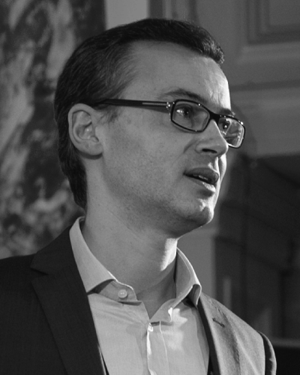 Nicola Ciulli合作论文数The working group where he or she is active appear to be ccamp13
 Lukasz Ogrodowczyk合作论文数12Artur Binczewski合作论文数Sorry, no bio available. Please contact the speaker for more information10Maciej Stroinski合作论文数9
 Sergi Figuerola合作论文数i2CAT Foundation, c/ Gran Capità 2-4, Edifici Nexus I, 2a planta, desp. 203, Barcelona, Spain 080348Gino Carrozzo合作论文数7
 Landi, Giada合作论文数7
 Pascale Vicat-Blanc Primet合作论文数Centre de recherche Inria Lyon, National Institute for Research in Computer Science and Control;INRIA7
 Jordi Ferrer Riera合作论文数i2CAT Foundation, c/ Gran Capità 2-4, Edifici Nexus I, 2a planta, desp. 203, Barcelona, Spain 080347Joan a Garciaespin合作论文数6
 Cees de Laat合作论文数Informatics Institute, Faculty of Science, University of Amsterdam6
 Marc Brogle合作论文数6
 Kostas Pentikousis合作论文数Detecon International GmbH6Artur Juszczyk合作论文数5
 Georgios Zervas合作论文数Department of Electronic and Electrical Engineering, Faculty of Engineering Sciences, University College London5
 Chris Develder合作论文数IDLab, Department of Information Technology, Ghent University5Krzysztof Dombek合作论文数5Umar Toseef合作论文数University of Bremen5
 Yuri Demchenko合作论文数Fraunhofer Institut SCAI, 53754 Sankt Augustin, GermanyPoznan Supercomputing and Networking Center, Noskowskiego 12/14 , 61-704 Poznan, Poland5
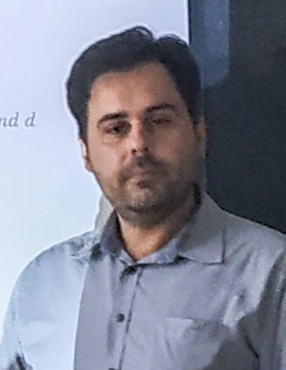 Markos Anastasopoulos合作论文数National and Kapodistrian University of Athens5
 Shuping Peng合作论文数State Key Laboratory of Advanced Optical Communication Systems & Networks, Peking University5g landi合作论文数4Tanaka, J.合作论文数4
 Eduardo Jacob合作论文数Departamento de Electr ·;Telecomunicaciones / Elektronika eta Telekomunikazioak Saila;Euskal Herriko Unibertsitatea, Universidad del Pais Vasco;Euskal Herriko Unibertsitatea, Universidad del Pais Vasco4Joan Antoni García Espín合作论文数4Tomohiro Kudoh合作论文数4
 Jens Buysse合作论文数4Iwo Olszewski合作论文数4G. Carrozzo合作论文数3Jakub Gutkowski合作论文数3Nikos Makris合作论文数3
 Giacomo Bernini合作论文数3
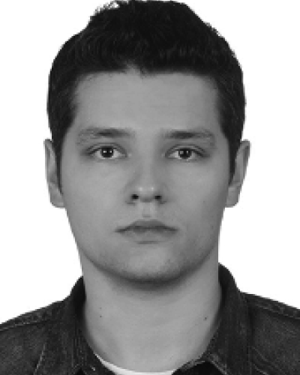 Piotr Wisniewski合作论文数3
 Carolina Fernandez合作论文数Department of Information and Communication Technologies, Universitat Pompeu Fabra3Cedric Crettaz合作论文数3Victor Fuentes合作论文数3George Markidis合作论文数3L. Lopatowski合作论文数3
 Vasilis Maglaris合作论文数National Technical University of Athens3
 Remigiusz Rajewski合作论文数Pozna, Poznan University of Technology3Jon Matías合作论文数Faculty of Engineering of Bilbao, University of the Basque Country3
 Sebastien Soudan合作论文数RESO Team;LIP Laboratory;ENS Lyon, UCB3
 Konstantinos Georgakilas合作论文数3




