The great hopes in Brussels that a circular bioeconomy will help bridge the growing divide between urban and rural areas and allow the hinterlands to prosper from ‘green growth’ are addressed in this article, which reflects on insights from three Nordic case studies of brown, green and blue biomass use at different levels of technology readiness. A closer examination of the forward, backward, fiscal and final demand linkages at regional level from increased biomass utilization, from eastern Finland and northern Sweden to Jutland and North Atlantic islands, suggests that linkages are and will remain relatively weak, predominantly dashing the expectations. As suppliers and exporters of natural resources, disadvantaged regions may all too easily get locked into a ‘staples trap’, where the value creation evaporates owing in part to the steep start‐up costs and the associated boom‐and‐bust cycles, which place them in a weak position vis‐à‐vis the resource manufacturers and consumers. To make the prospects of development, employment and prosperity in the hinterlands materialize, measures are needed to strengthen the regional‐level economic linkages. Regional‐level revolving funds based on benefit‐sharing instruments related to natural resources can be used to bolster economic development, as reflected in such schemes present in both China and Canada. We call for further research into whether and how such approaches can be replicated successfully by channeling revenues from biomass cultivation to regional‐scale revolving funds, with mandates to strengthen long‐term economic linkages and prosperity within the hinterlands. © 2022 The Authors. Biofuels, Bioproducts and Biorefining published by Society of Industrial Chemistry and John Wiley & Sons Ltd
Energy intensive industries (EIIs), producing the basic materials and products needed in society, contributesignificantly to global emissions of greenhouse gases (GHGs). Motivated by the fear of carbon leakage, climatepolicy has so far treated the EIIs leniently with e.g. low carbon prices and/or free allocation of emissionallowances. This has not resulted in more than marginal emission abatement. However, the emissions from EIIshave to approach zero by 2050 to 2070, following the overall target of the Paris Agreement. It is therefore urgentto develop policy strategies for a deep decarbonisation of EIIs.In this study we explore the role of various policy instruments in the transformation of EIIs to zero emissionsand how they can be combined. In our analysis we acknowledge the specificities of the various EII sectors withregard to mitigation options (e.g. available technologies and potential for recycling), market situation, andfeedstock substitutability. The feasibility of specific policy instruments depends on these specificities and mighttherefore differ between subsectors of the EII.The analysis of instruments is structured through an extended typology that takes its starting point in theeconomic impact the instruments have on the actors. The types of instruments include the commonly usedsticks, carrots and sermons, as well as an additional type that we call “cushions” (Sticks, carrots and sermons areoften assumed to be equal to regulation, economic instruments and information but we have slightly adapted theconcepts to fit our “resource” perspective). These cushions can be flanking policies, that soften the negativeeffects on competitiveness that follow from implementing policy instruments, while climate policies betweencountries are not in pace. We also differentiate between instruments according to where along the value chainthey are applied. How different instruments affect the competitiveness of industry is a key consideration.We conclude that both energy and material efficiency, emissions-free processes and clean energy are needed totransform the EIIs. For this purpose a range of instruments can be used in different parts of the value chain andthe mix can change over time as technologies, markets and institutions change. New approaches to policyevaluation are needed to assess the combined and long term effects of such policy strategies.
Abstract This chapter employs qualitative analysis to apply the Index of Policy Activity (IPA) to climate policy in Sweden and Demark—two countries often identified as environmental leaders. It finds that the economic crisis that started in 2007–8 had substantial impacts in both states. However, Denmark, which was hit harder and for a much longer period of time than Sweden, witnessed more dismantling of its environmental policy. The analysis suggests that in both countries the political orientation of the government and changes of government proved to be key factors shaping policy ambition. Path dependence, manifested in an entrenched commitment to ecological modernization, helped to maintain support for progressive environmental policy. International pressure was also central in pushing Sweden in particular to express leadership and to promote ambitious climate policy.
Purpose– Scenarios have become a vital methodological approach in business as well as in public policy. When scenarios are used to guide analysis and decision-making, the aim is typically robustness and in this context we argue that two main problems at scenario set level is conservatism, i.e. all scenarios are close to a perceived business-as-usual trajectory and lack of balance in the sense of arbitrarily mixing some conservative and some extreme scenarios. The purpose of this paper is to address these shortcomings by proposing a methodology for generating sets of scenarios which are in a mathematical sense maximally diverse.Design/methodology/approach– In this paper, we develop a systematic methodology, Scenario Diversity Analysis (SDA), which addresses the problems of broad span vs conservatism and imbalance. From a given set of variables with associated states, SDA generates scenario sets where the scenarios are in a quantifiable sense maximally different and therefore best span the whole set of feasible scenarios.Findings– The usefulness of the methodology is exemplified by applying it to sets of storylines of the emissions scenarios of the Intergovernmental Panel on Climate Change. This ex-post analysis shows that the storylines were not maximally diverse and given the challenges ahead with regard to emissions reduction and adaptation planning, we argue that it is important to strive for diversity when developing scenario sets for climate change research.Originality/value– The proposed methodology adds significant novel features to the field of systematic scenario generation, especially with regard to scenario diversity. The methodology also enables the combination of systematics with the distinct future logics of good intuitive logics scenarios.
in Undetermined Sometimes energy security is used as an advocacy for renewable energy systems. Although renewable energy systems can surely have such characteristics they will not per se solve all types of security problems, and new problems will most certainly arise. In this paper, energy security aspects of renewable energy systems are analysed taking the starting point in a broad typology on energy security. Various renewable energy systems will be discussed from an EU perspective, however noticing the on-going development of global renewable energy markets. Three specific areas will be discussed more thoroughly: the expansion of biofuels, the integration of large quantities of variable electricity in the electricity system, and the existing plans for providing significant parts of renewable electricity from Northern Africa. Furthermore, the importance of various institutions is touched upon. (Less)
The use of biomass in Sweden has increased by 88% between 1980 and 2002. In 2002 it was 89 TWh, equivalent to 14% of the total Swedish energy supply. The existence of a large forest industry and district heating systems has been an essential condition for this expansion. The tax reform in 1991 seems, however, to have been the most important factor responsible for the rapid bioenergy expansion. Last year a system with green certificates was introduced aiming at increasing annual electricity production from renewable energy by 10 TWh between 2002 and 2010. The coming EU system for emission trading will lead to increasing electricity prices thereby improving the competitiveness for renewable electricity. If, however, new fossil-fuel based cogeneration plants achieve emission rights at no cost, while taxes in the sectors included in the trading system are removed, biomass-based heat and cogeneration plants will have problems to compete with fossil-fuel based plants.
The report discusses the conditions for replacing petrol and diesel by biofuels, with respect to biofuel resources, ecological, industrial and agricultural policy restrictions on the use of biofuels for energy purposes, and the possible need for biofuels for production of electricity and heat. Compared with 1994, annual Swedish use of biofuels would increase by ca 125 TWh. This would be enough to cover both present fuel needs and estimated needs up to 2015. Even if biofuels are primarily used for production of heat and electricity, which is a more effective way of reducing CO2 than using them for vehicles, there would be considerable quantities of biofuels for production of fuels if other non-fossil energy sources are utilised for electricity production and/or there are considerable increases in energy efficiency. Export of biofuels to other countries to replace fossil fuels for production of electricity and heat may be more or equally cost effective way of reducing CO2 emissions than using Swedish biofuel resources for domestic fuel production. However, estimates have very large uncertainties and are greatly dependent on location of biofuel resources and on potential users.
 andre mansson合作论文数3
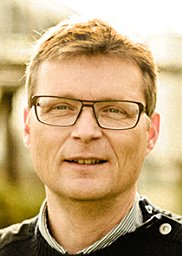 Lars J. Nilsson合作论文数Faculty of Engineering, Lund University3
 Roger Hildingsson合作论文数Department of Political Science, Lund University3Jamil Khan合作论文数Lund University2
 Annica Kronsell合作论文数Department of Political Science, Lund University2
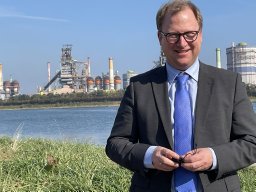 Max Åhman合作论文数Department of Environmental and Energy Systems Studies, Lund University2Barbara Hedeler合作论文数1
 Fredrik Andersson合作论文数Department of Economics, Lund University;Center for Economic and Policy Research1
 Marianne Thomsen合作论文数Department of Food Science, Faculty of Science, University of Copenhagen1
 Teis Hansen合作论文数Department of Food and Resource Economics, Faculty of Science, University of Copenhagen1
 Tor Hakon Jackson Inderberg合作论文数Fridtjof Nansen Inst Polhogda1E Jochem合作论文数1
 Oscar Svensson合作论文数Environm & Energy Syst Studies, Lund Univ1
 Jakob Skovgaard合作论文数Department of Political Science, Lund University1
 Helle Orsted Nielsen合作论文数1
 Kornelis Blok合作论文数Faculty of Electrical Engineering, Mathematics and Computer Science, Delft University of Technology1
 Leif Gustavsson合作论文数Department of Built Environment and Energy Technology, Faculty of Technology, Linnaeus University1Henrik Carlsen合作论文数Swedish Defence Research Agency1
 Karin Ericsson合作论文数Environmental and Energy Systems Studies, Lund University1
 Lars Coenen合作论文数Mohn Centre for Innovation and Regional Development, Western Norway University of Applied Science/The University of Melbourne1
 Ad van Wijk合作论文数Delft University of Technology;KWR Water Research Institute1
 Tuula Teravainen-Litardo合作论文数1
 Måns Nilsson合作论文数Stockholm Environment Institute/The Royal Institute of Technology1
 Martin Patel合作论文数Institute for Environmental Sciences, University of Geneva1
 Massimo Pizzol合作论文数Department of Development and Planning, Aalborg University1
 Ernst Worrell合作论文数Copernicus Institute of Sustainable Development, Utrecht University1Gunnar Modig合作论文数1
 Jon Birger Skjærseth合作论文数Fridtjof Nansen Institute1
 E.A. Alsema合作论文数1E. Anders Eriksson合作论文数Division of Defence Analysis, National Defence Research Establishment1Karl Henrik Dreborg合作论文数1
 Rauno Sairinen合作论文数Centre for Urban;Helsinki University of Technology;Centre for Urban, Helsinki University of Technology1
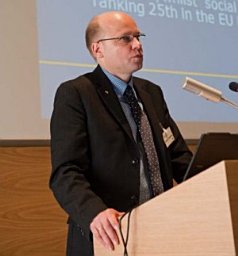 Mikael Skou Andersen合作论文数National Environmental Research Institute (NERI),, Aarhus University1
 Patrik Söderholm合作论文数Social Sciences Division, Department of Social Sciences, Technology and Arts, Luleå University of Technology;Department of Business Administration, Technology and Social Sciences, Luleå University of Technology1
 Daniel Jonsson合作论文数Division of Transport and Systems Analysis, Department of Urban Planning and Environment, School of Architecture and the Built Environment, KTH Royal Institute of Technology1
 Wolfgang Eichhammer合作论文数Fraunhofer Institute for Systems and Innovation Research1




