Abstract Age is a major risk factor for lung disease. Accumulation of somatic mutations has been implicated in both aging and cellular senescence. We analyzed somatic mutations called from single-cell RNAseq (scRNAseq) data. scRNAseq was performed on lung parenchyma samples from healthy donors (32 samples, 11-72 years, 21M/11F). Following standard pre-processing and cell type annotation, mutations were called using SComatic with the default parameters. Mutation burden was calculated for each cell type-sample combination by dividing the number of mutations by the number of callable sites. Our resulting scRNAseq dataset consisted of 199,400 cells, comprising 25 distinct cell types. Mutation burden was highest in alveolar type 1 (AT1) cells (93.6 mutations/MB), alveolar macrophages (79.1), and general capillary (gCap) cells (62.1). Mutation burden was positively correlated with age (r=0.28, p< 0.001). Globally, the top genes correlated with mutation burden included ubiquitin ligase genes (AMBRA1, ANAPC1, SEL1L, USP25, USP33) and DNA damage response genes (RAD50, PRKDC). Notably, mutation burden also correlated with expression of senescence marker CDKN2A (r=0.48, p< 0.05). In AT1 cells, mutation burden correlated with decreased expression of cell marker genes such as AGER (r=-0.64, p< 0.05) and HOPX (r=-0.83, p< 0.05). Similarly, gCap cells exhibited decreased expression of marker genes Il7R (r=-0.54) and VIPR1 (r=-0.64), while MAPK/ERK signaling genes were increased (p < 0.05). These genes were also significantly correlated with age in the same direction (p < 0.05). These results suggest that somatic mutation accumulation may contribute to age-associated transcriptional changes and loss of cell function, with cell types of the alveoli and endothelium experiencing the greatest effects.
Supplementary Figure Legends 1-2, Methods from SLC45A3-ELK4 Is a Novel and Frequent Erythroblast Transformation–Specific Fusion Transcript in Prostate Cancer
Supplementary Figure 1 from SLC45A3-ELK4 Is a Novel and Frequent Erythroblast Transformation–Specific Fusion Transcript in Prostate Cancer
Supplementary Figure 2 from SLC45A3-ELK4 Is a Novel and Frequent Erythroblast Transformation–Specific Fusion Transcript in Prostate Cancer
"Defining the Genetic Landscape of IPF: Role of Common and Rare Variants ." American Journal of Respiratory and Critical Care Medicine, 0(ja), pp. –
The pathogenesis of idiopathic pulmonary fibrosis (IPF) involves a complex interplay of cell types and signaling pathways. Recurrent alveolar epithelial cell (AEC) injury may occur in the context of predisposing factors (e.g., genetic, environmental, epigenetic, immunologic, and gerontologic), leading to metabolic dysfunction, senescence, aberrant epithelial cell activation, and dysregulated epithelial repair. The dysregulated epithelial cell interacts with mesenchymal, immune, and endothelial cells via multiple signaling mechanisms to trigger fibroblast and myofibroblast activation. Recent single-cell RNA sequencing studies of IPF lungs support the epithelial injury model. These studies have uncovered a novel type of AEC with characteristics of an aberrant basal cell, which may disrupt normal epithelial repair and propagate a profibrotic phenotype. Here, we review the pathogenesis of IPF in the context of novel bioinformatics tools as strategies to discover pathways of disease, cell-specific mechanisms, and cell-cell interactions that propagate the profibrotic niche.
Critical Care Medicine: January 2020 - Volume 48 - Issue 1 - p 677 doi: 10.1097/01.ccm.0000645520.77275.1f
[This corrects the article DOI: 10.1093/ofid/ofaa307.].
 Francesca Demichelis合作论文数Department of Cellular, Computational and Integrative Biology, University of Trento;Laboratory of Computational and Functional Oncology, Centre for Integrative Biology, University of Trento19
 Mark Rubin合作论文数Department for BioMedical Research, Faculty of Medicine, University of Bern;Bern Center for Precision Medicine, University of Bern19
 David Rickman合作论文数Pathology and Laboratory Medicine, Weill Cornell Medicine, Cornell University17
 Ivan O Rosas合作论文数Department of Medicine, Baylor College of Medicine;Brigham and Women's Hospital;Harvard Medical School, Harvard University15
 Tewari Ash合作论文数12Dorothee Pflueger合作论文数12
 Mark B Gerstein合作论文数School of Engineering & Applied Science, Yale University11
 Cristian Coarfa合作论文数Dan L. Duncan Cancer Center, Advanced Technology Core, Alkek Center for Molecular Discovery, Baylor College of Medicine;Department of Molecular and Cell Biology, Baylor College of Medicine;Center for Precision Environmental Health, Baylor College of Medicine11
 Andrea Sboner合作论文数Department of Pathology and Laboratory Medicine, Sandra and Edward Meyer Cancer Center, Weill Cornell Medical School;Institute for Computational Biomedicine, Sandra and Edward Meyer Cancer Center, Weill Cornell Medical School;Institute for Precision Medicine, Sandra and Edward Meyer Cancer Center, Weill Cornell Medical School10
 Naoki Kitabayashi合作论文数10
 Neil J McKenna合作论文数Dan L Duncan Comprehensive Cancer Center, Baylor College of Medicine9
 F. Poli合作论文数Dept Med, Baylor Coll Med8
 Christopher LaFargue合作论文数8
 Sven Perner合作论文数University Hospital of Luebeck;Department of Pathology, Leibniz Research Center Borstel8Rainer Kuefer合作论文数8K. Tsoyi合作论文数7Stéphane Terry合作论文数INSERM, Univ Paris Saclay7
 Alexandre De La Taille合作论文数Hopitaux universitaires Henri Mondor;d’Urologie du CHU Mondor7
 Maria A Svensson合作论文数7
 Sunita R. Setlur合作论文数Takeda7J. D. Cala Garcia合作论文数6Vanessa E. VanDoren合作论文数6R. E. Cardenas Castillo合作论文数6
 Arul M. Chinnaiyan合作论文数Rogel Cancer Center, Department of Pathology and Clinical Laboratories, University of Michigan;Michigan Center for Translational Pathology, University of Michigan;Howard Hughes Medical Institute6A.R. Waich合作论文数5Yihang Pan合作论文数5Scott A. Ochsner合作论文数5
 Stefan W Ryter合作论文数4
 Tarek A Bismar合作论文数Dept Pathol & Lab Med, Univ Calgary4
 Ari M. Melnick合作论文数Departments of Medicine and Pharmacology, Weill Cornell Medical College4
 Karen A. Bunting合作论文数4MacDonald Theresa合作论文数4Soong T David合作论文数4
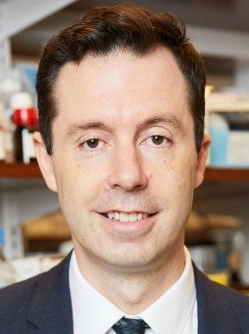 Olivier Elemento合作论文数Englander Institute for Precision Medicine, Weill Cornell Medical College;Institute for Computational Biomedicine , Weill Cornell Medical College;Clinical & Translational Science Center, Weill Cornell Medical College;Department of Physiology and Biophysics, Weill Cornell Medical College;Laboratory of Cancer Systems Biology, Weill Cornell Medical College;Institute for Computational Medicine, Weill Cornell Medical College;Meyer Cancer Center, Weill Cornell Medical College4Raquel Esgueva合作论文数4Lukas Habegger合作论文数Department of Molecular Biophysics and Biochemistry, Yale University4R. Kanchi合作论文数3S. A. Ochsner合作论文数3Chen X. Chen合作论文数3S. Poli De Frias合作论文数3Pei-Chun Lin合作论文数3
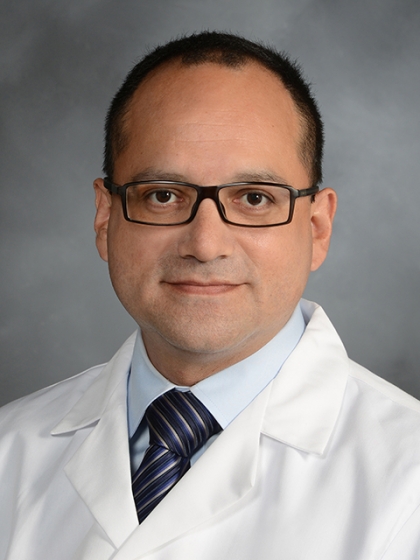 Juan Miguel Mosquera合作论文数Department of Pathology and Laboratory Medicine, Weill Cornell Medical College, Cornell University;New York-Presbyterian Hospital3
 Naftali Kaminski合作论文数Yale School of Medicine;Boehringer Ingelheim Pharmaceuticals, Inc.3Peter Juo合作论文数3Xuhong Cao合作论文数3M. J. Robertson合作论文数2F. Romero合作论文数2L. J. Celada合作论文数2J. Whiteford合作论文数2




