Signal processing applications have been shown to map well to time multiplexed coarse grained reconfigurable array (CGRA) devices, and can often be decomposed into a set of communicating kernels. This decomposition can facilitate application development and reuse but has significant consequences for tools targeting these devices in terms of allocation and arrangement of resources. This paper presents a CGRA floorplanner to optimize the division and placement of resources for multi-kernel applications. The task is divided into two phases aligned with the respective goals. Resource allocation is accomplished through incremental assignment to minimize performance bottlenecks while operating within the bounds of the maximum available resources. The resulting allocation of resources is arranged in the device using simulated annealing and a perimeter-based cost function which serves to minimize resources needed for both interand intra-kernel communications. The floorplanner is applied to a set of multi-kernel benchmarks demonstrating resource allocations providing maximum throughput across a range of available resources. The algorithms are very fast, taking only a few seconds while producing high quality results. Inter-kernel wire lengths are almost always minimal, and the resource allocation is proven optimal.
It is hard to optimize applications for coprocessor accelerator architectures, like FPGAs and GPUs, because application parameters must be tuned carefully to the size of the target architecture. Moreover, some combinations of parameters simply do not work, because they lead to overuse of a constrained resource. Applying auto-tuning---the use of search algorithms and empirical feedback to optimize programs---is an attractive solution, but tuning in the presence of unpredictable failures is not addressed well by existing auto-tuning methods. This paper describes a new auto-tuning method that is based on probabilistic predictions of multiple program features (run time, memory consumption, etc.). During configuration selection, these predictions are combined to balance the preference for trying configurations that are likely to be high quality against the preference for trying configurations that are likely to satisfy all constraints. In our experiments, our new auto-tuning method performed substantially better than the simpler approach of treating all failed configurations as if they succeed with a "very low" quality. In many cases, the simpler strategy required more than twice as many trials to reach the same quality level in our experiments.
We believe that FPGA-like parallel coprocessor accelerators can be programmed efficiently at the “C level” of abstraction. In order to support this claim we define an abstract architectural model of accelerators that conveys the kind of high-level behavior and performance characteristics that the von Neumann model conveys to programmers of conventional processors. Using the model as a guide we define a programming language and compilation strategy that: 1. do not impose programming style restrictions that are not inherent in the model, 2. do not introduce serious inefficiencies, and 3. are performance portable across implementations of the model. In this dissertation I describe C-level programming of accelerators broadly, and make three particular contributions to the programmability of accelerators. Enhanced loop flattening is a new method for translating loop nests with arbitrary static control flow into a form that can be efficiently pipelined with conventional algorithms designed for simple loops. This method advances the goal of supporting a wide set of programming styles with reasonable efficiency. Parallel accelerators have statically managed resources—like local memories—that vary widely in capacity from one implementation to the next. In order to get close to peak performance, applications must be tuned to the specific resources available in a given implementation, and empirical auto-tuning is an attractive way to do that. I propose and evaluate a new probabilistic auto-tuning method that elegantly handles situation where many possible configurations of the application fail to work at all because they exceed some architectural resource limit. For many applications, achieving good performance on parallel accelerators requires deep loop pipelining, which requires dramatically reordering the individual operations in the application. Local dependencies between operations can be respected by compilers relatively easily, but non-local dependencies force implementations to choose between conservatively not reordering operations (which might kill performance), proving that reordering preserves the meaning of the program (which is impossible in the general case), or making unsound transformations (which programmers generally dislike). I propose a mostly sequential operational semantics for C-level streaming languages targeted at parallel accelerators that offers enough flexibility to the implementation to achieve good performance, deviates from conventional program-order semantics in fairly modest and understandable ways, and provides tools with which the programmer can control the reordering performed by the implementation. These innovations are evaluated in the context of Macah, a new C-like language developed in the Mosaic group at the University of Washington. For validation we use a number of compute-intensive benchmarks developed by members of the Mosaic group and other contributors.
Spatially-tiled architectures, such as coarse-grained reconfigurable arrays (CGRAs), are powerful architectures for accelerating applications in the digital-signal processing, embedded, and scientific computing domains. In contrast to field-programmable gate arrays (FPGAs), another common accelerator, they typically time-multiplex their processing elements and are word rather than bit-oriented. These differences lead us to re-examine some of the traditional architecture choices made for FPGAs as we move to these coarser-granularity architectures. In this paper we study the efficiency of time-multiplexing global interconnect as architectures scale from single-bit to multi-bit datapaths. Using the Mosaic infrastructure, we analyzed the design trade-offs involved in static vs. time-multiplexed routing for global interconnect channels, as well as the benefit of including a dedicated bit-wide control interconnect to supplement the word-wide datapath of a CGRA. We show that a time-multiplexed interconnect is beneficial in these coarse-grained systems, reducing the area-energy product to 0.32times the area-energy product of a fully static interconnect. We also show that for our benchmarks, which include single-bit control logic, providing both word and bit-wide interconnect resources further reduces the area-energy product to 0.94times that of an exclusively word-wide interconnect.
In this paper we present SPR, a new architecture-adaptive mapping tool for use with Coarse-Grained Reconfigurable Architectures (CGRAs). It combines a VLIW style scheduler and FPGA style placement and pipelined routing algorithms with novel mechanisms for integrating and adapting the algorithms to CGRAs. We introduce a latency padding technique that provides feedback from the placer to the scheduler to meet the constraints of a fixed frequency device with configurable interconnect. Using a new dynamic clustering method during placement, we achieved a 1.3x improvement in throughput of mapped designs. Finally, we introduce an enhancement to the PathFinder algorithm for targeting architectures with a mix of dynamically multiplexed and statically configurable interconnects. The enhanced algorithm is able to successfully share statically configured interconnect in a time-multiplexed way, achieving an average channel width reduction of .5x compared to non-shared static interconnect.
Coprocessor accelerator architectures like FPGAs and GPUs are increasingly used in embedded systems because of their high per- formance on computation-heavy inner loops of a variety of appli- cations. However, current languages and compilers for these archi- tectures make it challenging to efficiently implement kernels that have complex, input-dependent control flow and data access pat- terns. In this paper we argue that providing language support for such kernels significantly broadens the applicability of accelerator architectures. We then describe a new language-called Macah-and compiler that provide this support. Macah is a "C-level" language, in the sense that it forces programmers to think about some of the abstract architectural characteristics that make accelerators different from conventional processors. However, the compiler still fills in several important architecture-specific details, so that programming in Macah is substantially easier than using hardware description languages or coprocessor-specific assembly languages. We have implemented a prototype Macah compiler that produces simulatable Verilog which represents the input program mapped onto a model of an acceler- ator. Among other applications, we have programmed a complex kernel taken from video compression in Macah and have it running in simulation.
Coarse-grained reconfigurable architectures (CGRAs) have the potential to offer performance approaching an ASIC with the flexibility, within an application domain, similar to a digital signal processor. In the past, coarsegrained reconfigurable architectures have been encumbered by challenging programming models that are either too far removed from the hardware to offer reasonable performance or bury the programmer in the minutiae of hardware specification. Additionally, the ratio of performance to power hasn’t been compelling enough to overcome the hurdles of the programming model to drive adoption. The goal of our research is to improve the power efficiency of a CGRA at an architectural level, with respect to a traditional island-style FPGA. Additionally, we are continuing previous research into a unified mapping tool that simplifies the scheduling, placement, and routing of an application onto a CGRA.
Platform FPGAs that integrate sequential processors with a spatial fabric have become prevalent. While these hybrid architectures ease the burden of integrating sequential and spatial code in a single application, programming them, and particularly their spatial fabrics remains challenging. The difficulty arises in part from the lack of an agreed upon computational model and family of programming languages. In addition, moving algorithms into hardware is an arcane art far removed from the experience of most programmers. To address this challenge, we present a new type architecture, an abstract model analogous to the von Neumann machine for sequential computers, that can serve as common ground for algorithm designers, language designers, and hardware architects. We show that many parallel architectures, including platform FPGAs, are implementations of this type architecture. Using examples from a variety of application domains, we show how algorithms can be analyzed to estimate their performance on implementations of this type architecture. This analysis is done without having to delve into the details of any architecture in particular. Finally, we describe some of the common features of languages designed for expressing micro-parallelism, highlighting connections with the type architecture
In this paper, we hypothesize that reconfigurable computing is not more widely used because of the logistical difficulties caused by the close coupling of applications and hardware platforms. As an alternative, we propose computing machines that use a single, serial instruction representation for the entire reconfigurable computing application. We show how it is possible to convert, at run-time, the parallel portions of the application into a spatial representation suitable for execution on a reconfigurable fabric. The conversion to spatial representation is facilitated by the use of an instruction set architecture based on an operand queue. We describe techniques to generate code for queue machines and hardware virtualization techniques necessary to allow any application to execute on any platform.
Coprocessor accelerator architectures like FPGAs and GPUs are increasingly used in embedded systems because of their high performance on computation-heavy inner loops of a variety of applications. However, current languages and compilers for these architectures make it challenging to efficiently implement kernels that have complex, input-dependent control flow and data access patterns. In this paper we argue that providing language support for such kernels significantly broadens the applicability of accelerator architectures. We then describe a new language‐called Macah‐and compiler that provide this support. Macah is a “C-level” language, in the sense that it forces programmers to think about some of the abstract architectural characteristics that make accelerators different from conventional processors. However, the compiler still fills in several important architecture-specific details, so that programming in Macah is substantially easier than using hardware description languages or coprocessor-specific assembly languages. We have implemented a prototype Macah compiler that produces simulatable Verilog which represents the input program mapped onto a model of an accelerator. Among other applications, we have programmed a complex kernel taken from video compression in Macah and have it running in simulation.
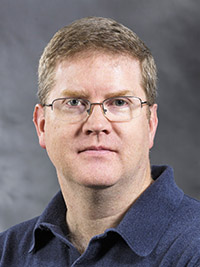 Scott Hauck合作论文数Department of Electrical & Computer Engineering, University of Washington8
 Carl Ebeling合作论文数Altera8
 Brian Van Essen合作论文数Lawrence Livermore National Laboratory7
 Stephen Friedman合作论文数6
 Allan Carroll合作论文数6Aaron Wood合作论文数3
 Dan Grossman合作论文数Paul G. Allen School of Computer Science & Engineering, University of Washington2Benjamin Levine合作论文数1Robin Panda合作论文数1Herman Schmit合作论文数Department of Electrical and Computer Engineering;Carnegie Mellon University1




