Inverse rendering is an ill-posed problem. Previous work has sought to resolve this by focussing on priors for object or scene shape or appearance. In this work, we instead focus on a prior for natural illuminations. Current methods rely on spherical harmonic lighting or other generic representations and, at best, a simplistic prior on the parameters. This results in limitations for the inverse setting in terms of the expressivity of the illumination conditions, especially when taking specular reflections into account. We propose a conditional neural field representation based on a variational auto-decoder and a transformer decoder. We extend Vector Neurons to build equivariance directly into our architecture, and leveraging insights from depth estimation through a scale-invariant loss function, we enable the accurate representation of High Dynamic Range (HDR) images. The result is a compact, rotation-equivariant HDR neural illumination model capable of capturing complex, high-frequency features in natural environment maps. Training our model on a curated dataset of 1.6K HDR environment maps of natural scenes, we compare it against traditional representations, demonstrate its applicability for an inverse rendering task and show environment map completion from partial observations. We share our PyTorch implementation, dataset and trained models at https://github.com/JADGardner/ns_reni
Most currently used object detection methods are learning-based, and can detect objects under varying appearances. Those models require training and a training dataset. We focus on use cases with less data variation, but the requirement of being free of generation of training data and training. Such a setup is for example desired in automatic testing of graphical interfaces during software development, especially for continuous integration testing. In our approach, we use segments from segmentation foundation models and combine them with a simple feature-based classification method. This saves time and cost when changing the object to be searched or its design, as nothing has to be retrained and no dataset has to be created. We evaluate our method on the task of detecting and classifying icons in navigation maps, which is used to simplify and automate the testing of user interfaces in automotive industry. Our methods achieve results almost on par with learning-based object detection methods like YOLO, without the need for training.
LiDAR-captured point clouds are often considered the gold standard in active 3D reconstruction. While their accuracy is exceptional in flat regions, the capturing is susceptible to missing small geometric structures, thin edges, and structures exhibiting challenging surface properties. Alternatively, capturing multiple photos of the scene and applying 3D photogrammetry can infer these details as they often represent feature-rich regions. However, the accuracy of LiDAR for featureless regions is rarely reached. Therefore, we suggest combining the strengths of LiDAR and camera-based capture by introducing SurfFill: a Gaussian surfel-based LiDAR completion scheme. We analyze LiDAR capturings and attribute LiDAR beam divergence as a main factor for artifacts, manifesting mostly at thin structures and edges. We use this insight to introduce an ambiguity heuristic for completed scans by evaluating the change in density in the point cloud. This allows us to identify points close to missed areas, which we can then use to grow additional points from to complete the scan. For this point growing, we employ Gaussian surfels and focus optimization and densification on these ambiguous areas. Finally, Gaussian primitives of the reconstruction in ambiguous areas are extracted and sampled for points to complete the point cloud. To address the challenges of large-scale reconstruction, we extend this pipeline with a divide-and-conquer scheme for building-sized point cloud completion. We evaluate on the task of LiDAR point cloud completion of synthetic and real-world scenes and find that our method outperforms previous reconstruction methods. The project page is located at: https://linus-franke.com/surffill
3D Gaussian Splatting (3DGS) [KKLD23] has transformed novel-view synthesis from RGB images, yet remains restricted to the visible spectrum. Many applications, including agricultural monitoring, rely on multi-spectral imaging, where spectral camera alignment and scalability pose major challenges.We present MS-Splatting-a multi-spectral 3DGS framework enabling unified multi-view consistent reconstruction and rendering across both visible and invisible spectra. Our key component is a neural color representation that encodes per-primitive features shared across spectral bands, decoded through a shallow multi-layer perceptron into spectrum-specific radiance. By leveraging inter-band correlations, this formulation enhances detail while reducing memory consumption compared to independent band modeling via per-channel modeling with spherical harmonics.Our method enables accurate parallax-free novel-view vegetation index rendering for plant monitoring and enhances RGB novel view synthesis quality by exploiting details revealed through multi-spectral bands. Our evaluation demonstrates that MS-Splatting exceeds the current leading methods in both categories. In addition, we introduce a multi-spectral dataset from aerial captures covering outdoor environments, specifically designed for evaluating these applications. We will release our code and dataset to facilitate further research. The project page is located at: https://meyerls.github.io/ms_splatting
Assembling objects from parts requires understanding multimodal instructions, linking them to 3D components, and predicting physically plausible 6-DoF motions for each assembly step. Existing datasets focus on simplified scenarios, overlooking shape complexities and assembly trajectories in industrial assemblies. We introduce AssemblyBench, a synthetic dataset of 2,789 industrial objects with multimodal instruction manuals, corresponding 3D part models, and part assembly trajectories. We also propose a transformer-based model, AssemblyDyno, which uses the instructional manual and the 3D shape of each part to jointly predict assembly order and part assembly trajectories. AssemblyDyno outperforms prior works in both assembly pose estimation and trajectory feasibility, where the latter is evaluated by our physics-based simulations.
Depth estimation has numerous medical and surgical applications. We benchmark four depth sensors on a porcine bone specimen, a porcine belly specimen, and a silicone kidney phantom using stylus-sampled references. These objects contain several real-world challenges, including homogeneous surfaces, specular surfaces, and subsurface scattering. The comparison includes stereo, structured-light, and time-of-flight sensors at a distance of approximately 50 cm. Specifically, the Intel RealSense D405 (Intel RealSense, United States), PMD Flexx2 (pmdtechnologies, Germany), Stereolabs ZED 2i (Stereolabs, France), and Zivid 2M+ 60 (Zivid, Norway) are compared. The Zivid 2M+ 60 performed best across all objects and metrics considered in this work. The ZED ranked second for real tissue, but last on the phantom.
Inverse rendering is an ill-posed problem, but priors like illumination priors, can simplify it. Existing work either disregards the spherical and rotation-equivariant nature of illumination environments or does not provide a well-behaved latent space. We propose a rotation-equivariant variational autoencoder that models natural illumination on the sphere without relying on 2D projections. To preserve the SO(2)-equivariance of environment maps, we use a novel Vector Neuron Vision Transformer (VN-ViT) as encoder and a rotation-equivariant conditional neural field as decoder. In the encoder, we reduce the equivariance from SO(3) to SO(2) using a novel SO(2)-equivariant fully connected layer, an extension of Vector Neurons. We show that our SO(2)-equivariant fully connected layer outperforms standard Vector Neurons when used in our SO(2)-equivariant model. Compared to previous methods, our variational autoencoder enables smoother interpolation in latent space and offers a more well-behaved latent space.
We propose to use the family of Matérn kernels for implicit surface reconstruction, building upon the recent success of kernel methods for 3D reconstruction of oriented point clouds. As we show from a theoretical and practical perspective, Matérn kernels have some appealing properties which make them particularly well suited for surface reconstruction---outperforming state-of-the-art methods based on the arc-cosine kernel while being significantly easier to implement, faster to compute, and scalable. Being stationary, we demonstrate that Matérn kernels allow for tunable surface reconstruction in the same way as Fourier feature mappings help coordinate-based MLPs overcome spectral bias. Moreover, we theoretically analyze Matérn kernels' connection to SIREN networks as well as their relation to previously employed arc-cosine kernels. Finally, based on recently introduced Neural Kernel Fields, we present data-dependent Matérn kernels and conclude that especially the Laplace kernel (being part of the Matérn family) is extremely competitive, performing almost on par with state-of-the-art methods in the noise-free case while having a more than five times shorter training time.
Motion capturing is the de facto standard for objective measurement of motion patterns in clinical applications. However, the arising data is hard to interpret and visualize in an intuitive manner. To aid physicians in diagnostic decisions, we present a pipeline that predicts diseases based on motion capture gait sequences and visualizes the most important features that led to classification decision in an intuitive manner. To account for arbitrary motion capture systems, we transfer the motion capture data into a common reference frame, in which we map the gait sequence into a unified joint-based space. This representation can not only improve the neural network based classification but also enables the projection of interpretability metrics from the classifier back onto the reference shape model, which ultimately is visualized in a human interpretable way. The proposed pipeline allows clinicians to comprehend decisions made by our classifier even if they are based on subtle changes in movement patterns. We evaluate our approach on a Parkinson's disease classification task demonstrating its applicability and interpretability. The unified joint-based representation is very general and can also be applied for e.g. hands or be deployed in settings where the 3D motion is retrieved via existing 3D-from-2D methods.
Neural Radiance Fields (NeRFs) quickly evolved as the new de-facto standard for the task of novel view synthesis when trained on a set of RGB images. In this paper, we conduct a comprehensive evaluation of neural scene representations, such as NeRFs, in the context of multi-modal learning. Specifically, we present four different strategies of how to incorporate a second modality, other than RGB, into NeRFs: (1) training from scratch independently on both modalities; (2) pre-training on RGB and fine-tuning on the second modality; (3) adding a second branch; and (4) adding a separate component to predict (color) values of the additional modality. We chose thermal imaging as second modality since it strongly differs from RGB in terms of radiosity, making it challenging to integrate into neural scene representations. For the evaluation of the proposed strategies, we captured a new publicly available multi-view dataset, ThermalMix, consisting of six common objects and about 360 RGB and thermal images in total. We employ cross-modality calibration prior to data capturing, leading to high-quality alignments between RGB and thermal images. Our findings reveal that adding a second branch to NeRF performs best for novel view synthesis on thermal images while also yielding compelling results on RGB. Finally, we also show that our analysis generalizes to other modalities, including near-infrared images and depth maps. Project page: https://mert-o.github.io/ThermalNeRF/.
We present the first deep implicit 3D shape model of the female breast, building upon and improving the recently proposed Regensburg Breast Shape Model (RBSM). Compared to its PCA-based predecessor, our model employs implicit neural representations; hence, it can be trained on raw 3D breast scans and eliminates the need for computationally demanding non-rigid registration, a task that is particularly difficult for feature-less breast shapes. The resulting model, dubbed iRBSM, captures detailed surface geometry including fine structures such as nipples and belly buttons, is highly expressive, and outperforms the RBSM on different surface reconstruction tasks. Finally, leveraging the iRBSM, we present a prototype application to 3D reconstruct breast shapes from just a single image. Model and code publicly available at https://rbsm.re-mic.de/implicit.
Scanning Electron Microscopes (SEMs) are widely renowned for their ability to analyze the surface structures of microscopic objects, offering the capability to capture highly detailed, yet only grayscale, images. To create more expressive and realistic illustrations, these images are typically manually colorized by an artist with the support of image editing software. This task becomes highly laborious when multiple images of a scanned object require colorization. We propose facilitating this process by using the underlying 3D structure of the microscopic scene to propagate the color information to all the captured images, from as little as one colorized view. We explore several scene representation techniques and achieve high-quality colorized novel view synthesis of a SEM scene. In contrast to prior work, there is no manual intervention or labelling involved in obtaining the 3D representation. This enables an artist to color a single or few views of a sequence and automatically retrieve a fully colored scene or video. Project page: https://ronly2460.github.io/ArCSEM
We present a neural parametric 3D breast shape model and, based on this model, introduce a low-cost and accessible 3D surface reconstruction pipeline capable of recovering accurate breast geometry from a monocular RGB video. In contrast to widely used, commercially available yet expensive 3D breast scanning solutions and existing low-cost alternatives, our method requires neither specialized hardware nor proprietary software and can be used with any device that is able to record RGB videos. The key building blocks of our pipeline are a state-of-the-art, off-the-shelf Structure-from- Motion pipeline, paired with a parametric breast model for robust surface reconstruction. Our model, similarly to the recently proposed implicit Regensburg Breast Shape Model (iRBSM), leverages implicit neural representations to model breast shapes. However, unlike the iRBSM, which employs a single global neural Signed Distance Function (SDF), our approach—inspired by recent state-of-the-art face models—decomposes the implicit breast domain into multiple smaller regions, each represented by a local neural SDF anchored at anatomical landmark positions. When incorporated into our surface reconstruction pipeline, the proposed model, dubbed liRBSM (short for localized iRBSM), significantly outperforms the iRBSM in terms of reconstruction quality, yielding more detailed surface reconstruction than its global counterpart. Overall, we find that the introduced pipeline is able to recover high-quality and metrically correct 3D breast geometry within an error margin of less than 2 mm. Our method is fast (requires less than six minutes), fully transparent and open-source, and together with the model publicly available at https://rbsm.re-mic.de/local-implicit.
Single-view 3D reconstruction is currently approached from two dominant perspectives: reconstruction of scenes with limited diversity using 3D data supervision or reconstruction of diverse singular objects using large image priors. However, real-world scenarios are far more complex and exceed the capabilities of these methods. We therefore propose a hybrid method following a divide-and-conquer strategy. We first process the scene holistically, extracting depth and semantic information, and then leverage an object-level method for the detailed reconstruction of individual components. By splitting the problem into simpler tasks, our system is able to generalize to various types of scenes without retraining or fine-tuning. We purposely design our pipeline to be highly modular with independent, self-contained modules, to avoid the need for end-to-end training of the whole system. This enables the pipeline to naturally improve as future methods can replace the individual modules. We demonstrate the reconstruction performance of our approach on both synthetic and real-world scenes, comparing favorable against prior works. Project page: https://andreeadogaru.github.io/Gen3DSR
The 3D reconstruction of faces gains wide attention in computer vision and is used in many fields of application, for example, animation, virtual reality, and even forensics. This work is motivated by monitoring patients in sleep laboratories. Due to their unique characteristics, sensors from the radar domain have advantages compared to optical sensors, namely penetration of electrically non-conductive materials and independence of light. These advantages of radar signals unlock new applications and require adaptation of 3D reconstruction frameworks. We propose a novel model-based method for 3D reconstruction from radar images. We generate a dataset of synthetic radar images with a physics-based but non-differentiable radar renderer. This dataset is used to train a CNN-based encoder to estimate the parameters of a 3D morphable face model. Whilst the encoder alone already leads to strong reconstructions of synthetic data, we extend our reconstruction in an Analysis-by-Synthesis fashion to a model-based autoencoder. This is enabled by learning the rendering process in the decoder, which acts as an object-specific differentiable radar renderer. Subsequently, the combination of both network parts is trained to minimize both, the loss of the parameters and the loss of the resulting reconstructed radar image. This leads to the additional benefit, that at test time the parameters can be further optimized by finetuning the autoencoder unsupervised on the image loss. We evaluated our framework on generated synthetic face images as well as on real radar images with 3D ground truth of four individuals.
Advances in medical imaging have enabled detailed digitisation and representation of human anatomy, but challenges remain when modelling complex structures. Statistical models have been developed to capture variations in shape, pose, and intensity features of anatomical structures. However, these models often embed a single feature. This paper investigates how a novel dynamic multi-feature-class Gaussian process modelling framework (DMFC-GPM) designed to learn shape, pose, and intensity features in continuous domains, facilitates the modelling of complex anatomical structures. The work evaluates the framework’s ability to capture multi-feature variations within complex anatomy. Computed tomography image data was processed to build and validate a statistical shape, pose and intensity neutral-arched foot model (12 bones). Framework evaluation was done by validation of the model using specificity, and generality. Fitting the model globally to all objects resulted in specificity and generality reported as average root mean square (RMS) of 0.61 ± 0.11 mm and 1.02 ± 0.21 mm, and average Hausdorff distance (Hd) of 3.47 ± 0.98 mm and 7.56 ± 1.33 mm, respectively. Further validation of the model marginalised to the talus bone resulted in specificity and generality of 0.81 ± 0.25 mm and 1.20 ± 0.48 mm average RMS and 3.24 ± 1.10 mm and 6.50 ± 2.34 mm average Hd, respectively. The talus model variations were consistent with literature. Thus, the novel DMFC-GPM framework can model complex anatomies such as the foot arch.
We present a study of how to integrate color (RGB) and multi-spectral imagery (red, green, red-edge, and near-infrared) into the 3D Gaussian Splatting (3DGS) framework, a state-of-the-art explicit radiance-field-based method for fast and high-fidelity 3D reconstruction from multi-view images. While 3DGS excels on RGB data, naive per-band optimization of additional spectra yields poor reconstructions due to inconsistently appearing geometry in the spectral domain. This problem is prominent, even though the actual geometry is the same, regardless of spectral modality. To investigate this, we evaluate three strategies: 1) Separate per-band reconstruction with no shared structure. 2) Splitting optimization, in which we first optimize RGB geometry, copy it, and then fit each new band to the model by optimizing both geometry and band representation. 3) Joint, in which the modalities are jointly optimized, optionally with an initial RGB-only phase. We showcase through quantitative metrics and qualitative novel-view renderings on multi-spectral datasets the effectiveness of our dedicated optimized Joint strategy, increasing overall spectral reconstruction as well as enhancing RGB results through spectral cross-talk. We therefore suggest integrating multi-spectral data directly into the spherical harmonics color components to compactly model each Gaussian's multi-spectral reflectance. Moreover, our analysis reveals several key trade-offs in when and how to introduce spectral bands during optimization, offering practical insights for robust multi-modal 3DGS reconstruction.
Inverse rendering of outdoor scenes from unconstrained image collections is a challenging task, particularly illumination/albedo ambiguities and occlusion of the illumination environment (shadowing) caused by geometry. However, there are many cues in an image that can aid in the disentanglement of geometry, albedo and shadows. Whilst sky is frequently masked out in state-of-the-art methods, we exploit the fact that any sky pixel provides a direct observation of distant lighting in the corresponding direction and, via a neural illumination prior, a statistical cue to derive the remaining illumination environment. The incorporation of our illumination prior is enabled by a novel 'outside-in' method for computing differentiable sky visibility based on a neural directional distance function. This is highly efficient and can be trained in parallel with the neural scene representation, allowing gradients from appearance loss to flow from shadows to influence the estimation of illumination and geometry. Our method estimates high-quality albedo, geometry, illumination and sky visibility, achieving state-of-the-art results on the NeRF-OSR relighting benchmark. Our code and models can be found at https://github.com/JADGardner/neusky.
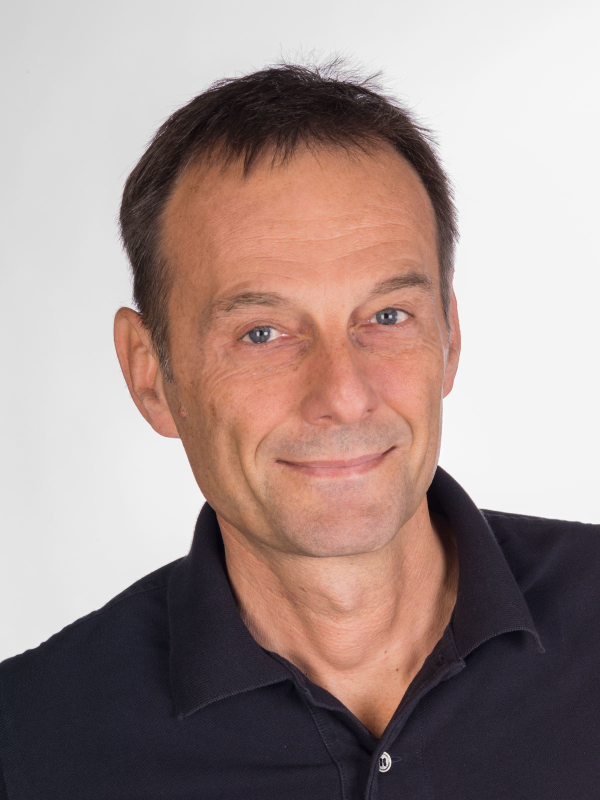 Thomas Vetter合作论文数Department of Mathematics and Computer Science, University of Basel21
 Andreas Morel-Forster合作论文数Shapemeans13
 Josh Tenenbaum合作论文数Department of Brain and Cognitive Sciences, Massachusetts Institute of Technology;Computer Science & Artificial Intelligence Laboratory, Schwarzman College of Computing, Massachusetts Institute of Technology13
 Maximilian Weiherer合作论文数Department Informatik, Technische Fakultät, Friedrich-Alexander-Universität12
 Sandro Schönborn合作论文数Dept Math & Comp Sci, Univ Basel11
 Adam Kortylewski合作论文数University of Freiburg;Max-Planck-Institute for Informatics10
 Marc Stamminger合作论文数Department of Computer Science, Friedrich-Alexander-Universität Erlangen-Nürnberg9
 Andreas Schneider合作论文数University of Basel9
 Will Smith合作论文数Department of Computer Science, University of York8
 Clemens Blumer合作论文数6
 Thomas Gerig合作论文数University of Basel6
 Karthik Shetty合作论文数Pattern Recognition Lab, Department of Computer Science, Friedrich-Alexander-Universität5
 Srikrishna Jaganathan合作论文数Siemens Healthineers AG5
 Annette Birkhold合作论文数Julius Wolff Institute, Charité-Universitätsmedizin Berlin;Berlin-Brandenburg School for Regenerative Therapies;Berlin-Brandenburg School for Regenerative Therapies, Charité-Universitätsmedizin Berlin5
 Markus Kowarschik合作论文数Technical University of Munich;Siemens Healthineers5
 Norbert Strobel合作论文数University of Applied Sciences Wuerzburg-Schweinfurt5
 Matthias Berking合作论文数4Skylar Sutherland合作论文数4Max H. Siegel合作论文数4
 James Gardner合作论文数Department of Computer Science, University of York4
 Robert Richer合作论文数4
 Björn Eskofier合作论文数Helmholtz Munich;Machine Learning and Data Analytics Lab, Friedrich-Alexander-Universitat;Department Artificial Intelligence in Biomedical Engineering, Friedrich-Alexander-Universitat;Portabiles GmbH;Portabiles HealthCare Technologies GmbH;Adidas;ProCarement GmbH4
 Christian Theobalt合作论文数Visual Computing and Artificial Intelligence Department, Max Planck Institute for Informatics;Saarbruecken Center for Visual Computing, Interacton and Artificial Intelligence, Max Planck Institute for Informatics;Department of Computer Science, Saarland University4
 Tim K. Marks合作论文数Mitsubishi Electric research Laboratories4Lena Schindler-Gmelch合作论文数3Andreea Dogaru合作论文数3
 Hannah Schieber合作论文数Friedrich Alexander Univ Erlangen Nurnberg, Human Ctr Comp & Extended Real, Erlangen, Germany3
 Vanessa Brebant合作论文数3Ilker Yildirim合作论文数Department of Interdepartmental Neuroscience, Yale School of Medicine, Yale University3
 Ye Wang合作论文数Mitsubishi Electric Research Laboratories3
 Stefanie Wuhrer合作论文数Inria Centre, University Grenoble Alpes3
 Christoph Palm合作论文数Lab Regensburg Medical Image Computing, Faculty of Computer Science and Mathematics, Ostbayerische Technische Hochschule Regensburg;Fakultät Informatik und Mathematik, Ostbayerische Technische Hochschule Regensburg;Regensburg Center for Artificial Intelligence, Ostbayerische Technische Hochschule Regensburg3
 Anoop Cherian合作论文数Mitsubishi Electric Research Labs3
 Andreas Maier合作论文数Pattern Recognition Lab, Department of Computer Science, University of Erlangen-Nuremberg3Klara Capito合作论文数2
 Akash Srivastava合作论文数IBM;Massachusetts Institute of Technology2Corius Reyneke合作论文数2
 Vanessa Wirth合作论文数2
 Yoni Friedman合作论文数MIT2
 Dinu Kaufmann合作论文数Inst Comp Sci, Univ Basel2
 Thomas P O'Connell合作论文数Yale Univ, Dept Psychol, New Haven, CT 06520 USA2
 Amir Arsalan Soltani合作论文数Department of Psychology, Boston College2
 Vossiek, Martin合作论文数Friedrich-Alexander University2
 Suhas Lohit合作论文数Mitsubishi Electric Research Laboratories2
 Yukun Ding合作论文数Harbin Institute of Technology, Harbin Institute of Technology2
 Daniel Roth合作论文数School of Medicine and Health, Technical University of Munich2
 Volker Roth合作论文数Department of Mathematics and Computer Science, University of Basel2
 Prasanna Sattigeri合作论文数IBM Research;MIT-IBM Watson AI Lab2




