Random samples of quantum states with specific properties are useful for various applications, such as Monte Carlo integration over the state space. In the high-dimensional situations that one already encounters when working with a few qubits, the quantum state space has a very complicated boundary, and it is challenging to incorporate the specific properties into the sampling algorithm. In this paper, we present the Sequentially Constrained Monte Carlo (SCMC) algorithm as a practical and versatile method for sampling quantum states in accordance with properties that can be stated as inequalities. We apply the SCMC algorithm to the generation of samples of bound entangled states; for example, we obtain nearly ten thousand bound, entangled, two-qutrit states in a few minutes, compared with less than ten such states per day from independence sampling in our implementation. In the second application, we draw samples of high-dimensional quantum states from a narrowly peaked target distribution and observe, for the system sizes investigated, that SCMC sampling remains computationally manageable as the dimensions grow. In yet another application, the SCMC algorithm produces uniformly distributed quantum states in regions bounded by values of the problem-specific target distribution; such samples are needed when estimating parameters from the probabilistic data acquired in quantum experiments.
Random samples of quantum states are an important resource for various tasks in quantum information science, and samples in accordance with a problem-specific distribution can be indispensable ingredients. Some algorithms generate random samples by a lottery that follows certain rules and yield samples from the set of distributions that the lottery can access. Other algorithms, which use random walks in the state space, can be tailored to any distribution, at the price of autocorrelations in the sample and with restrictions to low-dimensional systems in practical implementations. In this paper, we present a two-step algorithm for sampling from the quantum state space that overcomes some of these limitations. We first produce a CPU-cheap large proposal sample, of uncorrelated entries, by drawing from the family of complex Wishart distributions, and then reject or accept the entries in the proposal sample such that the accepted sample is strictly in accordance with the target distribution. We establish the explicit form of the induced Wishart distribution for quantum states. This enables us to generate a proposal sample that mimics the target distribution and, therefore, the efficiency of the algorithm, measured by the acceptance rate, can be many orders of magnitude larger than that for a uniform sample as the proposal. We demonstrate that this sampling algorithm is very efficient for one-qubit and two-qubit states, and reasonably efficient for three-qubit states, while it suffers from the "curse of dimensionality" when sampling from structured distributions of four-qubit states.
Random samples of quantum states with specific properties are useful for various applications, such as Monte Carlo integration over the state space. In the high-dimensional situations that one encounters already for a few qubits, the quantum state space has a very complicated boundary, and it is challenging to incorporate the specific properties into the sampling algorithm. In this paper, we present the Sequentially Constrained Monte Carlo (SCMC) algorithm as a powerful and versatile method for sampling quantum states in accordance with any desired properties that can be stated as inequalities. We apply the SCMC algorithm to the generation of samples of bound entangled states; for example, we obtain nearly ten thousand bound entangled two-qutrit states in a few minutes – a colossal speed-up over independence sampling, which yields less than ten such states per day. In the second application, we draw samples of high-dimensional quantum states from a narrowly peaked target distribution and observe that SCMC sampling remains efficient as the dimension grows. In yet another application, the SCMC algorithm produces uniformly distributed quantum states in regions bounded by values of the problem-specific target distribution; such samples are needed when estimating parameters from the probabilistic data acquired in quantum experiments.
We discuss an implementation of the minimum error state discrimination measurement, originally introduced by Helstrom [Quantum Detection and Estimation Theory (Academic Press, New York, 1976)]. In this implementation, instead of performing the optimal projective measurement directly on the system, it is first entangled to an ancillary system and the measurement is performed on the ancilla. We show that, by an appropriate choice of the entanglement transformation, the Helstrom bound can be attained. The advantage of this approach is twofold. First, it provides an implementation when the optimal projective measurement cannot be directly performed. For example, in the case of continuous variable states (binary and N phase-shifted coherent signals), the available detection methods, photon counting and homodyning, are insufficient to perform the required cat-state projection. In the case of symmetric states, the square-root measurement is optimal, but it is not easy to perform directly for more than two states. Our approach provides a feasible alternative in both cases. Second, the measurement is nondestructive from the point of view of the original system and one has a certain amount of freedom in designing the post-measurement state, which can then be processed further.
In a recent paper [Phys. Rev. Lett. 111, 100501 (2013)], a scheme was proposed where subsequent observers can extract unambiguous information about the initial state of a qubit, with finite joint probability of success. Here, we generalize the problem for arbitrary preparation probabilities (arbitrary priors). We discuss two different schemes: one where only the joint probability of success is maximized and another where, in addition, the joint probability of failure is also minimized. We also derive the mutual information for these schemes and show that there are some parameter regions for the scheme without minimizing the joint failure probability where, even though the joint success probability is maximum, no information is actually transmitted by Alice.
When quantum states are used to send classical information, the receiver performs a measurement on the signal states. The amount of information extracted is often not optimal due to the receiver's measurement scheme and experimental apparatus. For quantum non-demolition measurements, there is potentially some residual information in the post-measurement state, while part of the information has been extracted and the rest is destroyed. Here, we propose a framework to characterize a quantum measurement by how much information it extracts and destroys, and how much information it leaves in the residual post-measurement state. The concept is illustrated for several receivers discriminating coherent states.
We study the discrimination of weak coherent states of light with significant overlaps by nondestructive measurements on the light states through measuring atomic states that are entangled to the coherent states via dipole coupling. In this way, the problem of measuring and discriminating coherent light states is shifted to finding the appropriate atom-light interaction and atomic measurements. We show that this scheme allows us to attain a probability of error extremely close to the Helstrom bound, the ultimate quantum limit for discriminating binary quantum states, through the simple Jaynes-Cummings interaction between the field and ancilla with optimized light-atom coupling and projective measurements on the atomic states. Moreover, since the measurement is nondestructive on the light state, information that is not detected by one measurement can be extracted from the post-measurement light states through subsequent measurements.
One can implement fast two-qubit entangling gates by exploiting the Rydberg blockade. Although various theoretical schemes have been proposed, experimenters have not yet been able to demonstrate two-atom gates of high fidelity due to experimental constraints. We propose a novel scheme, which only uses a single Rydberg pulse illuminating both atoms, for the construction of neutral-atom controlled-phase gates. In contrast to the existing schemes, our approach is simpler to implement and requires neither individual addressing of atoms nor adiabatic procedures. With parameters estimated based on actual experimental scenarios, a gate fidelity higher than 0.99 is achievable.
The Lecce group concerned with the Foundations of Quantum Mechanics has worked on different but interconnected research topics. Firstly, the research activity on the elaboration of a new theory (the ESR model) which avoids the problems and paradoxes of the standard interpretation of quantum mechanics (QM) has been continued. The ESR model embodies the mathematical formalism of QM into a broader mathematical framework, reinterpreting quantum probabilities as conditional on detection rather than absolute. Because of these features the ESR model avoids the basic problem of the quantum theory of measurement (the objectification problem), together with the related paradoxes (Schrödinger's cat, Wigner's friend, etc.). At the beginning of 2012 an article has been published which provides an improved version of the ESR model and compares the mathematical representations of proper and improper mixtures in this model with the mathematical representation of mixtures in QM. The article shows that the ESR model representation of improper mixtures coincides with the QM representation, while proper mixtures require an essentially different and new mathematical representation. On this basis the scheme of an experiment aiming to confirm or disprove the ESR model is proposed [1]. Furthermore, the Greenberger-Horne-Zeilinger (GHZ) experiment has been considered and described in the framework of the ESR model, showing that the toy models proposed by Szabó and Fine to supply a local interpretation of the GHZ experiment can be recovered as special cases within the local theory proposed by the Lecce group [2]. Finally, an article addressed to philosophers has been published which illustrated the unsolved problems of QM that have led the Lecce group to devise the ESR model and provides an informal description of the main features of this model [3]. Secondly, a research activity on the identification of quantum effects outside the microscopic domains has been continued and developed in collaboration with the Brussels research group. (i) Cognitive science. Understanding the structure and dynamics of human concepts, how concepts combine and carry meaning in human thought is one of the major challenges in cogni-tive science. However, none of the existing theories on concepts explain 'how concepts combine'. This combination problem was revealed by Hamp-ton's experiments (1988) which measured the deviation from classical (fuzzy) set theoretic membership weights of exemplars with respect to pairs of concepts and their conjunction or disjunction (overextension, underextension). The lack of a universally accepted theory for representing and structuring concepts has manifold consequences on other …
In multi-level systems, the commonly used adiabatic elimination is a method for approximating the dynamics of the system by eliminating irrelevant, nonresonantly coupled levels. This procedure is, however, somewhat ambiguous and it is not clear how to improve on it systematically. We use an integro-differential equation for the probability amplitudes of the levels of interest, which is equivalent to the original Schrodinger equation for all probability amplitudes. In conjunction with a Markov approximation, the integro-differential equation is then used to generate a hierarchy of approximations, in which the zeroth order is the adiabatic-elimination approximation. It works well with a proper choice of interaction picture; the procedure suggests criteria for optimizing this choice. The first-order approximation in the hierarchy provides significant improvements over standard adiabatic elimination, without much increase in complexity, and is furthermore not so sensitive to the choice of interaction picture. We illustrate these points with several examples.
Driven Raman processes --- nearly resonant two-photon transitions through an intermediate state that is non-resonantly coupled and does not acquire a sizeable population --- are commonly treated with a simplified description in which the intermediate state is removed by adiabatic elimination. While the adiabatic-elimination approximation is reliable when the detuning of the intermediate state is quite large, it cannot be trusted in other situations, and it does not allow one to estimate the population in the eliminated state. We introduce an alternative method that keeps all states in the description, without increasing the complexity by much. An integro-differential equation of Lippmann-Schwinger type generates a hierarchy of approximations, but very accurate results are already obtained in the lowest order.
In multi-level systems, the commonly used adiabatic elimination is a method for approximating the dynamics of the system by eliminating irrelevant, non-resonantly coupled levels. This procedure is, however, somewhat ambiguous and it is not clear how to improve on it systematically. We use an integro-differential equation for the probability amplitudes of the levels of interest, which is equivalent to the original Schrodinger equation for all probability amplitudes. In conjunction with a Markov approximation, the integro-differential equation is then used to generate a hierarchy of approximations, in which the zeroth order is the adiabatic-elimination approximation. It works well with a proper choice of interaction picture; the procedure suggests criteria for optimizing this choice. The first-order approximation in the hierarchy provides significant improvements over standard adiabatic elimination, without much increase in complexity, and is furthermore not so sensitive to the choice of interaction picture. We illustrate these points with several examples.
A system of three spin-1/2 atoms allows the construction of a reference-frame-free (RFF) qubit in the subspace with total angular momentum j = 1/2. The RFF qubit stays coherent perfectly as long as the spins of the three atoms are affected homogeneously. The inhomogeneous evolution of the atoms causes decoherence, but this decoherence can be suppressed efficiently by applying a bias magnetic field of modest strength perpendicular to the plane of the atoms. The resulting lifetime of the RFF qubit can be many days, making RFF qubits of this kind promising candidates for quantum information storage units. Specifically, we examine the situation of three Li-6 atoms trapped in a CO2-laser-generated optical lattice and find that, with conservatively estimated parameters, a stored qubit maintains a fidelity of 0.9999 for two hours.
Some important features of the graphene physics can be reproduced by loading ultracold fermionic atoms in a two-dimensional optical lattice with honeycomb symmetry and we address here its experimental feasibility. We analyze in great detail the optical lattice generated by the coherent superposition of three coplanar running laser waves with respective angles 2 pi/3. The corresponding band structure displays Dirac cones located at the corners of the Brillouin zone and close to half-filling this system is well described by massless Dirac fermions. We characterize their properties by accurately deriving the nearest-neighbor hopping parameter t(0) as a function of the optical lattice parameters. Our semiclassical instanton method proves in excellent agreement with an exact numerical diagonalization of the full Hamilton operator in the tight-binding regime. We conclude that the temperature range needed to access the Dirac fermions regime is within experimental reach. We also analyze imperfections in the laser configuration as they lead to optical lattice distortions which affect the Dirac fermions. We show that the Dirac cones do survive up to some critical intensity or angle mismatches which are easily controlled in actual experiments. In the tight-binding regime, we predict, and numerically confirm, that these critical mismatches are inversely proportional to the square root of the optical potential strength. We also briefly discuss the interesting possibility of fine tuning the mass of the Dirac fermions by controlling the laser phase in an optical lattice generated by the incoherent superposition of three coplanar independent standing waves with respective angles 2 pi/3.
 Berthold-Georg (Berge) Englert合作论文数Department of Physics, Faculty of Science, National University of Singapore;Centre for Quantum Technologies, National University of Singapore10
 Ng Hui Khoon合作论文数Yale-National University of Singapore College9
 Gerd Leuchs合作论文数Institut für Optik, Information und Photonik, Department Physik, Naturwissenschaftliche Fakultät, Friedrich-Alexander-Universität Erlangen-Nürnberg3
 János A. Bergou合作论文数Department of Physics and Astronomy, Hunter College, City University of New York3
 Vanessa Paulisch合作论文数2
 Weijun Li合作论文数2Jun Suzuki合作论文数1
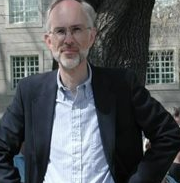 Mark Hillery合作论文数Department of Physics, Hunter College of City University of New York1
 Shrobona Bagchi合作论文数1
 Jiangwei Shang (尚江伟)合作论文数School of Physics, Beijing Institute of Technology1Niels Lörch合作论文数1
 Markus Grassl合作论文数International Centre for Theory of Quantum Technologies, University of Gdansk1
 Benoit Gremaud合作论文数Laboratoire Kastler Brossel;Université Pierre et Marie Curie;Laboratoire Kastler Brossel, Université Pierre et Marie Curie1Kean Loon Lee合作论文数1
 Christian Miniatura合作论文数Laboratoire Ondes et Desordre1




